%20%20--%3E%0A%3Csvg%20version%3D%221.1%22%20id%3D%22Layer_1%22%20xmlns%3D%22http%3A%2F%2Fwww.w3.org%2F2000%2Fsvg%22%20xmlns%3Axlink%3D%22http%3A%2F%2Fwww.w3.org%2F1999%2Fxlink%22%20x%3D%220px%22%20y%3D%220px%22%0A%09%20width%3D%2239px%22%20height%3D%2240px%22%20viewBox%3D%220%200%2039%2040%22%20enable-background%3D%22new%200%200%2039%2040%22%20xml%3Aspace%3D%22preserve%22%3E%0A%3Cpath%20fill%3D%22%23FFFFFF%22%20d%3D%22M38.5%2C7H28.2v26h10.3V7z%22%2F%3E%0A%3Cpath%20fill-rule%3D%22evenodd%22%20clip-rule%3D%22evenodd%22%20fill%3D%22%23FFFFFF%22%20d%3D%22M26.1%2C25.5c0%2C5.8-4.1%2C7.5-12.9%2C7.5C3.9%2C33%2C0%2C31.2%2C0%2C25.2v-1.1h11.6%0A%09v2.4c0%2C0.7%2C0.1%2C1.4%2C1.2%2C1.4c1%2C0%2C1.2-0.4%2C1.2-1.3v-0.9c0-1.6-0.9-1.6-3.5-2.2C2.2%2C21.7%2C0%2C19.7%2C0%2C15.3v-0.9C0%2C9.3%2C5.5%2C7%2C12.9%2C7%0A%09c10.2%2C0%2C12.8%2C2.6%2C12.8%2C7.4v1.8h-11v-2.9c0-0.6-0.4-1.1-1.2-1.1c-0.6%2C0-1.2%2C0.4-1.2%2C1.1v0.9c0%2C1.5%2C0.9%2C2%2C3.3%2C2.5%0A%09c8%2C1.6%2C10.5%2C3.3%2C10.5%2C7.5V25.5z%22%2F%3E%0A%3C%2Fsvg%3E%0A)
Tom Verducci’s Breakdown of the Week: Freddy Peralta Has Mechanical Issues
In this story:
This article was originally published as part of Verducci’s View, a new weekly baseball newsletter from Sports Illustrated senior writer Tom Verducci. Every Monday, Tom empties out his notebook over email and covers MLB’s hottest topics, provides in-depth analysis through both text and video breakdowns, looks forward to what’s worth watching during the week and more. If you want to be featured in his new mailbag, please email newsletters@si.com with any questions about MLB or his decades in the sport.
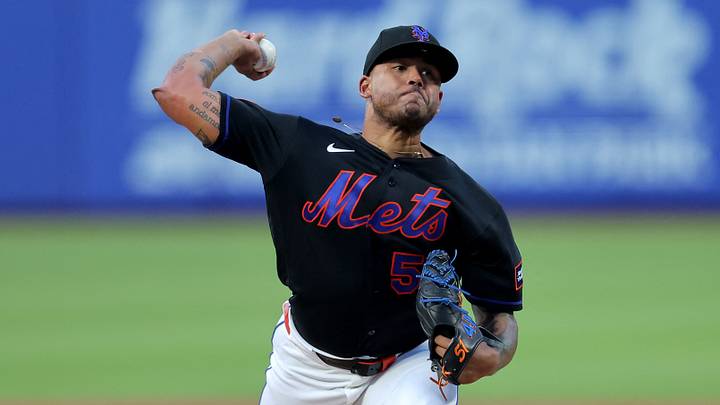
Buyer beware. Freddy Peralta of the Mets is one of the few starting pitchers on the trade market who has the pedigree to start Game 1 or 2 of a postseason series. But the righthander they call “Fastball Freddy” is not the same pitcher, especially when you dig down to find what’s underneath his 4.81 ERA.
Peralta simply is not exploding down the mound nearly the same as he did in his prime. Over the past five years, including a dramatic change since last year, Peralta has devolved from having elite extension—the magic behind his lively fastball—to average extension and below-average perceived velocity.
You can see for yourself the decline of Peralta in the video above. He is throwing with career lows in extension, arm angle and perceived velocity. Here is one snapshot of his mechanical decline, with both of his noted 2026 metrics registering as career-low marks:
Year | Extension | Arm Angle |
|---|---|---|
2021 | 7.2 | 37.3° |
2025 | 6.8 | 38.4° |
2026 | 6.5 | 32.1° |
Losing 8 ½ inches of extension means Peralta is giving hitters more time to read and react to his pitches. Perceived velocity, a function of how far the ball travels and its speed, means much more to a hitter than basic velocity.
Since 2023, Peralta’s fastball has lost 0.3 mph on the radar gun. But because Peralta has lost extension, it has lost 1.3 mph in perceived velocity, that is, to the hitter’s eye. With a perceived velocity of 94.2, the fastball of Fastball Freddy is now a below average major league fastball.
Looking at the decline in extension and perceived velocity here, you understand that any time that trades for Peralta, a free agent after the season, must be confident it can quickly fix his mechanics to get the life back on his pitches.
Year | FB Velocity | Extension | Perceived Velocity | Opponents’ BA |
|---|---|---|---|---|
2023 | 94.4 | 6.9 | 95.5 | .213 |
2024 | 94.3 | 6.8 | 94.9 | .239 |
2025 | 94.8 | 6.7 | 95.4 | .209 |
2026 | 94.1 | 6.5 | 94.2 | .257 |
2026 MLB Average | 94.7 | 6.5 | 95.0 | .246 |
More MLB from Sports Illustrated
 Add us as a preferred source on Google
Tom Verducci is a senior writer for Sports Illustrated who has covered Major League Baseball since 1981. He also serves as an analyst for FOX Sports and the MLB Network; is a New York Times best-selling author; and cohosts The Book of Joe podcast with Joe Maddon. A five-time Emmy Award winner across three categories (studio analyst, reporter, short form writing) and nominated in a fourth (game analyst), he is a three-time National Sportswriter of the Year winner, two-time National Magazine Award finalist, and a Penn State Distinguished Alumnus Award recipient. Verducci is a member of the National Sports Media Hall of Fame, Baseball Writers Association of America (including past New York chapter chairman) and a Baseball Hall of Fame voter since 1993. He also is the only writer to be a game analyst for World Series telecasts. He lives in New Jersey with his wife, with whom he has two children.