
Tigers Could Unlock a More Dominant Version of Kevin Gausman in 2027
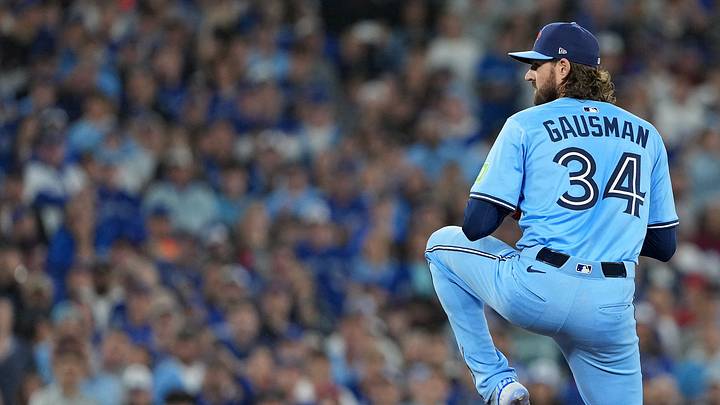
In this story:
I know Kevin Gausman’s final 4.51 ERA in 2026 is not his most encouraging mark, much less the explosion in his 9.7% HR/FB rate with the Blue Jays in his first 23 starts of the year, which rose to a terrible 21.6% after he was traded to the Chicago Cubs at the trade deadline, but there were also several reasons to believe that not everything is lost.
Despite everything, Gausman returned to generating his standards in Chase%, Whiff%, strikeouts, and walks, ranking in much higher percentiles than in his 3.59 ERA season over 193 innings in 2025. Much of those improvements are reflected in his 3.58 xFIP, better than last year’s 3.77, as Gausman maintained his great control but improved his strikeout rate, which helped him finish with a higher 3.91 K/BB ratio compared to 3.78 in 2025 and 2.89 in 2024.
Much of all those differences and a few more that we will analyze here represent one of the main reasons why the Detroit Tigers decided to bet on him with a one-year, $25 million contract to reinforce a rotation that already has left-hander Framber Valdez, Troy Melton, Drew Anderson, Jackson Jobe, Keider Montero, and River Ryan, in addition to Reese Olson and Luis Gil as other options.
Melton recently received a six-year, $46.5 million guaranteed extension, which includes a club option for 2033 and can reach $80 million with incentives.
Tigers, RHP Kevin Gausman reportedly agree to 1-year deal, per multiple reports including MLB’s @Feinsand. pic.twitter.com/lCTmmo8j3P
— MLB (@MLB) November 25, 2026
So Gausman will arrive in Detroit after completing another season of considerable volume, surpassing 30 starts, 170 innings, and 160 strikeouts for the sixth consecutive season, a feat no other MLB pitcher has accomplished in every season since 2021.
In that period, since 2021, Gausman has also accumulated 1,204 strikeouts, the third-highest total in the Major Leagues, and 1,103 ⅓ innings, behind only San Francisco Giants right-hander Logan Webb (1,129).
That durability, which is sometimes undervalued and quite difficult to find beyond the free-agent market, represents one of the main arguments for the signing, as Detroit went through many problems trying to stabilize its rotation this year when they lost Tarik Skubal and Casey Mize, who were traded at the deadline to the Los Angeles Dodgers and San Diego Padres, respectively.
Those problems were joined by Framber’s inconsistencies, the injuries to Reese Olson (who missed the entire season due to surgery to repair his right shoulder labrum), Justin Verlander, who was able to make only two starts in the final season of his career, and Jack Flaherty, who, after entering the injured list in July due to inflammation in his right forearm flexors, returned to pitch as a reliever in the final game of the season.
An Idea for Gausman to Improve His Execution in the Situations That Defined His Season

The point that should not worry Gausman too much is how he has maintained his ability to limit contact, since, as we saw here, his metrics have remained in a solid position. So, what should really be a concern is the quality of contact from his opponents, basically the problem that has followed him throughout his career.
In 2026, Gausman saw a decline in his Hard-Hit% percentile, from 43rd to 34th, which is somewhat concerning because he has never been a pitcher with the ability to generate ground balls at a high frequency. His best ranking was the 56th percentile in 2018.
Analyzing these trends, I had a suspicion about how Gausman managed his counts throughout the season and, with the help of Statcast tools, I reached some interesting conclusions.

As you already know, Gausman has been a three-pitch-type pitcher for most of his career, with the splitter, four-seam fastball, and a slider that he has used around 8.0% over the last three seasons.
Although this year he made an attempt to recover a sweeper that he had not used since 2023 and a changeup that he stopped throwing in 2022, his usage was limited to 1.2% and 0.9%, respectively. That said, I filtered the plate appearances in which Gausman was behind in the count and analyzed how his three main weapons worked in his attempt to get out of those difficult situations.
Season | Pitch Type | Pitch% | PA | xSLG | HR | HR% |
|---|---|---|---|---|---|---|
2025 | Split Finger | 7.4 | 48 | .289 | 1 | 2.1 |
2026 | Split Finger | 8.8 | 74 | .385 | 4 | 5.4 |
2025 | 4-Seamer | 13.2 | 146 | .604 | 5 | 3.4 |
2026 | 4-Seamer | 14.8 | 150 | .614 | 6 | 4.0 |
2025 | Slider | 1.5 | 7 | .897 | 1 | 14.3 |
2026 | Slider | 1.1 | 7 | .507 | 1 | 14.3 |
Obviously, these were not the only difficult situations Gausman went through, but when you are behind in the count, the hitter usually gets ready to attack with more confidence and aggression. The results reflect a notable difference, especially when Gausman tried to get out of those difficult situations with his two main weapons, the splitter and the four-seam fastball.
As expected, he threw the fastball more, while the splitter had a smaller presence in those counts. This season, hitters punished the latter more, raising its xSLG from .289 to .385 and its home run rate from 2.1% to 5.4%. The fastball, which ended up being the most used pitch in those situations, with an increase of 1.6 percentage points compared to last year, was also punished, with an xSLG above .600 and a higher home run rate.
Now let’s look at a heat map of his opponents against fastballs.

I think this is the missing part of the story, as right-handed hitters posted a .459 slugging percentage against Gausman’s fastballs around the lower edge of the strike zone, well above the .389 he allowed overall in 2026. His adjustment may involve avoiding unfavorable counts and perhaps improving his slider, a pitch he has never fully trusted as a third weapon.
 Add us as a preferred source on Google

Yirsandy is a baseball writer specializing in MLB coverage with experience across multiple teams and storylines. He currently writes for Diamond Centric, where he covers the New York Mets, San Diego Padres, Chicago Cubs, Milwaukee Brewers, and Kansas City Royals. My work focuses on game coverage, player analysis, and storytelling that connects performance with context. My Substack has also been an important part of my writing development, where I’ve built much of my baseball coverage and storytelling voice over time. I’m passionate about combining reporting, research, and thoughtful analysis to produce engaging baseball content for readers.
Follow Yirsandy