
Tigers Rookie Broke Brutal 6-for-43 Slide With One Swing
In this story:
The Detroit Tigers needed an immediate response after the Minnesota Twins scored in the first inning on Monday. Kevin McGonigle might have needed one even more.
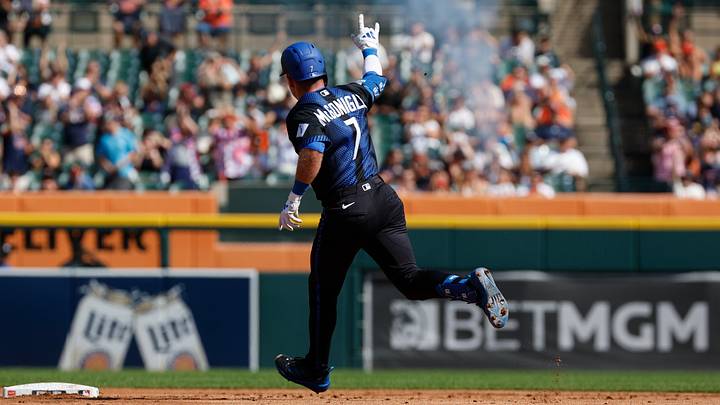
McGonigle entered the afternoon stuck in an 11-game, 6-for-43 slide. The Tigers rookie ended that stretch emphatically, driving Joe Ryan’s 95.1 mph fastball into the right-field seats for a game-tying solo home run.
The ball left McGonigle’s bat at 108.4 mph and traveled an estimated 375 feet, according to MLB’s official Statcast data. Detroit eventually defeated Minnesota 5-4, avoiding another late-game disappointment after suffering three walk-off losses during its previous series in Cleveland.
McGonigle Finally Ended His Power Drought

McGonigle fell behind Ryan with two strikes before turning around the four-seam fastball. The Tigers infielder pulled the pitch with authority for his 15th home run, ending a power drought that dated back to Aug. 23.
“It was nice to answer back right away,” McGonigle said, according to MLB.com’s Jason Beck. “It’s also nice to see one leave.”
Detroit scored two more runs in the second inning before Riley Greene extended the advantage with a two-run homer in the fifth. Minnesota eventually reduced the lead to one, making McGonigle’s opening swing an important part of the final margin.
The home run also offered an encouraging response from a young hitter navigating the longest schedule of his professional career. McGonigle had reached the Majors without appearing at Triple-A, yet he entered Tuesday with a .271/.372/.413 slash line, 15 home runs, 60 RBIs and 12 stolen bases, according to FanGraphs.
Those complete numbers remained impressive for a rookie. The Tigers still needed to determine how McGonigle would adjust when opposing pitchers found ways to limit him over an extended stretch.
One Home Run Did Not Answer Every Question

One swing did not prove McGonigle had completely escaped his downturn. Detroit needed to see whether he could carry the improved timing and contact through the rest of the Minnesota series.
His importance extended well beyond the final weeks of a disappointing campaign. The Tigers signed McGonigle to an eight-year, $150 million extension in April, making him one of the central pieces of their long-term plans.
The agreement began in 2027 and ran through 2034, with escalators that could increase its total value to $160 million. Detroit made that commitment because of McGonigle’s advanced approach, contact skills, and ability to impact games in multiple ways.
A difficult 11-game period did not change that evaluation. The Tigers’ fading playoff position, however, made the development of McGonigle and the club’s other young players one of the most important reasons to follow the remaining schedule.
Monday’s home run gave the response Detroit wanted, but the next step was sustaining it. McGonigle broke through with a powerful swing; the following games would show whether it represented the beginning of another productive run.
 Add us as a preferred source on Google
Alvin Garcia is a Puerto Rico-born sportswriter and U.S. Army veteran. He has covered Major League Baseball since 2022, producing breaking news, game coverage, analysis, roster stories and player features for national and team-focused publications. His previous work has appeared at Heavy, The Sporting News, Athlon Sports, Yardbarker, and FanSided. Garcia brings a data-informed, fan-focused approach to his coverage.