
Twins’ Bullpen Could Be Close to Breakout in 2027 Despite Second-Half Collapse
In this story:
If I asked you who the most undervalued Twins reliever in 2026 was, according to expected metrics, which pitcher would come to mind?
It’s likely that names like Andrew Morris or Kody Funderburk would be among your first options, since, in a way, their contributions were consistent at certain points during the season. What about Taylor Rogers or Eric Orze? I don’t know if that’s the case for you, but I was eagerly expecting an improvement in Orze’s command and, although I still like Rogers for certain bullpen situations, the arrival of A.J. Minter solves some of the consistency issues.
So, well, it all points to another one of the younger players, right? What if I told you that pitcher was Travis Adams? Would that surprise you too much?
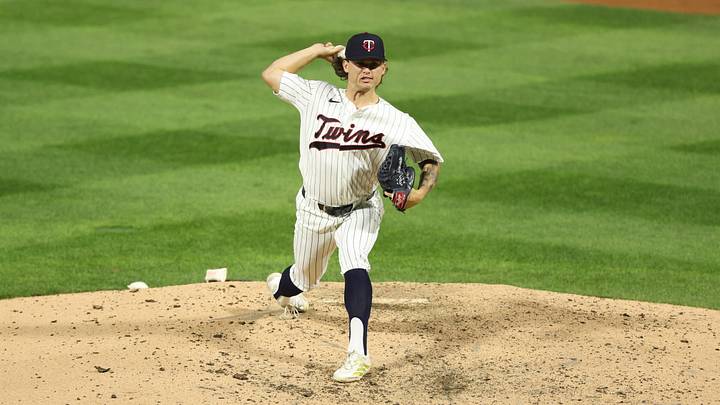
Well, it is Adams, who finished with the best xFIP (3.98) among all relievers who threw at least 30 innings in 2026. Of them all, Adams was also the only one to allow a home run rate per nine innings above 1.00 — 1.22, to be exact — which was one of his most vulnerable points in his 40 appearances. However, he was also the pitcher with the most strikeouts in this group of seven pitchers, backed by the big jump his breaking pitches made, which placed him in the 76th percentile in Breaking.
How much attention should the Twins pay to Adams’ improvements?

If there’s something I like about Minnesota, it’s the mix of young right-handed pitchers with several left-handers who have experience in the league, such as Minter, Funderburk, Rogers and Anthony Banda. Rogers probably won’t return to the group, since he will be a free agent at the end of the season, but Minnesota still has to decide whether Minter’s arrival is enough to solve its problems in the late innings.
Returning to the topic of the different profiles, right-handers like Jeff Hoffman, who should be the new closer, Yoendrys Gomez, Morris and Adams could bring different strengths to the bullpen. This also assumes that Pablo Lopez’s arrival in the rotation could send some arms like right-hander Zebby Matthews and left-hander Connor Prielipp to the bullpen.

That said, and looking enthusiastically at Adams’ season, his improvements are more interesting than some of his peripheral statistics show. Adams ranked in the 75th percentile in Chase%, the 69th in Whiff% and the 70th in K%, indicators that point to an important step forward in his ability to generate swings and misses and strikeouts, regardless of the high home run rate he allowed.
Along with this progress, it is also worth noting that Adams finished in the 87th percentile in Hard Hit% and the 86th in Avg. Exit Velocity, two indicators that help us understand how close he could be to becoming a much more dominant pitcher.
 Add us as a preferred source on Google

Yirsandy is a baseball writer specializing in MLB coverage with experience across multiple teams and storylines. He currently writes for Diamond Centric, where he covers the New York Mets, San Diego Padres, Chicago Cubs, Milwaukee Brewers, and Kansas City Royals. My work focuses on game coverage, player analysis, and storytelling that connects performance with context. My Substack has also been an important part of my writing development, where I’ve built much of my baseball coverage and storytelling voice over time. I’m passionate about combining reporting, research, and thoughtful analysis to produce engaging baseball content for readers.