
Why Bailey Ober May No Longer Fit Into the Twins’ Future
In this story:
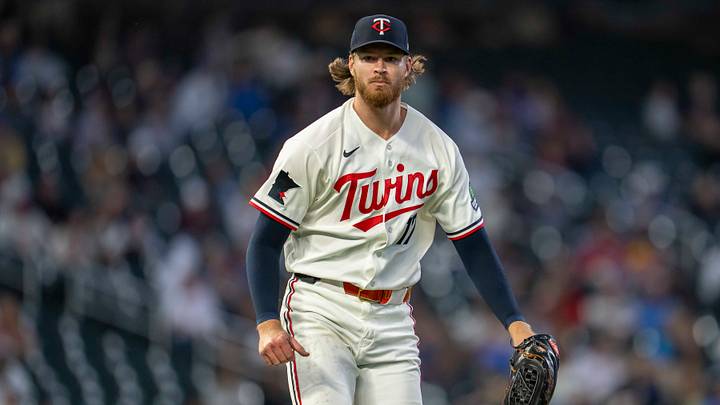
The Minnesota Twins have reached a point where Bailey Ober’s experience alone should no longer secure his rotation spot.
The 31-year-old finished 2026 with a 4.47 ERA and 1.30 WHIP across 131 innings. That represented an improvement from his 5.10 ERA in 2025, but it also left Minnesota weighing a veteran rebound against opportunities for younger pitchers.
His contract adds urgency. Ober remains arbitration-eligible and could reach free agency after 2027. The Twins must decide whether his remaining year of control provides more value in their rotation or in a trade. That evaluation should begin with how much his place on the staff has changed.
Ober’s Role Has Become Harder to Justify

MLB Trade Rumors projected Ober’s 2027 salary at $6.9 million, as detailed in Twins On SI’s arbitration outlook. That is an estimate, not an agreed-upon contract, but it provides a useful starting point for evaluating his fit.
Ober’s ability to miss bats also declined. He recorded 96 strikeouts in 131 innings this year, compared with 191 in 178.2 innings in 2024. That worked out to roughly 6.6 strikeouts per nine innings, down from 9.6. Fewer strikeouts leave a pitcher more dependent on contact outcomes and defensive support.
Meanwhile, the rotation competition became more substantial. Taj Bradley, Joe Ryan and Dean Kremer give Minnesota established options. Pablo López’s return could strengthen that group, while Connor Prielipp and Zebby Matthews deserve opportunities to earn regular starts.
Prielipp’s development case is especially relevant. He made 22 starts and logged 125.2 innings in his first Major League campaign. His uneven results require improvement, but he has already gained meaningful experience.
If Lopez is ready and the Twins retain Bradley, Ryan, and Kremer, keeping Ober in a five-man rotation would leave Prielipp and Matthews competing for opportunities elsewhere. Minnesota should weigh that development cost alongside the salary commitment.
Ryan, Lopez, and Kremer could also reach free agency after 2027. Their shared contract clock gives the club another reason to establish younger starters now.
The Case for Keeping Him Still Matters

The strongest argument for retaining Ober is how quickly pitching depth can disappear.
López is recovering from Tommy John surgery. MLB’s October assessment cautioned that he might not regain full effectiveness immediately. Younger starters also have to prove they can deliver consistently. Ober’s 131 innings would be difficult to replace if several alternatives struggled or became unavailable.
His improved ERA supports patience, too. At the projected salary, a productive rebound could make him a useful investment. Trading him after two campaigns below his 2024 standard could also produce a disappointing return.
Those concerns should establish Minnesota’s asking price and depth requirements. They should not automatically preserve Ober’s previous role.
Prioritize a trade that returns useful organizational depth or a prospect with a credible development path. Prielipp should receive the first opportunity to claim the opening, with Matthews competing and Lopez’s rehabilitation shaping the final arrangement.
If offers provide little value or the medical outlook worsens, retaining Ober for an open rotation competition would be reasonable. A non-tender should require a firm conclusion that his projected contribution no longer justifies his cost.
The Star Tribune reported that Minnesota was open to trading a starter. Identifying Ober as the preferred candidate is this article’s analysis, not a reported team decision.
 Add us as a preferred source on Google
