%20%20--%3E%0A%3Csvg%20version%3D%221.1%22%20id%3D%22Layer_1%22%20xmlns%3D%22http%3A%2F%2Fwww.w3.org%2F2000%2Fsvg%22%20xmlns%3Axlink%3D%22http%3A%2F%2Fwww.w3.org%2F1999%2Fxlink%22%20x%3D%220px%22%20y%3D%220px%22%0A%09%20width%3D%2239px%22%20height%3D%2240px%22%20viewBox%3D%220%200%2039%2040%22%20enable-background%3D%22new%200%200%2039%2040%22%20xml%3Aspace%3D%22preserve%22%3E%0A%3Cpath%20fill%3D%22%23FFFFFF%22%20d%3D%22M38.5%2C7H28.2v26h10.3V7z%22%2F%3E%0A%3Cpath%20fill-rule%3D%22evenodd%22%20clip-rule%3D%22evenodd%22%20fill%3D%22%23FFFFFF%22%20d%3D%22M26.1%2C25.5c0%2C5.8-4.1%2C7.5-12.9%2C7.5C3.9%2C33%2C0%2C31.2%2C0%2C25.2v-1.1h11.6%0A%09v2.4c0%2C0.7%2C0.1%2C1.4%2C1.2%2C1.4c1%2C0%2C1.2-0.4%2C1.2-1.3v-0.9c0-1.6-0.9-1.6-3.5-2.2C2.2%2C21.7%2C0%2C19.7%2C0%2C15.3v-0.9C0%2C9.3%2C5.5%2C7%2C12.9%2C7%0A%09c10.2%2C0%2C12.8%2C2.6%2C12.8%2C7.4v1.8h-11v-2.9c0-0.6-0.4-1.1-1.2-1.1c-0.6%2C0-1.2%2C0.4-1.2%2C1.1v0.9c0%2C1.5%2C0.9%2C2%2C3.3%2C2.5%0A%09c8%2C1.6%2C10.5%2C3.3%2C10.5%2C7.5V25.5z%22%2F%3E%0A%3C%2Fsvg%3E%0A)
Has the Center Position Become Less Valuable? What History Says and How the Second Apron Intervened
In this story:
As a wild NBA offseason reached its conclusion, difficult contract negotiations took center stage across the league.
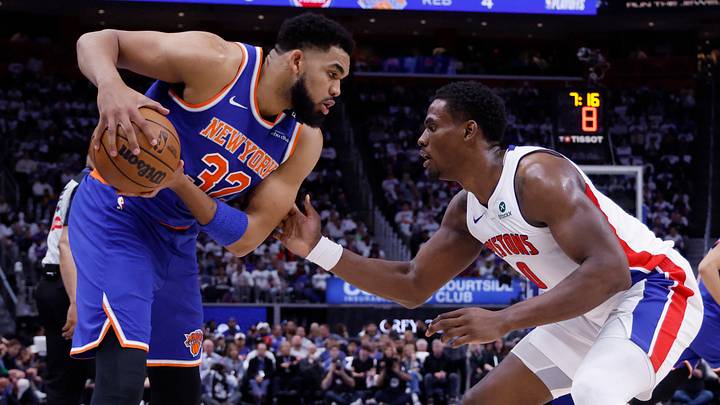
Most notably, the Pistons stood firm on their final offer to All-Star center Jalen Duren and the defending champion Knicks remain apart from big man Karl-Anthony Towns’s wishes for a new deal. At the start of the offseason, Walker Kessler signed a four-year, $129.5 million contract to join the Lakers through a sign-and-trade with the Jazz after negotiations broke down with Utah in restricted free agency.
Kessler’s deal will pay him 18% of the salary cap over the next four seasons. Duren’s stalemate with Detroit ended with him agreeing to a five-year, $200 million contract. Much more than Kessler’s both in total money and annually, but much less than the maximum Duren was eligible for—a five-year deal worth up to $287 million. Duren, still just 22, presumably expected more after an All-NBA and All-Star season.
He’ll hover between 20% to 25% of the salary cap over the course of the deal. With Towns, the Knicks need him to accept a somewhat team-friendly deal to keep their championship team intact.
So, what gives? Are these each one-off scenarios where solid centers need to take less because of team context and financial constraints? Or, maybe something bigger is taking place across the league with how teams value the last line of defense. We looked at the center position over the past 15 seasons to try to get an answer.
Are these centers just not getting paid? Or are all centers not getting paid?

Kessler, Duren and Towns all have one thing in common: None are the best player on their respective team. Towns has Jalen Brunson, Duren has Cade Cunningham and Kessler has Luka Dončić (and Austin Reaves). Kessler specifically played just five games in Utah last season due to season-ending shoulder surgery, which certainly impacted his contract number.
Still, it’s a trend worth digging into. Duren was forced to take much less than his max. In the prior CBA—before the second apron and subsequent limitations—the Pistons may have been forced to offer the max after his All-NBA season despite a significant playoff drop-off. Towns may wind up in the same shoes given there’s a payday for Brunson looming in New York.
If they were stars worthy of being a No. 1 option on a contender, each would get more. Victor Wembanyama signed a five-year, $255.2 million extension this summer. Nikola Jokić will make more than any player not named Steph Curry this year. Anthony Davis and Joel Embiid are in the top six in terms of salary, too, which makes half of the six highest salaries this year at the center position. But if you zoom out and look at a larger sample size, there’s been a consistent downward trend with big men contracts.
Season | No. of centers in top-100 highest-paid players (by salary and cap percentage) |
|---|---|
2026-27 | 18 |
2025-26 | 19 |
2024-25 | 17 |
2023-24 | 15 |
2022-23 | 19 |
2021-22 | 15 |
2020-21 | 13 |
2019-20 | 23 |
2018-19 | 24 |
2017-18 | 28 |
2016-17 | 24 |
2015-16 | 24 |
2014-15 | 19 |
2013-14 | 20 |
2012-13 | 23 |
2011-12 | 23 |
From 2011 to '20, 20 or more centers were within the 100 highest NBA salaries in all seasons but one. And we have not seen that threshold met since. The reason isn’t simply that there were more quality big men back then, either. Fifteen years ago, Dwight Howard was the highest-paid center and he just snuck into the top-10 salaries in 2011-12. He made $18.1 million with the Magic that year, which ranked ninth. After Howard, the highest-paid centers were Andrew Bynum and Al Jefferson who were both right outside of the top 20.
For comparison’s sake, five centers will be inside the top-20 salaries this season: Jokić, Davis, Embiid, Towns and Bam Adebayo. Essentially, a superstar center is just as much of an advantage as any position. Just look at Jokić and Wemby, two absolute anomalies that force defenses to bend solely by their presence.
However, failing to employ a star at the center position isn’t as much of an issue as it is to have a lackluster wing group, subpar three-point shooting or deficient backcourt scoring. The Hornets and the Celtics were two teams that took that approach last season as they played out the year with big questions in the frontcourt. In both cases, it worked out.
Moussa Diabaté was Charlotte’s primary starting center, while rookie big man and second-round pick Ryan Kalkbrenner made 31 starts, too. Neither provided a ton on offense compared to the rest of the team, but both players were solid rebounders and rim protectors that helped keep the Hornets afloat as the franchise finished with its best record in a decade. And each player only made up 1.5% of the team’s cap sheet.
There was a similar story in Boston last year in Neemias Queta’s first season as its starting center. He played his way into a bigger, but still affordable, deal over the offseason. However, he was an impactful defense-first big next to Jaylen Brown on the second-seeded Celtics a year ago—also earning just 1.5% of the cap. Now, he gets a raise (around 7.5% of the cap) to do the same next to a healthy Jayson Tatum while the team also invested in center depth over the offseason with the signing of Mitchell Robinson.
If the Hornets or the Celtics didn’t have considerable offense coming from elsewhere, it would be an issue. However, both proved there is a path to success without a star big man. And if a team doesn’t have that player, that’s more salary that can be routed elsewhere.
What does the second apron have to do with it all?
The second apron came into play with the new CBA, which was ratified in 2023. Since it effectively serves as a hard cap which teams try to avoid at all costs, much has been said on the second apron’s impact on player salaries. Superstars still get paid, but there’s less room to give a second or third option a massive contract and operate with multiple max deals while filling out the roster.
The NBA, however, vehemently disagrees with that sentiment.
“Recent reports asserted that the second apron is hurting ‘lower’ and ‘middle’ class players. That’s untrue,” the league said in a post on its communications X account on Friday. “Since the implementation of the second apron, the number of players on team rosters has remained the same and annual salaries have increased by nearly $1.3 billion resulting in pay increases of approximately 30% for all classes of players.”
Bigger salary cap numbers result in bigger salaries, obviously. Players make more now than they did 10 years ago, no matter their standing in the league’s ecosystem. However, if the second apron wasn’t involved, players like Duren and Towns would more than likely have an easier time negotiating new contracts. The Pistons held firm on Duren’s $200 million offer and structured it so the team would pay him more in the first year of the contract compared to the second, which is when Ausar Thompson’s extension kicks in and the team will get closer to the aprons.
The Knicks didn’t reach an extension with Towns over the summer and said the franchise will table contract negotiations with all players until later in the season, at least. You’d think that after he played a critical role in winning a championship, the franchise would want to lock him down and keep the roster together as long as possible. That gets tougher as time goes on with the presence of the second apron, though, a threshold that owner James Dolan wants to avoid at all costs.
If you look at the center position specifically, there isn’t a direct line between the implementation of the second apron and a decline in centers getting paid. A decline in the amount of big men making up top salaries is a clear trend, but started a few years before the second apron came into play. Really, it’s players close but not quite at superstardom who have been impacted in contract negotiations amidst the apron era. Critical players, maybe even All-Stars—but not the best player on their team.
The Jokićs and Wembys of the world will still get paid. Same goes for superstar guards and wings. For players in the next tier, the second or third options critical to winning, it’s been tough sledding. That will only come more to the forefront as time goes on and teams have to pull off salary cap gymnastics to keep a contender on the floor.
PODCAST 🎧: Listen to SI’s NBA podcast, Open Floor, below or on Apple and Spotify. Watch the show on SI’s YouTube channel.
 Add us as a preferred source on Google
Blake Silverman is a writer at Sports Illustrated, primarily covering the NBA and WNBA. Before joining SI in November 2024 as a breaking/trending news writer, he covered the WNBA, NBA, G League and college basketball for numerous sites, including Winsidr, SB Nation and A10Talk. He’s an alum of both Michigan State and St. Bonaventure University, receiving a master’s degree from the Bonnies’ sports journalism program. Outside of work, he’s a husband, father, yogi and fairly mediocre tennis player who’s open to any tips on how to play defense in EA Sports College Football.
Follow blakesilverman