%20%20--%3E%0A%3Csvg%20version%3D%221.1%22%20id%3D%22Layer_1%22%20xmlns%3D%22http%3A%2F%2Fwww.w3.org%2F2000%2Fsvg%22%20xmlns%3Axlink%3D%22http%3A%2F%2Fwww.w3.org%2F1999%2Fxlink%22%20x%3D%220px%22%20y%3D%220px%22%0A%09%20width%3D%2239px%22%20height%3D%2240px%22%20viewBox%3D%220%200%2039%2040%22%20enable-background%3D%22new%200%200%2039%2040%22%20xml%3Aspace%3D%22preserve%22%3E%0A%3Cpath%20fill%3D%22%23FFFFFF%22%20d%3D%22M38.5%2C7H28.2v26h10.3V7z%22%2F%3E%0A%3Cpath%20fill-rule%3D%22evenodd%22%20clip-rule%3D%22evenodd%22%20fill%3D%22%23FFFFFF%22%20d%3D%22M26.1%2C25.5c0%2C5.8-4.1%2C7.5-12.9%2C7.5C3.9%2C33%2C0%2C31.2%2C0%2C25.2v-1.1h11.6%0A%09v2.4c0%2C0.7%2C0.1%2C1.4%2C1.2%2C1.4c1%2C0%2C1.2-0.4%2C1.2-1.3v-0.9c0-1.6-0.9-1.6-3.5-2.2C2.2%2C21.7%2C0%2C19.7%2C0%2C15.3v-0.9C0%2C9.3%2C5.5%2C7%2C12.9%2C7%0A%09c10.2%2C0%2C12.8%2C2.6%2C12.8%2C7.4v1.8h-11v-2.9c0-0.6-0.4-1.1-1.2-1.1c-0.6%2C0-1.2%2C0.4-1.2%2C1.1v0.9c0%2C1.5%2C0.9%2C2%2C3.3%2C2.5%0A%09c8%2C1.6%2C10.5%2C3.3%2C10.5%2C7.5V25.5z%22%2F%3E%0A%3C%2Fsvg%3E%0A)
Chris Mannix: Victor Wembanyama Gave Chet Holmgren a Clear Offseason Mission
In this story:
Late Saturday night, Chet Holmgren sat in front of his locker and tried to make a postgame interview about anything but him. For Holmgren, Game 7 was a disaster: Four points, four rebounds, two blocks. In 33 minutes, Holmgren attempted two shots. It punctuated a forgettable series in which Holmgren averaged a paltry 10.7 points per game.
“At the end of the day, it’s always about us trying to win a basketball game,” said Holmgren. “Us as a collective, the Thunder team trying to win the basketball game. And that’s what’s it’s always going to be.”
In the aftermath of any postseason exit, the negatives are magnified. Boston won 56 games … and the last few weeks have been dominated by questions about trading Jaylen Brown. Cleveland advanced to its first conference finals in the post-LeBron James era and there was a spirited debate about whether Cavs coach Kenny Atkinson should keep his job.
Oklahoma City isn’t immune. A year removed from a title, the Thunder won 64 games. Shai Gilgeous-Alexander earned his second straight MVP. They swept the Suns and Lakers in the playoffs and pushed the Spurs to seven games without Jalen Williams and Ajay Mitchell playing meaningful minutes in four of them.
“I think you can be simultaneously disappointed and also proud of the path that took us to the point where we could be disappointed,” said Thunder coach Mark Daigneault. “If you get too focused on the way the season ends, you can dilute the importance of all the things that lead up to that.”
Still, any autopsy of Oklahoma City’s season begins with Holmgren. Statistically, Holmgren was outstanding. He averaged career highs in points (17.1), rebounds (8.9) and field goal percentage (55.7%). He earned an All-NBA third-team spot and finished second in voting for Defensive Player of the Year. In the second-round series against Los Angeles, Holmgren averaged 20 points on 61% shooting.
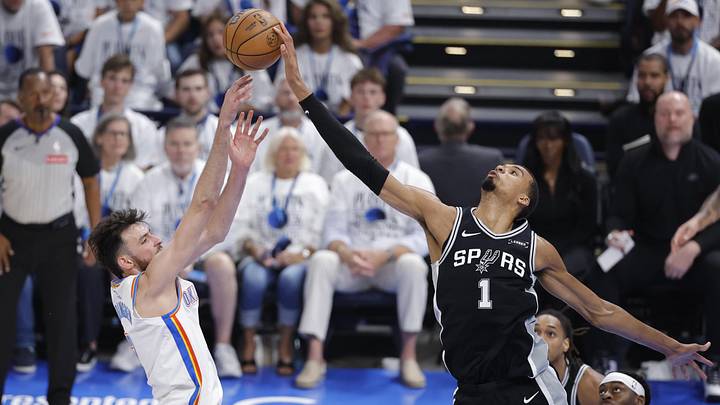
In the conference finals, everything unraveled. Holmgren couldn’t score. He couldn’t rebound. He couldn’t defend. Wembanyama relished his matchup with Holmgren. Holmgren appeared to fear it. Wembanyama dunked on Holmgren. He blocked his shots. When Holmgren had opportunities to go one-on-one with Wembanyama, he routinely passed them up.
Wembanyama shined in the spotlight.
Holmgren shrunk in it.
Predictably, the Thunder rushed to Holmgren’s defense. Daigneault noted Holmgren’s role in getting Oklahoma City to the conference finals. “You don’t just get a ticket there,” said Daigneault. Gilgeous-Alexander noted that “before Chet was here, we weren’t who we are today.” Whatever happened against the Spurs, Gilgeous-Alexander said, Holmgren will grow from it.
“I always say this, the version of Chet that we have today is the worst vision that Chet will ever have,” said Gilgeous-Alexander. “And I’ve said that literally every time I talk about Chet. So he’s going to get better at basketball and he’s just going to be a better player because of the makeup he has, talent he has and I don’t need to umbrella Chet. He’ll figure it out.”
Fair. And it was one series. But it’s the series, one that will likely be repeated. Wembanyama is 22. His core teammates—Stephon Castle and Dylan Harper—are younger. If both teams stay healthy, it’s likely they will spend the next few years jousting for the No. 1 seed and meeting in the conference finals.
When they do, Oklahoma City needs Holmgren to be better. A lot better. That means improvement. He’ll never pack on too many pounds onto his wiry 7'1" frame, but around Holmgren there is a belief that another 10 to 15 pounds could help. His release could be quicker, which may help Holmgren get up more three-point shots. Schematically, the Thunder could be more creative in getting him involved in the offense.
More than anything, Holmgren needs an injection of confidence. Watch Wembanyama. Any floor he steps on, he thinks he’s the best one on it. He gets excited for matchups with Holmgren, a rivalry that dates back to international tournaments. Holmgren doesn’t, or at least doesn’t play like it. Wembanyama moves with the swagger of a superstar. Holmgren gives off a vibe of a player who isn’t certain he belongs on that level.
On Sunday, Oklahoma City’s players conducted exit interviews. Holmgren was purposefully vague on the subject of San Antonio. On his struggles, Holmgren said, “I feel like it comes down to kind of looking at the tape, figuring out where I can improve individually and then trusting my work through the offseason.” He admitted to being “a bit out of rhythm at times” and repeated the need to study film.

“I’d definitely say it sucks losing and it’s hard for that to not overshadow everything else,” said Holmgren. “But you also have to look at everything, understand where you’ve improved, understand where you still need to improve and then kind of look at everything objectively and continue to put your head down and continue to work from there.”
There will be changes in Oklahoma City. The Thunder will get creative to reduce their payroll this summer. Gilgeous-Alexander is on a supermax contract, while Holmgren and Williams’s max deals will kick in next year. At a minimum they will likely pare off some depth, restructure some contracts and enter next season looking a little different.
But the biggest change needs to come from Holmgren. All the accolades Holmgren earned this season mean nothing if he freezes in the biggest moment. The Spurs halted the Thunder’s attempt to establish a new dynasty, and Wembanyama is only going to get better. For Oklahoma City to win, Holmgren has to match that development. Or exceed it.
“I feel like the longer you live, the days start to feel shorter because you’ve lived so many,” said Holmgren. “Same thing with mistakes. If you’ve only ever made one mistake, that mistake probably feels so heavy and so easy to dwell on. But as you make more mistakes, you learn that there are opportunities to learn from and improve from and find different ways to get better.”
More NBA From Sports Illustrated
Listen to SI’s NBA podcast, Open Floor, below or on Apple and Spotify. Watch the show on SI’s YouTube channel.
 Add us as a preferred source on Google
Chris Mannix is a senior writer at Sports Illustrated covering the NBA and boxing beats. He joined the SI staff in 2003 following his graduation from Boston College. Mannix is the host of SI’s “Open Floor” podcast and serves as a ringside analyst and reporter for DAZN Boxing. He is also a frequent contributor to NBC Sports Boston as an NBA analyst. A nominee for National Sportswriter of the Year in 2022, Mannix has won writing awards from the Boxing Writers Association of America and the Pro Basketball Writers Association, and is a longtime member of both organizations.
Follow sichrismannix