%20%20--%3E%0A%3Csvg%20version%3D%221.1%22%20id%3D%22Layer_1%22%20xmlns%3D%22http%3A%2F%2Fwww.w3.org%2F2000%2Fsvg%22%20xmlns%3Axlink%3D%22http%3A%2F%2Fwww.w3.org%2F1999%2Fxlink%22%20x%3D%220px%22%20y%3D%220px%22%0A%09%20width%3D%2239px%22%20height%3D%2240px%22%20viewBox%3D%220%200%2039%2040%22%20enable-background%3D%22new%200%200%2039%2040%22%20xml%3Aspace%3D%22preserve%22%3E%0A%3Cpath%20fill%3D%22%23FFFFFF%22%20d%3D%22M38.5%2C7H28.2v26h10.3V7z%22%2F%3E%0A%3Cpath%20fill-rule%3D%22evenodd%22%20clip-rule%3D%22evenodd%22%20fill%3D%22%23FFFFFF%22%20d%3D%22M26.1%2C25.5c0%2C5.8-4.1%2C7.5-12.9%2C7.5C3.9%2C33%2C0%2C31.2%2C0%2C25.2v-1.1h11.6%0A%09v2.4c0%2C0.7%2C0.1%2C1.4%2C1.2%2C1.4c1%2C0%2C1.2-0.4%2C1.2-1.3v-0.9c0-1.6-0.9-1.6-3.5-2.2C2.2%2C21.7%2C0%2C19.7%2C0%2C15.3v-0.9C0%2C9.3%2C5.5%2C7%2C12.9%2C7%0A%09c10.2%2C0%2C12.8%2C2.6%2C12.8%2C7.4v1.8h-11v-2.9c0-0.6-0.4-1.1-1.2-1.1c-0.6%2C0-1.2%2C0.4-1.2%2C1.1v0.9c0%2C1.5%2C0.9%2C2%2C3.3%2C2.5%0A%09c8%2C1.6%2C10.5%2C3.3%2C10.5%2C7.5V25.5z%22%2F%3E%0A%3C%2Fsvg%3E%0A)
NFL Free Agency 2026: How NFC Teams Stack Up by Salary Cap Space
In this story:
Projected Contracts, Landing Spots for the NFL’s 50 Best Free Agents in 2026 | When Does 2026 NFL Free Agency Start? | NFL Free Agency Guide for All 32 Teams
You know the NFL free agency frenzy is around the corner when teams begin cutting players for the purpose of being cap compliant.
Teams have until 4 p.m. ET on Wednesday, the start of the new league year, to get under the $301.2 million salary cap limit.
In the coming days, expect to hear about many contracts being restructured or players being asked to take pay cuts. There could also be more trades, with teams looking to shed hefty salaries.
The words “barring trade” are popular these days because teams hold out hope of executing a deal before the likelihood of releasing the players placed on the trading block.
With that said, here’s a salary cap breakdown for all the teams in the NFC.
All cap numbers are from Overthecap.com, but these numbers change periodically.
Arizona Cardinals
Cap space: $30,707, 226
Cap implications: The Cardinals plan to release Kyler Murray on March 11, when the new league year begins, barring a trade, which seems unlikely, given the signal-caller’s guaranteed salary of $36.8 million for 2026.
The Cardinals will likely place a post-June 1 designation on Murray’s release, creating about $5.1 million in cap space for this year. This would also allow the team to spread out $47.5 million in dead money over two years.
Arizona could release a few veteran players to add more cap relief. Cutting defensive tackle Dalvin Tomlinson and running back James Conner would create about $17 million in cap space. Edge rusher Baron Browning could be another cut candidate after a disappointing 2025 season. His release would create $4.6 million in cap space.
Atlanta Falcons
Cap space: $8,000,319
Salary cap implications: Falcons GM Ian Cunningham recently announced that the team has plans to release Kirk Cousins on the first day of the new league year. If Atlanta places a post-June 1 designation on Cousins, the team would save $2.1 million in salary cap in 2026. The $35 million in dead money would be split over two years.
The Falcons probably still need a few more roster cuts to be at a comfortable salary cap position. They could release Darnell Mooney for $7.4 million in cap savings or make him a post-June 1 cut to save nearly $12 million.
There’s also the possibility of the team moving on from 2025 first-round pick James Pearce Jr., who’s facing legal charges stemming from a domestic dispute. Cutting him would cost the team $5.4 million in cap space if he’s given a post-June 1 destination.
Carolina Panthers
Cap space: $8,985,304
Salary cap implications: The Panthers could cut a few veteran defenders to gain more cap space ahead of free agency.
If they let go of A’Shawn Robinson, Bobby Brown III and Patrick Jones II, that would free up about $20 million in cap space. There’s also tight end Tommy Tremble, whose departure would create $6 million in cap relief.
Robinson was reportedly given permission to seek a trade. There’s also the possibility of the Panthers trading backup quarterback Andy Dalton, who has a cap hit of $5.6 million.
Chicago Bears
Cap space: $8,151,445
Salary cap implications: The Bears were $7 million over the salary cap before trading wide receiver DJ Moore to the Bills on Thursday.
But the team still needs to make another notable move to be at a healthy place with the salary cap. There’s still the possibility of the team trading linebacker Tremaine Edmunds, who has a $17.4 million cap number for this season. The team can also cut Edmunds and save $15 million against the cap.
Additionally, Chicago is expected to save $10 million in cap space due to Drew Dalman’s shocking retirement.
Dallas Cowboys
Cap space: $9,786,896
Salary cap implications: The Cowboys were a whopping $55 million over the cap before restructuring the contracts of Dak Prescott, CeeDee Lamb and Tyler Smith on Wednesday.
The trio of moves cleared about $66 million in cap space. But that won’t be enough for Dallas to be a real player in free agency. There’s the option of working out a long-term deal with George Pickens to avoid the $27.3 million cap charge from placing the non-exclusive franchise tag on him.
Dallas could also look to restructure more contracts after Jerry Jones told reporters at the combine that there’s the possibility of the team redoing the deals of defensive tackles Quinnen Williams, Kenny Clark and Osa Odighizuwa.
Detroit Lions
Cap space: -$6,534,212
Salary cap implications: The Lions are still over the cap limit despite making two notable moves this week.
The team created more than $11 million in cap space after trading running back David Montgomery to the Texans and releasing center Graham Glasgow.
Perhaps the Lions ask Taylor Decker to take a pay cut after he announced that he’s returning for his 11th NFL season. If they want to avoid the awkward conversation, Detroit can look to restructure the deals of its most expensive star players.
Green Bay Packers
Cap space: -$5,072,857
Salary cap implications: The Packers could soon be parting with a few long-time players to get under the red line.
Green Bay could save more than $30 million in cap space by cutting edge rusher Rashan Gary and offensive guard Elgton Jenkins. It wouldn’t be a surprise if the team executes trades for either one of those players.
Also, don’t rule out the possibility of the Packers moving on from last year’s two-prize free-agent signings, offensive guards Aaron Banks and cornerback Nate Hobbs. But GM Brian Gutekunst told reporters at the combine he expects to have Banks on the roster despite his disappointing 2025 season after signing a four-year, $77 million contract.
Los Angeles Rams
Cap space: $27,459,655
Salary cap implications: The Rams are still in a good spot after trading for cornerback Trent McDuffie, who has a cap number of $13.6 million for the final year of his rookie deal.
Additionally, the Rams could make that number smaller if they agree to an extension with the soon-to-be former Chiefs standout. But the Rams could lose some cap space for Matthew Stafford’s looming pay raise after his sensational MVP season. Then again, the team could add a few void years to spread out the cap charges.
There’s also the option of the team redoing Davante Adams’s contract, with the wideout having a $28 million cap charge for 2026. Guard Kevin Dotson could also see a new deal with the intent of lowering his cap number of $12.6 million this season.

Minnesota Vikings
Cap space: -$46,675,553
Salary cap implications: The Vikings had the most work to do to get under the salary cap limit as of Thursday morning.
This could lead to tough decisions, including the possibility of trading productive edge rusher Jonathan Greenard, who carries a $22.1 million cap number in 2026.
There are also reports that the team will soon release running back Aaron Jones and defensive tackles Javon Hargrave and Jonathan Allen, barring trades. Cutting those three players could save about $25 million in cap space. Center Ryan Kelly could be another potential cut candidate, freeing up $8.3 million against the cap if he were to be released.
New Orleans Saints
Cap space: -$11,635,260
Salary cap implications: The Saints’ cap situation isn’t that bad compared to previous years.
They finally acknowledged that they long needed to rebuild and began parting with veteran players last season. But they still have work to do to get under the red line by March 11.
Perhaps a tough decision is parting with long-time star running back Alvin Kamara. The team would save $8.5 million in cap space if it released Kamara with a post-June 1 designation.
Cameron Jordan and Taysom Hill could also be parting with the franchise that it’s had plenty of success with for many years. Cutting those two players with post-June 1 designations would free up about $16 million in cap space.
New York Giants
Cap space: $9,794,521
Salary cap implications: The Giants began creating cap space when they released defensive captain and linebacker Bobby Okereke on Tuesday.
The move saved the team $9 million, but there will likely be more roster cuts. The trio of running back Devin Singletary, offensive tackle James Hudson III and kicker Graham Gano appears to be an obvious cut candidate, which could create a combined $15 million in cap space if the team parts with all three.
Philadelphia Eagles
Cap space: $12,525,188
Salary cap implications: The Eagles could be shopping star receiver A.J. Brown, but trading him would mean losing more than $20 million in cap space.
If that were to occur, that would likely create a series of roster cuts. Cornerback Michael Carter II is probably atop the team’s list of cut candidates because he would save $8.7 million in cap space. There’s also the possibility of that the Eagles will restructure the contracts of their expensive star players.
San Francisco 49ers
Cap space: $37,787,976
Salary cap implications: The 49ers gained a healthy salary cap after the mass exodus of players last March.
It remains to be seen whether they’ll use that flexibility to chase top free agents or continue on their path of getting younger and relying more on the draft.
The team could also focus on keeping its star players happy, as left tackle Trent Williams seeks a new deal heading into the final year of his current contract. An extension would likely lower Williams’s cap number, which is at $38.8 million for this season.
Seattle Seahawks
Cap space: $58,081,261
Salary cap implications: The Seahawks have plenty of money to spend as they begin their quest to capture back-to-back Super Bowl titles.
In recent years, the Seahawks have traded Russell Wilson, DK Metcalf and Geno Smith, while hitting on their draft picks to build arguably the best roster in football. They also got Sam Darnold at a bargain rate last season, but he might be looking for a pay raise for helping Seattle hoist the Lombardi Trophy.
As for potential cuts, the Seahawks could part with edge rusher Uchenna Nwosu to save $11.4 million in cap space.
Tampa Bay Buccaneers
Cap space: $19,962,510
Salary cap implications: The Buccaneers could have a win-win scenario with Baker Mayfield if the two sides agree to a new deal this offseason.
Mayfield is entering the final year of the three-year, $100 million deal he signed ahead of the 2024 season and doesn’t have any guaranteed money remaining. The Buccaneers could do right by their quarterback while also lowering his cap number for this season, which is $39.9 million.
Tampa Bay could also restructure contracts if it intends to chase a prized free agent next week.
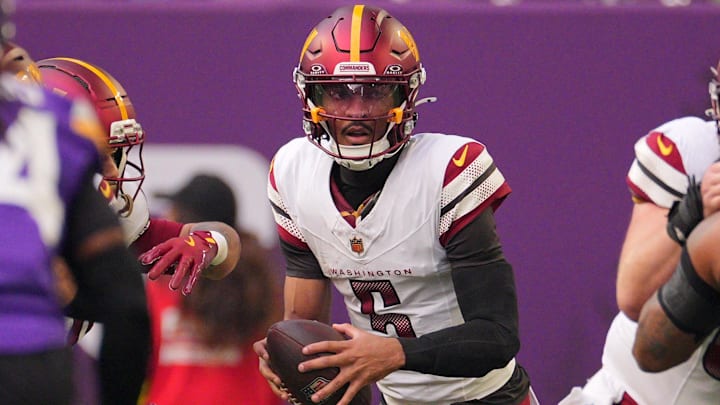
Washington Commanders
Cap space: $69,991,063
Salary cap implications: The Commanders have the most cap space among the teams in the NFC, and they will soon gain another $18.5 million in cap space after they release cornerback Marshon Lattimore.
GM Adam Peters could be extremely busy next week, filling all of the roster holes that were exposed during a dreadful five-win season last year. He’ll likely look to pay one of the top cornerbacks and edge rushers on the market.
More NFL on Sports Illustrated
 Add us as a preferred source on Google
Gilberto Manzano is a staff writer covering the NFL for Sports Illustrated. After starting off as a breaking news writer at NFL.com in 2014, he worked as the Raiders beat reporter for the Las Vegas Review-Journal and covered the Chargers and Rams for the Orange County Register and Los Angeles Daily News. During his time as a combat sports reporter, he was awarded best sports spot story of 2018 by the Nevada Press Association for his coverage of the Conor McGregor-Khabib Nurmagomedov post-fight brawl. Manzano, a first-generation Mexican-American with parents from Nayarit, Mexico, is the cohost of Compas on the Beat, a sports and culture show featuring Mexican-American journalists. He has been a member of the Pro Football Writers of America since 2017.
Follow gmanzano24