%20%20--%3E%0A%3Csvg%20version%3D%221.1%22%20id%3D%22Layer_1%22%20xmlns%3D%22http%3A%2F%2Fwww.w3.org%2F2000%2Fsvg%22%20xmlns%3Axlink%3D%22http%3A%2F%2Fwww.w3.org%2F1999%2Fxlink%22%20x%3D%220px%22%20y%3D%220px%22%0A%09%20width%3D%2239px%22%20height%3D%2240px%22%20viewBox%3D%220%200%2039%2040%22%20enable-background%3D%22new%200%200%2039%2040%22%20xml%3Aspace%3D%22preserve%22%3E%0A%3Cpath%20fill%3D%22%23FFFFFF%22%20d%3D%22M38.5%2C7H28.2v26h10.3V7z%22%2F%3E%0A%3Cpath%20fill-rule%3D%22evenodd%22%20clip-rule%3D%22evenodd%22%20fill%3D%22%23FFFFFF%22%20d%3D%22M26.1%2C25.5c0%2C5.8-4.1%2C7.5-12.9%2C7.5C3.9%2C33%2C0%2C31.2%2C0%2C25.2v-1.1h11.6%0A%09v2.4c0%2C0.7%2C0.1%2C1.4%2C1.2%2C1.4c1%2C0%2C1.2-0.4%2C1.2-1.3v-0.9c0-1.6-0.9-1.6-3.5-2.2C2.2%2C21.7%2C0%2C19.7%2C0%2C15.3v-0.9C0%2C9.3%2C5.5%2C7%2C12.9%2C7%0A%09c10.2%2C0%2C12.8%2C2.6%2C12.8%2C7.4v1.8h-11v-2.9c0-0.6-0.4-1.1-1.2-1.1c-0.6%2C0-1.2%2C0.4-1.2%2C1.1v0.9c0%2C1.5%2C0.9%2C2%2C3.3%2C2.5%0A%09c8%2C1.6%2C10.5%2C3.3%2C10.5%2C7.5V25.5z%22%2F%3E%0A%3C%2Fsvg%3E%0A)
The Deception Behind Mykhailo Mudryk’s Doping Ban Is a Lesson for All Athletes
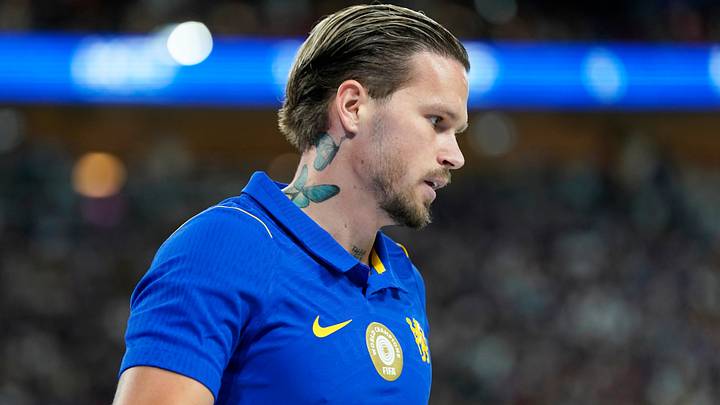
Mykhailo Mudryk has pointed the finger of blame squarely at one of the nutritionists on the Ukraine national team for the failed doping test which forced him to miss two years of soccer and derail his Chelsea career. But he can’t completely absolve himself of any accusations.
Mudryk was once hailed as Europe’s next great prospect after breaking through at Shakhtar Donetsk in his native Ukraine. Arsenal and Chelsea battled out a bidding war for the jet-heeled winger who eventually moved to Stamford Bridge for a sum that could rise to €100 million ($110 million at current rates) in January 2023.
After an up-and-down first 18 months during a particularly chaotic period at the club, any hope of growing momentum for Mudryk was quashed by news of a failed doping test in December 2024. A “low concentration” of the banned substance meldonium had been found in his system. The Ukraine international protested his innocence but was initially banned for four years.
Those terms were reduced in July after a change in the anti-doping regulations specifically surrounding meldonium, a drug shown to improve endurance and aid recovery, Mudryk came to an agreement with the English Football Association, and the World Anti-Doping Agency to end his suspension over the summer.
Freshly appointed Chelsea manager Xabi Alonso included Mudryk in his preseason plans before telling the winger that he would be best advised seeking an exit. The 25-year-old promptly joined Tottenham Hotspur on loan where he was reunited with his former Shakhtar manager, Roberto De Zerbi.
In a wide-ranging interview with Ukrainian journalist Dmitry Gordon on his YouTube channel, Mudryk revealed for the first time how he believes he came to have the banned substance in his system.
How Mudryk Failed His Doping Test

“I had never heard of a drug like meldonium, never seen it, never come across it in my life. I only learned about it when they told me the news,” the winger explained. “I definitely have ideas. It’s a drug you can only get in Eastern Europe.
“This drug could only have got into my body where I was, and that’s Ukraine. There are no such drugs in England. It supposedly stimulates your heart and helps you, as far as I understand, handle physical load better.
“There are people who keep an eye on it. In the Ukrainian national team we have a nutritionist who hands us pills every couple of days before games. He brings us a little cup. Everyone has to take the pills that are in that cup.”
The Real Blame Game

If those allegations are substantiated, Ukraine’s international setup will come under all sorts of scrutiny. Yet, Mudryk still had to swallow these nondescript pills himself without seemingly ever querying what they contained. For a player who, by his own admission, “spends a huge pile of money on watching your diet, on a nutritionist, on a chef,” it’s a curious inconsistency that he should willingly ingest these mysterious supplements.
Ignorance is not an excuse—as FIFA make it explicitly clear in their anti-doping documentation.
“It is each player’s personal duty to ensure that no prohibited substance enters their body,” Article 3 of the latest regulations reads. “Players are responsible for any prohibited substance or its metabolites or markers found to be present in their samples. Accordingly, it is not necessary that intent, fault, negligence or knowing use on the player’s part be demonstrated in order to establish an anti‑doping rule violation.”
While most of his interview was an attack on the Ukraine soccer association, Mudryk did come away with a conclusion that can apply to all professional athletes, including himself: “I just would like, for the future, everyone to understand that you can only rely on yourself.”
The Mental Toll on Mudryk
“You can’t believe it’s true,” Mudryk reflected when thinking back to that day in 2024 when he learned his fate. “You can’t believe this is happening to you.
“They tell you this news, and you sit there, and you kind of listen to them but don’t hear them,” he added. “At some point you just go into a trance.
“It feels like you’re falling in a dream off a skyscraper. You’re flying down, you feel yourself flying down, and only in a dream do you wake up when you hit the ground, but in real life you don’t wake up, you just keep falling.”
“It hits you very hard mentally. At that moment the tears came later.”
 Add us as a preferred source on Google

Grey Whitebloom is an Associate Editor for SI FC. He has more than half a decade of experience in sports media across all its various guises, from the fast-paced demands of news articles and match reports to in-depth research required for features. Whitebloom graduated with a First Class Honours from University College London and found himself named on the Dean’s List—which, despite his initial fears, was a form of praise rather than a punishment. He specialises in the Premier League and Champions League, while also boasting an extensive track record of La Liga coverage.