%20%20--%3E%0A%3Csvg%20version%3D%221.1%22%20id%3D%22Layer_1%22%20xmlns%3D%22http%3A%2F%2Fwww.w3.org%2F2000%2Fsvg%22%20xmlns%3Axlink%3D%22http%3A%2F%2Fwww.w3.org%2F1999%2Fxlink%22%20x%3D%220px%22%20y%3D%220px%22%0A%09%20width%3D%2239px%22%20height%3D%2240px%22%20viewBox%3D%220%200%2039%2040%22%20enable-background%3D%22new%200%200%2039%2040%22%20xml%3Aspace%3D%22preserve%22%3E%0A%3Cpath%20fill%3D%22%23FFFFFF%22%20d%3D%22M38.5%2C7H28.2v26h10.3V7z%22%2F%3E%0A%3Cpath%20fill-rule%3D%22evenodd%22%20clip-rule%3D%22evenodd%22%20fill%3D%22%23FFFFFF%22%20d%3D%22M26.1%2C25.5c0%2C5.8-4.1%2C7.5-12.9%2C7.5C3.9%2C33%2C0%2C31.2%2C0%2C25.2v-1.1h11.6%0A%09v2.4c0%2C0.7%2C0.1%2C1.4%2C1.2%2C1.4c1%2C0%2C1.2-0.4%2C1.2-1.3v-0.9c0-1.6-0.9-1.6-3.5-2.2C2.2%2C21.7%2C0%2C19.7%2C0%2C15.3v-0.9C0%2C9.3%2C5.5%2C7%2C12.9%2C7%0A%09c10.2%2C0%2C12.8%2C2.6%2C12.8%2C7.4v1.8h-11v-2.9c0-0.6-0.4-1.1-1.2-1.1c-0.6%2C0-1.2%2C0.4-1.2%2C1.1v0.9c0%2C1.5%2C0.9%2C2%2C3.3%2C2.5%0A%09c8%2C1.6%2C10.5%2C3.3%2C10.5%2C7.5V25.5z%22%2F%3E%0A%3C%2Fsvg%3E%0A)
FIFA Given Fresh Warning Over World Cup Hydration Breaks and Impact on Fans
Netherlands center back Virgil van Dijk has joined the growing number of critics over the current approach to hydration breaks at the World Cup, warning FIFA that they are “not great” for TV viewers at home and are effectively making matches worse for both players and fans.
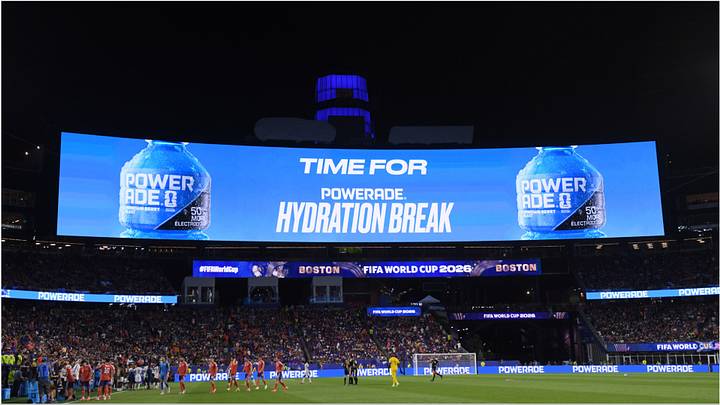
Per the new rules introduced before the tournament, every half of action includes a mandatory three-minute hydration break—a concept previously introduced at the 2014 World Cup and saved specifically for matches in hot temperatures.
Broadcasters have been granted permission to cut to commercials during these breaks, leaving many questioning whether the match remains in two halves or is being pushed towards the four-quarter approach adopted by the NFL and NBA for monetary purposes.
Van Dijk was on the scoresheet as Netherlands drew 2–2 in its opening game with Japan in Dallas, and a hydration break was enforced in both halves despite the AT&T Stadium’s roof being closed and the climate being controlled.
Post-match, Liverpool’s skipper laughed as he chose his words carefully on the subject: “I think hydration breaks are really interesting.
“I was obviously watching almost all of the games up until today. I think every time going to commercials is a bit ... not really something that I like. I think for the neutral watchers on TV it is also not great. So if it is really hot, obviously it would be good to put them in, but I think you have to look at it in every game separately, in my opinion.
“But I think I have said enough already on that.”
Controversies Already Racking Up for FIFA

FIFA’s approach to this summer’s World Cup has not gone down well with a large number of fans, with many concerns stemming around the finances involved.
High ticket prices dominated headlines for months before the tournament and appeared to lead to a number of empty seats across the opening games. Official attendance numbers have not always aligned with the eye test and FIFA’s attempts to explain the statistics have only added to the confusion.
By the third day of the World Cup, the controversies were focused on on-field affairs. A surprising onside call in Switzerland’s 1–1 with Qatar was not proven with any evidence or supporting replays until hours after the final whistle, at which point FIFA pointed to a “technical issue.”
In defending the VAR decision, FIFA belatedly offered up images of the call which, in the eyes of many, still did not line up with the official ruling of onside.
The hydration breaks are just another source of tension between FIFA and fans, with one broadcaster even missing 10 seconds of Mexico’s opening victory over South Africa in favor of finishing a commercial break.
Broadcasters are not obligated to show commercials during hydration breaks. Some have specifically pledged to maintain a live feed of the match throughout.
Even for those inside the stadiums, spectators have been left frustrated on a number of occasions as the restart of play was delayed to finish up these three-minute breaks, even though both sets of players were lined up and ready to go.
“FIFA is always trying to find ways to innovate,” Zac Kenworthy, vice-president of production at Fox Sports, attempted to explain. “They’re very intrigued in the American market, the way we do sports here.”
READ THE LATEST WORLD CUP NEWS, ANALYSIS AND INSIGHT FROM SI FC
 Add us as a preferred source on Google
Tom Gott is an associate editor for SI FC, having entered the world of soccer media in early 2018 following his graduation from Newcastle University. He specialises in all things Premier League, with a particular passion for academy soccer, and can usually be found rebuilding your favorite team on Football Manager.
Follow tomgott2