%20%20--%3E%0A%3Csvg%20version%3D%221.1%22%20id%3D%22Layer_1%22%20xmlns%3D%22http%3A%2F%2Fwww.w3.org%2F2000%2Fsvg%22%20xmlns%3Axlink%3D%22http%3A%2F%2Fwww.w3.org%2F1999%2Fxlink%22%20x%3D%220px%22%20y%3D%220px%22%0A%09%20width%3D%2239px%22%20height%3D%2240px%22%20viewBox%3D%220%200%2039%2040%22%20enable-background%3D%22new%200%200%2039%2040%22%20xml%3Aspace%3D%22preserve%22%3E%0A%3Cpath%20fill%3D%22%23FFFFFF%22%20d%3D%22M38.5%2C7H28.2v26h10.3V7z%22%2F%3E%0A%3Cpath%20fill-rule%3D%22evenodd%22%20clip-rule%3D%22evenodd%22%20fill%3D%22%23FFFFFF%22%20d%3D%22M26.1%2C25.5c0%2C5.8-4.1%2C7.5-12.9%2C7.5C3.9%2C33%2C0%2C31.2%2C0%2C25.2v-1.1h11.6%0A%09v2.4c0%2C0.7%2C0.1%2C1.4%2C1.2%2C1.4c1%2C0%2C1.2-0.4%2C1.2-1.3v-0.9c0-1.6-0.9-1.6-3.5-2.2C2.2%2C21.7%2C0%2C19.7%2C0%2C15.3v-0.9C0%2C9.3%2C5.5%2C7%2C12.9%2C7%0A%09c10.2%2C0%2C12.8%2C2.6%2C12.8%2C7.4v1.8h-11v-2.9c0-0.6-0.4-1.1-1.2-1.1c-0.6%2C0-1.2%2C0.4-1.2%2C1.1v0.9c0%2C1.5%2C0.9%2C2%2C3.3%2C2.5%0A%09c8%2C1.6%2C10.5%2C3.3%2C10.5%2C7.5V25.5z%22%2F%3E%0A%3C%2Fsvg%3E%0A)
How Barcelona Could Line Up With Rodri
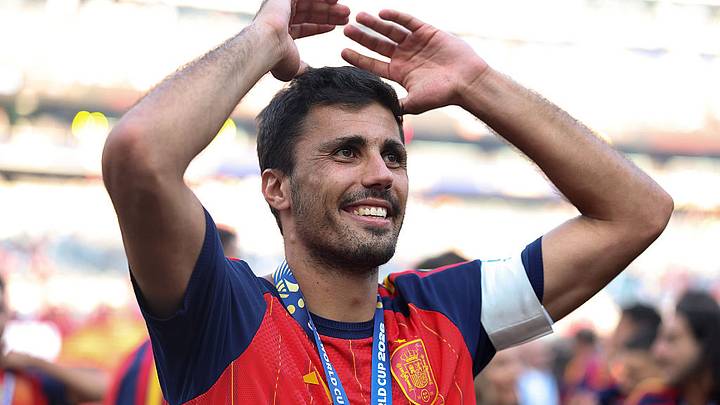
Barcelona’s midfield is already one of the strongest in world soccer, and the rich are set to get even richer after an agreement was reached with Manchester City to sign 2024 Ballon d’Or winner Rodri.
For a while, it seemed like the Spanish international was destined to join Real Madrid if he were to leave Manchester. However, knowing that Rodri’s arrival in Madrid would greatly threaten their stranglehold over La Liga, Barcelona intensified their pursuit of the best player of the 2026 World Cup and leapfrogged their arch-rivals in the race for his signature.
Rodri may well have been tempted to join longtime Man City teammate Bernardo Silva in the capital, but he’s had his heart set on Catalonia ever since the back-to-back La Liga champions registered an interest.
After having two proposals rebuffed, Barça struck with the third attempt. The 30-year-old is joining in a deal that could be worth $88.5 million and will only improve an engine room that is hardly bereft of talent. The heir to Sergio Busquets’ throne has operated as an imperious anchor throughout his career for club and country, and there are few questions about how Rodri fits in at Barcelona.
The transition should be seamless, and here’s how they could line up with Rodri in midfield.
Spain’s World Cup Winning Midfield

Barcelona have played out of a 4-2-3-1 formation ever since Flick joined the club, the same system Spain used during its glorious 2026 World Cup run this summer, in which Rodri stole the show.
Flick would be able to deploy the exact same Spain midfield at the club level—with Pedri starting over Fabián Ruiz as he did in the early stages of the summer tournament.
Rodri, obviously, would be the No. 6, responsible for picking the ball from the center backs in build up and staying anchored to the middle of the park, protecting the backline from transition attacks with his excellent counter-press—something Barça lacked a season ago.
He’d be taking over from Frenkie de Jong, who can play as a No. 6 but also likes to venture forward more often and doesn’t boast the physicality and duel-winning ability of the Spaniard. There have also been reports of newfound tension developing between De Jong and Barcelona, so his long-term future is up in the air once more.
There might be concerns that Pedri’s level dropped playing alongside Rodri, but that could have been the result of multiple factors, including clear fatigue. Also, Spain’s system under Luis de la Fuente is much more positional than Flick’s, who for two years has granted Pedri the freedom to roam all over the midfield dictating the rhythm of Barça’s possessions, with De Jong the more locked midfielder.
In this style, Rodri would upgrade on De Jong, especially defensively, which the team sorely needs.
Ahead of them, Dani Olmo would operate as the attacking No. 10 midfielder after such a brilliant World Cup campaign. However, at full fitness, Fermín López is more than capable of challenging Olmo for the starting job—talk about champagne problems for Flick.
A Traditional Barcelona 4-3-3

Although Barça have favored a 4-2-3-1 formation under Flick, the German has also shown his flexibility by utilizing a traditional 4-3-3 on occasion—especially when dealing with injuries. Rodri spent many years under Pep Guardiola playing as the No. 6 in a 4-3-3 with two No. 8’s alongside him.
If Flick wishes to play out of a 4-3-3, Rodri would once again anchor it all, the bridge between the backline and the more creative forward players. He’d be a defensive shield and the first pass out.
With this formation, Pedri could operate as a traditional No. 8 to his left and Spain teammate Gavi could enter the XI as the second No. 8 to Rodri’s right. The tenacious midfielder has missed considerable time over the last three seasons, but back to full health and ahed just 22, Barcelona hope this can be the year where Gavi returns to the level that saw him win the 2022 Kopa Trophy as the best young player in the world.
If Gavi isn’t able to up his game, Flick has deployed Fermín in that position for around a month of 2025–26 when both De Jong and Pedri were injured. If the boss wants to opt for a more conservative midfield—which is unlikely—Marc Bernal and even De Jong could be deployed as the second No. 8. The former, though, would probably become Rodri’s backup.
Perhaps Flick’s hesitance to play out of a 4-3-3 was a result of Barcelona not having a natural, world-class No. 6 during his tenure. Rodri’s arrival would fix all that.
Barcelona would be returning to their classic DNA playing out of a 4-3-3, with Rodri fulfilling his destiny—at least in the eyes of Barcelona sporting director, Deco—as the only player capable of filling the shoes of the legendary Sergio Busquets.
 Add us as a preferred source on Google
Roberto Casillas is a writer for SI FC, focusing primarily on FC Barcelona, the Mexico National Team, Liga MX and all things Latin American football. Born and raised in Mexico City, he developed a deep passion for football from an early age and fell in love with Cruz Azul. The once future star of Mexican football still likes to showcase what’s left of his talent on the Sunday league pitch. He’s also a big fan of the New England Patriots—so much so he moved to the region for four years—, Chicago Cubs and is a life-long Formula 1 follower. When he takes a break from sports, he enjoys traveling the world, watching the latest great TV show, going to concerts and spending plenty of time with friends and family.