%20%20--%3E%0A%3Csvg%20version%3D%221.1%22%20id%3D%22Layer_1%22%20xmlns%3D%22http%3A%2F%2Fwww.w3.org%2F2000%2Fsvg%22%20xmlns%3Axlink%3D%22http%3A%2F%2Fwww.w3.org%2F1999%2Fxlink%22%20x%3D%220px%22%20y%3D%220px%22%0A%09%20width%3D%2239px%22%20height%3D%2240px%22%20viewBox%3D%220%200%2039%2040%22%20enable-background%3D%22new%200%200%2039%2040%22%20xml%3Aspace%3D%22preserve%22%3E%0A%3Cpath%20fill%3D%22%23FFFFFF%22%20d%3D%22M38.5%2C7H28.2v26h10.3V7z%22%2F%3E%0A%3Cpath%20fill-rule%3D%22evenodd%22%20clip-rule%3D%22evenodd%22%20fill%3D%22%23FFFFFF%22%20d%3D%22M26.1%2C25.5c0%2C5.8-4.1%2C7.5-12.9%2C7.5C3.9%2C33%2C0%2C31.2%2C0%2C25.2v-1.1h11.6%0A%09v2.4c0%2C0.7%2C0.1%2C1.4%2C1.2%2C1.4c1%2C0%2C1.2-0.4%2C1.2-1.3v-0.9c0-1.6-0.9-1.6-3.5-2.2C2.2%2C21.7%2C0%2C19.7%2C0%2C15.3v-0.9C0%2C9.3%2C5.5%2C7%2C12.9%2C7%0A%09c10.2%2C0%2C12.8%2C2.6%2C12.8%2C7.4v1.8h-11v-2.9c0-0.6-0.4-1.1-1.2-1.1c-0.6%2C0-1.2%2C0.4-1.2%2C1.1v0.9c0%2C1.5%2C0.9%2C2%2C3.3%2C2.5%0A%09c8%2C1.6%2C10.5%2C3.3%2C10.5%2C7.5V25.5z%22%2F%3E%0A%3C%2Fsvg%3E%0A)
Lionel Messi Hints at Uncertain Future in Emotional Retirement From International Soccer
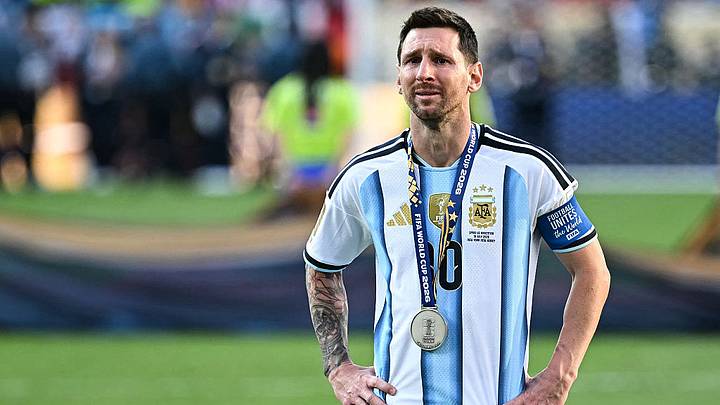
After Argentina’s dramatic 1–0 loss to Spain in the 2026 World Cup final this summer, Lionel Messi simply took a seat in the grass, stretching his legs out and looking up to soak it all in: the loss, the singing fans, the atmosphere. “The King is dead,” the cry went. It was perhaps in that very moment that the 39-year-old, having competed in a record-sixth World Cup, knew he would never again appear on the international stage.
Messi announced his retirement from international soccer on Monday, hanging up his Argentinian jersey after over 20 years of awe-inspiring performances on the global stage.
The soccer legend’s decision comes after a heartbreaking summer, not only losing out on a historic second-consecutive World Cup trophy after an odds-defying journey to the title match, but also experiencing the death of his father and long-time representative, Jorge Messi.
Messi shared an emotional farewell, which also hinted that his retirement from the club level may not be far behind.
To read the latest version of this article, click here.
‘To My Core’—Lionel Messi’s Emotional Farewell to Argentina

“After the time that has passed since the final, and after giving it a lot of thought, I want to let everyone know that I am retiring from the National Team,” Lionel Messi posted to social media, which included his handwritten note.
“It was a decision that hurt, and still hurts, to my core, but I understand that it’s the right time. I swear that I always gave my all, not just in the last few years when we won everything, but before that too. I always fought and gave everything for this jersey, to bring you joy and make you proud to be Argentinian through football.
“There’s not much time left, and chapters are closing, and this is one that hurts me deeply. I love, loved, and will always love being on the National Team. I’ve given everything I have; I have nothing more to give, and besides, there are some great young players coming up behind me who deserve to be there.
“Thank you for all the love and support over these 20 years. I’m going to miss hearing you all from the inside so much. Now I’m going to be just one of you, cheering and supporting you from the sidelines (in good times and bad, even more so).
“Thank you to my family for always being there, for accompanying me on this beautiful but difficult journey. Thank you to each and every one of the coaches, teammates and managers I had the privilege of working with. I take with me unforgettable memories and moments.
“I leave with the peace and pride of having given you, along with my teammates, dreamlike moments. It was incredible to have experienced it with you all. I love you!
“Thank you, God, for making me Argentinian.”
Commenting on his own letter, Messi added: “I wrote these words on July 21, two days after the [World Cup] final. Today, after what happened to my dad, I’m even more convinced than before.”
Jorge’s Death Gives Lionel Messi New Perspective

Messi first contemplated retirement shortly after the death of his father, who had been by his side through every step of his career, including moving across the Atlantic Ocean with him in 2000 after Messi was scouted by Barcelona.
“I don’t know what I’m going to do without you; I don’t know how to go on,” Messi said in a social media message to his father on Aug. 12. “All I ever did was play soccer, and now I’m really not sure if I’ll keep doing it for much longer. You were by my side from the very beginning—we were so close to the end. Why didn’t you hang in there just a little longer so we could finish this together?”
Jorge couldn’t travel to North America for the 2026 World Cup due to his declining health, the only time he was not right by his son’s side.
“Every time a game ended, I’d wait for your message and miss you,” Messi added. “That’s when I realized the situation was really bad. Even so, I couldn’t stop thinking about going as far as possible, to give you time so you could watch a game. We made it to the final, and you couldn’t be there.
“I wanted to win it to bring it to you—to show you a new one. I couldn’t do it; my legs just wouldn’t hold up anymore. This time I tried to push past my physical limits, but I couldn’t. I never felt right.
“When I got there, you thought we’d lost the final on penalty kicks. We couldn’t talk about any of what had happened. You couldn’t enjoy a single moment. We didn’t become champions, but you didn’t know how much we enjoyed every game. Once again, you were right: I had to be there and play.”
Messi’s emotional farewell to his father shed light on the true meaning of the sport, what purpose it gave even to the greatest player to ever play the game: human connection. For Messi, it was the connection to his father, and for millions and millions of fans, it was to the man who now takes his final bow.
 Add us as a preferred source on Google
Sophia Vesely is a writer, reporter and editor for SI FC, with an emphasis on North American coverage. Her experience comes from regional journalism as a former sports reporter for the Orlando Sentinel, Dallas Morning News and Seattle Times. Vesely graduated from Swarthmore College, where she played collegiate soccer as a wingback. She specializes in MLS, NWSL and NCAA soccer.