%20%20--%3E%0A%3Csvg%20version%3D%221.1%22%20id%3D%22Layer_1%22%20xmlns%3D%22http%3A%2F%2Fwww.w3.org%2F2000%2Fsvg%22%20xmlns%3Axlink%3D%22http%3A%2F%2Fwww.w3.org%2F1999%2Fxlink%22%20x%3D%220px%22%20y%3D%220px%22%0A%09%20width%3D%2239px%22%20height%3D%2240px%22%20viewBox%3D%220%200%2039%2040%22%20enable-background%3D%22new%200%200%2039%2040%22%20xml%3Aspace%3D%22preserve%22%3E%0A%3Cpath%20fill%3D%22%23FFFFFF%22%20d%3D%22M38.5%2C7H28.2v26h10.3V7z%22%2F%3E%0A%3Cpath%20fill-rule%3D%22evenodd%22%20clip-rule%3D%22evenodd%22%20fill%3D%22%23FFFFFF%22%20d%3D%22M26.1%2C25.5c0%2C5.8-4.1%2C7.5-12.9%2C7.5C3.9%2C33%2C0%2C31.2%2C0%2C25.2v-1.1h11.6%0A%09v2.4c0%2C0.7%2C0.1%2C1.4%2C1.2%2C1.4c1%2C0%2C1.2-0.4%2C1.2-1.3v-0.9c0-1.6-0.9-1.6-3.5-2.2C2.2%2C21.7%2C0%2C19.7%2C0%2C15.3v-0.9C0%2C9.3%2C5.5%2C7%2C12.9%2C7%0A%09c10.2%2C0%2C12.8%2C2.6%2C12.8%2C7.4v1.8h-11v-2.9c0-0.6-0.4-1.1-1.2-1.1c-0.6%2C0-1.2%2C0.4-1.2%2C1.1v0.9c0%2C1.5%2C0.9%2C2%2C3.3%2C2.5%0A%09c8%2C1.6%2C10.5%2C3.3%2C10.5%2C7.5V25.5z%22%2F%3E%0A%3C%2Fsvg%3E%0A)
‘Act of Desperation’—Lionel Messi Receives Rare Criticism From World Cup Winner
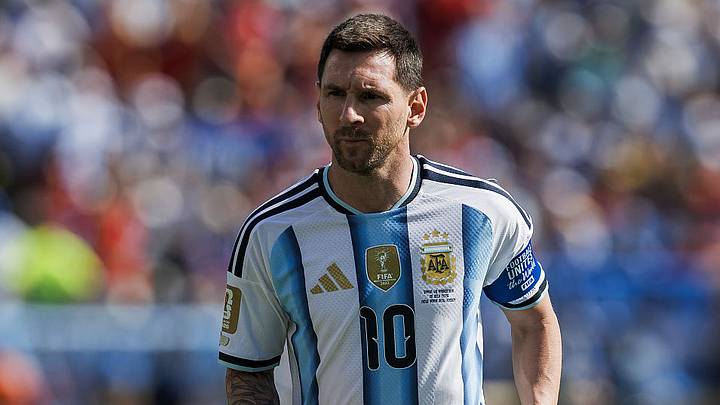
It’s not often that someone is willing to criticize Lionel Messi. But Argentina legend Jorge Valdano has accused his compatriot of “desperation” in the 2026 World Cup final, which La Albiceleste lost in a bid to become men’s soccer’s first back-to-back champions in 64 years.
Messi turned back the clock in North American during the summer, scoring six goals during the World Cup group stage alone—he celebrated his 39th birthday while it was happening.
Further goals followed in surprisingly challenging knockout wins against Cabo Verde and Egypt, giving Messi eight for the tournament. He was briefly the World Cup’s all-time leading goalscorer, a record that was broken immediately by Kylian Mbappé.
But the final against Spain was too much for Argentina. The 2022 champion became increasingly frustrated, with Enzo Fernández shown a red card in stoppage time of the regulation 90. Then the final whistle that signaled Spain’s win sparked an angry Argentine reaction.
Argentina’s players even turned their backs when Spain was presented the trophy in a display of shocking disrespect. Messi was not excluded from the pettiness, trying in vain to get Spain defender Marc Cucurella sent off after he momentarily put his hand by his mouth.
Messi immediately complained to referee Slavko Vinčić, hoping to see Cucurella punished with a rule introduced prior to the World Cup outlawing players covering their mouth during confrontations; it followed the high profile Gianluca Prestianni case last season.
Paraguay’s Miguel Almirón was the first to fall victim to the new rule at the World Cup. The difference with Cucurella is that it was not a confrontational exchange, nor was his hand by his mouth long enough to obscure anything being said. Messi simply saw it as an opportunity for his team after losing Fernández to a reckless dismissal only moments earlier.
‘Spain Didn’t Fall into Any Traps’

The final was still tied 0–0 at the time. But Valdano, a World Cup winner with Argentina in 1986 and someone who shares common ground with Messi as an ex-Newell’s Old Boys player, has suggested in an interview with El Pais that the eight-time Ballon d’Or sensed his team was going to lose and was willing to resort to dirty tricks to prevent it.
“It was a gesture of desperation—an admission of inferiority in a final where the gap between the two teams was far greater than what we are accustomed to seeing,” Valdano, a former Real Madrid player, manager and executive explained.
“Argentina was suffering from the physical and emotional toll of their previous match against England,” he added. It’s worth noting that Argentina not only played its semifinal 24 hours later than Spain did, but needed extra time against both Cabo Verde and Switzerland in earlier stages, and fought back from two goals down against Egypt in the round of 16.
Argentina was spent.
“They lacked the legs and the drive they had shown up to that point, while Spain played the match masterfully from every perspective—both tactical and moral, if we can assign an ethical dimension to football,” Valdano summarized. “Spain didn’t fall into any of the traps.”
 Add us as a preferred source on Google

Jamie Spencer is a writer and editor for SI FC. Jamie grew up in Manchester, England, in the 1990s and fell in love with the game at the same time as the Premier League was taking off. With more than a decade of experience behind him in sports media, he specializes in Manchester United and the overall Premier League, still living in England’s north-west soccer hotbed. Jamie is also an expert on the women’s game and enjoys old school nostalgia, telling stories from soccer’s rich history and culture.