%20%20--%3E%0A%3Csvg%20version%3D%221.1%22%20id%3D%22Layer_1%22%20xmlns%3D%22http%3A%2F%2Fwww.w3.org%2F2000%2Fsvg%22%20xmlns%3Axlink%3D%22http%3A%2F%2Fwww.w3.org%2F1999%2Fxlink%22%20x%3D%220px%22%20y%3D%220px%22%0A%09%20width%3D%2239px%22%20height%3D%2240px%22%20viewBox%3D%220%200%2039%2040%22%20enable-background%3D%22new%200%200%2039%2040%22%20xml%3Aspace%3D%22preserve%22%3E%0A%3Cpath%20fill%3D%22%23FFFFFF%22%20d%3D%22M38.5%2C7H28.2v26h10.3V7z%22%2F%3E%0A%3Cpath%20fill-rule%3D%22evenodd%22%20clip-rule%3D%22evenodd%22%20fill%3D%22%23FFFFFF%22%20d%3D%22M26.1%2C25.5c0%2C5.8-4.1%2C7.5-12.9%2C7.5C3.9%2C33%2C0%2C31.2%2C0%2C25.2v-1.1h11.6%0A%09v2.4c0%2C0.7%2C0.1%2C1.4%2C1.2%2C1.4c1%2C0%2C1.2-0.4%2C1.2-1.3v-0.9c0-1.6-0.9-1.6-3.5-2.2C2.2%2C21.7%2C0%2C19.7%2C0%2C15.3v-0.9C0%2C9.3%2C5.5%2C7%2C12.9%2C7%0A%09c10.2%2C0%2C12.8%2C2.6%2C12.8%2C7.4v1.8h-11v-2.9c0-0.6-0.4-1.1-1.2-1.1c-0.6%2C0-1.2%2C0.4-1.2%2C1.1v0.9c0%2C1.5%2C0.9%2C2%2C3.3%2C2.5%0A%09c8%2C1.6%2C10.5%2C3.3%2C10.5%2C7.5V25.5z%22%2F%3E%0A%3C%2Fsvg%3E%0A)
Man Utd vs. Tottenham: High-Pressure Fixture Could Shape the Season
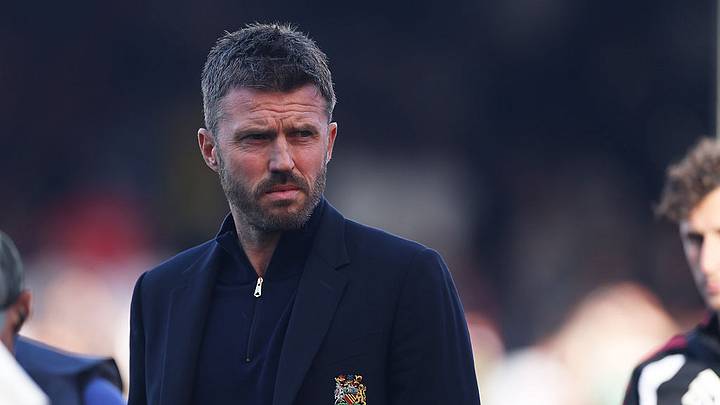
We’ve not entered ’El Sackico’ territory yet, but there’s no overlooking the significance of Saturday’s Premier League fixture between Manchester United and Tottenham Hotspur for both managers.
It’s a battle of the crisis clubs, as Michael Carrick’s 12th-placed Red Devils welcome Roberto De Zerbi’s bottom-of-the-table Lilywhites.
These two have struggled to escape mediocrity and outright incompetence for much of their recent histories, even if Man Utd haven’t yet sunk to the depths Spurs flirted with last term.
But there’s a sense that the Red Devils, after the highs overseen by Carrick during the second half of last season, are merely in the midst of an all-too-familiar cycle that will ultimately end with another manager losing their job.
As for Spurs ... well, they just want something to cling on to.
Is Carrick’s Job Seriously Under Threat?

Carrick was robust in his response to talk of his potential firing before the break, labeling it “nonsense.” But that came before Man Utd’s draw at Craven Cottage, an indifferent display barely salvaged by Matheus Cunha’s late deflected strike.
It was a performance that drew fierce, hyperbolic criticism from prominent Sky Sports pundit Gary Neville, who said Man Utd’s early second-half performance against Fulham was the “worst 15 minutes” he’d seen from any Red Devils outfit.
Neville’s slander was predicated on the lack of effort and intensity shown by Carrick’s players, decrying their dynamism while they sat in a zonal 4-4-2 mid-block. But Man Utd’s walking out of possession is instructed. Carrick’s zagging, with an absence of man-to-man, while the rest of the division zigs with high-octane affairs predicated on out-dueling and outrunning the opposition.
And as Michael Cox pointed out in an article for The Athletic, league leaders Man City sit alongside the Red Devils with the joint-fewest high-speed runs and sprints. Liverpool and City have also covered less ground than United through five games. More running doesn’t equate to an improved performance.
Still, the role Neville and Co. play in shaping public opinion shouldn’t go unnoticed. They’re remarkably influential. Although plenty suggested Neville’s criticism was over the top, such comments can sow seeds of discontent, perhaps indirectly.
The modern-day manager has such a short shelf life, with results demanded from the outset. Clubs are desperate for their Jürgen Klopp or Mikel Arteta equivalent, but are so often unwilling to let the project marinate. We’re all so impatient.
And the job Carrick has taken on condemns him to win. "This is Manchester United Football Club we’re talking about here." His excellent work as interim manager was predicated on a common-sense approach that allowed United’s best player, Bruno Fernandes, to flourish. He didn’t reinvent the wheel, and nobody should ask him to either. It worked! No Premier League team earned more points last season after Carrick’s arrival than the Red Devils.

Ultimately, he’s a victim of heightened expectations that are perhaps unjust, no matter the size of the institution he currently leads. His first full season at the helm was always going to bring about stiffer challenges with extra games, having benefited from free midweeks during the second half of last season.
INEOS rebuilt his midfield astutely, but was enough done in the summer to compete fiercely on multiple fronts? There are holes in defense, and Carrick is struggling to find the right attacking balance in the absence of Benjamin Šeško.
New issues are seemingly cropping up with each passing week, but Carrick has earned the right to be given the chance to fix them. Defeat here, though, and there’s no doubt that Eddie Howe, masquerading as the Grim Reaper, will feel as if it’s time to start knocking on the Manchester United manager’s door.
When Will Spurs’ Season Ignite?

Ange Postecoglou may have provided one of the best moments in Spurs’ modern history, but at what cost? By sacrificing Premier League results in favor of Europa League prioritization, he paradoxically desensitized a club to losing. It became habitual.
The decision to part ways in the aftermath of Bilbao, ushering in Thomas Frank, proved horribly erroneous, yet plenty at the time understood why such a course of action was taken. Postecoglou was unlikely to ever build something long-term, even if he was one of the very few managers who seemingly understood what it meant to lead Tottenham Hotspur.
The extent of their demise last season meant an under-pressure and unpopular hierarchy felt they had no choice but to hand Roberto De Zerbi the keys. It took a mammoth salary and a guarantee of borderline total control for the Italian to take the job on, but it did pay off. Spurs remain a Premier League club as a result.
Yet by dancing with the combustible De Zerbi, questions have resurfaced regarding Spurs’ long-term outlook.
Desperate to rid themselves of last season’s horrors, a record amount was spent reshaping De Zerbi’s roster, supposedly in his image. Expectations skyrocketed, with absolutely no one foreshadowing a campaign similar to last. “They’ve got too many good players,” optimists have said.
That might be true, but De Zerbi’s profiling of new arrivals has proved detrimental so far. Mateus Fernandes is no No. 10, and he’s unlikely to get the best out of Omar Marmoush down the left.

They’ve offered promise between the boxes, but it’s at both ends of the pitch where Spurs have suffered. They didn’t score their first Premier League goals of the season until Matchday 4, by which point De Zerbi’s side were 3–0 behind to an Aston Villa side boasting a new core.
Underlying numbers at least point toward progress. Spurs haven’t been as bad as the table suggests. Based on FotMob’s expected points table, the Lilywhites should be four points better off in 15th. It’s hardly where they want to be, yet it does point toward a semblance of misfortune.
De Zerbi said after his team exited the Carabao Cup at Anfield that he’s still waiting for his expensive, new-look team to “click,” and there is a sense that once a couple of pieces fall into place, Spurs will find their groove.
However, trips to Old Trafford and Stamford Bridge represent a daunting October, and should the woes that plagued their first month of the season persist, there’s no doubt that supporters will fear a repeat of last season’s descent toward the abyss.
The unwavering faith in the manager that so many possessed at the end of May will be put to the test, that’s for sure.
 Add us as a preferred source on Google
James Cormack is a writer for SI FC. Opting against a football coaching undergraduate degree at the last minute, he instead decided to take on a six-month internship with 90min in 2019 and hasn't looked back. Cormack's current SEO focus means he tends to venture to the land of match previews and predicted lineups, but he also has a wealth of experience in news and feature writing. A passion for soccer's history and the European game often takes his work beyond the familiarity of the Premier League, but it's with Tottenham Hotspur where his strongest allegiance lies.