%20%20--%3E%0A%3Csvg%20version%3D%221.1%22%20id%3D%22Layer_1%22%20xmlns%3D%22http%3A%2F%2Fwww.w3.org%2F2000%2Fsvg%22%20xmlns%3Axlink%3D%22http%3A%2F%2Fwww.w3.org%2F1999%2Fxlink%22%20x%3D%220px%22%20y%3D%220px%22%0A%09%20width%3D%2239px%22%20height%3D%2240px%22%20viewBox%3D%220%200%2039%2040%22%20enable-background%3D%22new%200%200%2039%2040%22%20xml%3Aspace%3D%22preserve%22%3E%0A%3Cpath%20fill%3D%22%23FFFFFF%22%20d%3D%22M38.5%2C7H28.2v26h10.3V7z%22%2F%3E%0A%3Cpath%20fill-rule%3D%22evenodd%22%20clip-rule%3D%22evenodd%22%20fill%3D%22%23FFFFFF%22%20d%3D%22M26.1%2C25.5c0%2C5.8-4.1%2C7.5-12.9%2C7.5C3.9%2C33%2C0%2C31.2%2C0%2C25.2v-1.1h11.6%0A%09v2.4c0%2C0.7%2C0.1%2C1.4%2C1.2%2C1.4c1%2C0%2C1.2-0.4%2C1.2-1.3v-0.9c0-1.6-0.9-1.6-3.5-2.2C2.2%2C21.7%2C0%2C19.7%2C0%2C15.3v-0.9C0%2C9.3%2C5.5%2C7%2C12.9%2C7%0A%09c10.2%2C0%2C12.8%2C2.6%2C12.8%2C7.4v1.8h-11v-2.9c0-0.6-0.4-1.1-1.2-1.1c-0.6%2C0-1.2%2C0.4-1.2%2C1.1v0.9c0%2C1.5%2C0.9%2C2%2C3.3%2C2.5%0A%09c8%2C1.6%2C10.5%2C3.3%2C10.5%2C7.5V25.5z%22%2F%3E%0A%3C%2Fsvg%3E%0A)

00:45:35 |
Up Next

Christian Gonzalez's Massive Deal, Patriots-Seahawks, 49ers-Rams and Annual QB Poll
Sep 8, 2026

Albert Breer on Herbert, Purdy and Hurts QB Poll Rankings
19 hours ago

Albert Breer on Gonzalez Getting Paid, Tyler Smith on IR and Tua is Falcons QB1
Sep 8, 2026

Tom Verducci Explains What Makes Konnor Griffin’s Swing Elite
Feb 27, 2026
Christian Gonzalez's Massive Deal, Patriots-Seahawks, 49ers-Rams and Annual QB Poll
Sep 8, 2026
Albert Breer on Herbert, Purdy and Hurts QB Poll Rankings
19 hours ago
Albert Breer on Gonzalez Getting Paid, Tyler Smith on IR and Tua is Falcons QB1
Sep 8, 2026
Tom Verducci Explains What Makes Konnor Griffin’s Swing Elite
Feb 27, 2026

The Ins and Outs of an NBA Fight
Mar 13, 2026

Movsar Evloev Isn’t Here to Talk—He’s Here to Win
Mar 21, 2026

Alexa Grasso Locked In on Maycee Barber… But Still Wants Shevchenko 4 👀
Mar 26, 2026

The Cleveland Browns Want NBA-Style Trades
Mar 30, 2026

The NBA's Anti-Tanking Proposals Make No Sense
Mar 31, 2026

“Knock His Head Off” — Chris Duncan Sends Warning to Renato Moicano 😳
Apr 2, 2026

A Title Contender is Not Giving LeBron $50 Million
Apr 3, 2026

BEHIND THE SCENES of the Olympic Opening Ceremony Stadium 🏟️
Feb 24, 2026
Transcript
Hello and welcome to Sports Illustrated's Daily Rings, SI's Daily Olympics podcast.
I'm Mitch Golddich here as always with Dan Gartland.
GAT, day 11, mostly in the books, but we just saw something very exciting and basically just ran to our microphones immediately to get started here.
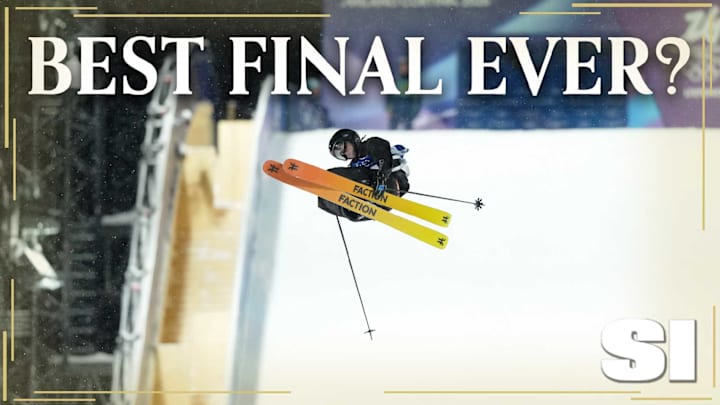
Yeah, a little bit different schedule today, recording early, so we're recording right after the men's ski B A final, which I don't, you know, look, there's a couple more events happening, uh, after we record here, but you're not gonna be able to top this one.
This was fantastic.
I mean, we, we should have known from the way the qualifying with that this was gonna be awesome and it really led up to the hype.
Yeah, so I was thinking after maybe the first run, I was thinking like, this probably has to be my favorite of the freestyle skiing events.
Um, I , I had talked earlier in the Olympics about like seeing the skiers do tricks on the rails at the top of the mountain, and I was like, yeah, I don't know about that.
Um, but this like seeing them go down the 18 story structure all the way to the bottom and then hit the ramp and do all these tricks, like this is just awesome.
And then, and then the jumps got even better.
I believe we finished.
Up by seeing 3 consecutive jumps that were the highest in Olympic history, which is unbelievable.
Meanwhile, uh, the aesthetics here were excellent.
We're gonna talk about the snow later.
There were some events that were postponed, uh, and bumped off the schedule because of heavy snow over in Italy.
This one, they competed in the snow, uh, like we've seen with a couple of other events, and it was awesome.
I will say the, uh, the tricks themselves absolutely escaped my ability to jump.
them.
Like, I was actually, I was thinking, I am, I am, uh, impressed by the judges here, just that they're able to like watch all of these and remember, like between, we saw 36 jumps, 3 each from 12 competitors.
The fact that they can remember like what each person did and judge them and be able to tell us which ones are the best is very impressive cause this, this got over my head, but just sitting there as a fan who does not watch this sport very much outside of the Olympics every 4 years, uh, some unbelievable tricks that were just really cool to see.
Yeah, this is one where you rely so heavily on the announcers and, and even, I mean, you rely on them in a, in an unusual way because like, I feel like the guy, you know, they, they, I wrote down some, some phrases here, uh, nose butter double bio, nose butter, triple cork 21, 60.
I mean, this is all, this might as well be, you know, in Greek to me, it's, it's really.
It's just, it doesn't make a lick of sense, but you're relying on really, like, the announcer's, uh, like, tone of voice, and like, he'll just go, oh, like, you know, and he'll, like, several times he said that's never been either attempted in competition or never been landed before.
Um, the color commentator here, I want to shout out, his name is Tom Wallace.
He is himself a, a former freestyle skier.
So that's why he knows all of the nose butter.
And bio and triple cork terminology, where you can count all those various spins so quickly.
Um, but yeah, they did a great job.
They also like , there were a couple of instances where you could rely on, um, the skiers themselves to reveal how cool their trick was.
There was an American named Carter Ralph, who fell on his first two runs.
He was out of his, out of medal competition, medal contention.
Uh, he's got his last shot, he's gonna go, he's gonna go for it.
And he really pulled out all the stops and he lands the uh triple cork 2160 on his last run.
He lands at the bottom, he turns up to the screen and he goes, no effing way, no effing way.
He just couldn't believe that he had done it.
Um, so, I, you know, look, they all look basically the same to me, but when the competitor himself is cursing on a hot mic, then, you know, it's been, been a good trick.
Yes, and the other, uh, uh, thing the giveaway here is that they were like congratulating each other at the end.
Like the three guys who are going to be sharing a podium, um, you know , I, I, we've talked about like some of the athletes who are just like, uh, crazy competitive edge, like the Michael Jordan style, like want to beat everyone and everything all the time, can't turn it off.
And then this is one of those sports where like a guy is in gold medal position and then he gets topped by someone else and bumped down to silver.
And they're like hugging each other and like fist bumping and, and like clearly impressed by each other and having a good time.
Yeah, I think you mentioned there was a 1980, and I was like, 0, 1980, and I wrote that one down and broke out the calculator and was like, OK, that's 5.5 times around.
And then they did get into the 2000s.
I know we sound like novices talking about some of these tricks, but yeah, just, just an unbelievable event.
And I love when it comes down to, um, you know, that situation, these events where you've got the people who are in the lead going.
Last, and they just finished by one upping each other.
We've seen plenty of events throughout these Olympics and on like a decisive crash or somebody falls or slips or whatever.
And so it's just fun to tune into one and uh how, I don't know, this was like an hour maybe that we were watching, and it ends with 3 guys just like nailing their finals to keep like one upping each other and getting higher on the podium.
Well, and there was a really interesting discussion at the end because the, the goal, the eventual gold medal winner Tormat Frost of Norway.
Um, they were talking throughout the competition.
Now, he was doing the least amount of spins of any competitor, but he was doing, he had like a particular style that the judges liked, and so Wallace was saying, you know, after Frosted went last, he's saying, OK, like, you know, Mac Forehand, the American, uh, who ended up getting silver, um, he had, he had done a much bigger, he, he was the one who did the, uh, nose butter triple cork 12 2160, whereas Frosted did the nose butter double bio 1980.
And so, um, the, the Wallace is saying there's an interesting decision that judges have to make here, um, you know, do they like the, the style of what Frosted is doing, these more, um, you know, there's more personality in his tricks, or do, are they gonna reward the, um, The pure spinning of, of a guy like forehand, um, and, you know, and, and also pointing out very astutely, I thought that what they decide , how they decided to judge these, these tricks would in a lot of ways, uh, shape the future of the sport.
Does this become a sport where it's just, you just, you know, like, uh, we used, I think in the snowboard version of big air, the phrase, uh, derogatorily spin to win, right?
Does it become a spin to win sport where you're just trying to look like a dreidel up there, or are you, you know, you're trying to put a little panache in it, you know, do some, some, uh, you know, little things here, some add some style points that, that are not just purely spinning until your head falls off.
Yeah, I thought that was interesting too.
I, I wrote out that, that same note there, um, but it's, it's the interesting thing is like, I don't know that it necessarily shapes the future because they also both require just like perfect execution.
And, uh, you know, just the idea that you'd go out there and you've got 3 runs in the Olympics, and guys are attempting things that they personally have never landed.
Before it's just like astounding to me when we watch figure skating, and it's these like perfectly precise routines that are all sketched out beautifully with the music, and they've done the same routine hundreds of times.
Same for all kinds of, you know, I don't know if you wanna talk about, um, like in gymnastics, like a vault or things that that people have, or even just like the biathlon.
On shooting like so much of so many of these sports is muscle memory and having your routine down.
I feel like some of the like short track speed skaters, a lot of them know like exactly how many strides it's gonna take them to get to the end of the rink.
And here they're just like, yeah, I've never done this before, but let's let's give this a shot, uh, and just like landing it in the biggest, in the biggest spot of all like run 3 of the Olympic final.
It's just unbelievable.
Yeah, Wallace was saying he's like maybe some of these these they've attempted landing on an airbag, but never actually like on snow before.
Um, maybe that you, you know, maybe they've tried to practice on snow, but yeah, never, never pulled on competition, but it just goes to show you the level of competition they saw today, like.
Wallace was saying from the very beginning, from the first round, like, we might be seeing an all-time ski contest here and like, I mean, the scores are just incredible.
When, when Frosted puts out that 95.25 in his first run, you're like, all right, this is, this is gonna be nuts, like, you know, then he goes 97 in his second run.
Uh, forehands last run, 98.
25, and then Frosted bested with a 98.5 in the, in his last run.
I mean, just a, just an incredible display, like, you know, really, like, you're like, they're getting so close to 100 here, like, you know, like, what if, what if Frosted does something that, you know, It does that 98.5 in his second run and then then Matt Mac Forehand comes out and best it and they go, all right, I guess, I guess it's got to be 100, you know, like, it's just, they're getting close to the ceiling.
It's, it was pretty incredible.
I think the judges maybe didn't expect the because that was the other thing was so often we see in the, especially in the big air event.
Where you have this one shot and you're going as big as possible for this trick to land as high a possible a score, um, you know, since it's so difficult, a lot of times people are falling, but everybody's landing them today.
They're doing these, these crazy nose butter bio double pizza big twists, and they're, you know, but they're landing them, and they're, and, you know, and so the judges gotta go, all right, I guess I gotta find a, a new, uh, a new spot in my rubric to put that one on.
Yeah, you sound like an offensive coordinator calling in the play, the play calls banana.
Yeah, um, yeah, so Mac forehand going into that last jump, he needed a 97.5 to take over the top spot on the podium, and he actually got it with a 98.
And then going into Frostad's last jump, the, uh, the announcer even said like, talking about what how high of a score he needed, he was like, I can't believe I'm even saying this, but here's what he needs to take back his gold medal, and then he did it.
But yeah, it was amazing.
I mean, and so they, uh, a bit of an upset here in that Burke Roo, the Norwegian defending gold medalist, he was knocked off the podium, um, but they have a new Norwegian in gold.
And then a quick shout out to Mac Forehand, the American, 24 years old from Fairfield, Connecticut, my same hometown.
I've heard, you know, the beer is flowing down at the Sea grape, they're selling out of chicken wings at Archie Moore's, you know, they got a bonfire on Penfield Beach.
Everyone's going crazy for Mac Forehand and the silver medal, but, uh, yeah, congrats to him and, and congrats as well to the, the Austrian bronze medalist, Matte sponsor.
Yeah.
Um, all right, well, uh, we should move on.
There was a lot of exciting stuff, um, a lot of different directions, I guess we should say, um, for, uh, figure skating fans, that is gonna be one of the biggest stories of the day, given our schedule.
We're gonna be, uh, hitting figure skating a little bit, uh, at the end before we get to our day 12 preview, so we will get there.
But, um, speaking of people on skates, uh, this is.
It's in a different arena, but, uh, let's talk about the, the speed skate, cause I was glued to the team pursuit, which I know is something we've talked about, uh, the past couple of days.
But today I was watching the, uh, the semi-finals and the finals, which were, um, both today for men and women, and I have just, I love this event, the, the races themselves, it's just like a fascinating concept to me, seeing them go in the, the 3.
on 3 and they're, uh, like in a tight line and perfectly synced and pushing each other.
Although I got to tell you, Gart, I have some, uh, like format structural issues with the Olympic program, I think.
I don't know if, if you saw anyone else talking about this or if it was just me, but, uh, I, I have some, I have some issues with this.
So I don't, I'm, I'm guessing you caught, uh, at least some of this , um, I did a little bit, yeah, yeah, so.
So here's the issue, and, and for people who haven't seen it, the setup is basically, um, you go two teams at a time and they start on opposite ends of the track, and it's a timed race, although you can't actually, like, I think if you pass your opponents like lap them, they call the race before you get to the finish line, I believe.
Didn't see that today, um.
But the issue is that it's like a head to head and bracket style, and so the semifinals were really anticlimactic, because once a team pulled ahead, knowing that the finals were later that day, um, basically, everyone would just take their foot off the gas.
So, um.
So the, uh, let's see, the, the first semifinal, the, the US men were in a semifinal against China, and, uh, they were the favorites expected to win, and they got out to a lead, and then China basically like took their foot off the gas, cause it's just like 2 hours later, I think, uh, they, they knew coming in it was going to be really hard and they probably weren't going to win, um, and they knew that they were gonna have a bronze medal race 2 hours later, so they were just kind of like, well, let's save our energy, no reason to do this.
And then once China starts conserving their energy in the US it's like, OK, we can ease up too, and it felt like that happened in a couple of the semis.
And then in the gold medal match, you end up having almost like a rest differential where one team is, is better rested and the other team, uh, might have done the same in their semi or somebody might have had to push really hard.
Um, there was one, yeah, one of the semis was, uh, was like really closely contested and, and so I don't know what the solution is here, um.
Cause I, it can be tough if you, if you move the final to like the following day, like, how annoying is that for everybody?
I don't know.
Um, and like, would that even make a difference or would people still sort of save their legs.
Um, I, I was talking about this on social media and somebody responded like, what if you then went to To like a timed element for the bronze medal, like the fastest semi with, with that force, but I don't know if I like that because I, I do like sort of the, um, head to head feel.
So I don't know, it's an event that I really like.
It just feels like there are some structural issues that, uh, sort of impact the race, uh, before you get to the gold medal round.
Yeah, that's a good point.
I, I think, wasn't the, uh, I think the opening heats, they were the day before, right?
So then today you had the quarters, semis, and final, if I, if I recall correctly.
Yeah.
So, I think, you know, I, I, I guess like cause one concern is because it's a team, right?
The, the skaters are skating in other events, so there might be an individual event tomorrow that they want to have their energy for as opposed to the team event as well.
Um, but it, it does make sense that they're conserving their energy because this is a long race, is what, is it 3 or 5000 m?
Um, I, either way, it's, it's a, yeah, whatever, I, I put you on the spot like you were Dutch.
Um, no, you did, I did just say that I was glued to it all day, but hang on, I'll, I can get an answer for you.
OK, but yeah, point being it's a longer race, right?
It's not, this is not like, um, they do the, the, a lot of the short track speed skating.
All in one fell swoop, you know, and those are much shorter races.
Those are, uh, they max out at 1500 m, and I, and I, and I don't know if those are all in the same day either, but certainly like the 500 m, like those are all, you know, run in quick succession because, you know, it's like a 30, 42nd race, whatever it is, so.
Um, you know, it makes sense to, to delay it like that a little bit, but, um, yeah , I know it's, it's an interesting point you bring up that there's kind of this strategy within the race that you're, you know, once the, once the result becomes clear, you kind of have to think about, uh, you know, your next, your next race.
Um, if I have this right, it looks like the, uh, women do 6 laps, which is 2400 m, and the men do 8 laps, which is 3200 m .
OK, so I was, I was wrong in guessing a round number.
Yeah, you gave me a choice between two round numbers and neither.
of them sounded familiar and I think that's why, um, that's which are not the distances they run in the individual races, which is why I was a little confused anyway.
Yeah, that's OK.
It happens.
This was my quick Googling and I found what I'll get it for 2 correct answer from ESPN.
Yeah, listen, it's just around the corner, um.
Yes, so, um, we should probably also get to the actual results of the race, uh , once we've put aside my gripes.
So also, a little bit of a disappointing day for the US here.
Um, we talked yesterday that the US men were favorites and basically, um, pioneered this strategy that has now been adopted by a bunch of teams where they used to have, um, like a different skater go to the front of the pack every, uh, every lap or two, and now they have just like a lead skater take all of that wind resistance.
But they give them a little, uh, push push in the back to keep them moving.
Um, so the US pioneered that and was doing really well and they had a very good season, um, but they lost to Italy, uh, in the final.
And so you mentioned, uh, that the qualifying rounds were earlier in the week, and those, I think the winners advanced, but there was also a time element there to fill in the rest of the field.
So I believe the US actually lost to Italy twice in 3 days after not losing to them all season, um.
Then most demoralizing of all is that Italy crosses the finish line, and then one of their guys hits the uh Steph Curry night night celebration, but I mean, Italy, they have just been unbelievable.
Uh, it feels like they've been great in like every single event.
They are second only to Norway in the medal table, um, but especially in speed.
Skating, we've seen them from day one, they've just been winning medals.
Um, but an impressive showing for them.
I think this is, you know, sometimes it's hard to talk about like a disappointing silver because the silver medal is still such an achievement as, as we've talked about a bunch, but this is definitely one of those events that the US came in thinking that they were going to win gold, um, and weren't able to.
Um , and then on the women's side, uh, oh, so I should say, uh, gold for Italy, silver for US.
and then, uh, bronze for China.
And then on the women's side, gold for Canada, silver for Netherlands, and bronze for Japan.
And this is another one where the, um, the US, they were in the semis against Canada, who was a heavy favorite.
And that was one where it was like, OK, let's ease up and, uh, you know, save some for the, um, save some for the finals, but US ends up finishing off the medal stand.
Yeah, you know, like you said, two tough, tough breaks there, especially for the men who were the world record holders and, you know, to come up.
It's like, I mean, obviously, Italy's been fantastic.
We talked about like the, the home court advantage, the home, the home country advantage, and the, um, you know, and, and the, the home nation really investing heavily.
I think they've invested heavily in speed skating ahead of these games and, you know, kind of finding good athletes, coaching them up in speed skating, and it's, and it's paid off really well for them with some, some great medal results.
All right, quick shout out to one of my favorite things in my closet right now, Cozy Earth.
First off, their bamboo pajamas, ridiculous.
These are hands down the softest pants I own, like unbelievably soft.
I wear them when I'm working from home, running errands, even just lounging on the couch.
They somehow feel cozy without being too warm, and they actually look good enough to leave the house in, which is rare for pajamas.
Whether it's for someone special or just for yourself, Cozy Earth makes it easy to bring comfort and care into your everyday life.
This Valentine's Day season, we are offering a buy one, get one pajama deal you won't see any other time of the year.
Share a little extra love this February and wrap yourself or someone you care about in comfort that truly feels special.
Head to cozyEarth.
com and use my code Daily Rings BOGO, Daily Rings B O G O for up to 20% off.
And if you get a post-purchase survey, be sure to mention you heard about Cozy Earth right here.
Celebrate everyday love with comfort that makes the little moments count.
Um, I would like to move now, I think, to, to Nordic combined, which I had a, a, a pretty good time watching this morning.
This was, this was early.
I did not, I look, I'll admit I did not watch the ski jumping portion at 3 and then 4 in the morning, but, uh, no, but I, you know, I think this is, this is a good format with the, the cross country ski race, which takes about a half hour, uh, starts at a decent time.
It was like 7:30 in the morning.
And um I wanted to bring it up because the, the interesting results, um, the, the winner again was Norway's Jens Oftebro, who he had this amazing surge of those two hills that that we've seen Johannes Clabo dominate on.
Um, you know, it was a close race.
He gets to those two hills and then just like Clabo, he really pulls away.
Um, so he had started in 5th.
Place after the ski jumping, uh, he was 22 seconds behind the leader, which was Ryota Yamamoto of Japan.
Yamamoto was the 22nd ranked Nordic combined athlete in the world.
Surprised to see him there at the start, but then he ended up fading and he finished 15th to nearly 2.5 minutes behind off to bro.
But, um, Offro, if that name sounds familiar, people who have been listening, it's because he also won, today was, I should say, today was the, uh, large hill competition.
So they, there's two individual events in Nordic combined.
There's the, uh, normal hill and the large hill, both, both followed by a, uh, a 10 kilometer ski.
So he had won the normal hill last week.
Today he wins the large hill.
He's only the 2nd athlete ever to win both individual Nordic combined medals at the same Olympics.
The only other one was Sampa Leinen of Finland in 2002.
Uh, Leyen also won the team event that year, so he had, he had a triple, uh, you know, chance for off the bro to.
To match that, I think the team event is, uh, maybe Friday.
Um, so great performance by him and, uh, really, you know, like we talked about Norway dominating in the, uh, in the cross country skiing, in the ski jumping, and here again in the Nordic combined, combining of both and, uh, off to broke gets a second gold.
Yeah, well, we remember the Ofta brothers.
That's, that's why I remembered Ofbro when I saw his name.
Um, I believe this is his 3rd gold medal overall.
Um, I think one of, I forget which of those two events, but one of them, he's a, uh, a repeat champion, uh, with his now 2 medals this time around.
Yeah, that's interesting that that is rare because you would think that, uh, you know, obviously the cross country skiing is, is a very important part of it.
And so you'd think that, uh, that would happen more often, that somebody who has, I guess, the, the skills that translate between the large hill.
Normal hill and then is able to do the cross-country skiing, you'd think that, that that would happen more often.
I, you know, I, I haven't really looked at the results, uh, even just looking at ski jumping between like large hill and normal hill to see how many, how common it is for someone to win the double versus like how different those skill sets are.
It, it feels like something that, you know, it must be different because it exists at all.
And if it was just like the same person won every time, then why would you break it out into two events.
Um, but it, I don't know, as a novice, uh, in the sport of Nordic, it surprises me that that doesn't happen.
Often.
Now, Mitch, I'm gonna, I'm gonna admit something here.
The baseball writer Sam Miller is known to say that every fun fact has a lie.
And so the lie in this fun fact is that they've only been doing the large hill since 2002, the year that the Leyen won.
So it's not like it's been going like they've done the Nordic combined since like 1924, right?
So it's not like they've been doing this for over 100 years.
It's a little bit of a shorter, uh, you know, sample size, but, um, yeah, even still in that, in those, you know, 20 odd years that they've been doing the large hill as well.
Yeah, only, uh, Only off the bro and the and the Finn have done that.
Yeah, I was gonna, that still is like 7 Olympics, maybe.
Yeah, yeah, it's not, it's not nothing.
Yeah, but some other interesting results here and down the rest of the medal stand, um, Johannes Lomparter of Austria, he took silver.
Uh, he had also won silver in the normal hills.
We talked about those skills translating.
Apparently this is a case where, you know, he also did very well in the large hill.
And then uh Ilka Herola of Finland, he won bronze.
Uh, this is, this follows.
Ero Hirovannen of Finland winning bronze in the normal hill.
This is the first time that Finland has won any individual Nordic combined medals since our friend Lyen in 2002.
Uh, Jarko, I'm sorry, Jako Tulis also won silver that year, so breaking a streak there for Finland in this, in this event.
Yeah , well, of course, uh, Lampeter of Austria who won the silver did have the built-in advantage of being named Johannes, which I think if you that's true, if you are naming children, uh, over in Europe and you want them to be cross country skis or in America, you can have a Johannes here also, um, but yeah, I think that is a sort of a cheat code if you, if you want to, I think you might be right, yeah.
Um, all right, let's see, where to next?
Well, I guess we should, by the way, talk a little bit about the weather.
Um, I think I mentioned this briefly, but, uh, one reason today was a little bit light is that they had some major weather issues, uh, up north, uh, in, I think it was in Lavino, um, primarily, yeah, yeah, and so, uh, it affected two sports, but a few.
events.
The, uh, the women's slopestyle snowboard was supposed to have the final.
That was, uh, like, waking up and then in a scramble looking for that on the correct stream and realizing that the reason I couldn't find it is because it wasn't happening, uh, it was, it was a little bit of a jolt in the morning.
And then also the, uh, men's and women's aerials qualifications were both moved, um, and so.
So we'll get to that at the end of the show with, um, when they, they have, they built in some time in case of possible weather delays.
Um, so, you know, thankfully this was not like the final day of the Olympics and they couldn't squeeze them in.
But, um, yeah, schedule is a little bit lighter, and then actually the men's big air, which we already talked about, um, that start was delayed, and so I was a little bit worried that that was gonna get like pushed today also and was like scrambling to find info, um.
But I think it was only like a 20 minute delay, so that kind of, yeah, yeah, they they they created some really cool visuals there with the snow falling and, and it makes that those big scores even more than impressive because we saw the trouble that the falling snow presented during the women's snowboard halfpipe and so yeah, like you said, uh, snow, of course, being a big story at the Winter Olympics, who would have thought.
Yes, um, speaking of snow and aesthetics, by the way, I wanna say I don't have a ton to say about the biathlon, which was also early this morning, but, uh, the aesthetics there were amazing too because it had snowed and so the background was all of these like, uh, snow covered trees, and it just looked like beautiful and it was just like perfect scenery, exactly what I would want the Olympic biathlon to look like.
Uh, so I don't know if you have any like specifics, but I can.
Just sort of shout out the winners here.
Yeah, I just a little bit.
I mean, I saw that we have to keep talking about Sterling Holmes the ride.
Like, I can't believe this guy.
And he was actually, so Norway won silver behind France won gold.
Sweden took the bronze.
It was, uh, by the way , it was France's first gold ever in a, uh, a or first, yeah, first gold in a relay event.
Wow, OK.
Yeah, they've done pretty well in the, in the, in some of the biathlon events, but I guess never before a relay, but, um, yeah, it's unbelievable.
Like the ride was really the reason that Norway won that, that, uh, that silver.
So, um, the Johann Olaf Botten, the gold medalists in the 20 kilometer biathlon, he was, he skied, he skied the second leg in this event for Norway.
He missed 3 shots and then they dropped from 1st place to 9th place.
He then kind of fought back a little bit and they, they were in 4th when he did the handoff to the ride.
Therian shot perfectly in both the uh standing and the prone, was only a half second behind France at the final handoff, and then, yeah, you know, the France pulled away a little bit and then won by, I think it was 5 or 6 seconds.
Um, but just like, you know, this guy, I think he talked about this being like, oh, it's the worst week of my life.
I never was thinking about sports.
Like, I don't believe him now because he just keeps winning everything.
I feel like he doesn't actually care that he cheated on his girlfriend and turned her into kind of an international laughingstock.
Well, he, yeah, he hasn't.
Said that in a few days.
I think he's won he's the best week of his life.
Yeah, I was gonna say he has now won 3 Olympic medals since he said that, I believe, um, he also, the, the broadcaster keeps talking about it like they, they won't leave this guy alone.
I mean, I get , and who are, listen, we're doing the same thing, we keep bringing it up every day, but it was the broadcaster in the middle of the race, he's like, well, it's team pursuit and LeGride is in pursuit of a girlfriend.
It's just like, leave, leave the guy alone.
And then here I am repeating the jokes, but Uh, yeah, what can you do?
Um, Team USA, by the way, finished in 5th place, uh, which was not a medal, but that is, uh, the US's best finish ever in a biathlon event at the Olympics, uh, which is pretty cool.
In, in a relay or any biathlon event, I believe they said also in any biathlon event.
Remember we've talked that that's one where they're still looking for their first medal.
I think it's Campbell Wright is the biathlete, um, who we thought might have a chance to break through, but, uh, yeah, they were, uh, they were, that's what, uh, that's, I believe that's what I heard on the broadcast that they were, uh, 5th place was their best ever finish.
Always shocking when the US is not good at the gun sports.
I know a lot of people have made that joke too.
Speaking of jokes all over the internet, yes, yes, there's that also, yeah.
Um, all right, well, we're, we're winding down a little before we get to the figure skating.
Do you want to give like a quick, uh, daily hockey update?
My, my one hockey update is this is the big story we've been following.
They changed the color of the boards finally, is that right.
Yes, we, uh , so we talked, when was it was the US's 2nd or 3rd game, I think it was against Germany, when , when they had the backup goalie in and he gave up, uh, a goal on a pretty easy shot and people were talking afterward that it might have been the color of the board.
So they did go ahead and change them, um.
I think that is something that does kind of happen commonly, but it felt like this was also sort of led by the players.
They got feedback and they said, OK, let's swap these out.
We're in the playoff rounds, we don't want them to be decided by something stupid like the puck blending in with some thing on the boards, uh, you know, let's make sure we settled on the ice.
So for me that was the most exciting and interesting hockey story is that we've, we've gotten rid of that storyline.
But yeah, so this was the, the playoff round.
So these winners will go to the quarterfinals tomorrow.
It's it's a tough, it's a tough situation for them because, and it makes sense.
You're, you're punishing really the teams for not receiving a bye and they didn't have to play it back to back tomorrow in the quarterfinals.
Um, so first off, it was Germany easily handling France 5 to 1.
Um, I think that's to be expected.
France has a minimal number of NHL players.
I'm not sure quite the number.
I know their, their goalscorer today, um, Belmar of, I think he plays in the NHL, but Germany, better team there.
Uh, Leon Dreissele, the Edmonton Oilers star, he had a goal.
Assists.
It was pretty even on shots, but yeah, Dryole, you know, made things happen.
And then the, uh, Germany had a really great advantage in terms of goalie play because their goalie is Philip Grubauer.
He plays for the Seattle Kraken, and then the French goalie is a 21 year old named Antoine Keller.
He plays in the Swiss league.
So you can understand how similar number of shots, but Grubauer, the superior goalie, let's fewer of them in.
Um, Switzerland had no real trouble with Italy.
This is another one, you know, it could have been a lot worse cause, uh, the Italian goalie faces 51 shots.
I think Italy only got off 20, but, uh, that Italian goalie Damian Clara, I think he's a 2nd round pick of the Anaheim Ducks.
He's playing in, in, uh, Sweden, I believe.
He was great all tournament, you know, playing as a pretty Swiss cheese, uh, no pun intended, uh, Italian defense, but, um, no, and then, uh, Nico Hiser for Switzerland, the, he, the Devils star, he had a goal and 2 assists.
And then Czechia, uh, this is a really much more interesting game than probably it should have been.
Playing against Denmark survived 3 to 2.
Cea came dangerously close to blowing this one, clinging to that, that 1 goal lead.
In the third period was outshot 12 to 5, committed 2 penalties.
Uh, Denmark was on the power play for 4 minutes, but, uh, the, the goalie for Czechia, Lukas Dosta, he, he withstood the pressure and, uh, and managed to get out of there.
He, he is a current Ducks goalie.
OK, well, I can move on and give the, uh, the daily curling update.
Uh, tough day for the US men.
Um, they lost to China in the very early morning hours, and then this actually just went final, although that's , that's not true for anyone listening.
This has been final for hours probably, but, uh, then they lost their second game of the day to Italy, so they are in trouble, um, and I haven't seen the fully.
Updated standings now that, uh, this entire session 10 is complete, but I think we were talking about them possibly being backs against the wall, have to win and going 0 and 2 today is not going to be helpful.
So they, they, at the very least, they need to win out and even that, um, could be too late for them.
Uh, the US women, they're now 4 and 4, with 1 game left.
So, that's a, that's a tie for 5th and, uh.
Yeah, it's, uh, it's not looking good , especially now that Italy has jumped to 4 and 3 and now holds that tiebreaker over the US and is in 3rd place.
Yeah, I think they've been talking that like 6 is kind of the magic number.
Uh, all teams are going to play 9 games and the top 4 move on, and so they were saying like, depending on, uh, you know, a strange situation in the round robin or how ties work, um, you typically need to get to 6 wins, and so now impossible to do that.
Um, the US women, however, got back, uh, they had a nice rebound game after remember they lost to the previously winless Italy team, um, but they had only one game today and they beat Denmark, so they are now, uh, 5 and 2 with 2 games left, um, and they play against a Great Britain team that's only 2-4, uh, is one of their games tomorrow, so they've got a couple of chances to win, and, uh, again, they, uh, they have 2 chances.
to get to that magic number of 6, which should be good and so they're in much better shape.
Um, so yeah, it looks like, uh, still a decent shot.
I, I think we would have been a little surprised to see both of them move on and advance into, uh, medal play, but, um, the way it works, remember, only 4 move on , so you're immediately in the semis, and if you win, you're in the gold medal game, and if you lose, you at least have a chance to play for bronze.
So, um, the US women still look to be in a, in pretty good shape to go for a medal.
Yeah, you know, we were talking about the US men being kind of an underdog here, but the women being more of the, the steady metal threat.
And it seems like, I mean, in my very limited curling experience and watching these matches, uh, you gotta feel good about having Tabitha Peterson as your skip is throwing those final stones in the end because she's just been nailed.
Every time she gets those final rocks, she's, she's killing it, you know, it seems like every match or every, every end of every match, she's, you know, they're talking about her coming through and, and delivering that perfect stone right at the end to score a point or, or limit some damage.
And yeah, it's a, you know, assuming they're able to make, to, to move on, she's gonna be the real key for them.
Yeah, there has been so much curling that it's like, if you want to just watch the curling, you almost miss like so much of like everything else happening at the Olympics.
But if you have been uh sort of cautious about it and haven't really been diving in, I think when we get, if they get to the medal rounds, which they look likely to do , I think you're gonna want to make sure you check those out.
Yeah.
OK, well, that's all I have on my list for right now, but uh I'm gonna throw it to Mitch here solo with an update on figure skating cause I gotta run to another obligation.
And then when, when we're done hearing from Mitch, then we'll get on to our preview for tomorrow.
Yes, the whole podcast has been building to just me doing a figure skating segment by myself.
This is, this is the moment I've been waiting for, uh, but yes, I'll, I'll handle the, uh, the update on the women's, uh, short program, uh, and then after that, you will hear the two of us get to the day 12 schedule.
All right, enjoy that.
All right, Gart had to take off or maybe Jeff Galloli and I hatched a plan to take him out.
Uh, but either way, here I am back solo, uh, mostly to talk about figure skating, but I do have a luge update if anyone was waiting for that info.
Uh, just wanted to Passed along that within the last hour, the Germans completed their podium sweep in the two-man luge.
We mentioned yesterday that they were in position to do that after 2 heats.
Uh, and they basically led wire to wire by a pretty impressive margin.
So you can add 3 more medals to Germany's tally.
And there was a US team of Frankie Del Duca and Joshua Williamson, who came in 4th, nearly half a second off the podium.
I think they're actually in 6th going into the final heat and then, uh, made up some ground.
So a nice showing from them, but finished behind the Germans.
But the reason I wanted to cut back in was to give you the update on the women's short program.
The, uh, figure skating is always one of the marquee events of the Olympics, and this was considered the strongest US field in decades by a lot of people, just with the depth of three really good skaters in the women's, uh, singles program.
So, uh, I think people have probably seen by now, there is a video.
Video narrated by Taylor Swift.
So I'm guessing, uh, a lot of people who are listening to this podcast have come across that.
But the, uh, the 6 skaters, uh, sorry, in the final 6 skaters, there were the 3 Americans.
They call themselves the Blade Angels, and they've actually gotten a lot of attention for being friends instead of rivals.
I think, uh, sort of leaning into that Team USA spirit and being there for each other .
Whereas, uh, other people in their position might be rivals with themselves.
Um, but yeah, we, uh, we talked about them on the preview episode way back when, um, but didn't get into it a whole lot yesterday.
So I just wanted to give you sort of a quick, uh, recap on who they are.
Um, there's, uh, two of them we got to know during the team competition because Alyssa Liu did the short program and Amber Glenn did the free skate.
Um, so Amber Glenn was, uh, she's 26 and she is the 3-time reigning US champ.
Then Alyssa Liu, who is 20, uh, she's the reigning world champ, and she's the one who, remember, uh, retired already at age 16 and came back.
She's 20 and she's already back from retirement.
Uh, Isabel Lovito is, uh, is the one we did not see in the, uh, team program.
She's 18, and she was a silver medalist at the 2024 World Championships.
She's also the one who has gotten a lot of attention because her grandmother lives like literally 13 minutes away from the arena where they're skating in Italy.
Um, so that was Team USA coming in, and they just a minute ago wrapped up the, uh, short program.
So remember this is, uh, the competition is made up of two parts.
They did the short program today, and then a couple of days from now, they'll do the free skate and combine the scores, uh, from those two events.
So, I'll sort of walk through it in just chronological order here.
Um, Alyssa Liu went first, and she was great.
Uh, she did a, a tough combo of the triple lutz and triple loop, and it was very good.
I was, uh, you know, listening in to Tara and Johnny being very helpful, and, and they were saying she skates, she skates very light, like she's skating in a cloud, uh, and then you could hear her when she came off the ice, uh, talking about how good she felt, uh, telling her coach that she knew she did really well.
Um, so she moved into 2nd place after she was finished.
Uh, next up for the US was Isabel Lovito, and the, uh, broadcasters described her as a quintessential figure skater, and they called her the ballerina of the group, talking about her being, uh, sparkly with her artistry and performance value.
Um, she also, she had a, uh , music change in the middle of the routine to something that was a little more uptempo and had everybody like clapping along in the arena.
While she was skating, which is fun to watch.
Um, she also had a, uh, a slight under rotation and she landed in 5th place with then 3 more skaters to go after her.
Um, I should say they were trailing already behind, uh, Ami Nakai, a skater from Japan, who does a triple axle, which is, uh, very rare in women's skating, and she had landed it and put herself number #1 on the podium.
Um, so then it was actually another Japanese skater, Kari Sakamoto, who went next, and she moved into 2nd place behind Ami Nakai.
And then next up, and I think this is the one that a lot of people are going to be talking about, um, unfortunately, but it was Amber Glenn who was 3rd up for the US and she does that triple axle, which I mentioned is rare.
Uh, Ami Nakai had done one.
She nailed her triple axel.
She does it like right off the top early in the.
Routine to help set the tone .
She's out there skating to Madonna.
And then, unfortunately, she missed one jump.
Uh, she had a triple loop and just didn't get around enough and fell a rotation short.
Ends up getting 0 points for the whole jump, costs her 7 points in her routine.
Really unfortunate to see because she was actually very close to like a perfect run, which would have put her in a good position to possibly win a gold.
Um, but 7 points is just such a huge amount to make up that that really took her down the leaderboard.
Afterward, you could see she was really emotional after it.
Um, I don't know if it was a coach or a trainer or who she was, but she, uh, she really, she kept it together on the ice, you could see the look on her face, but then she's, you know, started crying when she came off it, understandably, um, and You know, she really, she almost had it, and, and it was, it's always tough watching.
We talk about all these sports, like you play a hockey game, and there can be one moment that swings the whole thing, but you at least get 60 minutes to play.
It's unbelievable just the tiny margins in figure skating, where the whole thing comes down to one jump, one rotation just not being enough, and that can sort of torpedo your whole, uh, Olympics, at least the individual program, remember, she is a gold medalist, uh, in the team competition.
Um, so yeah, that was tough to see.
And then the final skater was, uh, Mone Chiba, and she, uh, slotted in behind Alyssa Liu to put her in 4th.
So, looking at the final podium after everyone went, uh, we, we knew it was gonna be the US and Japan that would be competing for those top spots.
The, uh, Japanese skaters are actually in 1st.
2nd and 4th.
And then Alyssa Liu is there in third place, 2.12 points behind.
But again, anything can happen and we've seen how one missed jump can have such a huge effect.
So she is definitely, um, you know, I mean, she's currently on the podium in third place and definitely within range to pass either of the two skaters in front of her.
Um, Isabel Lovito ended up in 8th place, and Amber Glenn is in 13th.
Um, so yeah, that'll continue 2 days from now, and, um, you know, I'm sure a lot of people are gonna be talking about Amber Glenn, but also there should be a lot of focus on Alyssa Liu, who was very, very good, and, um, she's the one who is, uh, gonna be in the best position to possibly medal a couple days from now.
So now, we'll welcome Gart back in and we will preview day 12.
All right, so that was Mitch.
I want, I'll have to listen back and hear what he said just like any other listener.
But, uh, moving on to tomorrow, make sure if, if I did a good job, please leave me an Apple Podcast review.
I would, I'll leave a highly specific review, yeah, for your, your figure skating update.
Yeah, toward the middle of day 12.
Absolutely.
All right, or day 11, yeah.
Is it 11 or 12?
I mean, honestly, it's, it's point, point is getting close to the end.
We're, we're getting, we're in the back half of, you know, the back nine, so to speak, and, uh, things are, are moving along.
Uh, it's a little, it's a weird day tomorrow.
It's, it's very front loaded in the early afternoon is like primarily just curling.
Uh, so it's, it's an interesting, interesting little, little wrinkle there in the schedule.
But I think the thing I'll start off with the first thing in the morning will be the women's slalom.
Uh, this is 4:04 in the morning is the first run.
Second run at 7:30.
We've been talking so much about Mikaela Shiffrin, her chance here to, to get another medal.
Um, she goes off seventh in that first run.
Paula Molson, the other American contender, will go second.
Yeah, well, uh, more early morning skiing, uh, although not quite as early, but, uh, cross country skiing, we're gonna have the team sprint finals.
Uh, so the women are gonna go at 5:45, followed by the men at 6:15.
Norway, of course , is favored with Johannes Clabo going for his 5th of 6 gold medals.
This is, uh, his last team event, so this is the last time he's like relying on anyone else to help him get a medal , uh, but it's, uh, it's called teams, but it's actually.
Just pairs of two.
so he's gonna be with, uh, Einar Hedgegart.
Uh, any relation to Einar Hedgegart, uh, and you know, any ancestors coming back?
I have discussed how there is a town in Norway called Gartland.
So that, you know, possibly it's possible you and Einar, uh, have distant relatives who were neighbors or something back there.
Uh, the US team, it'll be, uh, Ben Ogden and Gus Schumacher, and then, uh, the, the women who are going first at, uh, 5:45.
Jessie Diggins is gonna be back in action and she's gonna be teamed up with Julia Kern.
Um, this is an interesting event.
There's gonna be like qualification heats very early in the morning, um, and then to qualify for the finals, um, I believe the finals, it's 3 laps per team member, and so that's, if you tune in at those times that I just gave you, that'll be for the , uh, final rounds.
More early morning skiing, believe it or not, as Roger Sherman joked with us, there's just like a million different kinds of skiing.
And so this one is the ski aerials, which, as we say, the weather, you know, kind of wreaked havoc on the schedule here.
They had to be moved up.
Um, interestingly, the entire competition, uh, for both men and women , they're both gonna take place all in one day.
The men got bumped to, uh, to Thursday, but the women are gonna have theirs on Wednesday, on, on, uh, yeah, day 11 or 12, whatever we decided this is.
Uh, it's going to be the qualification starting at 4:00 a.m. and then the finals are two runs, 7:00 a.m. and 8:00 a.m. I talked yesterday about how China is really the team to watch here, but the US has some good medal chances as well.
Yes, um, more early morning action on skis, the, uh, biathlon.
So we had the, the men's biathlon team relay was today, as we talked about earlier, and, uh, tomorrow we're gonna get the women's relay at 8:45.
So if you missed it or if you just want more biathlon, uh, we got more of that coming too.
Early morning action on snowboards, not skis, the, uh, men's and women's slopestyle both taking place tomorrow, again cause of weather.
The men, they moved that that up by an hour.
So now start at 5:20 in the morning.
Uh, if you want to get up early, the, the guy to watch there on the US side is Olly Martin, the 17-year-old who narrowly missed the, the podium in the big air.
Uh, the women are gonna go a little bit later at 8:30 in the morning.
No real US medal contenders there.
Um, there's, it's the, uh, the trio that won in the slopestyle, Zoe Saaski Senate of New Zealand, Kokomo Morase of Japan, and Yunun Gun of Korea.
Yeah, I think part of the reason you said that, uh, it's very front loaded.
I think part of the reason it's so front loaded is because some of these events that got moved from yesterday are gonna end up coming up, uh, uh, today, tomorrow, what day is?
I don't even know how to talk about the days.
Uh, I guess some of, uh, I hope I have the right day.
Some of Tuesday's events are gonna be moved to Wednesday.
I'm like 95% sure I have the correct days of the week.
I think, I think you're right, yes.
Um, all right, let's talk hockey.
Uh, the men's quarterfinals, we're gonna have all 4 games, uh, on Wednesday.
So, uh, I think a lot of people are gonna want to know about Team USA.
Uh, they are actually the last game at 3:10 p.m. Eastern.
Now, as of this current taping, we don't know who their opponent will be, uh, cause we're waiting on that.
I think that's the final, uh, the final game where we don't know the matchup.
But if you're interested in the US men's team, they're gonna be playing at 3:10 p.m. Um, and if you want to tune in and see the other games , uh, 6:10 a.m. Slovakia, Germany, 10:40 a.m. Canada, Checha, and 12:10 p.m. Finland, Switzerland.
Uh, Gart, you have been following the hockey more closely than I have, and you have, uh, more of a knowledge of the NHL.
So besides the US game, is there one of those other three games you're most interested in?
Oh, I, I mean, I think it's gotta be Slovakia, Germany.
I mean, I was like the earliest one, but I just, I'm all in on the Slovakia story.
They're kind of a real surprise, you know.
Not really expected to contend for a medal, but here they are with a chance again, they win tomorrow, they're guaranteed to play for at least some kind of medal.
Um, so that's a good one.
I mean, yeah, it seems like, I think, you know, Canada's like so good that they're just going to demolish Czechia, especially, especially after they struggle with Denmark.
Um, so yeah, probably Slovakia and Germany.
And as a side note, the US game will either be against Latvia or Sweden as we speak now, Sweden leads 2-0 after one period.
We'll see if that holds or if we seem silly, but I expect it to be Sweden.
If it's not, people can, can yell at me online.
Um, all right, I think, uh, any other, there's, there's short track coming up tomorrow.
That's the last thing on my list.
There's two short track medals, the men's 500 m and the women's 3000 m relay.
Uh, quarterfinals begin at 2:15 p.m. that we mentioned how this is when there's no, uh, figure skating in prime time.
This is when they do the short track in that, in that time slot.
So quarterfinals 2:15 in the afternoon and then the medal races begin at 30, that's the relay and 3:30 is the men's 500.
Yep, so I know people are very excited about the figure skating, and uh if you're wondering when the free skate program is for the women's singles, that is going to be the following day, so they get a day off in between the short program and the free skate.
Yeah, good sable, and uh that's forward to seeing it all, yeah.
And yeah, uh, tomorrow uh at this time we'll do it all again and tell you about all those events, uh, unless it snows and they cancel them again.
But uh, yeah, it's uh another fun day getting through everything and uh looking forward to tomorrow's episode.
Yep, should be a good one.