%20%20--%3E%0A%3Csvg%20version%3D%221.1%22%20id%3D%22Layer_1%22%20xmlns%3D%22http%3A%2F%2Fwww.w3.org%2F2000%2Fsvg%22%20xmlns%3Axlink%3D%22http%3A%2F%2Fwww.w3.org%2F1999%2Fxlink%22%20x%3D%220px%22%20y%3D%220px%22%0A%09%20width%3D%2239px%22%20height%3D%2240px%22%20viewBox%3D%220%200%2039%2040%22%20enable-background%3D%22new%200%200%2039%2040%22%20xml%3Aspace%3D%22preserve%22%3E%0A%3Cpath%20fill%3D%22%23FFFFFF%22%20d%3D%22M38.5%2C7H28.2v26h10.3V7z%22%2F%3E%0A%3Cpath%20fill-rule%3D%22evenodd%22%20clip-rule%3D%22evenodd%22%20fill%3D%22%23FFFFFF%22%20d%3D%22M26.1%2C25.5c0%2C5.8-4.1%2C7.5-12.9%2C7.5C3.9%2C33%2C0%2C31.2%2C0%2C25.2v-1.1h11.6%0A%09v2.4c0%2C0.7%2C0.1%2C1.4%2C1.2%2C1.4c1%2C0%2C1.2-0.4%2C1.2-1.3v-0.9c0-1.6-0.9-1.6-3.5-2.2C2.2%2C21.7%2C0%2C19.7%2C0%2C15.3v-0.9C0%2C9.3%2C5.5%2C7%2C12.9%2C7%0A%09c10.2%2C0%2C12.8%2C2.6%2C12.8%2C7.4v1.8h-11v-2.9c0-0.6-0.4-1.1-1.2-1.1c-0.6%2C0-1.2%2C0.4-1.2%2C1.1v0.9c0%2C1.5%2C0.9%2C2%2C3.3%2C2.5%0A%09c8%2C1.6%2C10.5%2C3.3%2C10.5%2C7.5V25.5z%22%2F%3E%0A%3C%2Fsvg%3E%0A)

01:03:22 |
Up Next

DJ Moore Is Making the Bills More Dangerous | Top 5 Bills Camp Takeaways | Albert Breer
Aug 14, 2026

Extend CJ Stroud or Wait for Loaded 2027 QB Class?
Feb 25, 2026

Tom Verducci Explains What Makes Konnor Griffin’s Swing Elite
Feb 27, 2026

UFC Middleweight Reinier de Ridder Calls for Major Weight Cutting Reform
Mar 5, 2026
DJ Moore Is Making the Bills More Dangerous | Top 5 Bills Camp Takeaways | Albert Breer
Aug 14, 2026
Extend CJ Stroud or Wait for Loaded 2027 QB Class?
Feb 25, 2026
Tom Verducci Explains What Makes Konnor Griffin’s Swing Elite
Feb 27, 2026
UFC Middleweight Reinier de Ridder Calls for Major Weight Cutting Reform
Mar 5, 2026

The Biggest WINNERS of NFL Free Agency
Mar 10, 2026

Welcome to The Pit: College Basketball’s Loudest Underground Arena
Mar 11, 2026

The Lakers Are Better Without LeBron James
Mar 11, 2026

Pistons Have Big Challengers in the East
Mar 11, 2026

Albert Breer on Vikings QB Dilemma, Brian Thomas Jr., Chiefs Free Agency
Mar 12, 2026

The Ins and Outs of an NBA Fight
Mar 13, 2026

Movsar Evloev Isn’t Here to Talk—He’s Here to Win
Mar 21, 2026

Alexa Grasso Locked In on Maycee Barber… But Still Wants Shevchenko 4 👀
Mar 26, 2026
Transcript
Hello and welcome to Sports Illustrated's Daily Rings.
I'm Dan Gartland here as always with Mitch Goldish.
Mitch, another fantastic day in the books.
I don't know where to start.
There's a lot of action to get to, um, you know, once again, overwhelmed, but once again, we'll get through it.
There is a lot to get to , but I actually, I have sort of a theme of the day here, which we have not done, but I, I noticed something and I wanna hit you with a little bit of a take.
My take is today feels a little bit like an NFL Sunday.
And the reason I'm saying that is because my timeline is full of people complaining about refs and judges and officials.
And I don't know if you were keeping track of all of the, uh, I don't know if you want to call them controversies or disagreements, but I have a whole list of sports that I've been following where in my notes, it's just like refs, refs, refs, whether warranted or not.
But we've got the French figure skating judges, which we did.
Not talk about on yesterday's show because, uh, as we've said, we tape like right when the sports end.
Uh, and so on figure skating the past couple of days, it's been like, OK, they're done.
Let's get on the pods.
And then the, uh, the, the specific judging scores came out.
We've got Chloe Kim, and I know some people are upset about the way she was scored on her first run.
We had a, uh, a controversial disqualification in the men's snowboard cross.
We had two hockey goals taken off the board on replay review.
Uh, and then we had an obscure rule that I didn't know, break a tie down to the 100s in the men's freestyle mogul.
So it just feels like the whole game is like, what did this ref think?
Why did that judge do that?
What is the tiebreaker on this random rule that we're supposed to be aware of?
So that's kind of my big takeaway on the day.
How does that sound to you?
Yeah, it seems like NBC's gonna have to get Terry McCauley on the line and break some of these ties.
Is he even the NBC guy?
Do we know all the, he is?
Yeah, we know the guys.
Yeah, it's my career for Fox.
Yeah, yeah, OK.
ESPN is another guy.
Yeah, I think his name is Bill.
Yeah, OK.
All right, well, no, I think, yeah, which one we start with?
Yeah, up to you.
Where do you want to take us first?
Well, do you want to?
Start with another controversy that happened in a conference room instead of on the field of play, or should we get into, should we leave that for later?
Um, we can do that too, if that's where you want to start.
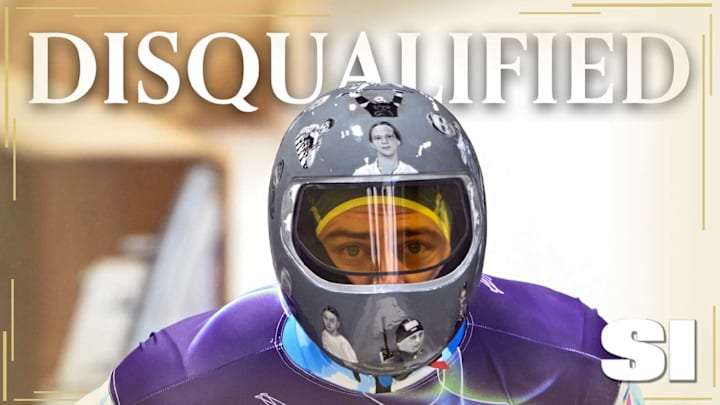
I think, I think just because right off the topic it's been before we get into, I think it's good also to get it out of the way before we start talking about, you know, things that are less serious, um, referring here, of course, to the , the, uh, Ukrainian skeleton situation, um.
Where the, the racer, uh, Vyatroslav Harraskevich.
Um, so, I think we have been, people have been following this story.
I think , hopefully, have at least some passive familiarity, but if not, uh, Harraskevich had this, um, this helmet that depicted several, uh, athletes and coaches from Ukraine who have been killed in the war with Russia.
Uh, he'd been wearing it during training.
He wants to wear it during his actual competition.
The IOC had told him earlier in the week, no, uh, but, uh, Harriskevich did not back down.
He continued to stand his ground, say, I want to wear this helmet, and then finally, uh, once, you know, the IOC said, no, you're not allowed to do.
And then it reached a boiling point, uh, early this morning in Cortina, right before he was set to have his first run.
He met, in fact, with IOC President Kirsty Coventry, who informed him if he, if he refused to switch to a different helmet, he would be disqualified from the race.
And that's exactly what happened.
He did not get to race today.
Yeah, this was, um, and it happened very early in the morning US time, so it was kind of, uh, it's interesting.
The news was in some ways it was surprising to wake up to it and in some ways not surprising because like you said, this had boiled over and, and you and I actually talked about this like a couple of days ago that maybe we should bring this up on the podcast, and I think we were sort of waiting for this to be the day and then not realizing that it was actually going to boil over.
Um, so yeah, I, I think, uh, and I've got a couple of quotes.
There was a very good story that broke this down by Tim Reynolds of the Associated Press, and I shared this on Twitter and Blue Sky for people who want to see.
And then that was followed up by a story from SI's own Pat 40 who had, uh, some quotes from some of the Ukrainian supporters who were there at the sliding center to watch.
Um, so I, I guess to, to lay it out with, so, and like you said, the IOC president was there.
She was, I read in Tim, uh, Reynolds' story, she was supposed to be at the skiing, and I guess knowing that this was gonna happen, she, uh, called an audible and went to the luge track, um, so that she could talk to him and have this conversation, and then she said afterwards.
Um , as you've all seen over the last few days, we've allowed for Vladislav to use his helmet in training.
No one, no one, especially me, is disagreeing with the messaging.
The messaging is a powerful message.
It's a message of remembrance.
It's a message of memory, and no one is disagreeing with that.
The challenge that we are facing is that we wanted to ask or come up with a solution for just the field of play.
Um.
And so it sounds like they offered some sort of compromise situations, including wearing a black armband, um, or being able to have the helmet and display it, uh, once he's off the ice, which I would assume still would encompass, or maybe I shouldn't assume, but probably encompasses sort of in and around the track, but not necessarily like during the actual race.
Yeah, and also another detail from the AP story was how Coventry apparently was in tears after meeting with Harriskevich, you know, this, this was a decision that, like she said, she didn't want to have to have to make this call, uh, wanted to come to a solution, wasn't able to clearly sympathize with his point of view, um, and was, and was really emotional after, after speaking with him.
Yeah, so I guess, and, and sort of, we've laid it out, but getting into our opinions here, um.
I, I will, I'll start with this.
I think a lot of people looked at this and, and as happens a lot in 2026, people are very quick to just like jump to a side and a conclusion and, you know, I'm right and this person's wrong and that kind of thing.
Just to lay out for both sides, I do understand the reason for this rule in the first place to uh limit expression on political type subjects, and I know that you can.
You know, try to parse the difference between what's political and what's not, um, but I can understand why allowing somebody to have a certain message creates a slippery slope, because if you allow for this, then the next person is gonna say, well, how about this and how about that?
And, and even if there are people who are very much, uh, supportive, uh, and, and believe he should have been able to wear this helmet, you can understand how the IOC at least comes at this, uh, with that viewpoint of, you know, what's the next thing that's gonna come along.
That said, I feel that remembering people who are dead is very different from like a political slogan or hashtag or something.
Like, I think that is one important point here.
And then I think a second important point is just that the IOC has basically already taken a big stand on the Russian invasion.
Of Ukraine by banning almost all athletes from Russia and Belarus, um, at, uh, you know, we've talked about at these Olympics and previous Olympics, they've had them, uh, compete under various, uh, you know, names and flags, but not Russia's flag, and, uh, sometimes banning almost all of them entirely.
So it's, it's interesting that like this is one where the IOC has already said, like, yes, we understand, um.
And, and still they made this decision.
So, you know, I, I think you can at least understand why it might be a difficult decision, even if you don't, uh, agree with the outcome here, and, and so I don't know, those are, those are just a couple of my thoughts basically, but, but yeah, I, you know, it feels like this is very different from, uh, like I said, sort of a, a flip, uh, you know, slogan or something like that as that this falls into a different category for me than sort of, um, political expression in that way.
Does that make sense?
Yeah, and I feel like, I think the problem here is the IOC making a big deal out of it, because his statement is, is rather minor, right?
This is, these people are dead.
I wish they could be here with me at these games, competing themselves in some cases.
Um, and if he'd just been allowed to, to race with this helmet, I think it would have been a nice heartwarming moment.
Um, he's not, you know, he's not making a, a really direct statement about the, the war with his helmet, at least, you know, maybe with his words he is, but with the helmet, you know, it's just pretty much, it's, it's a memorial.
Um, it's somewhat similar, obviously , the the circumstances are different.
Um, the Latvian hockey, men's hockey goalie, Elvis Mirlikens.
Um, he has an image on his helmet, and I, I believe with, with the national team as well, but at least with his, um, his NHL team, the Columbus Blue Jackets.
He has an image of a teammate, um, I, I don't recall his name, who was killed in a fireworks accident a couple of years ago.
Mers Les was actually present at this, uh, tragic event, but, um, you know, and I believe that the teammate who was killed was also Latvian.
Um, so, you know, it's, it's a similar thing, um, uh, I should say, um.
This Ukrainian athlete you're speaking about, uh, he, in fact, in the 2022 games, made a more direct statement about war.
So, uh, Russia had not yet invaded Ukraine at that point, or at least not, uh, to the extent that it has, you know, uh, escalated this war.
Um, so, you know, what was mounting troops near the border, there was rumblings of potential war.
Um, the Olympic truce is a big thing, you know, no war during the Olympics, and, um, and so he held a sign after his race in Beijing that said no war in Ukraine.
And the IOC said actually they approved of that.
Um, I can see, uh, the IOC said that at that point, it was a quote, a general call for peace, and they found that acceptable.
It wasn't really any kind of, that statement was kind of vague enough that they, you know, they cleared him.
I think also the issue was that he did it after racing, right?
Um, you know, he might have been able to do something, uh, at, you know, less premeditated.
at these games and gotten away with it.
But by basically, you know, alerting the IOC that he was planning to do this, um, you know, it, it raised the alarm.
And in fact , I think it, it, it benefits him because, uh, now his statement, you know, his, his views are, are out there, right?
Obviously, the guy would prefer to be racing at these Olympics.
Um, he was not really considered a medal contender.
You know, it's not like, it's, it's a shame he doesn't get to race again.
Um, but it's not as though he's, he's missing out on a medal chance.
Maybe we, it may be the case that, you know, he really wanted to get this statement out there and that was more important to him than actually competing.
Um, I don't, you know, he hasn't said anything to that effect, but you can see how that might be possible.
Well, I, I think that is probably pretty clear because he had the chance to back down and, you know, I, so I think to you earlier.
Point, um, I think you're absolutely right.
They call this the Streisand effect when, like, you know, doing something calls more attention to it, and that is 100% true.
If he had just worn this, I think a lot of people would have just looked at it as like a heartwarming thing.
And now many, many more people are aware of it, specifically because this has become a much, because the IOC made it a much bigger story.
But I think you'd have to look at it and say that he, he felt it was more important cause, you know, I think he really, he took a principled stand here by not competing.
It, it sounds like they gave him a chance, say, hey, wear a different helmet, you can compete, wear an armband, you can compete, and his thought was, essentially, he said, you know, if I can't wear this helmet, I'm not competing at all, and, and.
And it was sort of a game of chicken and he refused to back down.
And so I actually, I give him a lot of credit for taking a principled stand there, um, but yeah, absolutely, like the, the IOC, uh, and, and I was also going to bring up that past example, um, maybe he felt like they already blinked once and so they would blink again, um, but yeah, it's, it's interesting.
Saying that, uh, and again, that comes back to like, having to make a decision every single time can be difficult, but, uh, but yeah, it sounds like he, he brought even more attention to this.
And, and we should also add, we are taping at uh about 5:30 p.m. Eastern time on Thursday, and he has filed an appeal.
And so, uh, if he wins the Appeal, then he will, I think, ride one or two times, uh, tonight even, which would be even before people, uh, hear this podcast in their feed.
So it's possible there will be a big update.
Um, I have no idea what the chances are of an appeal, how often appeals like that are made and, and won and anything like that, but it's possible there will be a pretty significant update to this, um, by the time this podcast is out.
Yeah, and I think the last point I'll make and, um, just kind of moving the story forward, it's, it's been interesting to see, and it will be interesting to see going forward how other athletes react to this news, particularly the Ukrainians.
So, um, today at the, the, uh, luge relay, the Ukraine team took a knee and raised their helmets all in unison, and, you know, it just hours after this news had broke.
Um, so a nice show of support there from, from these athletes who were allowed to compete.
And then previously, um, on Tuesday, in the luge, of the women's luge, Olena Samehamaha, I'm not sure, I might, I'm not sure how to say, but, um, she was not part of that relay team.
But on Tuesday, she had worn a glove and she had written on it, uh, quote, remembrance is not a violation.
Um, so that, you know, that's a statement in its own way, and I didn't see any news about her being punished by the IOC.
So it'll be interesting to see how, uh, the Ukrainian colleagues react to this news going forward, right?
I, I think that is a feeling a lot of people have that, that, uh, what was that remembrance is not a violation, not a violation.
Yeah, yeah, and I think that is, that does draw a pretty clear difference.
So, OK, well, I'm glad.
We talked about this.
I know there are people out there who probably don't want us talking about these kinds of things.
They want to hear us get back to, uh, Olympic records on the speed skating track and, uh, you know, amazing races on the super G and the halfpipe and all that stuff.
Um, I think we've talked about it that, um, you know, when some of these other type of stories rise to the level that they're actually affecting.
The field of play, that's when it probably rises to the level that it's worth us talking about here.
And so, um, you know, the fact that a, a writer, and I think, I think pilot is actually the word.
I have been calling them skeleton athletes or riders, but I've seen people calling him a pilot.
The fact that a pilot was, was pulled from the track today.
I think that was a big enough story that I'm, I'm glad we gave that some time here on the podcast.
Yeah, we don't want to have to talk about these things, but when they become, you know, significant, you know, it's kind of you feel silly not bringing it up.
Yeah, for sure.
All right, well, now we got a segue out of that.
So I'll just do a hard pivot to the snowboard cross, which is perhaps my favorite event of these of the Winter Olympics.
Every time they do it, just like the snowboarders making a hard pivot like that going around the shark bank.
Yeah, absolutely.
Let's, let's do it.
This is a, yeah, fun sport.
Let's go.
Yeah, so this is a lot of fun.
Um, it's always, you know, for, for just to, to give the basics for anybody who's not been paying attention.
So this is the one it's like kind of like an obstacle course race .
Um, the course today actually really interesting.
The Astros talking about how it's one of the more technical courses they've seen at an Olympics.
But so it's, uh, you know, they have several races where they slowly whittle down the field based on, you know, who finishes the top.
And, um, you know, it goes all day.
The event happens all in one day, started super early in the morning with a seeding run at like 4 o'clock, but then at a more reasonable hour, it it was like 7, 7:30 or so.
Then they start with the the 1/8 finals and moving forward, you know, from there, um, you know, one after another, really great action.
Um.
There was snow falling, it was like a really, you know, at, at, well, for a lot of the race, it was a really beautiful image.
Um, so many photo finishes in these races, so many , uh, you know, close calls, some crashes, some controversy, Mitch alluded to.
I think we will get into the controversy.
There was an American athlete, Nathan Pare.
He was disqualified for making contact with the Spanish rider.
I was watching this.
I, Mitch, I don't know what you felt.
I didn't really see too much in this, in this collision, certainly not enough to disqualify him, I thought.
Yeah, it's, again, this is one of those areas where we are not, uh, experts, and so I don't know what level of contact is permissible, but I do have a quote, um, that I saw from him, and I was reading this from a story from Dan Wolin at Yahoo, and uh apologies to Dan.
I don't know if these were exclusive quotes to him or if he said these in sort of a scrum in the mix zone to a bunch of media, um, but I saw them from Dan Wolin, uh, and Pare said to go from winning a heat to being right.
Last.
It's impossible to explain how that feels.
It's part of the sport.
It's why the sport's so exciting to watch for the fans.
As a rider, you try to do everything you can to avoid the contact, but sometimes it's uncontrollable and has to be OK.
And that is sort of my viewpoint.
It's like, you're watching them jockey for position, and we talked about it a little bit with like cross-country skiing too, where it's, it's not like running on a track where you just have your feet down below you, you've got This like extra equipment that sort of extends the amount of space that you take up.
And again, here they're going like up and down over jumps and around banks and they're leaning into each other and so naturally, there's going to be some contact.
Um, but yeah, it was kind of, it was an amazing race because it happened, uh, I believe they were like 3rd and 4th when the contact was made.
And then, um, and then the guy, uh, who he hit, uh, was basically.
Out of it at that point.
Um, but then Pere, like on the final, uh, jump of the race, like zoomed ahead of the two people in front of him, and the way these heats work, I, I'm sorry if you just said this, um, they have 4 people in each of them and the top two advance.
It's just like bracket style.
So you just have to get to the line in the top 2, and he just zooms ahead and finishes first and thinks he's all set up to go, I think, into the semifinals, um, and then gets the news after the fact, which is, uh, just a hard way to take it.
Yeah, and, and the cameras captured his reaction to learning this , you know, there was a, there was a delay while they're waiting for the for the ruling, and then, you know, he has this like, stunned look on his face, and then he goes up to a race official and, and, you know, and he's, he goes, that's insane, and he, he's trying to plead his case about, you know, with all the technicalities of what he was doing, what the other guy was doing, um, but you mentioned, you know, how it was a really exciting race.
I mean, so many of these were, it was, I have it here, um.
7 of the 16 races today had photo finishes.
Um, you know, like they're, they're so, so close, and so, like, one little bump like you saw happen with him, it can really change the race.
Um, there was a, there was a semi-final in, uh, in, I'm sorry, there was a photo finish in both semifinals, um, one of which included Nick Baumgartner, who we talked about yesterday, the 44-year-old American.
Racing here and what has to be his last Olympics, um, having won bronze in the mixed team event last time around.
Um, he was on the wrong end of the photo finish, missed out on the final and going to the B final, as it's known.
Um, but yeah, I mean, great racing that there was, um, at one point there was in one semifinal.
They're a pair of brothers from France, the Cholet brothers, Aiden and Jonas.
Um, there was, and Aiden won the race, and then Jonas is in a photo finish for 2nd and 3rd, and you had this tense moment where you're waiting, oh my God, are these two guys gonna be in the, the, the gold medal race together, these brothers who I believe are 21 and 17, uh, making their Olympic debuts, and then, no, you know, uh, the other Jonas was he finished in 3rd after the photo finish, and, um, yeah, just, I mean, a really great event, the women's event is tomorrow.
Um, if anybody missed it today, like, you gotta catch it tomorrow.
Yeah, the, the two brothers were in 1st and 2nd for much of that race.
So they, and like the way the graphics were on the screen, they were only showing the names of the top two leaders, and you're seeing, and they've got the French flag together and they've got the same last name and they're right there.
And, and yeah, the way it works with, um, with 3 of the 4 finishers receiving medals, then if the two brothers get to the finals, you know, they're guaranteed at least 1 medal for the family and a great chance of 2, But then it didn't, uh, ended up not working out.
But yeah, I'm, I'm with you, and the snowfall was so cool, and we'll talk about the halfpipe also, uh, where it was snowing like at night.
Um, it was just, you know, it felt like I, I already, I said it felt like an NFL Sunday, but like some of these playoff games that were played in the snow, like the atmosphere was just really, really cool.
And I love the whole, I love all the aesthetics, um, even just like the way they get around the track and, uh, cause they're track around the, uh.
The slopes, I guess, the course, of course, that's good.
Um, like the way they're, uh, their boots are like connected to the board, they, they have this way that they just kind of like shift their weight to try to speed themselves up on the bumps.
Anyone watching on YouTube, I'm now sort of like imitating the thing probably very poorly, um, but yeah, it's just, uh, and they have like, um, they go up over and they have like Olympic signage banners, like on the course on some of the parts where they know that.
The snowboarders are gonna leap over the banners and not touch them.
And so it's just like very cool aesthetics, uh, over all the Olympic signage and the snow and everything around the course, and you see them making these really sharp turns where they're just like on the edge of the board and like jockeying around each other, and yeah, it's just, just a super fun event.
You've, you've talked about it.
We love the cross, uh, on all disciplines, anything with a cross, we are in.
So, yeah, I'm sure I'll be glued to the women's race again.
Tomorrow and uh yeah, this was there's also ski cross, ski cross also, yeah, so this, this was high up on my list too of just things that I really, really enjoyed today and I like how fast moving it is.
It's not like one of these where, um, you know, you wait uh through like 40 competitors to go one at a time.
Uh, it's like there were 4 heats and they kept it moving really quick and you see the same athletes go a couple times within like 20 and 30 minutes.
Um, yeah, just a, a great little event.
Yeah, the visuals were fantastic.
That semifinal race with the two brothers, the sun came out a little bit, the sun shining through some snowflakes.
It was really great.
Um, I should also probably just mention who won.
So sure, it was a, it was a really, really exciting final that Aidenhole.
Aidenhole, the older brother, he was leading.
For most of it, and then faded right at the end, ended up finishing last, missing out on a medal, which was, which was a shame.
But the winner was Alessandro Hammerly of Austria, and then Elliott Grodin of Canada.
They finished 1st and 2nd.
They also finished 1st and 2nd respectively at the previous Olympics.
And then another Austrian, Jacob Dusick, he took bronze.
OK, well, speaking of bronze medals, I want to talk about one of my favorite things that I saw today, and I know you were all over this too, cause you posted a bunch of screenshots from right after the race ended.
But, uh, Jessie Diggins just won her 4th Olympic medal in her career.
This is now, uh, 3 consecutive Olympics that she has medaled.
We talked.
We talked about this yesterday, we thought it was probably unlikely that she was gonna win a medal here, partly because we know she was dealing with those bruised ribs and partly just thinking this might not be her best, uh, event with a chance.
Well, I think we were wrong on that one.
it was a very, very fun race.
It was the interval start, which is a little different from some of the mass start events that we've been watching on cross country.
Um, and so it's a little bit tougher to follow because it's not like the person who crosses the finish line first wins gold.
They, they start at different times and they, they cross.
But anyway, She was just, after she finished the race, uh, I think they, they were pretty sure she was going to be bronze, but they had to wait for a couple more people to finish and just make sure.
And then there were a bunch of people still on the course who at a certain point, it was obvious she had, she had won it.
We were, it was just a formality and we were waiting for the final time, but she just collapsed beyond the finish line, which we know is common in cross country, and she was just like screaming in pain.
And you could just feel how injured she was and how much that race took out of her, and what it took for her to get to the finish line in 3rd place.
Uh, and that was just like, it like got to me in a way, just like seeing how hard some of these athletes push themselves.
That is a sport that's known for it.
I think she's talked about that phrase, the pain cave.
Which is like the place that she gets to, um, and, and we talked about her with Michael Rosenberg and one of our preview episodes, just how she's very sort of self-driven and wants to, um, you know, beat the clock and do her thing, but not necessarily worried about, uh, or doesn't love the idea of like beating the other athletes, that idea that like, for me to win, you have to lose.
But just seeing like how far she took it , uh, in this event, I was just so impressed by her, and she's, she's the greatest American cross country skier ever, and this is just going to be such a huge, huge part of her legacy to now have medals in 3 straight Olympics and 4 of them total.
Yeah, I, I thought you're gonna say, in fact, even before she crossed the finish line, that final like stretch, she was digging so hard.
It was just, it was amazing to watch.
You could see the effort on her face and obviously, you know, it all kind of came, came flowing out at the end, but she just, she was really striving and like, it was just an incredible image of.
Her giving , like, you know, I think the phrase 110% is really overused, but in this case, no, it was like, literally like 150% of her maximum effort.
It was just, like, unbelievable to watch.
Yeah , and then she, she falls to the finish line, she's wailing, she's obviously in, in immense pain.
There was, I'm following along, you know, I, I'm like, In some of our, uh, our chat, you know, channels here and on Slack free plug for them, uh, with our co-workers, and somebody said, um, you know, like, she should go to like a hospital.
I mean, it looked, it looked really bad.
Um, and I was shocked.
It was maybe 3 to 5 minutes later, she's on her feet, she's smiling.
It seemed like maybe, like, there had to have been some cramping, I would speculate, um, because a, a teammate came over and immediately was like, it was, it was odd to see that there was not any, like, medical personnel.
to her.
I wonder if that was like a rule because it's like the race is still going on and nobody else is allowed in the area, but like, a teammate came over and I can't recall her name, but came over and um unclipped her from her skis, took her poles, you know, and then was like massaging her calves.
And, um, yeah, just like this really, uh, you know, indelible image, I think will be like, you know, part of her highlight, career highlight reel, part of any Olympic highlight reel going forward, just like this really incredible image of, of the effort it takes to win a medal, um, you know, even we talk about.
You know, uh, people who, who are excited to win silver and bronze, and like, yeah, that, that shows you, you know, that she was really giving it all to go for that, that bronze, even though she was out of contention for the gold.
Yeah, and, and you mentioned how quickly she went from just like being in agony to then being very happy.
I saw she gave a quote to uh NBC's Nicole Auerbach, who's been the uh reporter on the scene at the cross country, and she described herself as the happiest bronze medalist in the history of the world.
So, great for her that that's her attitude.
She did not look like it, uh, in the immediate aftermath of the race.
Maybe she didn't know that she had won it yet.
Um, let's, let's, I I also do want to mention the winners here.
Uh, so, uh, Sweden took gold and silver.
Um, and remember we talked about Sweden having a podium sweep, and I believe it was the skiathlon, uh, that, that Sweden had that 123 finish, and it's Frida Carlsson, who won gold in the skiathlon and also took gold here.
So very impressive, uh, for her already to have 2 gold medals, these Olympics.
She won by a huge margin.
She won by more than 46 seconds.
Over, uh, second place.
And then 23, 4th was a lot closer.
I think it was like, uh, 3.1 seconds separating the, uh, silver medalist from Jesse Diggins, and then, uh, Diggins had 3.3 seconds of cushion, uh, ahead of, uh, Norway.
Norwegian, uh, skiers finished 4th, 5th, and 6th.
so Diggins held them all off the podium.
Um, but yeah, just, uh, a fun race.
We're gonna see the same race for the men.
tomorrow.
So if you missed it, um, you know, you can check that one out tomorrow.
But, uh, yeah, I mean, it'll be hard for that race to have the same drama that it did today, especially knowing that Johannes Clabo is going to be in it.
And so maybe there won't be any drama at all.
But, uh, but yeah, Diggins, that was like one of my favorite Team USA performances we've seen so far at these Olympics.
Absolutely.
And you mentioned the Swedes.
Sweden has now won 7 out of the 9 medals in women's cross country awarded so far.
So great, uh, great showing for them at this point.
All right, quick shout out to one of my favorite things in my closet right now, Cozy Earth.
First off, their bamboo pajamas, ridiculous.
These are hands down the softest pants I own, like unbelievably soft.
I wear them when I'm working from home, running errands, even just lounging on the couch.
They somehow feel cozy without being too warm, and they actually look good enough to leave the house in, which is rare for pajamas.
Whether it's for someone special or just for yourself, Cozy Earth makes it easy to bring comfort and care into your everyday life.
This Valentine's Day season, we are offering a buy one, get one pajama deal you won't see any other time of the year.
Share a little extra love this February and wrap yourself or someone you care about in comfort that truly feels special.
Head to cozyEarth.
com and use my code Daily Rings BOGO, Daily Rings B O G O for up to 20% off.
And if you get a post-purchase survey, be sure to mention you heard about Cozy Earth right here.
Celebrate everyday love with comfort that makes the little moments count.
The other big moment of the day was the halfpipe.
I mean, this was, this was a really a, a headline stealing event .
Uh, everybody's going in expecting Chloe Kim to win her, her 3rd straight medal, and, uh, she came really close, ended up getting silver.
Um, it was, you mentioned the snow falling.
It had an effect in the competition.
Uh, the announcers kept talking about this, how, um, it was snowing, like, you know, at, at, at certain points, it would stop and start.
So it was pretty light.
In the final run, it was quite heavy.
And, um, that's a factor for, for two reasons.
First of all, uh, the snow will gather at the bottom of the pipe.
And so, uh, you know, it'll fall that, it won't cling to the walls, so the walls are too vertical, but it will all gather at the bottom of the pipe.
And then that affects your speed and then going through that transition zone up to the next wall.
Um, so you saw a lot of athletes struggling with this, failing to get the speed they're used to, under rotating on their turns and falling.
There were a lot, a lot of falls, um, partially because of that, partially because people are just, you know, they're going all out trying to win that medal.
Um, the way they actually clear that snow in the bottom is funny, they get this, this, uh, like V formation of folks on skis who are, who are shuffling down and kind of, you know, shoveling the snow, uh, with their own skis.
It's an interesting, uh, visual.
Yeah, before you get to the, um, before you get to the results, I just want to also say, I think the snow had an interesting effect on the visibility.
They mentioned this because this was, uh, again, this was a nighttime event with like huge stadium lights.
And so I think it's a little different than like snow coming down during the daytime.
These like really bright lights are reflecting off of the snow and just makes for like an interesting glare and, and just kind of a different visibility than they're probably.
Used to in major competition .
I'm sure they all practice in all kinds of conditions and, and, uh, you know, I doubt you're gonna find any athlete in the Winter Olympics using snow as an excuse, uh, for the conditions being a little bit different.
I'm sure they've all done it.
Uh, but I just think that isn't, you know, worth mentioning that, uh, you know, anything that can throw anyone off, that's just like a little bit different from maybe the like perfect conditions that you expect.
Um, but I thought being at night, uh, with all of that glare, that was interesting also.
Yeah, they likened it on the broadcast to driving in the snow, driving in heavy snow, where it's actually, they said like actually the lighting probably wasn't too much of a factor.
They were, they were joking that it was lit better than NFL stadium, like, it seemed really bright in there, and the issue really just like, is like those particles of snow in your vision, especially when you're spinning.
Um, you know, and, and it's easy to get, you know, you, you can't have that clear line of sight down to your landing zone because there's all this stuff, you know, in the way, but, uh, yeah, for whatever reason, it, it did seem to affect a lot of people.
And, um, certainly you think, you know, Kim, she, she fell on her final run, you know, that had to have been a factor.
Um, she had a good first run.
Um, some people thought it was better than the judges did.
She was given an 88, um.
A high score, but not like, and it was, you know, she was the last, last snowboarder to go, and so, you know, there's, as she's going and she posts an 88, you think, OK, like, that's, that's a good score, probably not gonna hold for gold, and it didn't.
Um, we mentioned, I should say, people falling.
The worst fall of the day was by uh Troy Gallen, Troy Gowen.
Of South Korea, she's 17.
She fell hard on her first run, really hard, was down for a little while.
Um, when it came time for her second run, we were actually informed, informed by the broadcasters that she had withdrawn from the competition, but then wait, all of a sudden, here she is at the top of the pipe, and the announcers are scrambling going, well, we were, you know, that on our screen, it said DNS did not start, you know, she, she's pulled out, but in fact, she emerges last minute from the, from the backstage area at the top of the pipe, decides to give it another go.
Second run is, is, is a throwaway, basically, she falls again, you know, not as violently this time, and then her final run, she kills it, and she puts up a 90.25 after that first fall.
So you, I mean, the, the narrative here is incredible.
Not only is she dethroning Chloe Kim, she's putting up this incredible score after having already had this really scary fall.
Um, it was just, it was, it was really amazing and a, and a great win by her.
It wasn't they, uh, again, broadcast is so helpful here.
They described, they were talking about how hard the, uh, the halfpipe is, and they said it's like polished marble.
That was the, uh, the comparison they made.
So think about how hard that is slamming when you're not just on the halfpipe, but like up however many feet in the air, uh, doing your, your twists and your tricks, um.
So, uh, they, the two of them have a cool relationship.
Uh, and, uh, sorry, is, is it, is it, uh, Gayon Choi, or is, is, I don't know if Choi is the first name or the last name sometimes with, um , Troy is the last name that typically the the SI style varies on these things, but the broadcast what how it looks on the screen is different from, yeah, well, well, so anyway, uh, Troy gown is how the broadcast was referring to her.
So, so Troy Gown, she is only 17 years old, and, uh, they made a point of saying that she broke K Chloe Kim's record for youngest Olympic gold medalist in this event.
And one thing I didn't know until after the race is that she had previously already broken Chloe Kim's record to be the youngest gold medalist in the Winter X Games in this event when she was like 14.
And I, I think Nick Ziccardi of NBC posted, um, like a clip of an old like social media.
A thing of Chloe Kim talking about how proud she was, like a proud mama that to see her record broken.
And that was really cool.
You would think that Chloe Kim, you know, wants to win, it's such a huge moment for her to go for potentially her 3rd consecutive gold in this event in the Olympics .
But she was like all smiles and went right over to, uh, to Troy Gown after the race and congratulated her and was like very gracious about it, which is always nice to see.
Um, and she seemed like totally cool.
With it.
Again, we were just talking about this, that like, sometimes a silver medal or a bronze medal is such a huge accomplishment, and people are thrilled by them.
Maybe you don't necessarily think that's going to be the case for someone like Chloe Kim, who's already a multi Olympic gold medalist, but I think she was still happy .
Um, one thing I will say, because you, you talked about her 88 in the first run, um, and there were people who thought it was better than that.
I think the broadcast made it sound like they thought it was like over already.
Um.
I've seen a sentiment, uh, from a bunch of people online that sort of the scores often get better as the competition progresses.
I think it's one of those things where like in the, uh, in the NBA dunk contest, you can't give out all 10s in the first round because then if somebody has a better dunk, there's nowhere to go above a 10.
And so, I saw some people, uh, talking about how maybe like if she had done the same exact run, uh, later in the competition, they just would have scored.
It better.
And so, you know, that this is one of those things that we've been very open a million times that we are not experts on all of these sports.
We are doing our best to capture everything and learn as much as we can and share it with people.
Um, but, uh, that was sort of the idea that I got and that's, that was part of why I mentioned this one at the very top on the list of things that are a little bit controversial, but I think that was one of the reasons people were upset, uh, with the way the scoring worked out.
Um, but yeah, then Chloe Kim had, she got to go last, and she had that chance.
To win it.
And so she was on top and it looked like she was gonna win the gold and then she gets surpassed and she's in silver medal position.
It sets up for this, the Hollywood movie scenario where it's like, OK, I've got one last shot, uh, potentially my final Olympics, but who knows, she's still young, but, um, but, uh, a chance to come out on top with one final amazing run and, uh, went for a big trick, couldn't pull it off, uh, you know, tough landing and, uh, ends up still on the strength of her first run, getting a silver medal.
You mentioned their relationship .
I think, um, they mentioned on the broadcast that Kim actually played some role in having Choi, helping her come to the US to train.
Um, you know, she's from Korea, but Kim had had, I , I didn't have time to look into this farther, but apparently there's like a really, you know , a really deep relationship there.
In fact, uh, helping her further her career.
So that explains that that great moment between them at the end.
Yeah, so many of these sports, they just, you find out they all have such close knit relationships with each other, uh, within the sport, and that is just so common in a lot of these Olympic sports, and it feels like probably more common even in the Winter Olympics in the summer, just given how few places there are in the world to train for some of these sports.
It feels like they're all concentrated and spend a lot of time together.
Yeah, that's a good point.
All right, well, you started the show by talking about your pet favorite event, and I saving this for you.
Yeah, I showed a little restraint, uh, by waiting until 4 in our lineup to talk about my personal pet favorite.
Did you watch the luge relay today, Gart?
Mitch, I watched every second of it.
It totally lived up.
It is so much fun.
I love this event.
I say everything's fun, but like this one, this one truly believe me, I'm not just the boy who cried wolf, and I know that there are.
For people who agreed with me because I was, I was hyping this one up pretty hard on social media, and then I got a flood of messages from people who were like, I'm only watching the luge relay because Mitch Goldlich told me to.
And oh my God, he was right.
I'm glad I did this.
I heard from people who were like watching it work.
Someone was, uh, like a middle school teacher who watched with their whole class and was talking about how much fun that was.
So that's good.
Let the kids watch sports in school, though, you know, whatever.
They can, they can, they can make up the work.
It's the Olympics.
Let them do it.
Uh, the luge relay was awesome.
Um, Germany won.
I will end the, uh, suspense for anyone who hasn't seen it.
Uh, so they've got, uh, now 4 consecutive gold medals, uh, in all 4 Olympics since this was introduced.
Uh, you know, I hope people know how this works.
I talked about it yesterday, so I don't have to get all the way, I don't have to give all the details, but yeah, it's just so.
Funny to see them that the 1st 3 sleds slide down and they have to slap this pad, and the opening at the top doesn't work unless you actually hit it.
And there was actually a close call from the German team.
Um, I think their first rider down was like a little bit late, but watching them cause, you know, they're so, um, like parallel to the ground, just like flat on their backs the whole time down the.
Of course, that's what we're used to seeing.
And then they get to that last straightaway and you see them like sit up at the perfect moment to like wind up and smack the thing.
And it just led to some funny visuals, and I loved the team element and, uh, you know, seeing, uh, some of these athletes that we have seen already, like Germany, I think their team was made up where every single athlete had already medaled, uh, previously in these Olympics.
Italy was another team that had a bunch of uh previous medalists together.
Um, Italy took bronze, it was Austria that was in 2nd, and it was kind of exciting where they put him in the order, sort of the reverse order of what you expected the medalist position to be, and they sort of kept like beating each other's times and establishing new gold medal favorites.
Um, so the US US went in the middle and they ended up finishing in 5th place.
But yeah, just a, a totally fun event.
I love that it's one, they get one shot at it, and there are 4 legs on the team.
So it's like, you need everybody to rise to the moment and they only get one time and, and you need all 4 legs to be perfect.
And, uh, and yeah, I'm, I'm already excited for 4 years from now to see it again.
It's good.
So a couple of things I loved about this, right?
I mean, you, you, you did a great job hyping it up.
Um, for anybody who was on the fence, it was only like 45 minutes.
Like it's just like there's 9 teams.
They all take, you know, it's like a 4 minute run-ish.
And, um, and I also think this was, if anybody, you know, was on the fence about this, this was the one to.
Watch because this, this one had to have been more exciting than any of the previous iterations.
They introduced this first in 2014 , um, because this was the first time there was a women's doubles team included.
The women's doubles event is new for these Olympics.
And so they're adding now 1/4 team to this relay event.
It used to be just three.
so you get that, you know, that extra run.
Extra opportunity for, for some drama, because like you said, you know, you really rely on everybody, every part of the team has to be perfect in order to win.
And there were several teams where they made, you know, one of the teams made a mistake.
There was, uh, the Romanian men's doubles team.
They were off first and then they had, uh, you know, this terrible skid that, that, uh, that cost them.
There was like Poland had another similar instance where, you know, another skid and they just, you know, went out of, out of control, drop a couple of, you know, a couple of fractions of a second and you're done.
Um, so, everybody's got to be perfect.
You're adding with that, with that women's doubles team, that additional factor of, uh, you know, somebody else has a chance to mess up.
Um, and you mentioned Germany.
The last thing I have to say on this is you, we were talking earlier about the two Toby, the, the legendary Germans, yep.
So, uh, Tobias, Tobias Wendel and Tobias Arlt, they've been part of all 4 gold medal winning teams for Germany.
That's an astounding fact.
Uh, one of my favorite things that I learned, uh, today.
Yeah, that was, they are legends.
This is Ken Childs told us to get used to hearing the German national anthem, and, uh, yeah, those guys are, are legends because they, they, am I correct, they did not win gold in their event, uh, earlier bronze, yeah, which was a surprise because we were expecting that they were gonna win everything, but yeah, just.
Incredible careers and uh I think, are they the, they must be the most decorated luge athletes ever.
I believe they are, but I think that, I think they were saying that on the broadcast, especially because they've like added events like this, which, which, you know, that's a nice way to pocket 4 extra gold medals that that didn't exist before 2014.
Um, I think I, I feel like we haven't gotten to hockey yet, that we were, we're to take folks behind the scenes a little bit.
Um, Mitch and I were discussing earlier this afternoon, hey, we might have to delay our recording a little bit to wait till the end of this hockey game between the US and Latvia, because it was tighter than expected at the beginning.
And, uh, then it got out of hand there in the 2nd period, and I, in fact, have not seen the final score.
People will get to hear my reaction to the final score, which is OK, it was 5 to 1.
That was the score last I checked about a half an hour ago.
So, um, can you imagine if it had been 6-5 Latvia and just during the first, during the first half an hour of this podcast, Latvia scored 5 goals and we found out that way, that would have been amazing.
That would have been amazing.
But no, uh, so yeah, so hockey hock.
He bumped to the lightning round on the podcast because I feel like we're going along on this one.
but yeah, let's, we still have a bunch of sports to get to.
So, but let's, uh, yeah, let's, let's do that hockey, obviously.
Yeah, just, just very quickly.
So the US had a, had a rough first period against Latvia.
Mish, you mentioned the, uh, officiating controversies.
There were two goals disallowed by the US, like, a goal, you know, against Latvia.
Uh, the first was called back for offside on Brock Nelson.
Um, if you recognize that name, plays for the Avalanche, who played for the Islanders about a decade.
Um, this was a tough one because, so Nelson had, it was, he had gotten into the zone before the puck, or at least that's what the replay ruled , but it was really difficult because there was no good camera angle showing exactly where the puck was when Nelson entered the zone, and that was in part because, um, the angle that should have been the best, the best camera angle was, uh, JT Miller was between the puck and the camera, his teammate.
Um, so it was like his arm was like where the puck was, so you can kind of infer where the puck is, but you can't tell exactly where it is.
So, uh, but for some reason, the officials found the reason to believe that, no, indeed, Nelson was in the in the zone before the puck.
Um, the second was on a redirected shot, a great redirect.
I, I, uh, don't have the name of the player redirected it because he didn't have counting, but, uh, Miller again was ruled to interfere with the Lafayan goalie, uh, Merlein, who we talked about in our earlier segment, um.
Miller was pushing the crease by a defenseman, and then, you know, the announcers are going, well, yeah, he was pushing the crease by the defensive, but he had enough time to get out, and so it's kind of this, this call was, was, I think, more understandable than the offside call.
Uh, the offside call was like, cause they didn't really have a good angle, you're like, you know, you should, you should.
You know, that that doesn't seem like it should have gone that way, but the, the interference call or the, the goalie interference call was, it was a little more understandable, and so that one was wiped off as well.
But then the US just like put the game to bed with a big second period, ended up scoring 3 goals, outshooting Lafaya 17 to 2, and, um, and that was that.
OK, those are the final stats you, you, uh, in that time you checked the score, you got the final shots on goal also.
No, that was, that was in the 2nd period.
Oh that was the 2nd period alone.
Oh yeah, that was the, that was the period that put it away, yeah, yeah.
I also want to shout out just very, very briefly cause Canada won 5-0 over Czechia.
And uh in the men's hockey, 55-0 as well over Finland in the women's, but on the men's side, I was talking earlier, uh, before the pocket before the Olympics started in our preview episodes about Macklin Celebrini, the 19-year-old, he scored the first Canadian goal, so, uh, you know, look out for him, he's gonna be real fun to watch and uh he had a great day today.
Nice.
All right, I want to briefly mention, we should mention the, uh, the Alpine, the women's Super G.
This was, I think, the first, this is the first thing that I actually watched live this morning, and it feels like ages ago because of how much has happened since, um, but yeah, it was just, uh, crazy like visibility issues, um, and, and we talked earlier in the week about like clouds rolling in affecting the downhill, but this was.
It was just like so much, whether it was fog or clouds or whatever it was, um, the visual shots were just like unbelievable, uh, how much of the mountain was like, not like a whiteout, but just like, you could see how difficult it was going to be to navigate.
Um, and that was obviously reflected in the results because 17 out of 43 racers did not finish the course.
Um.
That includes two Americans, Breezy Johnson, who we've talked about a bunch.
She won the gold in the downhill, and then she also was in first place after the downhill portion of the team combined, um, but, uh, was not on the medal stand because Mikaela Shiffrin had trouble, um , as her teammate.
Uh, Breezy crashed off the course and like crashed, you know, that like orange fence off to the side, which I don't know.
I don't know if that is, if it like.
Looks worse than it is, um, cause maybe there are like other things that are more painful to run into, and I guess the fence is there partially to just like stop them from hitting something worse, um, but it just, you know, it looked, looked awful to me, uh, going into the fence, and then the second American, Mary Bowcock also fell, and hers was bad enough that it was like one of her skis came off and was like trailing behind her and, uh, a couple of like ugly looking crashes, um.
The gold medal went to uh Frederica Brignonei from Italy.
So again, Italy is just having like an unbelievable Olympics.
I saw, um, Roger Sherman was talking about this, that they are like closing in on their record as a country for most gold medals and total medals in an Olympics, and I think there is commonly like a host country bump that you get, um, but they've just had like an unbelievable time so far in the 1st 6 days and picked up another gold in the Super G.
Yeah, it's a little surprising you mentioned the conditions.
Um, we saw in that event the week before the Olympics when Lindsey Vonn crashed, and then the, the rest of the race was canceled after that because of conditions.
Conditions here in the Super G a lot worse than that.
So a little bit surprised that they went forward with it, but, um, you know, I guess, uh, they got a tight schedule and they got to adhere to it.
Yeah, Um, I think that one of the last things on my notes is the short track.
Um, I was glued to this because, uh, we've, I've talked about.
Kristen Santos Griswold, my high school classmate, not that I knew her very well or anything, but she did go to my school, at the same time, partner, 2 years younger than me, but, um, anyway, uh, uh , she was the big star in these, in this short track day, uh, racing the 500 m.
I didn't realize going into this, she's actually ranked number one in the world going into these Olympics.
That's why she's wearing the number one helmet, uh, but she did not have a great day.
She, there was this weird, um, Uh, begin to a quarterfinal.
There were 4 consecutive restarts, where there were crashes before the end of the first turn, so they allowed them to , to restart.
Um, really infuriating, and they talked about the, the mental effect this can have on, on the skaters, um.
She's like, I was really struck by how aggressive she is.
So the backstory on her is that she was very close to winning a medal in Beijing.
She, on the, like, the final lap, even the final turn, um, was coll she collided with an Italian skater and missed out on a on a medal, um, to erratic attention, and they talked about how she's struggled to To move past that and how to, but so now she's being really aggressive and trying to make sure, you know, she's going for that, that gold in every race.
Um, she even had like in her, in the quarterfinal race once it actually did get started, had this aggressive inside move to go from 2nd to 1st when finishing 2nd would have already guaranteed her a spot in the, in the semifinal.
Um, it would have like finishing 1st, like improved her start.
position, but it was like, wow, you're risking a crash just to, you know, just to have a slight advantage in the next race.
Um, but yeah, a really, a really exciting event.
You know, we talked about how chaotic this, this, uh, this sport is.
And, um , it was my first, you know, real, real experience with these Olympics.
We mentioned how the time can be, can be difficult.
So, looking forward to catching more of this as the games move on.
All right, I've got, uh, I have 3 sports I want to touch on still, but can do it kind of quickly.
But the curling, uh, it was a big day.
It was one fun storyline that I really want to mention.
I will spare you the, uh, play by play and the, the end by end score of all the games, but I will say the USA women, uh, they beat Korea in the early morning at 3 a.m. and then lost to Sweden in the afternoon.
The, uh, US men lost 8 to 3 to.
Switzerland.
Uh, first, I want to say I want to give some love to the telestrator, because I, I was just very much enjoying it.
Um, they're doing like the John Madden, they're showing angles and they're putting them up on the screen and they're like, OK, well, if they try to hit this rock here, it can knock it into this rock, which can hit this rock, and you're just seeing like 4 different arrows on the screen, and then they wipe that away and they're like, or they could do this, and they show like a different pattern of arrows, and I was just very much digging the telestrator today.
Uh, but the story that I really wanted to bring up is this guy Rich Ruinan, and, uh, I, I was like, I, I'll be honest, I was not like fully aware of his story until I think yesterday.
Um, I think other people were like more aware that this was gonna happen, um, but he's 54 years old and he's an alternate.
Uh, he had tried to make the Olympic team for 7 cycles, um, and then he ended up, uh, making the team.
As an alternate.
He's, he seems like he's one of those guys who's just like been around curling forever and knows everyone.
Um, actually, the, I, I was on Gold zone during this match and they had John Schuster Schuster in studio, and he was like, oh, I know Rich, I've played with him at this tournament here and whatever.
Um, and he just feels like that, uh, one of those like glue guys that everyone in curling knows.
So anyway, the US was getting beat pretty badly, uh.
Down 6 to 2, and I, and we've talked, you can concede, uh, an end or a game, and I, I think you, uh, some people are wondering, like, um, replying to me when I posted about this, if like they couldn't concede yet.
I think you can concede at that point in the game that they were already down 6-2, but instead of conceding, they played one more end, and they got rich onto the field, like a Rudy moment.
Uh, I don't know.
What the rules are on substitutions.
I, cause I had seen there was a Wall Street Journal headline that was like, if one of his teammates slips and falls, he'll be the oldest US Winter Olympian ever.
And so I was like, OK, I guess he only gets in if there's an injury or something, uh, not realizing that, no, they can just make time and put him in.
Uh, so they put him in, he is, he's a lawyer.
And uh and he's just like a curling lifer and uh yeah, and he got out there and now he is the oldest American Winter Olympian ever, uh, and he was actually pretty good when he was out there, he had a couple of good uh plays, uh, obviously it was not enough , it was too little too late, they were down 6 to 2 already and and the game was pretty much out of hand, but I'm glad he got out there and got his Olympic moment.
Yeah, that was nice.
Great story by Pat Foring on SI.
com about this, about this moment if you want to check that out.
Also, while we're on the topic of curling, but the only thing I had in my notes about that, I saw a great story this morning in Yahoo by Jeff Eisenberg about Danny Casper, the skip of this US team, and his recovery from.
Non-Barre syndrome that it really knocked him out for about a year and he's how he's come back from that.
He's not 100%.
He's still, you know, fighting through some of the effects, uh, because there's no known cure for this.
There's, you know, just some, some treatments, but, um, uh, interesting detail.
I didn't know about him and his background.
That I, so I'm glad you brought that up because that actually is related to the Rich Ruinan story.
Um, I, I believe he was like helping as a fill-in for this team, um, while Danny Casper was out dealing with his illness, and so that was part of like why they wanted to bring him in and keep him a part of it and, and have him there.
I think those two issues are, are actually related.
Oh, that's good, that's good to know.
Yeah.
Um, OK, well, uh, I was gonna bring up very quickly the, uh, women's 5000 m speed skating, and I don't have to say too much, but I'll just say Francesca Lala Brigida won gold again.
We talked about her when she won the, uh, shorter race on her 35th birthday, uh, earlier , but so now she's got, uh, 2 golds these games.
This is the one, it's 12.5 laps around the track.
Her winning time was 6 minutes, 46 seconds and 1700.
And after that much skating, the top 4 were separated by 3/10 of a second.
So, it's just like unbelievable the margins and how close they are, um, but I just like couldn't get over that, that they did so much skating.
Um, although I guess if you think the, uh, 5000 m is a lot of skating, way.
Tomorrow, the men are gonna do the 10,000 m and that is gonna take them over 12 minutes.
Um, if do you have anything to add there or the last thing I was gonna do is just quickly this, uh, the men's freestyle skiing.
I, I only noted the, the margins there.
You, you got me covered.
OK .
The freestyle skiing, there was a huge upset actually.
This is another thing that I saw very early in the morning.
Um, Mika Kingsbury from Canada is like the all-time.
Goat.
He won gold in this event in 2018, and then, uh, previously had two silvers.
They called him like the Wayne Gretzky of moguls.
Uh, and he was upset by, uh, Cooper Woods from Australia, who the broadcaster said was not even on their list of medal contenders.
And, uh, and, and like I mentioned this at the very top, they're doing like all these crazy tricks and like 1440s and things.
So this is like that, uh.
Uh, unusual sport that is difficult to follow, as we talked about yesterday, cause the scoring is like 60%, uh, on the moguls and 20% turns and 20% times, and they're combining how you time with how you jump.
So anyway, they've got this scoring system I already don't understand.
And then the time flashes up on the screen that they both have an 83.71. And then they announced that, uh, that the, uh, Australian Cooper Woods won on the tiebreaker.
Which was your score on the turns out of those three elements.
So it's just like a crazy dramatic thing.
Uh, so silver medal for, uh, Mikael Kingsbury, the Wayne Gretzky of Moguls, uh, so now 4 Olympic medals for him total, but it was just like a crazy thing.
One of these where it's, it, it can be fun to not know the rules and not really know what you're looking at until it happens and just kind of a little delightful moment early in the morning.
Yeah, I miss that.
I'm I'm glad you brought it to my attention.
Um, so I guess we'll probably just get it, if that's all you got, I think day seven of tomorrow, we can, we can speed through this pretty quick.
Um, I think everybody knows my feelings on the snowboard cross.
Maybe I'll start there.
So, uh, seating runs for that begin at 4:00 a.m., but then, you know, the, uh, the, at a more reasonable hour at 7:30, that's when you get these back to back to back races nonstop for about 90 minutes, uh, until you crown a champion in the, uh, in the 9, 9:30 hour.
Yeah, and then I'll go to the uh figure skating, which talking about uh some of the huge Team USA stars in action throughout these games.
Uh, Ilya Malinin belongs on any of those lists, and, uh, remember he is in 1st place after the shorter program, uh, and then this is going to be the men's free skate.
It starts at 1 p.m. Eastern, however, he is 23rd in line, which is last, so, uh, Uh, if, if you want to watch all of them, tune in at 1 p.m. if you only want to see Ilya Maladin, you've got, uh, at least a couple of hours before that.
Um, he has a 5 point lead on, uh, Yuma Kakayama of Japan.
Uh, so he's in very good position, especially we've talked about how the, the free skate really benefits him because he has more opportunities to do jumps, uh, that he does at a higher difficulty level than anyone else.
Um.
So yeah, he is going for, remember his 2nd gold medal of the Olympics cause he already has gold in the team competition, um, but I think that's going to be some must-see TV on Friday.
Our friend Johannes Clabo is in the men's 10 kilometer interval freestyle cross country.
Uh, we talked about that's the event that Diggins has a bronze in today, so, uh, we know a little bit of what to expect tomorrow.
Uh, that event starts at 5:30 in the morning, but the main event is the guy Clabo, our main, our main man.
Uh, he was set to go off at 6:07 a.m. Yeah, and I just want to mention one American, uh, Gus Schumacher is, uh, an American who we talked about as, uh, potentially having a chance at a medal, um, but yeah, listen, we're, we're Clabo fans here.
We , we, I think you and I root for Team USA in most sports, but I want to see greatness.
I want to see Clabo get to the 6th gold medals, so I, I would not be upset to see him, uh, polish off gold medal number 3 tomorrow.
No.
Um, let's see.
So, OK, I'll bring up the speed skating.
I mentioned it.
It's the, uh, the men's 10,000 m, and, uh, if you are tuning in hoping to see Jordan Stowles, you should know he is not going to be in this one.
This race is a little bit long for him.
Um, but Casey Dawson is the American, uh, who's in this, and there are only 6, pairs of skaters, which is paired down from some of the other, uh, races with a lot more athletes competing, and he is in the 5th out of 6.
So we've talked about how , um, you know, typically.
The faster skaters are going to be at the end, and those are the ones with medal chances.
So him being in the second to last group is a, a pretty good sign for his chances.
This is going to be 25 laps around the track, and yeah, if you're wondering, uh, about how long it's going to take, uh, the Olympic record is 12 minutes, 30 seconds and change.
Damn.
Um, the biathlon, men's 10 kilometer sprint, 8 o'clock in the morning.
So the, uh, the defending gold or not defending gold medals, but the man who won the, uh, gold medal in the 20 kilometer earlier in these games, Johann Olaf Boden of, of Norway, he's gonna be in action.
But I want to bring it up because the notorious Sterla Holm LeGride or, uh, Leride, he is also taking part.
Uh, those two are gonna start at about 8:30.
And Mitch, I have one more fact I learned about LeGride, uh, just yesterday from the excellent college football podcast, The Shutdown forecast.
They brought up that LeGride.
He was disqualified from an event in 2023 for accidentally firing a shot from his rifle while in the team hotel during a during a practice was supposed to be dry shooting, the gun was supposed to be empty.
He inadvertently loaded a loaded magazine, fired a shot, nobody was hurt, but this guy's decision making has leaves a lot to be desired.
This guy needs people around him.
things.
Um, we should also mention an American there, Campbell Wright, uh , remember, is, uh, he is trying to become the first American ever to win a medal in biathlon .
And so he's gonna be in this race also, uh, tomorrow.
Um, I'll go back to snowboarding.
You already talked about the, uh, women's snowboard cross, but we're also gonna see the men's halfpipe.
And, uh, I don't think any Americans are in the final or, or if there are , there aren't any medals.
Favorites, Alessandro Barbieri, he, he qualified 4th.
Yeah, he's 17 years old.
Yeah, OK, I have that wrong.
The reason I, I was wrong there is because the athletes to watch that I have circled are the Hirano brothers of Japan.
I don't know how much they are not in fact brothers.
They just have the last name, the same last name.
Are you serious?
I'm serious.
Yeah, I learned this in my preview.
I, we have.
We have it in, we have a document.
I'm not gonna throw anyone under the bus, but I, somebody called them the Hirano brothers in a document that I was looking at, but I guess I don't know if I'm consulting my notes again because, OK, you may have, well, anyway, let's talk about the Hiranos.
I thought they were brothers.
One of them has a different brother who I saw that on Wikipedia, that he has a different brother who competed, but that would actually make sense.
OK, so let's just say.
The Hiranos of Japan, um, who I guess are not related, but are still both quite impressive.
Uh, Ayumu Hirano is the first one I wanna talk about.
He, um, Has medaled in 3 consecutive Olympics.
He has a gold and 2 silvers, and the other interesting fact about him is that he also competed in the skateboarding at the Tokyo Olympics.
So, um, so has competed in, uh, a bunch of Olympics at this point, including both summer and winter.
Uh, and then there's, uh, Rukko Hirano, who I guess is not related, uh, who won a silver in this event at the 2025 World Championships.
Yeah, I have in my notes from our preview episode that they are not related, but we will, I will run a 23 and on them and get back to you.
OK, we look forward to the, uh, the, the fact check and stat corrections tomorrow if needed.
But yeah, there's two other Americans who qualify, but they're like, they were like the last two in, they're not really medical contenders.
Um, the men's skeleton runs are tomorrow, the medal runs are tomorrow.
Uh, the third of the four runs is at 1:30 and the last at 3 o'clock.
We talked about the, um, the Ukrainian who may or may not be in it based on the time you're hearing this.
Um, the leader right now is Matt Weston of Great Britain, followed by two Germans.
There's also the initial two runs of the women's competition earlier in the day at 10:0:00 a.m. and 11:45.
Uh, curling, full slate of curling, and the, uh, the USA men play against Canada at 3:05 a.m., which may be a little early for many of you, uh, or after you're hearing this, but, uh, if you're up before 8:05 a.m. you can catch the US women against Canada also.
A double, doubleheader US-Canada curling tomorrow.
Lastly on my notes, a couple of hockey games.
On the men's side, or sorry, women's side first, you got the USA and Italy at 3:10 p.m. Not gonna be a real challenge for the US, but, uh, you know, always exciting to see them in action.
And then on the men's side, earlier in the day, 6:10 a.m. Sweden versus Finland.
This was really interesting because obviously they're two big rivals, neighboring countries.
Um, aren't the neighbor is Finland is Norway in between?
Anyway, uh, they, they are nearby countries in Scandinavia, uh, two big rivals, two medal contenders, and this could just end up deciding that group that they're both in together, uh, which has major implications in terms of, uh, how the rest of the tournament goes for them, who gets the bye to the next round, you know, it's a, it's a whole thing.
Uh, this could be a, a really big one we look back on it in a few weeks.
All right, well, you have previewed the final sport.
I have the very, very last thing on my list.
Did you hear about the Slovak fugitive?
No, the look on your face says you didn't.
This is a story I saw from NBC, uh, getting some play on social media.
There is a 44-year-old fugitive who was wanted in Italy for 16 years.
Let me read you a little bit of this story from NBC.
Uh, despite being on the Italian police wanted list, the Slovak man returned to the country to follow the national hockey team at the Winter Olympics.
Police tracked down the man after he checked in at a guest house on the outskirts of Milan and took him to the central San Vittori Prison.
The man who had planned to attend Slovakia's opening ice hockey game on Wednesday has 11 months and 7 days to serve for a string of shop thefts he committed in 2010.
Uh, so then, uh, Slovakia did beat Finland 4 to 1, but unfortunately our man miss missed the game, but, uh, took a risk, didn't quite pay off, but, uh, glad we had a, uh, you know, a little bit of time to sneak that into the show.
Whenever there's a humorous story about Slovakia, I feel obliged to mention an old SI article by Rick Riley.
You can, it's hard to find online now, we're having some issues with our archives, but he watched a, uh, a men's World Cup game, soccer World Cup game with Slovakian fans.
They're chanting.
He turns to the guy, you know, who had brought to the game and he goes, what he's trying to make notes.
Hey, what are you guys chanting?
He goes, Oh, we say he who was not chanting is not Slovak.
And I think about that basically every time I hear the country of Slovakia.
So I wanted to infect everybody else with that, that particular disease.
All right, shout out to uh old school SI and the SI vault.
Appreciate it.
Uh, now you'll have a new Slovakia story to think of also.
Um, we'll be, I'll be thinking of him as they progress through the tournament if they keep winning games.
All right.
I don't think there's anything we could possibly say.
I think we have hit quite a range of stories today.
Uh, we were all over the map.
Um, no pun intended, as we talk about all these countries and, and we'll, I think we'll get out of here and give you time to brush up on your, uh, European geography.
How does that sound?
Well, and I'm gonna go research the Hiranos who may or may not be brothers.
That too.
All right, thanks everybody.
This was a fun, uh, episode once we got, especially once we got into the meat of the show and all the sports.
It was a fun day of, of watching sports.
Don't let those refs ruin the Olympics for you.
It's just part of the charm.
Um, looking forward to another big day and another podcast tomorrow.
Garth, I'll talk to you then .
Yep, talk to you then.