%20%20--%3E%0A%3Csvg%20version%3D%221.1%22%20id%3D%22Layer_1%22%20xmlns%3D%22http%3A%2F%2Fwww.w3.org%2F2000%2Fsvg%22%20xmlns%3Axlink%3D%22http%3A%2F%2Fwww.w3.org%2F1999%2Fxlink%22%20x%3D%220px%22%20y%3D%220px%22%0A%09%20width%3D%2239px%22%20height%3D%2240px%22%20viewBox%3D%220%200%2039%2040%22%20enable-background%3D%22new%200%200%2039%2040%22%20xml%3Aspace%3D%22preserve%22%3E%0A%3Cpath%20fill%3D%22%23FFFFFF%22%20d%3D%22M38.5%2C7H28.2v26h10.3V7z%22%2F%3E%0A%3Cpath%20fill-rule%3D%22evenodd%22%20clip-rule%3D%22evenodd%22%20fill%3D%22%23FFFFFF%22%20d%3D%22M26.1%2C25.5c0%2C5.8-4.1%2C7.5-12.9%2C7.5C3.9%2C33%2C0%2C31.2%2C0%2C25.2v-1.1h11.6%0A%09v2.4c0%2C0.7%2C0.1%2C1.4%2C1.2%2C1.4c1%2C0%2C1.2-0.4%2C1.2-1.3v-0.9c0-1.6-0.9-1.6-3.5-2.2C2.2%2C21.7%2C0%2C19.7%2C0%2C15.3v-0.9C0%2C9.3%2C5.5%2C7%2C12.9%2C7%0A%09c10.2%2C0%2C12.8%2C2.6%2C12.8%2C7.4v1.8h-11v-2.9c0-0.6-0.4-1.1-1.2-1.1c-0.6%2C0-1.2%2C0.4-1.2%2C1.1v0.9c0%2C1.5%2C0.9%2C2%2C3.3%2C2.5%0A%09c8%2C1.6%2C10.5%2C3.3%2C10.5%2C7.5V25.5z%22%2F%3E%0A%3C%2Fsvg%3E%0A)

00:12:53 |
Up Next

Ex-NFL Linebacker Anthony Wint Is Ready for His UFC Debut
17 hours ago

TCU Head Coach Sonny Dykes on Raising Expectations and Chasing the CFP
Aug 21, 2026

Tavita Pritchard on Stanford’s New Era, Andrew Luck & QB Competition | Sports Illustrated
Aug 21, 2026

Have the Eagles Found Their A.J. Brown Replacement? | Top 5 Eagles Camp Takeaways | Albert Breer
Aug 21, 2026
Ex-NFL Linebacker Anthony Wint Is Ready for His UFC Debut
17 hours ago
TCU Head Coach Sonny Dykes on Raising Expectations and Chasing the CFP
Aug 21, 2026
Tavita Pritchard on Stanford’s New Era, Andrew Luck & QB Competition | Sports Illustrated
Aug 21, 2026
Have the Eagles Found Their A.J. Brown Replacement? | Top 5 Eagles Camp Takeaways | Albert Breer
Aug 21, 2026

Albert Breer on Expectations for Jaguars, Commanders and Eagles
Aug 21, 2026

Extend CJ Stroud or Wait for Loaded 2027 QB Class?
Feb 25, 2026

Tom Verducci Explains What Makes Konnor Griffin’s Swing Elite
Feb 27, 2026

UFC Middleweight Reinier de Ridder Calls for Major Weight Cutting Reform
Mar 5, 2026

The Biggest WINNERS of NFL Free Agency
Mar 10, 2026

Welcome to The Pit: College Basketball’s Loudest Underground Arena
Mar 11, 2026

The Lakers Are Better Without LeBron James
Mar 11, 2026

Pistons Have Big Challengers in the East
Mar 11, 2026
Transcript
Well, do you want to start with another controversy that happened in a conference room instead of on the field of play, or should we get into, should we leave that for later?
Um, we can do that too, if that's where you want to start.
I think, I think just because right off the topic it's been before we get into, I think it's good also to get it out of the way before we start talking about, you know, things that are less serious, um, referring here, of course, to the, the, uh, Ukrainian skeleton situation, um.
Where the, the racer, uh, Vyatoslav Harraskevich.
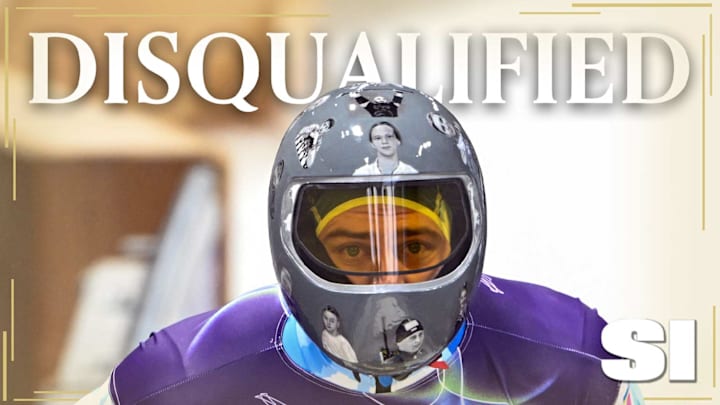
Um, so, I think we have been, people have been following this story, I think, hopefully, have at least some passive familiarity, but if not, uh, Harraskevich had this, um, this helmet that depicted several, uh, athletes and coaches from Ukraine who have been killed in the war with Russia.
Uh, he'd been wearing it during training.
He wants to wear it during his actual competition.
The IOC had told him earlier in the week, no, uh, but, uh, Harriskevich did not back down.
He continued to stand his ground, say, I want to wear this helmet, and then finally, uh, once, you know, the IOC said, no, you're not allowed to.
And then it reached a boiling point, uh, early this morning in Cortina, right before he was set to have his first run.
He met, in fact, with IOC President Kirsty Coventry, who informed him if he, if he refused to switch to a different helmet, he would be disqualified from the race .
And that's exactly what happened.
He did not get to race today.
Yeah, this was, um, and it happened very early in the morning US time, so it was kind of, uh, it's interesting.
The news was in some ways it was surprising to wake up to it and in some ways not surprising because like you said, this had boiled over and, and you and I actually talked about this like a couple of days ago that maybe we should bring this up on the podcast, and I think we were sort of waiting for this to be the day and then not realizing that it was actually going to boil over.
Um, so yeah, I, I think, uh, and I've got a couple of quotes.
There was a very good story that broke this down by Tim Reynolds of the Associated Press, and I shared this on Twitter and Blue Sky for people who want to see.
And then that was followed up by a story from SI's own Pat 40 who had, uh, some quotes from some of the Ukrainian supporters who were there at the sliding center to watch.
Um, so I, I guess to, to lay it out with, so, and like you said, the IOC president was there.
She was, I read in Tim, uh, Reynolds' story, she was supposed to be at the skiing, and I guess knowing that this was going to happen, she, uh , called an audible and went to the luge track, um, so that she could talk to him and have this conversation, and then she said afterwards.
Um, as you've all seen over the last few days, we've allowed for Vladislav to use his helmet in training.
No one, no one, especially me, is disagreeing with the messaging.
The messaging is a powerful message.
It's a message of remembrance.
It's a message of memory, and no one is disagreeing with that.
The challenge that we are facing is that we wanted to ask or come up with a solution for just the field of play.
Um.
And so it sounds like they offered some sort of compromise situations, including wearing a black armband, um, or being able to have the helmet and display it, uh, once he's off the ice, which I would assume still would encompass, or maybe I shouldn't assume, but probably encompasses sort of in and around the track, but not necessarily like during the actual race.
Yeah, and also another detail from the AP story was how Coventry apparently was in tears after meeting with Harriskevich, you know, this, this was a decision that, like she said, she didn't want to have to have to make this call, uh, wanted to come to a solution, wasn't able to clearly sympathize with his point of view, um, and was, and was really emotional after, after speaking with him.
Yeah, so I guess, and, and sort of we've laid it out , but getting into our opinions here, um.
I, I will, I'll start with this.
I think a lot of people looked at this and, and as happens a lot in 2026, people are very quick to just like jump to a side and a conclusion and, you know, I'm right and this person's wrong and that kind of thing.
Just to lay out for both sides, I do understand the reason for this rule in the first place to uh limit expression on political type subjects, and I know that you can.
You know, try to parse the difference between what's political and what's not, um, but I can understand why allowing somebody to have a certain message creates a slippery slope, because if you allow for this, then the next person is gonna say, well, how about this and how about that?
And, and even if there are people who are very much, uh, supportive, uh, and, and believe he should have been able to wear this helmet, you can understand how the IOC at least comes at this, uh, with that viewpoint of, you know, what's the next thing that's gonna come along.
That said, I feel that remembering people who are dead is very different from like a political slogan or hashtag or something.
Like, I think that is one important point here.
And then I think a second important point is just that the IOC has basically already taken a big stand on the Russian invasion.
Of Ukraine by banning almost all athletes from Russia and Belarus, um, at, uh, you know, we've talked about at these Olympics and previous Olympics, they've had them, uh, compete under various, uh, you know, names and flags, but not Russia's flag, and, uh, sometimes banning almost all of them entirely.
So it's, it's interesting that like this is one where the IOC has already said, like, yes, we understand, um.
And, and still they made this decision.
So, you know, I, I think you can at least understand why it might be a difficult decision, even if you don't, uh , agree with the outcome here, and, and so I don't know, those are, those are just a couple of my thoughts basically, but, but yeah, you know, it feels like this is very different from, uh, like I said, sort of a, a flip, uh, you know, slogan or something like that as that this falls into a different category for me than sort of, um, political expression in that way.
Does that make sense?
Yeah, and I feel like, I think the problem here is the IOC making a big deal out of it, because his statement is, is rather minor, right?
This is these people are dead.
I wish they could be here with me at these games, competing themselves in some cases.
Um, and if he'd just been allowed to, to race with this helmet, I think it would have been a nice heartwarming moment.
Um, he's not, you know, he's not making a, a really direct statement about the, the war with his helmet, at least, you know, maybe with his words he is, but with the helmet, you know, it's just pretty much, it's, it's a memorial.
All right, quick shout out to one of my favorite things in my closet right now, Cozy Earth.
First off, their bamboo pajamas, ridiculous.
These are hands down the softest pants I own, like unbelievably soft.
I wear them when I'm working from home, running errands, even just lounging on the couch.
They somehow feel cozy without being too warm, and they actually look good enough to leave the house in, which is rare for pajamas.
Whether it's for someone special or just for yourself, Cozy Earth makes it easy to bring comfort.
Comfort and care into your everyday life.
This Valentine's Day season, we are offering a buy one, get one pajama deal you won't see any other time of the year.
Share a little extra love this February and wrap yourself or someone you care about in comfort that truly feels special.
Head to cozyEarth.
com and use my code, Daily Rings BOGO, Daily Rings B O G O for up to 20% off.
And if you get a post-purchase survey, be sure to mention you heard about Cozy Earth right here.
Celebrate everyday love with comfort that makes the little moments count.
It's somewhat similar, obviously the circumstances are different.
Um, the Latvian hockey, men's hockey goalie, Elvis Merslikens, um, he has an image on his helmet, and I, I believe with, with the national team as well, but at least with his, um, his NHL team, the Columbus Blue Jackets.
He has an image of a teammate, um, I, I don't recall his name, who was killed in a fireworks accident a couple of years ago.
Merslis was actually present at this, uh, tragic event, but, um, You know, and I believe that the teammate who was killed is also Latvian, um, so, you know, it's, it's a similar thing, um, uh, I should say, um.
This Ukrainian athlete you're speaking about, uh, he, in fact, in the 2022 games, made a more direct statement about war.
So, uh, Russia had not yet invaded Ukraine at that point, or at least not , uh, to the extent that it has, you know, uh, escalated this war.
Um, so, you know, what was mounting troops near the border, there was rumblings of potential war.
Um, the Olympic truce is a big thing, you know, no war during the Olympics, and, um, and so he held a sign after his race in Beijing that said no war in Ukraine.
And the IOC said actually they approved of that.
Um, I can see, uh, the IOC said that at that point it was a quote, a general call for peace, and they found that acceptable.
It wasn't really any kind of, that statement was kind of vague enough that they, you know, they cleared him.
I think also the issue was that he did it after racing, right?
Um, you know, he might have been able to do something, uh, at, you know, less premeditated.
at these games and gotten away with it.
But by basically, you know, alerting the IOC that he was planning to do this, um, you know, it, it raised the alarm.
And in fact, I think it, it, it benefits him because, uh, now his statement , you know, his, his views are, are out there, right?
Obviously, the guy would prefer to be racing at these Olympics.
Um, he was not really considered a medal contender.
You know, it's not like, it's, it's a shame he doesn't get to race again.
Um, but it's not as though he's, he's missing out on a medal chance.
Maybe we, it may be the case that, you know, he really wanted to get this statement out there and that was more important to him than actually competing.
Um, I don't, you know, he hasn't said anything to that effect, but you can see how that might be possible.
Well, I, I think that is probably pretty clear because he had the chance to back down and, you know, I, so I think to your earlier.
Point, um, I think you're absolutely right.
They call this the Streisand effect when, like, you know, doing something calls more attention to it, and that is 100% true.
If he had just worn this, I think a lot of people would have just looked at it as like a heartwarming thing.
And now many, many more people are aware of it, specifically because this has become a much, because the IOC made it a much bigger story.
But I think you'd have to look at it and say that he, he felt it was more important cause, you know, I think he really, he took a principled stand here by not competing.
It, it sounds like they gave him a chance, say, hey, wear a different helmet, you can compete, wear an armband, you can compete, and his thought was, essentially, he said, you know, if I can't wear this helmet, I'm not competing at all, and, and.
And it was sort of a game of chicken and he refused to back down.
And so I actually, I give him a lot of credit for taking a principled stand there, um, but yeah, absolutely, like the, the IOC, uh, and, and I was also going to bring up that past example, um, maybe he felt like they already blinked once and so they would blink again, um, but yeah, it's, it's interesting.
Saying that, uh, and again, that comes back to like having to make a decision every single time can be difficult, but, uh, but yeah, it sounds like he, he brought even more attention to this.
And, and we should also add, we are taping at uh about 5:30 p.m. Eastern time on Thursday, and he has filed an appeal.
And so, uh, if he wins the Appeal, then he will, I think, ride one or two times, uh, tonight even, which would be even before people, uh, hear this podcast in their feeds.
So it's possible there will be a big update.
Um, I have no idea what the chances are of an appeal, how often appeals like that are made and, and won and anything like that, but it's possible there will be a pretty significant update to this, um, by the time this podcast is out.
Yeah, and I think the last point I'll make and, um, just kind of moving the story forward, it's, it's been interesting to see, and it will be interesting to see going forward how other athletes react to this news, particularly the Ukrainians.
So, um, today at the, the, uh, luge relay, the Ukraine team took a knee and raised their helmets all in unison, and, you know, it just hours after this news had broke.
Um, so a nice show of support there from, from these athletes who were allowed to compete.
And then previously, um, on Tuesday, in the luge, the women's luge, Olena Samehamaha, I'm not sure, I might, I'm not sure how to say, but, um, she was not part of that relay team.
But on Tuesday, she had worn a glove and she had written on it, uh, quote, remembrance is not a violation.
Um, so that, you know, that's a statement in its own way, and I didn't see any news about her being punished by the IOC.
So it'll be interesting to see how, uh, the Ukrainian colleagues react to this news going forward, right?
I, I think that is a feeling a lot of people have that, that, uh, what was that remembrance is not a violation, not a violation.
Yeah, yeah, and I think that is, that does draw a pretty clear difference.
So, OK, well, I'm glad.
We talked about this.
I know there are people out there who probably don't want us talking about these kinds of things.
They want to hear us get back to, uh, Olympic records on the speed skating track and, uh, you know, amazing races on the super G and the halfpipe and all that stuff.
Um, I think we've talked about it that, um, you know, when some of these other type of stories rise to the level that they're actually affecting.
The field of play, that's when it probably rises to the level that it's worth us talking about here.
And so, um, you know, the fact that a, a writer, and I think, I think pilot is actually the word.
I have been calling them skeleton athletes or riders, but I've seen people calling him a pilot.
The fact that a pilot was, was pulled from the track today.
I think that was a big enough story that I'm, I'm glad we gave that some time here on the podcast.
Yeah, we don't want to have to talk about these things, but when they become, you know, significant, you know, it's kind of you feel silly not bringing it up.
Yeah, for sure.