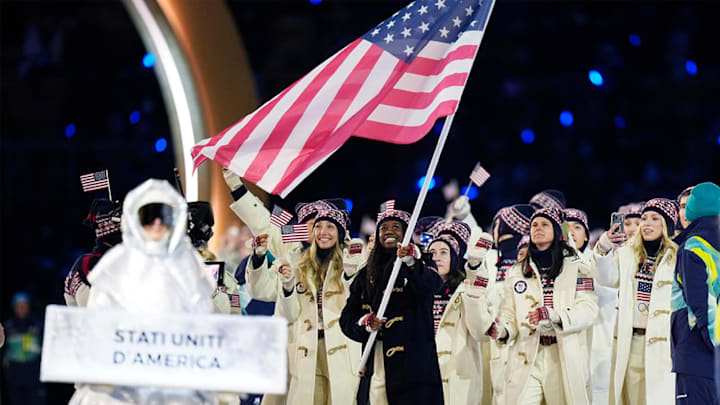
I believe you were the first African American woman to bear the USA flag at the Winter Games.
What did that mean to you?
Well, I definitely have to give credit to Ilana Meyers Taylor because she was voted as Team USA's flag bearer for the opening ceremonies in Beijing, but unfortunately she couldn't attend opening ceremonies because she had COVID.
But I think, yeah, really surprised and honored, you know, being selected from my peers on Team USA, and yeah, it was a, yeah, a really special time.
Talk to me about your mindset coming into Milan.
Like, what was different about this Olympics from the last one?
Yeah, with this Olympics, it's totally different from my last two games.
You know, my first one was kind of a surprise just to even be there.
Then my second one, I came in ranked first in the world and was able to pull off the gold medal.
So that was just an amazing time overall.
And then this time coming in trying to defend that gold medal just brought like a new type of pressure, but the pressure is what I really love about competing, so I, I really.
Had a great time with that and um yeah, the prep for me as I'm getting older is more about trying to train smarter versus harder and keep my body happy so that I can perform at my best.
You talked about that pressure and Mallin and, you know, he's talked about like the mental health aspects getting to him and just heavy favor to win the gold, finished 8th place in figure skating.
Can you talk about what you go through mentally as an Olympian with all of this pressure, your training.
Yeah, I mean, it was really tough with Ilya, but he's a strong kid.
I know he's going to bounce back and come back to the top.
As far as how I deal with pressure, I feel like it actually helps me because I'm someone who's normally really calm going into a competition.
I'm just a really laid back person, so I feel like the pressure kind of helps me get amped up to compete.
So yeah, I guess I like pressure and maybe that comes from my idea that you know a loss isn't this big failure or anything.
It's not the end of the world.
It's something that I can.
Kind of learn from and it makes me hungry to come back for more.
I, I would love to hear about your partnership with Lily.
Um, this is a really revolutionary program with Team USA athlete recovery.
Tell us a little bit about why you wanted to get involved with this.
Yeah , it's, it's awesome partnering with Lily like just as someone who has dealt with tons of injuries, and their athlete recovery program is something that, you know, really, really speaks to me because it's just been amazing getting that support from, from Team USA and I .
Recovery is something that's that's a really big part of every athlete's journey, and just seeing what Lily is doing is, you know, really inspiring for me to be able to keep going and, you know, keep pushing more and more years in my journey.
How big of a role does the specific host city that you're going to play in your preparation and competition, and how has Milan been as a host city for you?
Yeah, I think Milan has been really awesome as a host city.
The weather has been really nice.
It's a beautiful day today.
I think one of the most important things for the host city.
Is the venue, I guess, especially for speed skating because like our venue is very difficult.
It becomes like a big complicated thing so they actually built our facility in a warehouse.
It's this big temporary speed skating track and um so that was probably the biggest adjustment we had was just, you know, skating on a track that had never been, you know, used before for the Olympics or for.
Like any major speed skating competition, so that was definitely an adjustment in the beginning.
The organizers and the ice makers did a really great job of getting the ice where it needs to be for the long track competition.
So yeah, we're really happy with all that.
When it's all said and done, when your career is over, what do you plan to do with your medals?
Are you gonna just be wearing your medal, eating cereal?
Like what, what's the visual of you wanna have at the end of your career with your Olympic medals?
I probably won't wear the medal a whole lot because it's actually really heavy and it makes your neck a little sore if you wear it a lot, but yeah, right now it's in like a little pouch and I kind of carry it with me when I go on different trips because sometimes if I'm doing a speech or something or talking with kids, then everyone wants to see the meal, so I just have it in a little pouch and I bring it with me when I go on trips.
But I think when I'm done traveling with it as much, yeah, I'll probably find a way to display it on the wall or something.
%20%20--%3E%0A%3Csvg%20version%3D%221.1%22%20id%3D%22Layer_1%22%20xmlns%3D%22http%3A%2F%2Fwww.w3.org%2F2000%2Fsvg%22%20xmlns%3Axlink%3D%22http%3A%2F%2Fwww.w3.org%2F1999%2Fxlink%22%20x%3D%220px%22%20y%3D%220px%22%0A%09%20width%3D%2239px%22%20height%3D%2240px%22%20viewBox%3D%220%200%2039%2040%22%20enable-background%3D%22new%200%200%2039%2040%22%20xml%3Aspace%3D%22preserve%22%3E%0A%3Cpath%20fill%3D%22%23FFFFFF%22%20d%3D%22M38.5%2C7H28.2v26h10.3V7z%22%2F%3E%0A%3Cpath%20fill-rule%3D%22evenodd%22%20clip-rule%3D%22evenodd%22%20fill%3D%22%23FFFFFF%22%20d%3D%22M26.1%2C25.5c0%2C5.8-4.1%2C7.5-12.9%2C7.5C3.9%2C33%2C0%2C31.2%2C0%2C25.2v-1.1h11.6%0A%09v2.4c0%2C0.7%2C0.1%2C1.4%2C1.2%2C1.4c1%2C0%2C1.2-0.4%2C1.2-1.3v-0.9c0-1.6-0.9-1.6-3.5-2.2C2.2%2C21.7%2C0%2C19.7%2C0%2C15.3v-0.9C0%2C9.3%2C5.5%2C7%2C12.9%2C7%0A%09c10.2%2C0%2C12.8%2C2.6%2C12.8%2C7.4v1.8h-11v-2.9c0-0.6-0.4-1.1-1.2-1.1c-0.6%2C0-1.2%2C0.4-1.2%2C1.1v0.9c0%2C1.5%2C0.9%2C2%2C3.3%2C2.5%0A%09c8%2C1.6%2C10.5%2C3.3%2C10.5%2C7.5V25.5z%22%2F%3E%0A%3C%2Fsvg%3E%0A)