%20%20--%3E%0A%3Csvg%20version%3D%221.1%22%20id%3D%22Layer_1%22%20xmlns%3D%22http%3A%2F%2Fwww.w3.org%2F2000%2Fsvg%22%20xmlns%3Axlink%3D%22http%3A%2F%2Fwww.w3.org%2F1999%2Fxlink%22%20x%3D%220px%22%20y%3D%220px%22%0A%09%20width%3D%2239px%22%20height%3D%2240px%22%20viewBox%3D%220%200%2039%2040%22%20enable-background%3D%22new%200%200%2039%2040%22%20xml%3Aspace%3D%22preserve%22%3E%0A%3Cpath%20fill%3D%22%23FFFFFF%22%20d%3D%22M38.5%2C7H28.2v26h10.3V7z%22%2F%3E%0A%3Cpath%20fill-rule%3D%22evenodd%22%20clip-rule%3D%22evenodd%22%20fill%3D%22%23FFFFFF%22%20d%3D%22M26.1%2C25.5c0%2C5.8-4.1%2C7.5-12.9%2C7.5C3.9%2C33%2C0%2C31.2%2C0%2C25.2v-1.1h11.6%0A%09v2.4c0%2C0.7%2C0.1%2C1.4%2C1.2%2C1.4c1%2C0%2C1.2-0.4%2C1.2-1.3v-0.9c0-1.6-0.9-1.6-3.5-2.2C2.2%2C21.7%2C0%2C19.7%2C0%2C15.3v-0.9C0%2C9.3%2C5.5%2C7%2C12.9%2C7%0A%09c10.2%2C0%2C12.8%2C2.6%2C12.8%2C7.4v1.8h-11v-2.9c0-0.6-0.4-1.1-1.2-1.1c-0.6%2C0-1.2%2C0.4-1.2%2C1.1v0.9c0%2C1.5%2C0.9%2C2%2C3.3%2C2.5%0A%09c8%2C1.6%2C10.5%2C3.3%2C10.5%2C7.5V25.5z%22%2F%3E%0A%3C%2Fsvg%3E%0A)
The One-and-Done College Football Coach Was Nearly Extinct. That Could Change Soon.
In this story:
“We were unfortunate in securing a coach. After keeping him for a short time, we found that his knowledge of the game was very limited. We therefore got rid of him.”
Such was the fate of E.B. Beaumont, the first-ever coach of the Alabama football program, as written by the school’s yearbook The Corolla. Beaumont led the then-Cadets to a 2–2 record in 1892, with a loss to Auburn serving as the death knell to his tenure, as would be the case for Crimson Tide coaches to follow.
From the sport’s earliest days, college football fans have lived and died by their teams, and have held the men who lead them to high standards, though the era of the multimillionaire coach and the multimillion-dollar buyout was a century or so away. Through the first 50 or so years of the sport, the one-and-done coach was fairly common, though not always for reasons as clear as Beaumont’s dismissal. Short contracts were the norm, many coaches were still students (and occasionally, players) at the school, who would leave upon graduation. Others were faculty members, coaching multiple sports and looking to help get gridiron football off the ground. In the first half of the 20th century, the World Wars necessitated the changing of the guard at programs from year to year. And many of the greatest early coaches spread their wisdom as far and wide as possible, with Pop Warner, for example, serving overlapping tenures at Georgia, Iowa State and Cornell, “coaching” the Cyclones via telegram even after taking over the program in Ithaca, N.Y.
In modern college football, however, the one-and-done firing is exceptionally rare. The most ambitious major programs hiring elite coaches are reined in by the gargantuan buyouts included in their contracts, making it as untenable financially as it is hasty. And yet, in 2026, with roster budgets for top programs reportedly ballooning past $50 million per year, the concept of the steady rebuild is all but out the window. Next year’s College Football Playoff expansion to 24 teams may be, in many ways, designed to take the pressure off of programs that have invested so heavily in their rosters and coaching staffs, but it will crank the pressure way up on those who fail to meet the lowered expectations.
The 2026 coaching cycle may see not only the first coach fired after a single season in over a decade, but a number of coaches let go after disappointing first years at the helm.
MORE COLLEGE FOOTBALL FROM SI: Podcast | Forums | Newsletter | Bracket Challenge
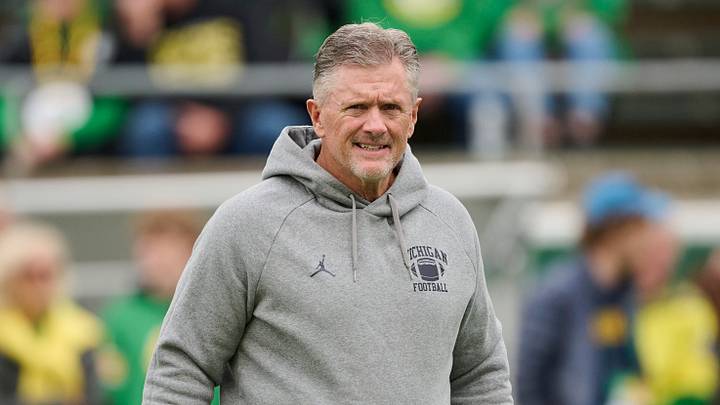
Michigan’s hiring of Kyle Whittingham was about as sensible as any coaching move can get. Whittingham, who was effectively pushed out at Utah after a 177–88 run dating back to 2004 when he took over for Urban Meyer, had shown few signs of slipping, leading the Utes to a 10–2 record just last season. Perhaps the school’s desire to move on to coach-in-waiting Morgan Scalley should have been a bigger tell, but it was somewhat understandable given messy coaching transitions that have taken place across the sport.
The Wolverines, meanwhile, were desperate to separate from the highly successful but scandal-ridden Jim Harbaugh era, which culminated in the arrest of Harbaugh assistant-turned-head coach Sherrone Moore late last year. Whittingham seemed to fit the profile of a “Michigan Man” without having any experience in Ann Arbor, and zero Harbaugh-associated baggage.
Fast forward to mid-November, and it is just not working at all.
Despite fielding a talented roster that is financially competitive with the top of the sport, including big-money quarterback Bryce Underwood, the team is worse than the disappointing one Moore fielded last year, with an elite defense but an offense that is among the worst in the Power 4. Making the situation worse is his handling of the on-field struggles, most recently downplaying the upcoming rivalry game against Ohio State while complaining about the spending of other programs like Oregon. The season has painted a picture of a coach completely out of his depth at a new program with higher expectations than he ever had at Utah, even as he built the Utes into a true national competitor. And while his buyout, which would pay him $24.75 million if he is fired this year, is steep, the cost of Michigan falling into mediocrity is far steeper.
If Whittingham doesn’t make it to Year 2 with the Wolverines, he’d join a very short list of modern FBS coaches fired after just one season. Without counting those who were embroiled in scandal or interim coaches who did not ultimately land the full-time head coaching job, Sports Illustrated found fewer than 10 examples of head coaches who fit the bill. The last came in 2012, at a much smaller program.
When Ellis Johnson left South Carolina to take over for Larry Fedora at Southern Miss in 2012, he was inheriting a gem of a small-conference program coming off of a 12-win season, a Conference USA championship and Hawai‘i Bowl win. Southern Miss had 18 consecutive winning seasons, was riding a 10-year run of bowl appearances and had a history of picking off SEC powers through the 1990s and 2000s.
The Golden Eagles not only failed to keep up that momentum, but they completely collapsed, falling to 0–12. Johnson didn’t get a second season. The program bounced back to experience some decent success under coaches Todd Monken and Jay Hopson, but bottomed back out under Will Hall, who bracketed a 7–6 bowl campaign in 2022 with a pair of 3–9 seasons and was fired after the ’23 campaign. Now, one year into his second head coaching opportunity, Hall is also running the risk of joining the short, ignominious list of one-and-done firings.

Prior to his stint leading Southern Miss, Hall served as offensive coordinator under Willie Fritz at Tulane, helping that program’s transformation into one of the best in the Group of 6. He returned in 2025 as the pass-game coordinator under Jon Sumrall, and despite his poor head coaching record, ascended to the top job after Sumrall’s departure to Florida, which came on the heels of the Green Wave reaching the College Football Playoff.
Fritz and Sumrall have raised the expectations of the Tulane program, and Hall has struggled to reach them, suffering blowout losses in two of their last three games to UTSA and Tulsa. Following the 60–10 drubbing at the hands of the Golden Hurricanes, athletic director David Harris was moved to put out a statement about the game.
“Today’s performance by our football program was unacceptable, and far below the standard that we have come to expect in recent years,” he said. “I understand the frustration and disappointment that our supporters feel. I am embarrassed by what transpired on the field in front of our student-athletes’ families, alumni, fans and the entire Tulane community. While any loss is difficult to accept, today’s defeat was particularly alarming given the point differential. Our play was not representative of the work, discipline and sacrifice made by those who established the standard we expect from Tulane football.


“Earlier this week, I relayed through a podcast interview that this season has not met the expectations of our department. With at least three games remaining in our season, our responsibility is to respond with urgency. Our student-athletes and staff have owned what happened, will evaluate it thoroughly and show meaningful improvement in the work ahead.”
If a midseason vote of confidence is considered an ominous sign for a coach on the hot seat, this sort of post-loss statement should send off serious alarm bells.
Whittingham and Hall are not the only first-year coaches whose futures have been openly questioned. Cal’s Tosh Lupoi, an alumnus who took over the program with pretty high expectations after a successful run as defensive coordinator at Oregon, and scored early marks for his aggressive moves to retain talented quarterback Jaron-Keawe Sagapolutele. From the start, the on-field product has failed to live up to expectations, and Sagapolutele was benched midway through the season. Entering Week 12, the Golden Bears have dropped six of seven games, including noncompetitive losses to Clemson, Wake Forest, SMU and an NC State team that has fired its coach.
A report by The Athletic describes a program “mired in chaos,” with general manager Ron Rivera—a longtime NFL head coach—openly stating that Lupoi has “bumped his head” as first-year coach and admitting that he hasn’t always been receptive to advice.

“We have talked a lot,” Rivera said. “[I’ve] tried to give him a lot of advice, point him in the right direction. Some of it, he’s been very receptive, and other portions of it, he hasn’t.”
Lupoi and Rivera appeared together during a news conference last week in an attempt to quiet concerns around the program, but at 3–7, their best chance to do so will come with late-season wins.
If Lupoi is dismissed, he would join fellow one-year Cal leader Frank Wickhorst, who was ousted after a 2–7 record in 1946. The former Navy All-American’s firing came after a large petition in which 2,600 students demanded a “cleanup” of the athletic department. Wickhorst also drew complaints from some of his players over the team’s “lack of unity and organization,” and in an issue raised decades ahead of its time, demands for a $75 “living wage” in order to attract better talent.
Down at Arkansas, coach Ryan Silverfield had no honeymoon period with his fan base, even though most of the pressure is directed at the athletic director that hired him, Hunter Yurachek. Firing Silverfield after one tough year in his SEC debut would be rash, but rash things happen in the conference where it just means more.
The Razorbacks had one of the last situations in which a coach was one-and-done at a school, though it came with extenuating circumstances. After the Bobby Petrino scandal, in which the successful Arkansas coach was fired after lying about an affair with an athletics staffer following a motorcycle crash involving the pair, the program tabbed John L. Smith to take over. The veteran coach had recently left Petrino’s staff to take over the FCS program at Weber State, but returned after Petrino’s ouster. While he wasn’t labeled interim coach, his contract with the program gave it room to move on from him at season’s end, and the school would hire Bret Bielema.
A similar situation played out at Illinois in 2015, when Bill Cubit was tabbed as the interim coach to replace Tim Beckman, who was dismissed over allegations of player mistreatment. He had the interim tag removed late in the season, but during the winter the school hired Josh Whitman as its new athletic director, and a month later, Whitman fired Cubit and hired former NFL coach Lovie Smith to replace him.
The Smith and Cubit situations were far from clean breaks with truly established coaches, even if neither had an interim tag when they were fired. Before Johnson and Southern Miss, the last true one-year firing that SI found came with Richard Bell at South Carolina in 1982, who was fired after a 4–7 record in his first and only season as Gamecocks head coach, though the dismissal may have had as much to do with his reluctance to fire assistant coaches at the behest of AD Bob Marcum. He later won $171,000 in a lawsuit against the school.
In 1972, Tom Harper, who was an internal promotion at Wake Forest, was let go after just eight games and a 1–7 mark leading the Demon Deacons. He was allowed to coach out the season, and did have a high note with a win over Duke in his first game after the dismissal, but Wake Forest finished just 2–9 and at the bottom of the ACC.
The well-traveled Lou Saban, later the coach at Maryland, Miami, Army, UCF, the Buffalo Bills, Denver Broncos and a host high school and lower-division college programs, lost his job at Northwestern after one year, a winless 1955 season. Athletic director Stu Holcomb relieved the entire staff—which also featured future New York Yankees owner George Steinbrenner—of their duties just days into his tenure leading the department. Holcomb struck gold, hiring future Notre Dame legend Ara Parseghian to replace him.
Outside of these rare one-off examples, spread across decades since the earliest years of the sport, one-and-done college football firings are virtually unheard of. And yet, as everything in college sports continues to evolve and change, it should come as little surprise that the increased pressure to win—and to keep the booster money spigots flowing—may ultimately reach a place in which even a potential Hall of Famer like Whittingham has little margin for error from Day 1 at a place like Michigan.
PODCAST: Listen to Sports Illustrated’s college sports podcast, Others Receiving Votes, hosted by Pat Forde, on Apple and Spotify. Watch the show on SI’s college YouTube channel or on SI TV.
 Add us as a preferred source on Google

Dan Lyons is a staff writer and editor at Sports Illustrated. He joined SI for his second stint in November 2024 after a season as senior college football writer at Athlon Sports and previous three-year run at SI as a writer and editor for the Breaking and Trending News team. When he’s not watching a game, you can find Dan at an indie concert venue or movie theater. Dan has a bachelor’s degree in writing and rhetoric from Syracuse.
Follow dan_lyons76