%20%20--%3E%0A%3Csvg%20version%3D%221.1%22%20id%3D%22Layer_1%22%20xmlns%3D%22http%3A%2F%2Fwww.w3.org%2F2000%2Fsvg%22%20xmlns%3Axlink%3D%22http%3A%2F%2Fwww.w3.org%2F1999%2Fxlink%22%20x%3D%220px%22%20y%3D%220px%22%0A%09%20width%3D%2239px%22%20height%3D%2240px%22%20viewBox%3D%220%200%2039%2040%22%20enable-background%3D%22new%200%200%2039%2040%22%20xml%3Aspace%3D%22preserve%22%3E%0A%3Cpath%20fill%3D%22%23FFFFFF%22%20d%3D%22M38.5%2C7H28.2v26h10.3V7z%22%2F%3E%0A%3Cpath%20fill-rule%3D%22evenodd%22%20clip-rule%3D%22evenodd%22%20fill%3D%22%23FFFFFF%22%20d%3D%22M26.1%2C25.5c0%2C5.8-4.1%2C7.5-12.9%2C7.5C3.9%2C33%2C0%2C31.2%2C0%2C25.2v-1.1h11.6%0A%09v2.4c0%2C0.7%2C0.1%2C1.4%2C1.2%2C1.4c1%2C0%2C1.2-0.4%2C1.2-1.3v-0.9c0-1.6-0.9-1.6-3.5-2.2C2.2%2C21.7%2C0%2C19.7%2C0%2C15.3v-0.9C0%2C9.3%2C5.5%2C7%2C12.9%2C7%0A%09c10.2%2C0%2C12.8%2C2.6%2C12.8%2C7.4v1.8h-11v-2.9c0-0.6-0.4-1.1-1.2-1.1c-0.6%2C0-1.2%2C0.4-1.2%2C1.1v0.9c0%2C1.5%2C0.9%2C2%2C3.3%2C2.5%0A%09c8%2C1.6%2C10.5%2C3.3%2C10.5%2C7.5V25.5z%22%2F%3E%0A%3C%2Fsvg%3E%0A)

01:03:18 |
Up Next
Tony Elliott on Virginia’s Turnaround, QB Battle & ACC Championship Goals | Sports Illustrated
14 hours ago
Dave Doeren on CJ Bailey’s Growth, NC State’s New Faces & ACC Title Push | Sports Illustrated
14 hours ago
Baylor Head Coach Dave Aranda on the Hot Seat and What Must Change in 2026 | Sports Illustrated
12 hours ago
Jaxson Dart Impresses, Malik Nabers Nears Giants Return
16 hours ago
Tony Elliott on Virginia’s Turnaround, QB Battle & ACC Championship Goals | Sports Illustrated
14 hours ago
Dave Doeren on CJ Bailey’s Growth, NC State’s New Faces & ACC Title Push | Sports Illustrated
14 hours ago
Baylor Head Coach Dave Aranda on the Hot Seat and What Must Change in 2026 | Sports Illustrated
12 hours ago
Jaxson Dart Impresses, Malik Nabers Nears Giants Return
16 hours ago
In The Corner: Ode Osbourne on Injuries, UFC Life & Building His Brand
Aug 25, 2026

Cincinnati Head Coach Scott Satterfield on What Must Change for the Bearcats in 2026
14 hours ago
Is This The Year These Coaches Turn It Around? | Others Receiving Votes
17 hours ago
Jaxson Dart on Playing Under Center, Longer Play Calls, & Being A New York Quarterback
13 hours ago
It's Officially Week Zero!! | Others Receiving Votes
18 hours ago
Extend CJ Stroud or Wait for Loaded 2027 QB Class?
Feb 25, 2026

Tom Verducci Explains What Makes Konnor Griffin’s Swing Elite
Feb 27, 2026
UFC Middleweight Reinier de Ridder Calls for Major Weight Cutting Reform
Mar 5, 2026
Transcript
All right.
Welcome to the show.
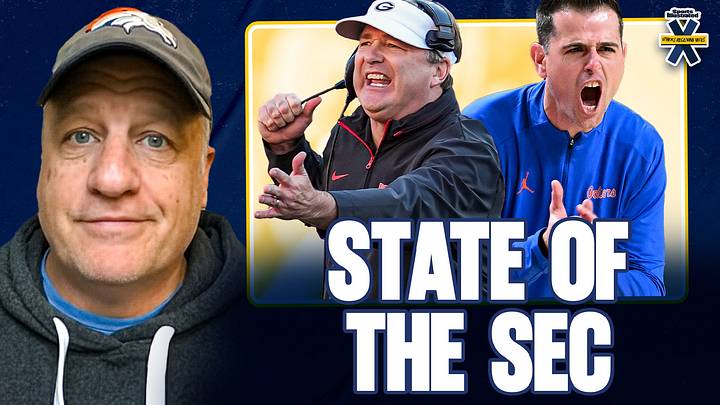
Others receiving votes.
Happy Memorial Weekend to everybody.
Uh, we're coming to you here during the weekend because it's a good time to listen to a podcast.
We are inside of 100 days until the kickoff of college football.
Which people, uh, generally kind of using as an excuse to kind of ramp things up, but we're already ramped up, have been for weeks, we'll continue to be so throughout the summer.
So thanks for watching and listening.
I'm joined as always by Brian Fisher and Kevin Sweeney from Sports Illustrated SI.
com.
And you can find the podcast on YouTube, on our site, on Apple, on Spotify, wherever.
Uh, the last couple of weeks, we've been doing conference, uh, breakdowns.
We did the ACC, we did the Big 10, and today we're gonna do the SEC.
And oh boy, are there interesting times in the Southeastern Conference right now, gentlemen.
Uh, they are meeting beginning Tuesday, technically, although really some things start happening Monday night, uh, at the Sandston Hilton in on the the panhandle of Florida, and compared to the Ritz-Carlton at Amelia Island, and compared to the Tirania in Palos Verdes, this is, they're almost slumming it, guys, not really.
But this is an older hotel.
It's, you know, it's a trendy kind of area, the panhandle, but it's still the panhandle, right?
You know, I mean, it's Redneck Riviera, so they're kind of keeping it real there.
Uh, I will point out, as we've been going through and talking about the locations of these, um, These spring meetings and, and how nobody has any money except until it's time to have a meeting.
Uh, my sources informed me that the Big Sky is meeting at Idaho State University in Pocatello .
They're keeping it real in the Big Sky.
So, not everybody is going to a, uh, completely obnoxious resort for their meetings.
All right, guys, uh, as I said, extremely interesting times in the SEC.
Let's get into it.
Uh, Kevin, I'm gonna start with you.
We're gonna kind of go through the same questions we have with the other leagues.
Where is the conference in the current national hierarchy, and is it trending up or down or steady?
I mean, I think it's clearly now behind the Big 10, as we talked about last week, uh, although it would be a good podcast to just tell each league's fans that they're #1, that might have been an interesting idea, we could have, we could have tried.
Why didn't we think of that, damn it.
But if, if, if we're calling the SEC number 2, it's, it's trending down and that, that.
At the end of the day, you know, the Southeastern Conference will be measured based on whether it dominates on the gridiron.
And because it hasn't, because it hasn't won national championships, because of this, uh, emerging drought that has begun, uh, for, for the league, uh, and that has coincided with the Big Ten's rise, it's, it's hard to say anything but, uh, a somewhat of a downward trend.
I don't think the SEC is, uh, bound for misery or anything like that.
The SEC is in very, very good position, but It is not, it does not have the hand it had uh just a few years ago, and that is probably a concerning thing for um the presidents, the ADs, for Greg Sankey, for everybody involved.
I mean, it's there there's a power to, certainly in college sports, but it just means more for one league in one sport only, and uh unfortunately they have not uh not only played for the title at least last couple of years, you know, I think that's that's probably the more jarring thing.
It it's one thing not to to win football titles like they did certainly.
Um, these really the past two decades in terms of the dominance they, they displayed on that sport, but, um, to not even play for the national title, I think has, uh, certainly added into what has been going on in SEC territory in terms of getting to grips with, um, you know, being behind the Big 10, um, not having as many elite teams as, as they previously are, adjusting to the new realities of, of college sports in terms of not only paying players, but, um, you know, assembling rosters, getting their coaching staffs in line, uh, getting everything else in their athletic departments.
Um, you know, all the ducks in a row.
That, that's probably the, the bigger thing for the SEC and really why Uh, it, it's going to make for some fascinating meetings this week, uh, there in Destin in terms of how do they adjust to these new realities and, and certainly, um, how do they get back on top?
I, I think that's going to be the dominant theme, not just of SEC meetings this week, but, but really the, the upcoming year, uh, the upcoming couple of years, depending on how, how long the Big 10 keep this, uh, run going, but, um, it's definitely prompted some, some introspection by those in the SEC and, uh, for , for good reason, given where they were, uh, just a couple of years ago and where they are now.
Yeah, the SEC has certainly been pushed into, I think, different and uncomfortable territory at the present.
Not just the fact that, yes, they've, they have lost their grip on their stranglehold on football, but Is Greg Sankey losing his grip on being the straw boss of college athletics.
One of the big topics, obviously there, and, you know, we've been writing about it and reporting on it, uh, is What is the playoffs going to expand to 24 over the semi-dead bodies of Greg Sankey and others in the SEC because the Big 10 says so, and the Big 10 now has backing from the Big 12 and the ACC and some other important people.
That's gonna be a huge topic, and if the ball is in the SEC's court, so to speak.
They can veto this.
They can say, heck no, we're not gonna do it.
But are they ready to stand up?
To the rest of FBS and basically say, we're, we're gonna be the obstruction here.
I hope they do, cause I want them to be the obstruction, cause I don't want a 2014 playoff, but it's still an uncomfortable position to have everybody else kind of arrayed in opposition to you.
So you've got that, and then, yes, you've got the um the lack of a loss of football primacy.
The last three college football playoffs, obviously, yes, the Big 10 has won all of them.
The SEC has not been in the finals, and the SEC's record.
In the last 3 playoffs is 5 and 9.
Not too good, not great, and they were 3 and 5 last year, and their only win over somebody other than themselves was Mississippi beating Tulane, which was certainly expected to happen .
It's not like anybody punched above their weight last year in the playoffs for the Southeastern Conference, except for Mississippi by beating Georgia, again, defeating another SEC team.
So, Uh, they're not delivering in the areas that they had been delivering, no doubt about it.
Now, basketball has been excellent, and we'll get to that, and Kevin's got plenty of information on that, uh, in a little bit here.
But in general, I just think that the, the entire vibe around The SEC and we'll see this in the spring meetings, cause it, it's always, you know, everybody goes to spring meeting and pats themselves on the back, but they have less to pat themselves about and more issues to face.
The other element to Whether or not they're gonna stand up against 24, is there's some people within the league that want 24.
I don't think there's unanimity there by any stretch behind not going to 24.
So, that's gonna be another element, I think of the churn and the angst.
And then, there's this.
One thing the SEC has always had, and maybe has more now than ever, and I want your feedback on this.
Internal infighting.
Oh my gosh, LSU has gone completely off the rails.
It's like the, the craziest, it's often been the craziest place in college sports, but it is yet again, in part because Lane Kiffin did what he did to Ole Miss, and now is taking shots, passive-aggressive shots at Ole Miss for um I I it's, I, I guess, problematic racial history and how that hurt recruiting.
Gee, he wasn't bringing that up when he was actually there.
Now he's bringing it up when he's recruiting against Ole Miss.
Uh, Steve Sarkisian's going after Ole Miss.
It's like bash Ole Miss Month in the, in the league.
Uh, is this just, uh, I'll, I'll, I'll, I'll ask, I'll start with you, Brian, on this.
Is this just part of the annual sideshow in the SEC or, or do we have something more here?
Uh, you know, I, I, I would say there's something more, you know, uh, this, you know, this, this also kind of speaks to the fact that this would not be happening under Greg Sankey's predecessor Mike Slide, you know, that was very much a, we're presenting a unified front, and while there definitely were disagreements, whether it made it actually Into the press and, and, and to, to our ears, uh, via phone calls or via press conferences.
Um, that was never the case, you know, previously.
And, um, you know, even in, in early in Greg's tenure, I, I would say that was, uh, certainly not the case, but, um, I think slowly but surely.
Everybody in the league has kind of, uh, understood that they're out for themselves and, and not out for, uh, presenting that, uh, united front for the conference.
And then that's certainly led to some issues.
I mean, even, you know, you go back to this time last year, you know, I think the ADs kind of came into, uh, you know, meetings kind of, uh, coalescing, I, I would say generally around, you know, hey, we could have uh an expanded play.
We could have these automatic qualifiers .
And then the coaches, when they met in Destin, they just threw cold water on that.
So it's gonna be interesting to see, uh, ultimately what becomes of those meetings, uh, this, this year because obviously, their, their opinion changed from, from last year and things have changed, uh, considerably over the course of, say, the last couple of months, uh, in the league, and there has been more infighting.
There has been Um, you know, more, uh, back and forth.
And I don't know if that's necessarily just a product of, of the fact that they're not able to puff their chest out like they used to, but it, it certainly led to everybody kind of looking around and saying, all right, well, all right, they're doing that , we, we've got to do this.
And, and I think there's, they're almost making up for lost time.
Uh, and, and they're certainly cutting some wrestling promos, uh, in, in, in the league, both the coaches and the ADs in terms of, uh, going out and saying things they probably previously would not.
So it's, it's fascinating times in the SEC, and I, I'm sure we'll talk more about what that means ultimately for Greg Sankey and, and his, his mood, uh, going forward out of Destin.
I don't know, it's, it's, I, I think it's, it's a symptom of feeling like you're losing control, right?
I, I think if the top, look, I don't think everybody would be taking shots, pot shots at Ole Miss if LSU and Texas felt secure in their position of we're, we're better than everybody else, or, or let alone, we're better than Ole Miss.
Right?
Like, the, I think the, the, the, the, the playing field being leveled , not just between the SEC and the Big 10, but between the top and the middle of the SEC, you know, financially to an extent with, with, with the way you can build rosters and Ole Miss certainly has been aggressive as anyone in doing that.
I think I think that's probably the, the cause of a lot of this, and that's not to, like, single out Ole Miss necessarily, but it seems like that's, that's seemingly what what's happened, and I think it, I think when, when things aren't going your way, it becomes easy to uh punch down a little bit.
I think that's what, uh, that's what you're seeing with, with some of the uh the recent, uh, the recent strife, and yeah, it's harder to control it when, when things aren't going so well.
Yeah, we have the, we have allegations of basket weaving degrees at, uh, at Ole Miss.
We have allegations of, you know, racial problems and hurting recruiting.
Uh, we also had Ole Miss in the college football playoff semifinals last year, unlike any other SEC team.
So, uh, it's, uh, it's fascinating to me.
And Like the, the, there's been plenty really of crossfire in the league's history.
I certainly remember Jimbo Fisher going after Nick Saban, after Nick Saban went after Texas A&M a couple of years ago, and it's like, oh my gosh, is this really happening?
Uh, I do remember.
Phillip Fulmer wants skipping an SEC football media days because he didn't want to get a subpoena to appear when Alabama people were going after him in a recruiting, uh, controversy.
So, they, you know, there's been plenty of stuff.
I remember Lane Kiffin, uh, raising the ire of Urban Meyer, when Urban Meyer was at Florida.
Uh, you're right though, Brian, that One of Mike's Live's talents or gifts was to get everybody to eventually get behind a closed door and get it out, and then come out and say, and lock arms, we're like, we're all in this together.
And Sankey at times has been able to do that too, but I think it's getting harder, as you mentioned, uh, and whether that is a symptom of insecurity or whatever, I don't know.
But, but it's fascinating to listen to and to watch, and just the, like the again, the LSU crazy pills.
are, are incredible.
And we will certainly talk about Will Wade and what he's trying to pull off there, uh, in Baton Rouge in a bit here.
But to, they're gonna show up in Destin with a new football coach who is wildly unpopular everywhere else in the league, a new basketball coach who is wildly unpopular everywhere else in the league.
An athletic director who's maybe the athletic director, but also maybe it's Heath Schreyer who they brought in.
And then you got a new president who just kind of wandered in from McNee at the behest of the governor.
The guy that really should be there is Jeff Landry, the governor of Louisiana, who was last seen charming the, the folks of Greenland, uh, to the extent that, like, he was getting flipped off, but that's a whole other issue.
So, again, I had a lot of, of just fascinating intrigue going on in the SEC.
But let's get to the actual sports, um, and let's get to football.
We touched on it, obviously, but, uh, Brian, What are the league's strengths from a football perspective ?
They obviously still have many of them.
What, where, where is the league good?
Well, you know, this, and, you know, this is a constant refrain from the coaches, you know, just top to bottom, the depth of the SEC, you know, and, and that's, uh, readily apparent when you look at the NFL draft in terms of having the most draft picks.
That's, uh, you know, been, been pretty constant in the last 20 years, uh, even though they had fewer first-rounders than the Big 10.
Um, for the first time in, in, in a while, uh, now recently, this, this past draft , but, um, you, you just look at the, the number of teams competing there for playoff bids for the top of the league, you know, it, it is definitely different, you know, you, you have your, your old missus, certainly that historically we're, we're not all that successful, uh, you know, rising up and, and getting the CFP, uh, making a deep run this past year.
You have the, the Vanderbilts of the world that have certainly come up and done things they've never done in their school history, you know, that, that's another thing that is adding to the league and Um, you know, really, even those teams that, uh, you know, were, were down last year had made significant investments and resources, um, you know, they've changed coaches, you know, LSU being, being certainly top of mind, but you look at what Kentucky has done, um, you know, in, in going from Mark Stoops to Will Stein and, and making investments in the roster that in football they previously have not done.
Um, you know, certainly there's been chaos at Auburn, you know, that's certainly one of the more roller coasters.
For programs in the SEC and they feel like they're, they're, they're getting out of their, their bottoming out phase and going back up, uh, you know, under a new coaching staff.
So, um, it's just a fascinating league and, uh, the amount of money being invested, uh, certainly reflects that, um, top to bottom, you know, from, from a competition standpoint, uh, week in and week out, it is very tough to, to win games in the SEC and, um , that's not just coach speak, that, that plays out on the field.
With your eyes, you know, you, you can tell that a lot of these games are going to be close, uh, you know, one score affairs, and I, I think truthfully, you know, the coaching has improved.
You've got better quarterbacks than there were certainly 4 or 5 years ago, uh, in the SEC and, um, you know, top to bottom, the, the depth of the SEC.
Maybe that leads to fewer elite teams, uh, that we're seeing in the national stage, but in terms of conference strength, it's hard to go wrong with the SEC right now.
Yeah, I, I just think there's more big games throughout the regular season, and part of that is because the top is a little bit more reachable, we talked about this in the Big 10.
Um, episode that, you know, the Big 10 needs a couple of these middle teams to take down the top every so often.
Ohio State needs to get beat, uh, Oregon needs to get beat, Indiana needs to get beat now.
Um, you know, I think the SEC has that and has the, the drama and intrigue.
They also have, I still think the best environments , the best kind of game day experience, atmosphere, like, when, when, like, There is something different about, like, watching an SEC football game that the Big 10 has not been able to quite capture yet, at least across its 1818 schools, and I don't think that's changing.
I think, I still think it's an incredible product, I think it's an incredibly competitive product.
I think the fact that there is more parity is, is great for the regular season in the SEC.
I think, like, it, it makes for more games.
That you feel like you have to watch, and more games that, where you feel like the result is actually in doubt, right?
That it isn't, oh, well, by the 2nd quarter, it'll be pretty obvious that once again, Nick Saban's Alabama isn't losing this week, right?
Like that, you know, the, the, you've lost some of that, but you've replaced that with, like, a Vanderbilt game that all of a sudden has a ton of juice, and here comes Missouri, and here comes.
Ole Miss, and here comes, you know, just the, the stronger middle that the league has, has, has built, I think has been, been great.
And, and again, we've seen examples where even some of the weaker, the bottom, quote unquote, of the league, um, those are not easy games, right?
You think about when Ole Miss, you know, lost to Kentucky and, and things like that.
Like, those games ended up mattering in a way that I don't think the Big 10 has been able to capture.
And I think that's important for, like, a league to have relevancy, especially outside of just, did you win the championship or not.
Really good point.
I think the atmosphere point is significant that.
You still, it, uh, hey, the results haven't necessarily been there, but you can't tell me it means more anywhere else.
It does just mean more, and you go to.
Uh, Starkville, and they're ringing the cowbells, and it's a hell of an environment.
You go to Auburn's as good as any environment in the country, as long as they are competitive.
It is phenomenal going to games there.
You go down the list, as you said, Vanderbilt.
I was there for Vanderbilt, Missouri, which you would, nobody would ever go to Vanderbilt, Missouri before.
It was electric in Nashville.
Missouri's uh atmosphere has gotten better.
Uh , you can go on down the list.
And, and we do have coaching changes at Auburn, Arkansas, Kentucky that I think, uh, uh, have injected some hope.
As you mentioned, Brian, that I think that, you know, Kentucky's finally going to be an offensively entertaining program again for the first time in a long time.
So, you know, I think the, just the, the, The ability to get everybody.
Excited, energized, optimistic before the season, that remains unprecedented, probably there.
South Carolina retained Lenora Sellers.
That's a place.
That fan base is incredible because they haven't had great return on investment, but Williams-Brice Stadium will blow up, and they'll be ready, and they'll be full, uh, no matter what.
So, I, I, I take my hat off to, to the fan bases there.
Also, I, Texas A&M has been on the rise with Mike Elko, that I think should continue.
Georgia doesn't appear to be going anywhere.
You guys mentioned Mississippi.
So, uh, Texas is there on the doorstep.
We're waiting to see, is this the year they break through, play for a championship, maybe win a championship, uh, Alabama, TBD, but there's, there's a lot of, a lot of reasons for a lot of people in the SEC to come into this season saying, hey, we're gonna be good.
So, that's always a fun place to start.
But there are also weaknesses in the SEC as we mentioned, I will go first here.
Uh, one of the problems I think that, and this may be changing this season, we'll see.
I think the quarterback plays been.
A little bit blah the last couple of years.
They have, you know, Trinidad Chambliss all of a sudden came on, that was great, but Gunner Stockton has been fine at Georgia.
He has not been next level.
Arch Manning.
Pretty disappointing to start with, got better last year, but he's not the guy, you know, like, if he was, if he were as he had been billed to be coming into the last season, which might have been unfair to him, but still, if he had been that guy, we would have been talking, he'd be, he would be far and away, like the number one pick, the, the, the, the Heisman favorite.
If he's that now, that's purely because of marketing and because of his last name.
He may still get there, but he has not yet done it on the field.
Uh, I think the coaching has been Ify.
Hadn't been great in some areas, and I think that's why we've seen some changes.
Auburn has had a run of very disappointing coaches.
Florida, it's just been a mess for a long time.
And when Florida's a mess, that really hurts the league, I think.
We are in the post-Saban era, which means the, the best coach in college football is no longer in the SEC unless we're gonna say it's Kirby Smart.
But right now, I'm saying it's Kurt Cignetti.
So, uh, I think that between the quarterbacking and the coaching, the league has slipped a bit, and we'll see whether they can market correct that.
What do you guys think?
I, I, I definitely agree on the coaching standpoint, you know, I think for, for so long, you know, especially with Nick Saban there, you know, there was just an overreliance on finding guys that were connected to Nick, you know, who knew the league and we're, we're gonna keep going insular.
Guys who, who, who understood SEC recruiting, right?
And, and I'm not downplaying that it's, it's a little different recruiting in this, this footprint in the, in the country, but, um, you know, it's just like constantly, you know, they were, they were getting told by Jimmy Sexton that, all right, this is, this is the guy that you got to get.
And I think for a lot of people, you know , they went on that.
Ride and it, the results were just not there.
And, or, you know, they would give, you know, 11 year, uh, a school would have a great year, they'd give a big contract extension and then it would lead to inevitably a year or two down the road, um, you, you've fallen short of expectations and then, all right, well, we got to spend, you know, 20 $25 million.
77 million dollars in terms of buyouts, uh, for, for, for, for just things that were not going to work out.
And so I think that was, uh, part of the issue, you know, for, for the SEC is just not finding the right coaches.
Certainly, the quarterback play was, was not there either.
And, um, You know, depending on how you look at things too, I, I, I would also bring up Pat, you know, you mentioned the governor early.
The, the meddling, uh, from, from outsiders, you know, in terms of the SEC programs.
It is not easy to run a big-time power to program at this point, but the, the amount of interference that athletic directors, coaches have to deal with from both boosters, politicians, of course, uh, especially nowadays, yes, that can help you in, in ways that we've seen at places like Missouri in terms of, all right, you get, getting your state laws changed, uh, to where you can have some more favorable NIL deals.
With, with high schoolers, all right?
That's a positive, but also that, uh, you know, there, there leads to a little bit more oversight, I would say.
Um, you know, the coaches and, and certainly administrators, uh, probably do not, uh, not look favorably to.
So like there's, there's another layer added on in, in SEC schools that frankly, you know, Big 10 schools just do not have to deal with, you know, at this point in time.
And so I think there's, you know, you kind of add all that up and, you know, as strong as the SEC has been, yeah, there's, there's been some cracks in the armor and, and that's definitely shown up, uh, in terms of the ultimate results on the field where they get measured by the most in the, in the playoffs.
Yeah, I mean, you dealt with the meddling in a pre-NIL era because that's how you got the money, and now, I mean, again, that's the, this is not like, oh, nobody in the Big 10 paid their players, like, let's, let's be very clear about that, but it was, I don't think it was necessarily the same magnitude, at least in terms of, like, the way that the the machinations worked behind the scenes, right?
And I think now it's like, OK, you deal with a lot of the same headaches, maybe even more headaches, cause it's bigger checks.
But just to get on the same level playing field as everybody else, that's, that's not a fun place to be, and I think that's probably why, Brian, and we, we talked about it with the Big 10, getting these experienced, high-level names in a way the SEC hasn't.
I think that's probably contributed to that in in some form.
I think the other thing too, is just the timing of some of these premier programs in the SEC, uh, dipping a little bit, uh, was not ideal in the sense of, like, OK, LSU Florida, you know, Alabama slight dip with, you know, from, from Saban to to Deboer, uh, Auburn has been down, like, Now, even if you're getting it right, you're in an environment where there's a lot of other teams that are as chips pushed in as you are financially, right?
LSU can't just decide, OK, we're gonna be good now cause we're LSU and now we have Lane Kiffin, so we'll be fine, right?
I'm, it's not to say that Lane, LSU won't be good.
I think LSU, will be fine, but it's not as simple as, OK, we're guaranteed to win national championships cause we're LSU and we have a good coach.
I think pre-2020.
LSU having a top 10-ish coach in college football pretty much guarantee that they would win a national championships.
I mean, that's, that's the history of the job.
And I think that's, that's, I think the thing I'm, I worry about, even for, you know, the summers and golus of the world, is that the expectations will not meet the reality on the ground of their jobs at this point.
That's, uh, you know what, LSU I think, won 2 national championships with coaches who weren't top 20 or 30, with less miles than Coach O.
Coach O, who's back, by the way, just another element of the, uh, the Baton Rouge circus.
Nobody ever really gets fired there.
Will Wade, he's back.
Coach O's back, Johnny Jones is back, you know, firings are temporary at LSU.
It all, it all comes back.
Um, all right, let's talk some basketball.
Um, Brian, the league, uh, I'm sorry, Kevin, uh, the, the league has been really, really good.
They won the championship with Florida in 2025.
Last year, they were good again.
Uh, tell me what's going well in the SEC basketball.
Yeah, I mean, he just had a run of incredible hires.
I mean, some of the best hires in, in a generation in college basketball in terms of NATOs and Alabama, building an absolutely elite program from Buffalo, Florida getting a national championship head coach, and Todd Golden from San Francisco.
Um, again, that's, that's not to say that the investment hasn't been there, it has, but I do think there was a lot of narratives about, oh, man, the SEC decided there was no longer.
We're, we're gonna win a basketball, we're gonna do this, we're gonna spend the money.
And the money certainly helped, but it was also, like, you nailed some up and comers too.
It wasn't just, oh, we got Bruce Pearl, or oh, we, you know, we're Arkansas and we, we flipped John Calipari in the league, right?
Like, you, you nailed some up and comers, even Arkansas with, with Musk, like, that was an up and coming guy that took them to 3 straight Sweet 16s after they hadn't been in uh.
Quite some time, like, that , that those type of hires, it feels like they've been on the right, right side of more often than not.
Um, and so you have this great group of, of coaches in the league, uh, Golden Oates, um, I think Mark Byington is phenomenal, uh, at Vanderbilt done a terrific job, um, you know, Tennessee and under Rick Barnes has been one of the most consistent programs in the country, um, you know, the list goes on.
They've done a great job with some, with some of the hiring and, you know, that's with not mentioning.
The big golden goose, Kentucky, right?
Kentucky, which is now in kind of an awkward spot, um, Mark Pope's tenure off to a rocky start, um, feeling a lot of heat, big really 1 to 2 weeks ahead for Mark Pope.
Uh, they've got a draft decision coming up for, for Malachi Moreno, uh, they're hoping to potentially pull one.
One of the draft or portal guys into uh Kentucky colors for next year, Milan Momcilovic, uh, the primary example of that.
So, a big week ahead for, for, for Pope, but reality-wise, like, he has to win, but the fact that Kentucky can be down for a little bit in the SEC not feel that pain.
is probably as good an illustration of any of the strength that the league is feeling.
It's just, it's, it's at a different place than it's ever been.
The investment is, is huge.
I would say, last year, the SEC had probably the highest average roster budget in college basketball.
I think that would still be true.
I'd need to, like, write down and kinda do the math and, you know, play, play my behind, you know, behind the scenes numbers to be sure of that, but anecdotally, I think the SEC is probably number one in in in in the financials from a basketball standpoint, which certainly helps as well.
Oh yeah, I mean, it's, it's money, money, money, money, right?
You know, like that, that is the ultimate reason why, why the, we're talking about the SEC basketball, but, um, you know, I almost think like they're, they're kind of ahead of the curve in terms of uh kind of seeing things out a little bit earlier than their football counterparts in terms of, all right, we, we, we gotta nail the coaching hires.
All right, number one, yes, we got to make the, the right roster investments and Uh, certainly, a lot of, you know, given, uh, the, the front loading and, and the amount of collectives that were in the SEC, uh, you know, early on, they were able to kind of do things, I, I think, and kind of see beyond or I guess see where the puck was skating, a little bit, uh, to use a, a cross sport analogy, uh, in terms of where basketball was going.
And so I think that that helped them certainly last year and, and going into this previous season as well, and, you know, just in terms of the strength of the rosters.
And, um, you know, It is notable, you know, I, I think Kevin brings up a good point in terms of the similarities in terms of Alabama and not having Nick Saban around and, you know, Kentucky dipping a little bit, uh, with John Calipari moving over to Arkansas.
Like I, I think not having that kind of reference point a little bit, uh, has almost kind of allowed schools to say, all right, hey, maybe, maybe we can go for it a little bit more than, more often than, than we have in the past.
And, uh, that certainly paid out in terms of the, uh, the checks that the boosters are cutting and Um, some of the revenue sharing agreements as well that a lot of these schools are, are putting into place just for basketball.
And I think they, they are seeing, um, you know, the , the uptick in, in fan interest as well.
I, I think you're, you're seeing places like Auburn , you know, which obviously way back in the, the Charles Barkley days were, were certainly rolling, but, um, You know, had, had their, uh, fallow periods where they were a little bit down and, and the fan base interest was not there, but, uh, Bruce Pearl certainly fired them up.
They won the NIT this past season, uh, you know, in terms of basketball, um, you know , they, they are fans now, uh, of that sport in places that you probably would not have expected.
Uh, 5678 years ago, uh, you know, in a lot of these SEC programs and, you know, frankly, it's, it's, um, you know, nice to see, uh, certainly from, from a league perspective, and look, the, the league office in particular has done a lot of work on this, you know, subject as well.
You know, they, they've hired, uh, people from, from outside, uh, you know, college sports, you know, Garth Glissman, who, who runs the SEC, uh, basketball.
Like he, he's been pretty, uh, you know, insistent in terms of non-conference scheduling, what they want to do in terms of these.
Coaches, getting them on the same page, um, with rules changes.
So like, they, they, they've been pretty out in front of that and I think they've had some, some foresight in, in basketball that there really has not been there maybe until this, this past, uh, 688 months in, in football, and I, I think we're gonna see some, some parallels in terms of basketball just being a little bit ahead, uh, of where football has in terms of kind of reinstituting that SEC supremacy that we've, uh, kind of come to know , uh, probably the last decade or so.
Yeah, I mean, throughout history, the, the league has been Kentucky.
And everybody else, or Kentucky and some intermittent riser.
You know, it was Arkansas under Nolan Richardson, it was Florida under Billy Donovan , now it's Florida again, and now we are, it's, Kentucky's not there.
Kentucky hasn't been to a Final Four since 2015.
Kentucky has not won a national championship since 2012.
And as Kevin pointed out, the league is still doing great, and I think that is a fantastic overall sign.
We've got Florida operating on a top three or so level of any program in the nation for the last couple.
Couple of years, as you point out, Golden home run hire.
Alabama is the top 1015 program.
Calipari has done well at Arkansas.
Tennessee under Barnes has been super consistent, and now they have pushed the chips in like it looks like Final Four or bust.
And then as you pointed out, some really, really good hires here, just recently, um, Byington at Vanderbilt, Bucky McMillan at Texas A&M.
Mike White is doing well at Georgia .
Dennis Gates is doing well at Missouri.
Uh, you know, I just, I think the league in general, top to bottom, is in very good position.
And, and it is interesting that they're spending as much as they are.
That tells you, you know, this is not just football-centric, uh, mindset anymore.
So, kudos to SEC basketball for For not just, you know, joining the modern world, but, but stepping to the front of the modern world, in my opinion.
But all is not necessarily well, and we alluded to part of it with Kentucky, but Kevin, where, where's the, uh, where's the league hurting?
Yeah, you know, like, I, I think if I was looking for, like, if I was doing a strengths and risks assessment for the league, I would say the issue is that the SEC is Heavily leveraged and heavily invested in being better at other things than they are at basketball, and right now, it's great that there seems to be money for everything, but I don't know that there will be money for everything forever, right?
And especially at places that care deeply about baseball, that, you know, wanna win in women's basketball or, or, or other sports, like, I don't know, man, like, we've, we've talked on this podcast before about South Carolina's big investment this spring, their, their, their basketball budget probably tripled at minimum, uh, from where it was a year ago, um.
I don't know, man, like, South Carolina seems to have some aspirations of being good at baseball, they're a terrific women's basketball school, uh, they obviously want to win under Shane Beamer in football, like, I do think if I was an SEC coach, I would be worried about the other shoe dropping a little bit, and outside of Kentucky , Arkansas, Probably Florida at this point, um, you know, a couple of other places.
There's nowhere that I think would be immune from a little bit of belt tightening and saying, hey, we, we're not getting elite results from our men's basketball program and we're paying elite money for that.
Let's make sure we're, we're trying to do what we, what we really care about, which is, which is winning football games.
I, I, I think that is top of mind, you know, throughout the league in terms of, you know, seeing that the level of spending right now and can that be sustained over, over the course.
It's one thing that, you know, to, to ask your boosters to be, you know, paying up for, for football and basketball at the level they're, they're doing for 2 or 3 years, right?
But when that turns into 5 or 7 or 10 years, like, are, are they still going to be invested in in in the same way and Um, you know, I, I think that the issue of donor fatigue, although you could definitely talk with a lot of, uh, counterparts in the Big 10 about it, uh, in terms of getting those donors over the line, I , I, I think it's gonna be very apparent in, in the SEC, and, and they're gonna be decisions starting to get made.
Everybody wants to have the shiny new object and, and make the NCAA tournament, and certainly that's easier, you know, easier than ever, uh, before to, to do that at, at this point.
Will, will we start to see any fools kind of Back off a little bit.
You know, I think that is going to be a, a very pressing issue.
Maybe not this season, but, uh , you know, certainly in the next year or two, because when, when there is football success and when that, uh, coach asked for another half a million dollars for, for, you know, for a backup left tackle, that is always going to take precedence over finding a power forward.
You know, it's just, it just is.
That's why it just means more, uh, in the SEC footprint.
And , um, you know, right now, those clashes have been, Probably minimal, you know, fairly minimal, uh, given, given, uh, where, where the league is at, but, um, you can definitely see some, some issues, you know, down the road, you know, looking at it, you know, LSU is a great example, you know, in terms of, yes, they are spending quite a bit in terms of football and basketball, but I'm not sure in terms of that booster fan base.
Uh, you know, unless the politicians really start stepping into things and, and providing additional funds, how is LSU going to sustain that in football and men's basketball and women's basketball and baseball and down the line there at LSU?
I, I think that is top of mind for, for a lot of ADs long term in the SEC.
Good points, guys, that, that you're right, that uh the money pool is not endless.
Uh, I think there's been considerable points made about maybe the, the pockets being deeper in the Big 10 than in the SEC overall.
And then, if, if, if you're trying to support that many sports, if you're trying to be good in all those things, you mentioned, LSU.
Elite women's basketball, South Carolina elite women's basketball.
There's several other programs, very good as well.
And then all of the baseball.
There are definitely some places that are giving some NIL money in softball.
There are some places that are giving NIL money in gymnastics.
LSU and Alabama are elite in gymnastics.
So, you know, there, there, there are a lot of hands out, and that's gonna be uh up to Coaches to convince their, uh, constituents, hey, we need the money, and does that impact other places that, in, within the, the university that want the money within the athletic department.
Uh, the tentpole Olympic sport, they're really good with sticks in the SEC in the spring, at least, maybe not with hockey sticks or lacrosse sticks, but baseball and softball, uh, pretty dominant there.
SEC has won the last 6 NCAA championships in the College World Series with 5 different schools.
Only LSU has won more than 1 in that stretch.
They'll be, you know, there'll be a force again when the, uh, the bracket comes out here, I think maybe even Monday, uh, for this year's NCAA tournament.
Softball, they're gonna have at least half.
We're taping this Monday, like 120, or I'm sorry, Sunday, like 12:00.
So we'll see where things come out, but the Women's College World Series, they're gonna have at least 102, and maybe 3/4 of the field for that.
So, those are the areas that it does mean more for the SEC as well.
Um, all right.
Off the field, in the boardroom.
Brian, Greg Sankey has been the most important person in college athletics , I would posture, for at least since the pandemic, maybe longer.
How secure is he?
You know, it depends on who you ask, you know, it seems certainly that he, he does feel pretty comfortable in terms of his position, but, uh, you know, the amount of infighting, uh, you know, in the, in the league, I, I think it's, it's certainly top of mind for, for others, especially externally, uh, you know, outside of the SEC and You know, frankly, I think Greg has, has also navigated, uh, quite a bit of turnover, you know, you mentioned the boardroom, the amount of presidents that have turned over, um, you know, in the SEC, that, that's a higher education thing that we probably, uh, get into and, and sidestep, uh, right now, but like that's something that all these conference commissioners, you know, are facing.
I mean, it's been a revolving door at places like Florida.
Alabama has changed over, uh, quite a bit as well, uh, you know, recently, like that is, that is an issue that he's having to manage up as much as he is having to manage down with a lot of his coaches.
So, Um, you know, it's definitely top of mind.
I, I think there's still Greg's job until he decides he, he wants to step away, but, and he doesn't give any signs that, uh, that, that is gonna be the case anytime soon.
But, um, you know, there's definitely some, some fissures, uh, in, in the SEC that, uh, were not there, uh, say 4 or 5 years ago under, under his leadership, and frankly, He probably has the most difficult job, uh, out of any of the, the , the P4 commissioners for sure and, and maybe FBS wide in terms of just managing so many strong personalities.
And, um, you know, he, he's very good, you know, behind the scenes, certainly, but it's, uh, you know, more of an issue, you know, nowadays in terms of some of that stuff leaking out and, and people being unhappy and, um, you know, he, he, he's got some gray hairs, and I think he's gotten more of them these last couple of years, uh, as much as his, his tenure as kind of the, the de facto leader of college sports.
Um, you know, has been solidified, uh, with, with his power in the SEC.
Um, it, it's also probably been never more under attack than it has been these last couple of years, but from the likes of Tony Pettitti in the Big 10.
Uh, you know, to others ready to take their potshots, you know, Greg is, uh, increasingly finding himself out on an island, and I'm not sure that's where he , he ever imagined being or wanted to be, but, um, it is certainly top of mind for, for him, uh, not only moving into these spring meetings, but I think generally looking out across the college landscape as one of those lifers that, that came up in this, uh, not being an outsider, you know, being heavily invested.
In college sports like he is being heavily invested in these SEC schools, uh, like he has been, um, you know, it's just a, just a different era, um, and, and maybe this is kind of, uh, Greg Sankey 2.0 in, in, in terms of his tenure, uh, you know, certainly after, after the years that he has spent dedicated to the SEC, um, you know, it's just a, a different time for, for Greg Sankey atop, not only that the SEC pyramid, but, uh, the college sports pyramid as well.
I also, you know, I, I, I just think there's probably a lot more cooks in the kitchen, you know.
We, we, we joked about Jeff Landrieu, the governor of Louisiana, like, I, I, I, I don't know if we'll have a bunch more Jeff Landry, but we're gonna have a bunch of people, especially if, kind of the struggles continue, the chaos, uh, you know, fails to settle itself, we don't get sort of congressional intervention that stabilizes the entire playing field in college sports, like, I, I, I, I, I do wonder if the next.
You know, 3 to 5 years is maybe an era of renewed state government involvement.
And we saw that begin with sort of the NIL uh laws that gave certain , certain schools a leg up.
I, I wonder if it becomes even more direct involvement, direct.
I mean, tampering is the wrong word, but meddling, probably, in terms of, like, what Greg Sankey is supposed to be doing, how he's supposed to be making decisions, how SEC football is supposed to look, how it's supposed to fit in with the rest of the country, uh, and, you know, we saw the comments from uh the the Georgia president about, well, why couldn't the SEC just take its ball and go home?
Why couldn't we just call ourselves the national champion after we win, like, I think it's one thing when a president says that, like, I don't think we're that far from a world where, like, I don't know, the next governor of Florida is saying that or something like that.
And how do you, how do you navigate that?
Uh, and that, that, those would be the types of things that would drive me to an early retirement if I was Greg Sankey, regardless of whether, uh, I have job security or not.
Yeah, and they, there's no doubt about it.
Look, we are in a very activist period from a political standpoint and a judicial standpoint.
And as you alluded to, the state of Tennessee did a lot to absolutely blow up the, the rules of college athletics.
That's in Sankey's backyard.
Alabama tried to go to court to get Charles Bettiaco in uniform.
Greg Sankey wasn't thrilled about that, but he had to put up with that.
LSU.
Very plausibly could be trying to go to court to get RJ Luis to be Bettiaco 2.0 and hope that they can find a judge, perhaps one handpicked by, say, the governor, who would be, who would greenlight his eligibility.
So there is a lot of, to your, yes, cooks in the kitchen.
Uh, really interesting to me that, as you pointed out, the, the president who was saying we can just go do our own thing is Jerry Moorehead at Georgia, who's become the most influential president, I think, in the league, and is like this, and I have my fingers crossed, like tight with Greg Sankey.
So, uh, you know, him saying that, I, I, that might, I, I don't know if that's even Sankey approved, or if that's just something else Sankey's gonna have to deal with, we'll see, but Um, look, he has done, he's rolled up his sleeves and done the work.
And I, there have been a lot of things Greg Sankey has done that absolutely mortify me, that infuriate me, that I think have been bad for college athletics.
I still probably respect him as much or more than any other commissioner because he's done all the work.
He's been on the committees, he's sat in the rooms and tried to figure out answers to things.
Uh, he's wanted to be part of the solution, not part of the problem, quite often .
Uh, but this is kind of a crossroads time for him, I do think.
I think he is, he is under pressure from the outside, he's under pressure from the inside.
I know there's a lot of football coaches that are unhappy, they went to a 9-game schedule without going to a 16-team playoff.
They felt like they got talked into 9 games without anything to deliver on the back end that they, they were expecting to happen.
So, between that, between having Will Wade back in the league, I mean, There's, as usual, there's many balls in the air.
He's been very good at juggling them, but this might be his toughest period yet, I think.
Uh, also, in the boardroom, which school swings the biggest stick within the league?
And this is interesting, they're, they're, uh, it's not really an Ohio State, Michigan sort of situation.
It's, uh, you know, I think that there's, there's a little more parity even from a decision-making standpoint, and there's been a lot of turnover in those areas as well.
The two longest tenured ADs in the league.
Mitch Barnhart and Joe Castiglione at Kentucky and at Oklahoma, respectively, are going or gone.
Mitch is retiring soon.
Castiglione has retired at Oklahoma.
So there's a little bit of a void there.
You got Greg Byrne, you got Scott Strickland, you got Josh Brook.
Brooks at Alabama, Florida, Georgia, respectively.
Chris Del Conte has come in and made an immediate impact.
He's an impact on every room he's ever been in at Texas.
Trev Alberts, I think, has been a, a welcome voice, I think, in, in affairs at Texas A&M.
So, There's, for a while, I, I, the word I was hearing is that it was a pretty weak AD room.
I think that has changed in the last couple of years and gotten a little bit stronger there.
But the president's uh continued to churn, and uh there's a lot of uh turnover there, and I do think there's a little bit of a vacuum.
We'll see if Jerry Moorhead and Georgia have the biggest voice.
That voice is getting a little bit cranky here.
Well, it's, it's not just Jerry Moorhead either, you know, I, I mean, Josh Brooks has been, he's very influential in, in that AD room and he's on a number of NCAAA committees that he, he's, uh, been, been pretty active in, especially football oversight, um, you know, which is looking at the calendar and other things.
Um, you know, Kirby Smart has, uh, you know, no, I, I think certainly with Nick Saban stepping away has kind of filled that vacuum as, as not only the, the longest tenured guy, uh, you know, in, in the league, but, uh, being that, that voice of, of reason and, uh, gravitas, you know, that, that was, uh, simply missing, uh, once Nick Saban retired.
And, um, you know , look, there's, there's alignment at Georgia, like that's, that's the one thing that as, as parity.
Uh, has come into the league in terms of the decision-making and, and where that center of gravity is.
Um, you know, there's that alignment at Georgia and the amount of people that have been there for, for a long time, been in these meetings year in and year out.
And, and I don't think that can be discounted, especially given, you know, that Florida's presidents have, have turned over.
Uh, Scott Strickland is, uh, you know, managing his way out the door, uh, in terms of his ultimate retirement.
There's been new coaches certainly these last couple of years.
Uh, you know, Texas A&M, uh, again, presidential turnover there.
Uh, you know, there's been an AD change recently, um, these last couple of years.
You, you look at, uh, just all of the issues there, uh, that have prevented some of the center, center of gravities, um, you know, in terms of the league.
Alabama, uh, you know, the, the turnover there.
I, I do think that, uh, it, you know, Greg Byrne has probably been uh another one of those ADs that has spoken up, uh, pretty, pretty, uh, pretty often, uh, for, for , uh, you know, any conference matters, but, um, you know, just the, there's the lack of consensus and lack of that one voice, I think can be a strength, uh, for, for a league like the SEC, but it's also led to a lot of these problems that we've been.
Seeing now, uh, in terms of everybody willing and able, uh, to take potshots of everybody else and not having the kind of kumbaya moments that, uh, that room, uh, whether it be the coach's room or whether it be the AD room or, or even the president's room in the, in the past, uh, we're able to kind of, you kind of see out of the SEC.
Not, not everybody can be LSU, um, but I do imagine that there's a lot of people in the SEC that are looking at what's happening at LSU, which I don't know if I would best describe it as, like, the inmates running the asylum, or it's it's it's it's, it's the most powerful, the, the coaches have always been the most powerful people, but now there's like, no, there's no, there's no pretext anymore, like, there's no question about who's running the show.
It is Lane Kiffin, it is Will Wade, it is Kim Mulkey , like, they, they're going to do whatever they want, and I think, especially in this sort of sort of power vacuum environment.
I think what happens at LSU probably over the next 2 years will tell us a whole lot, because if it starts working at least on the field and on the court , there's gonna be a lot of people looking around saying, hey, why don't we have this alignment, this support that LSU has has given us.
And if it doesn't work, well, there's gonna be a lot of people without jobs, but to me, that's the most interesting sort of infighting question is, is what comes of this, uh, wild chaos situation down in Baton Rouge.
I think that will tell us a lot about the future of kind of SEC governance.
Uh, one of the most memorable lines on this podcast uttered by Kevin Sweeney sometime back during the winter.
Alignment means the coaches get whatever they want.
And LSU looks like a place where the coaches are getting whatever they want.
So, we'll see whether that alignment leads to glory or into a ditch.
Uh, all right, last couple of things, and then we've got a story at the end here.
How many playoff bids will the SEC get in 2026, Brian?
That's a good question, you know, especially given that the calculus has changed significantly for the SEC with the move to 9 conference games.
I think I said 5, for the Big 10.
I'm, I'm probably gonna say 4 is kind of the baseline certainly for the SEC, but, um, the amount of candidates there are to get a 5th bid, um, you know, it, it, it's a long list.
It's not just, you know, Texas A&M or Ole Miss returning to the playoffs.
It's, um, you know, can Texas certainly Get in there.
They're gonna be a preseason top 5 team.
Uh, certainly, that game against, uh, Ohio State is going to go a long ways in terms of determining where they go.
They've got a pretty difficult schedule.
Um, you know, Tennessee could be back in, in terms of, uh, moving up and, and LSU, uh, probably the, the biggest example of a team that can go from kind of, you know, outside of the playoff talk last year into firmly into the mix, uh, given their roster and, and given what they have to do.
Uh, they'll That game against Clemson in the non-conference so they can hang their hat on, maybe, uh, possibly we'll see how, see what the state of Clemson is, uh, at this point going into this year.
Um, you know, so the, the, the amount of depth and candidates there are, it's going to be interesting to see how the committee is going to look at the SEC with those 9 conference games and everybody taking those additional losses, you know, those, those 10 and 2 teams are going to be 9 and 3 now.
Like there's, there's no doubt.
About it now, or is that 9 and 3 going to equate to getting another bid over, say, you know, an 11 and 1 Big 12 team, uh, you know, or another team out there in the ACC that, uh, maybe doesn't play anybody in terms of strength of schedule.
That, that's going to be top of mind for the selection committee going into this year.
I'm gonna say 4, but, uh, I think there's no doubt about it.
There could be 5, depending on how the, how the committee looks at the league overall and looks at the strength of a lot of these teams.
Yeah, I think 4 is safe.
I, I do think some of those big non-conference games that you mentioned have increased in importance, not necessarily even for Texas needing to win that game, or LSU needing to win that game, as much as it is like.
I think there is more reason for skepticism of the SEC theory that we are so above everyone else, right?
Like, I, I think there's a lot of people who are in that committee room making decisions for the, the playoffs and saying, hey, look, like, the big, the Big 10 won the big ones.
The SEC has not delivered in the biggest stage.
So, the SEC needs some of those games early, and I think they need a lot of them, because I think if they win a lot of them, then, yeah, those 9 and 3 teams will get, uh, get the credit.
Uh, if not, I I do think it's gonna be harder to sell, right?
Like, I, I know Steve Sarkisian had the comments that, what their twos and threes could go undefeated against the Texas Tech schedule, um, you know, speaking of, uh, people, people, people punching down a little bit and, uh, trying, trying, trying to, to cause a little, a little ruckus in the offseason, like, that is the, the groundwork already being laid by everyone in the SEC all year is going to be, well, especially with non-conference games, like, you couldn't imagine what we go through.
Well, Then win the big ones in the non-conference, and there will be fewer because there's only 33 non-conference games instead of 4, but especially before some of these games get moved off the books in future years, I think these, these early non-con games between the best of the best in college football will, will tell us a lot about, you know, some of those SEC bubble teams, but I think 4 is safe at the moment.
That's the interesting calculus here, is when they went to 9 games and teams started dumping quality non-conference games, the, you get less chance to prove on the field you're better, and you've now lost your ground as far as saying, well, look, we're just better, and the, the, the results, we win championships.
Hm, don't win championships anymore.
So what exactly are you hanging your hat on in terms of, we need that 4th bid, or even 5th bid.
And the math of the playoffs basically comes down to this.
If you're gonna have 4 from the SEC and 4 from the Big 10, that means you're only getting 1 from the Big 12, 1 from the ACC, 1, if it's, it's Notre Dame, if Notre Dame's doing what it should, and 1 from the group of 6.
So, They, is there gonna be a second ACC team?
And if so, who's gonna go?
It's gotta probably be with the 4th team from the Big 10 or the 4th team from the SEC.
That's where the tension point lies.
And the interesting thing with the SEC right now is that, I will, maybe we gotta let the games play out, clearly.
But the last few years, there just hasn't been that powerhouse that stands at the top and says, absolutely, we're in, and then there's a second team, absolutely , OK, fine.
But 34, there, there's just this muddle in there.
Like, I can look right now, and I say Texas and Georgia are the two most likely to be in.
But then our 3 and 4, A&M, Mississippi, LSU, Alabama, where, where are those teams, where are they coming from, and then how do they, are they gonna stack up against the Big 10 that has been kicking your ass lately?
Or against an ACC that had Miami that went to a championship game last year.
So , is the credibility there to win the usual arguments you get on strength of schedule and just we're the SEC.
All right, last question, guys.
In 5 years, the SEC will be, fill in the blank, Kevin Sweeney.
I'm gonna say bigger.
I, I, I, I think, look, when, when we think about the wave of realignment that started with Texas and Oklahoma to the SEC, like, I think you look back and say the SEC lost that round, because the Big 10 has risen accordingly with its, its national growth and national rise.
And I don't know where the SEC goes.
I think the, the common belief would be it, it, it targets the, the powers in the ACC that we talked about, the North Carolinas, etc.
But I, I think.
Just knowing the history of, of how this, this game has been played for, for many, many years, since before I was covering this and probably before Pat was covering it, um, you, you, you, you don't you respond by uh playing Manifest Destiny, by, by, by, by, by trying to Pick up more pieces on the chessboard, and I, I think that if the SEC can't climb out of this, uh, 2nd place spot in the power two very quickly, uh, they're going to get very aggressive very quickly in the, in the next realignment wars.
I'll, I'll stay back on top.
You know, I think this is, uh, you know, this is a conference that is going to continue to invest and invest and invest, and they're gonna change coaches out if things are not working at a whim.
Like this is a, a league that is geared towards one singular focus, and that's winning football national championships and You know, if they're not doing that, you know, they're gonna do everything in their power to, to get over that hump and, and get back to that.
And it does just mean more, uh, as the old saying goes, uh, down in, in this league footprint, and I think that is going to play itself out, you know, in terms of there, there , there might be, yes, it's the Big 10 moment right now, but I think we're gonna see a little more kind of trading of that trophy back and forth between these power two leagues moving forward.
Some of that's just gonna be natural in terms of the Big 10.
Uh, some of these programs in terms of just where they are in their cycles, you know, you, maybe you, you miss on a quarterback in here, here or there, and, uh, you know, there's, there's, you know, there's, there's one season where you're just not competing at the level you expect that to, uh, and, and the SEC is, is gonna rise up.
I mean, we, we have seen this sport be pretty cyclical.
Uh, the SEC is down right now compared to where they are historically, but I , I'm under no illusions that that is going to be anything but temporary, uh, just given the focus, um, the amount of time, the amount of effort.
The amount of money that has been invested by these schools and is getting continued to be invested.
I mean, I, I don't see with what, uh, you know, a program like Kentucky is doing, uh, in terms of spinning out their athletic department, finding every way they can, uh, to scrounge up in the couch cushions to find additional money for their rosters, um, you know, Vanderbilt, what they've been doing.
They, they've gotten the facilities pieces, um, you know, involved.
They're tapping into Nashville, uh, better than ever, you know, they, they've got Clark Lee in terms of the contract that he, uh, You know, a new contract that, that, that keeps them there after, uh, you know, fitting off, uh, some suitors, you know, this, this past year.
Like even the bottom tier SEC schools historically, um, you know, are rising up and, and playing at a level.
I think that's going to rise, uh, raise every, everybody's votes at, at this point.
And, uh, I think for the SEC that means getting back to, uh, where they're used to, and that is winning national titles.
And, uh, I'm gonna be curious, is the reaction gonna be like, all right, we've done it, we've got back up to, uh, you know, number one.
One, or is it going to be, all right, now, that just means, uh, we're gonna keep doing this, we're gonna keep throwing resources after it and, and cause the Big 10 to, to truthfully raise their games up, uh, even more as well.
I, I think that's gonna be a fascinating push and pull between these two conferences moving forward and it surprised me, uh, 0% to, to see the SEC back on top.
Maybe not this, this coming year, uh, in terms of this coming season, but if you're talking about 5 years and giving me that timeline, I'm gonna say the SEC is gonna be back on top, winning national titles again.
I'm not so sure.
I mean, I think, sure, they'll win national titles, but, but as far as regaining primacy is the number one conference , I, I'm not convinced.
I, I think the Um, you know, the, the economics are not in their favor in terms of revenue sharing, in terms of, of media rights revenue, and in terms of booster pockets.
Doesn't mean you can't win championships at all.
It doesn't mean you, you're not gonna have programs that are still gonna be.
Top 5, top 10, on a bunch of them.
But are you gonna have a bunch of really good programs, or you're gonna have programs that can win championships?
That's, that's the to be determined part.
Uh, if you still got Kirby Smart in your league, you probably got a really good chance to, to win more national championships.
But a lot of other places still have, have some proving to do.
Texas should.
But we've been saying that for how long now?
Um, I, getting bigger is really an interesting premise, because, yes, if the next round of realignment happens, and all of a sudden, they get to go and get North Carolina, and whoever else they may take with them, that's an interesting premise.
Doesn't necessarily make you a better football conference, but it could make you better in a lot of other areas, and, and richer, significantly richer, cause, cause that's the, the next prize out there.
And it is interesting.
The SEC started it, the Big 10 finished it in terms of that, the last round of realignment, who was going to land the big blow?
And they, they landed a blow that everybody thought, oh my gosh, you're getting Texas and Oklahoma, it's game over.
But then The Big 10 came back and, you know, destroyed the, the Pac-12.
Again, not good for college sports, but really good for the, for the Big 10.
So, I think Big 10 remains on top.
SEC not going away though.
All right, last story, guys , stupid humans.
Uh, Fox 6, Milwaukee.
Here we go.
Uh, the Wisconsin Department of Transportation is reminding motorists to never ignore or move road closed barriers.
This week's American Genius, uh, a guy in a pickup moved a road closed barrier on an on-ramp, and drove up the on-ramp, and oh, guess what?
It was fresh concrete, along I-894, and the pickup truck basically sunk into the concrete.
The picture is pretty sad.
Here's my question.
Uh, if you are this imbecile, and you've done this, and you like, you know, uh, let's just presume he is married or has a significant other.
I, I don't know why he would, cause he's got to be really unintelligent, but when you've got to go home and tell your spouse, your wife, your, your, whoever, your partner, that, that you've done this, what's the reaction?
What do you do with this guy if you are somehow related to him?
Kevin.
I mean, I, I think, first of all, you take the keys.
I mean, no, no matter, you're, you're, you're not driving again, you, you, you, you also, I mean, this, this is like years of, like, the ultimate retort.
Every time you get crit every time that guy tries to critique you, your friends, your family, whatever, well, at least I wasn't the idiot who drove into the concrete, you know, that's it it it's, it's the ultimate hand to play.
Uh, I, I'd be more concerned if I'm the driver.
What happens when I like go to work or people start bringing this up and like, they don't know it was me, how do I play this one cool?
How do I, like, oh man, that that moron, I don't know what he was doing, you know, that would be, that would be the tough one for me to try to figure out.
I, I would say the spouse is probably used to it at this point, so like this is probably just one of those things that you're just like, all right, sure, I can totally see that.
OK, I, I, I'd be more interested in terms of like what's the insurance claim on this?
Like what does the insurance company do?
Like, you know, can't be good is this, you know, I mean this is self-inflicted, you know, I love, I love, I love the pictures too because, you know, like you could see the front end is dipped down, like you could see like he was trying to floor it a little bit and just was driving right down.
And uh man it's um you know perfect perfect encapsulation to uh some of the issues that you have don't don't follow the signs.
Uh, it's a good point.
Like, you're going into work, so here's the, you're gonna play out that scenario.
Like, um, hey, Steve's driving a different car, like, you know, what, what's up with that?
And then somebody said, hey, what's Steve, he's had like a Toyota pickup.
Hey, like, did you hear about the guy that got stuck on I-894, now Steve's driving a different car?
This is Steve, he's the idiot.
So I think, I don't think you can get, it's, it's gonna follow you to work, it's gonna follow you for the rest of your life.
Hopefully not into divorce court or whatever else you may be into, but uh Steve, you messed up bad, man.
For everybody else, yes, when the sign says road closed, do not go on the road.
That's enough of this podcast.
Thanks for watching.
Thanks for listening.
We'll be back next week.
Big 12 next week as we continue touring the major conferences.
We'll talk to you later.