%20%20--%3E%0A%3Csvg%20version%3D%221.1%22%20id%3D%22Layer_1%22%20xmlns%3D%22http%3A%2F%2Fwww.w3.org%2F2000%2Fsvg%22%20xmlns%3Axlink%3D%22http%3A%2F%2Fwww.w3.org%2F1999%2Fxlink%22%20x%3D%220px%22%20y%3D%220px%22%0A%09%20width%3D%2239px%22%20height%3D%2240px%22%20viewBox%3D%220%200%2039%2040%22%20enable-background%3D%22new%200%200%2039%2040%22%20xml%3Aspace%3D%22preserve%22%3E%0A%3Cpath%20fill%3D%22%23FFFFFF%22%20d%3D%22M38.5%2C7H28.2v26h10.3V7z%22%2F%3E%0A%3Cpath%20fill-rule%3D%22evenodd%22%20clip-rule%3D%22evenodd%22%20fill%3D%22%23FFFFFF%22%20d%3D%22M26.1%2C25.5c0%2C5.8-4.1%2C7.5-12.9%2C7.5C3.9%2C33%2C0%2C31.2%2C0%2C25.2v-1.1h11.6%0A%09v2.4c0%2C0.7%2C0.1%2C1.4%2C1.2%2C1.4c1%2C0%2C1.2-0.4%2C1.2-1.3v-0.9c0-1.6-0.9-1.6-3.5-2.2C2.2%2C21.7%2C0%2C19.7%2C0%2C15.3v-0.9C0%2C9.3%2C5.5%2C7%2C12.9%2C7%0A%09c10.2%2C0%2C12.8%2C2.6%2C12.8%2C7.4v1.8h-11v-2.9c0-0.6-0.4-1.1-1.2-1.1c-0.6%2C0-1.2%2C0.4-1.2%2C1.1v0.9c0%2C1.5%2C0.9%2C2%2C3.3%2C2.5%0A%09c8%2C1.6%2C10.5%2C3.3%2C10.5%2C7.5V25.5z%22%2F%3E%0A%3C%2Fsvg%3E%0A)
If LIV Golf Ceases to Exist, Here’s What Could Happen Next
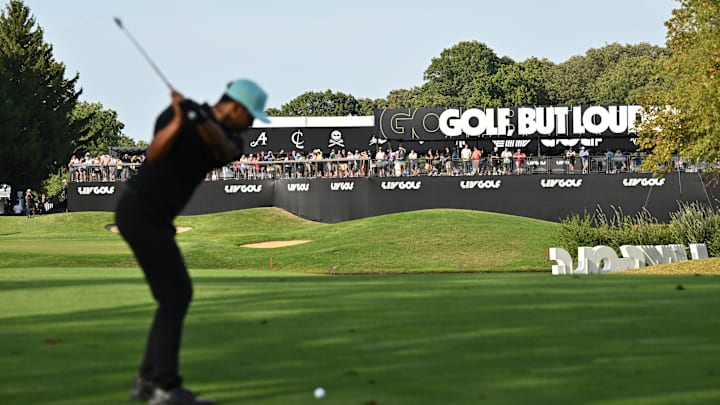
Widespread reports late Tuesday and Wednesday suggested that the Saudi Arabia Public Investment Fund would be cutting its funding for LIV Golf, perhaps signaling an end to the five-year-old breakaway league. Yet on Wednesday afternoon LIV Golf CEO Scott O’Neil told staff that the season will continue.
LIV Golf’s sixth of 14 scheduled events for 2026 begins Thursday in Mexico City, but what might come next? And if LIV Golf ceases to exist, what does that mean for its players and the pro game overall?
Sports Illustrated senior writer Bob Harig has covered LIV since its inception and offers his thoughts on some pressing questions.
Q: LIV Golf is playing this week in Mexico City and Scott O’Neil said the season will go on at “full throttle.” Will all 14 events in 2026 ultimately be played?
Bob Harig: My educated guess is the season will go on to completion. There are numerous reasons for the PIF and LIV not to shut down now, the biggest of which is credibility. The PIF has numerous sports interests. It’s not a great signal to the world to so abruptly close down when contracts have been signed with venues, vendors, contractors. If there is to be a closing of shop, best to do it after the season.
Q: If LIV Golf is indeed losing its primary funding source—the Saudi Arabia PIF—could it survive long-term on its own via sponsors, ticket revenue and other sources?
BH: Not for long. LIV has almost exclusively been propped up by the PIF. While it has made significant inroads in places like Australia, South Africa and even South Korea, Singapore and Hong Kong, the overhead is enormous without a lucrative television media rights deal and title sponsorship. It’s a huge undertaking. LIV has secured more sponsors but there’s never been a sense that they are paying a huge sum that would underwrite the majority of an event. And a good bit of its sponsors are tied to the PIF or Saudi Arabia, such as Aramco and Riyadh Air. It’s transferring money from one pocket to another.
Could LIV go it alone? It would probably need to secure other outside investment while it looks to shore up sponsorship, which was always going to take time.

Q: In the five years of LIV Golf’s existence, have any of its teams raised enough revenue to be self-sufficient? And if so, could they in turn help the league?
BH: This is unlikely but some have probably come close due to the prize money they bank as part of the team competition. The 4Aces (captained by Dustin Johnson), the Crushers (Bryson DeChambeau), Ripper (Cameron Smith) have all done quite well as teams and thus have attracted sponsors. But that is not really the ticket out of financial distress for the league.
Yes, it wants and needs its teams to be financially viable. But that was always supposed to include them being sold as franchises and run separately like a sports team in any sports league. Into year five, no teams have been sold, depriving LIV of a big revenue source but also forcing the league to subsidize the teams.
Q: The PGA Tour created a “Returning Member Program” for four major champions to come back, which Brooks Koepka accepted while Bryson DeChambeau, Jon Rahm and Cameron Smith did not. If LIV Golf folded, would those three still be welcomed back fairly quickly? Would any other LIV players be of interest to the Tour immediately?
BH: The sense is that they would be treated as Koepka was, with a financial penalty, the inability to play in signature events unless they qualify, and be denied FedEx Cup bonus money and player equity for five years.
Who else? Tyrrell Hatton, who just tied for third at the Masters, comes to mind. There are other young players such as Thomas Detry and Tom McKibbin and Elvis Smylie whom the Tour should embrace. But those players will need to find a way onto the Tour via some sort of qualifying system. The Tour will stick to its exemption system.
Q: Rahm has continued to spar with the DP World Tour over a deal that would allow him to play events this year without conflicting-event releases and fines, putting his 2027 Ryder Cup prospects in jeopardy as he could not play without being a DPWT member. If LIV Golf ceases to exist, does that clear Rahm’s path to the 2027 matches?
BH: To a degree. He’d not be running afoul of the DP World Tour’s conflicting-events rules. But he still has his fines to resolve through 2025, plus any new fines that he accrues this year. And the DP World Tour is for now insisting that he add two extra events to the four required. If he doesn’t do that this year, it won’t matter if there is no LIV next year. He’ll have forfeited his membership.

Q; A number of LIV Golf’s players are nearing 50, the required age for the PGA Tour Champions. Would that be a viable option?
BH: Yes, but all you need to do is look to Pat Perez and Henrik Stenson. They are being required to miss a year from their last LIV event before being permitted to play regular Champions Tour events. Even if LIV folds, it is hard to see the Tour going back on these rules.
Q: At the other end of the age spectrum is Michael La Sasso, who won the 2025 NCAA Championship and chose to start his pro career at LIV Golf. If the league folded, could he play the Korn Ferry Tour in 2027?
BH: Based on their current LIV rules, the Tour would not allow him to play for a year after his last LIV event. So if he plays out this year, he’d be looking at September of 2027. Does the Tour rescind all of this if LIV folds? Doubtful. They want the deterrent for any other such entities that might come along.
Q: If the Saudi PIF cuts off funding for LIV Golf, would it still invest elsewhere in worldwide golf?
BH: Yes, all of which makes this so perplexing. They’ve long wanted a bigger part in the greater golf landscape. They’ve had a chance for a seat on the PGA Tour board had there been some ability to compromise, whether it be the LIV format or number of events or even disbanding and putting the money elsewhere. A shutdown and lingering bitterness would not make this easier going forward.
Q: If this indeed is LIV Golf’s final year, would it be viewed as having been “additive” to golf as Greg Norman said it would be five years ago when it began?
BH: In some ways, yes it was. LIV Golf went to some underserved markets where they’ve never seen Phil Mickelson and Dustin Johnson and Bryson DeChambeau. But it seems they often diverted from that mission. Why would you go to New Orleans where there is already a PGA Tour event? Why would you schedule against the PGA Tour playoffs?
If you want to be additive, you need to be “in addition to.” While many of their events are not in advantageous time zones to the U.S. market, perhaps they should have been marketing a way to watch those events in a condensed package. They never pushed that idea.
More Golf from Sports Illustrated
 Add us as a preferred source on Google
Bob Harig was a senior writer covering golf for Sports Illustrated. He has more than 25 years experience on the beat, including 15 at ESPN. Harig is a regular guest on Sirius XM PGA Tour Radio and has written two books, “DRIVE: The Lasting Legacy of Tiger Woods” and “Tiger and Phil: Golf’s Most Fascinating Rivalry.” He graduated from Indiana University where he earned an Evans Scholarship, named in honor of the great amateur golfer Charles (Chick) Evans Jr. Harig, a former president of the Golf Writers Association of America, lives in Clearwater, Fla.
Follow bobharig