%20%20--%3E%0A%3Csvg%20version%3D%221.1%22%20id%3D%22Layer_1%22%20xmlns%3D%22http%3A%2F%2Fwww.w3.org%2F2000%2Fsvg%22%20xmlns%3Axlink%3D%22http%3A%2F%2Fwww.w3.org%2F1999%2Fxlink%22%20x%3D%220px%22%20y%3D%220px%22%0A%09%20width%3D%2239px%22%20height%3D%2240px%22%20viewBox%3D%220%200%2039%2040%22%20enable-background%3D%22new%200%200%2039%2040%22%20xml%3Aspace%3D%22preserve%22%3E%0A%3Cpath%20fill%3D%22%23FFFFFF%22%20d%3D%22M38.5%2C7H28.2v26h10.3V7z%22%2F%3E%0A%3Cpath%20fill-rule%3D%22evenodd%22%20clip-rule%3D%22evenodd%22%20fill%3D%22%23FFFFFF%22%20d%3D%22M26.1%2C25.5c0%2C5.8-4.1%2C7.5-12.9%2C7.5C3.9%2C33%2C0%2C31.2%2C0%2C25.2v-1.1h11.6%0A%09v2.4c0%2C0.7%2C0.1%2C1.4%2C1.2%2C1.4c1%2C0%2C1.2-0.4%2C1.2-1.3v-0.9c0-1.6-0.9-1.6-3.5-2.2C2.2%2C21.7%2C0%2C19.7%2C0%2C15.3v-0.9C0%2C9.3%2C5.5%2C7%2C12.9%2C7%0A%09c10.2%2C0%2C12.8%2C2.6%2C12.8%2C7.4v1.8h-11v-2.9c0-0.6-0.4-1.1-1.2-1.1c-0.6%2C0-1.2%2C0.4-1.2%2C1.1v0.9c0%2C1.5%2C0.9%2C2%2C3.3%2C2.5%0A%09c8%2C1.6%2C10.5%2C3.3%2C10.5%2C7.5V25.5z%22%2F%3E%0A%3C%2Fsvg%3E%0A)
The Dodgers’ Pursuit of History Ended in Stunning Failure
In this story:
The Dodgers spent the last several years building what was supposed to be a roster so loaded it couldn't possibly lose in the postseason. But on Thursday night, a campaign that began as a chase for baseball's first three-peat in a quarter-century ended as one of its most spectacular failures.
As the Brewers poured onto the field to celebrate their triumph in the National League championship series, Los Angeles’s star-studded squad stood in the dugout and watched in stunned silence. A year after sweeping Milwaukee out in the same round, the broom swung the other way. This Dodgers team was emphatically consigned to the dustbin of history.
Los Angeles won its second World Series in a row last October in a thrilling seven-game series against the Blue Jays. The team entered the offseason hungry for more and spent like it, much to the rest of baseball’s chagrin.
The Dodgers returned their core intact, then went out and signed the top position player and reliever on the market to bolster an already formidable roster. Outfielder Kyle Tucker received a massive four-year, $240 million deal, while closer Edwin Díaz inked a three-year, $69 million contract with a record $23 million annual salary for a relief pitcher. As if that wasn’t enough, when the trade deadline rolled around, Los Angeles ponied up a solid prospect haul to land Tarik Skubal, arguably the best pitcher on the planet over the past three years.
The result was a roster that had won six MVPs, four Cy Youngs, 19 Silver Sluggers and three Reliever of the Year awards. The lineup was as dangerous as baseball had ever seen, while the pitching staff featured five hurlers who could be No. 1 starters for most MLB franchises. The bullpen featured three pitchers who would likely be closers anywhere else. The Dodgers weren’t just good, they were terrifying.
The Dodgers’ spending also broke records. When factoring in the team’s CBT payroll and luxury tax payments, the roster cost more than $616 million this season, nearly $150 million more than the second-place Mets ($468.9 million). The disparity was so great, the idea of a salary cap in baseball gained renewed momentum. Given all the advantages the Dodgers had, anything short of a World Series would have been a disappointment. What happened in the NLCS went far beyond that.
The Brewers didn’t just sweep the Dodgers. They humiliated them. Los Angeles led in all four games and blew those advantages. They allowed Milwaukee’s scrappy roster to claw its way back every time.

A vaunted starting rotation that featured Skubal, Yoshinobu Yamamoto, Blake Snell and Tyler Glasnow only managed to pitch 18 innings over four games. They went 0–2, combined for a 6.50 ERA and a 1.33 WHIP, and surrendered four home runs.
On Thursday night in Game 4, Glasnow was staked to a 4–0 lead after two innings and retired the first nine batters he faced in order. When he was pulled with one out in the fifth, the score was 4–3. Four batters later, it was tied.
In Game 3, Snell actually pitched into the sixth inning, but surrendered back-to-back home runs to Jake Bauers and Garrett Mitchell that turned a 2–1 lead into a 4–2 deficit. Skubal didn’t make it past the fifth inning in Game 1, while Yamamoto was knocked out in the third inning of Game 2.
Milwaukee made that fearsome foursome look ordinary.
The Brewers’ pitchers, particularly their loaded bullpen, carved their way through L.A.’s lineup all series. As a team, the Dodgers slashed .185/.270/.250, with a single home run and 33 strikeouts over the four games. With runners in scoring position, they went 4-for-27, and Andy Pages had two of those hits. In the sixth, seventh and eighth innings of Game 4, the Dodgers had seven combined plate appearances with the tying run in scoring position. They went 0-for-6 with a sacrifice bunt accounting for the seventh. In those situations, they saw only 19 pitches. Five of the seven plate appearances ended in three pitches or fewer. For a lineup overflowing with All-Stars, the lack of resistance was mind-boggling.
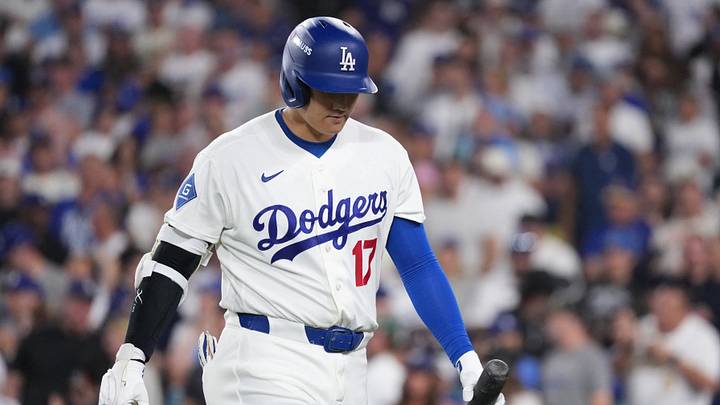
The team’s big bats were noticeably silent. While Shohei Ohtani hit a monster home run in Game 4, he finished the series 3-for-13. Mookie Betts went 3-for-15, while Freddie Freeman managed one hit in 14 at-bats. Max Muncy and Will Smith combined to go 4-for-27 with eight strikeouts. Tucker, whose first season in Los Angeles was disastrous, actually showed up in the NLCS with four hits in 12 at-bats.
The Dodgers weren’t constructed just to reach the NLCS. They were built to make baseball history. Instead, they’ll be remembered as one of the biggest disappointments the sport has ever seen. Championship teams often decline because they lose key contributors who helped them hoist a trophy. L.A. went the other way and added pieces to a title-winning roster in the hopes of creating an unbeatable machine. The Brewers proved they were human after all.
This won’t be the last we hear from the boys in blue. If there is baseball in 2027, they’ll certainly be among the World Series favorites. But the air of inevitability is gone.
The Dodgers built a roster that couldn’t possibly lose. It will be remembered as a monumental failure.
 Add us as a preferred source on Google
Ryan Phillips is a senior writer on the Breaking and Trending News team at Sports Illustrated. He has worked in digital media since 2009, spending eight years at The Big Lead before joining SI in 2024. Phillips also co-hosts The Assembly Call Podcast about Indiana Hoosiers basketball and previously worked at Bleacher Report. He is a proud San Diego native and a graduate of Indiana University’s journalism program.
Follow rumorsandrants