%20%20--%3E%0A%3Csvg%20version%3D%221.1%22%20id%3D%22Layer_1%22%20xmlns%3D%22http%3A%2F%2Fwww.w3.org%2F2000%2Fsvg%22%20xmlns%3Axlink%3D%22http%3A%2F%2Fwww.w3.org%2F1999%2Fxlink%22%20x%3D%220px%22%20y%3D%220px%22%0A%09%20width%3D%2239px%22%20height%3D%2240px%22%20viewBox%3D%220%200%2039%2040%22%20enable-background%3D%22new%200%200%2039%2040%22%20xml%3Aspace%3D%22preserve%22%3E%0A%3Cpath%20fill%3D%22%23FFFFFF%22%20d%3D%22M38.5%2C7H28.2v26h10.3V7z%22%2F%3E%0A%3Cpath%20fill-rule%3D%22evenodd%22%20clip-rule%3D%22evenodd%22%20fill%3D%22%23FFFFFF%22%20d%3D%22M26.1%2C25.5c0%2C5.8-4.1%2C7.5-12.9%2C7.5C3.9%2C33%2C0%2C31.2%2C0%2C25.2v-1.1h11.6%0A%09v2.4c0%2C0.7%2C0.1%2C1.4%2C1.2%2C1.4c1%2C0%2C1.2-0.4%2C1.2-1.3v-0.9c0-1.6-0.9-1.6-3.5-2.2C2.2%2C21.7%2C0%2C19.7%2C0%2C15.3v-0.9C0%2C9.3%2C5.5%2C7%2C12.9%2C7%0A%09c10.2%2C0%2C12.8%2C2.6%2C12.8%2C7.4v1.8h-11v-2.9c0-0.6-0.4-1.1-1.2-1.1c-0.6%2C0-1.2%2C0.4-1.2%2C1.1v0.9c0%2C1.5%2C0.9%2C2%2C3.3%2C2.5%0A%09c8%2C1.6%2C10.5%2C3.3%2C10.5%2C7.5V25.5z%22%2F%3E%0A%3C%2Fsvg%3E%0A)
Every NL Team’s Most Surprising Performer So Far
In this story:
Yesterday, we took a look at the most surprising performer from every American League team. Now, it’s the National League’s turn. Among the plot twists in the early goings of the season include the Braves’ hot start despite dealing with a spate of injuries, the Mets and Giants both being stuck in last place and the Pirates actually having a strong offense for a change.
We’ll dive into all of this and more as we highlight the biggest surprises (both good and bad) for each NL squad.
Arizona Diamondbacks: 1B/2B Ildemaro Vargas
Vargas came into his age-34 season with a career OPS+ of 78, bouncing around five different organizations as a utility infielder. He’s earned himself nine starts so far this year, and is rewarding the Diamondbacks with his production so far, posting a .381/.409/.667 slash line with seven extra-base hits.
Is that production sustainable? Of course not, but the under-the-hood Statcast data indicates that this hasn’t all been smoke and mirrors. Vargas has stellar contact rates and has been a line-drive machine so far, with the second-highest expected batting average (.375) among qualified hitters. Regression is coming, but there’s reason to believe the veteran infielder still has the potential to be a productive everyday player even when the eventual fall back to Earth arrives.
Colorado Rockies: RP Antonio Senzatela
Entering play Wednesday, the Rockies ranked 17th in the majors in runs allowed. That might not sound too impressive at first blush. But when you realize that Colorado has ranked dead last for four straight years, and that 17th would be its best finish since ranking 14th in 2017, then 17th feels like the achievement of the young season.
The organization’s new front office has poured a lot of resources into solving the problem of pitching at Coors Field. And while it’s still early, that outside-the-box thinking has shown promise. In Senzatela, the team transitioned a veteran starter into the bullpen following the righthander’s 2025 campaign in which he went 4–15 with a 6.65 ERA. In his new role, Senzatela is sitting at 97.2 mph with his fastball instead of 95, and he’s running a 34.9% strikeout rate compared to a career mark of 14.7%. Senzatela is not alone in helping turn Colorado’s pitching fortunes around, but he’s been a key member of the cause.
Los Angeles Dodgers: SP Justin Wrobleski
Any attempts at piercing the Dodgers’ formidable armor begins with the team’s starting rotation, which, like the rest of the roster, is big on star power but not so much on durability. Last season’s squad called on 17 different pitchers to make a start, an exercise manager Dave Roberts likely wants to avoid this time around.

To do that, he’ll need to get big innings (and production) from the younger arms in the organization, and Wrobleski has the inside track at stepping up to take on a bigger role. The lefthander posted a 4.32 ERA and 27.1% strikeout rate as a long reliever last year, and so far has allowed only four runs in 17 innings (with two starts and one bulk relief appearance). His transition to the rotation has seen a big downturn in strikeouts (just six to go along with five walks), which will need to change for him to stick as a starter. Wrobleski has leaned on mostly a two-pitch mix (four-seam fastball and slider) this year after mixing in his sinker and cutter more in 2025, so perhaps having a wider variety of pitches would lead to more missed bats.
San Diego Padres: SP Randy Vásquez
Last year, Vásquez posted a 13.7% strikeout rate, ranking 125th out of 127 pitchers with at least 100 innings. Through three starts this season, that number is up to 27.5%, a remarkable jump that’s big enough to, at least for the moment, outweigh the blinking neon sign that reads “small sample size.” The righthander doesn’t look that particularly different from his old self, though there are some key subtle changes. He’s throwing harder (94.8 mph on the four-seam fastball compared to 93.5 mph last year), and has a slightly reworked pitch mix that emphasizes the four-seamer more, while still mixing in each one of his seven different pitches. Vásquez already owned a solid 4.08 career ERA before his newfound strikeout abilities, so if he can keep this up, he has the look of a real difference maker as opposed to a back-of-the-rotation arm.
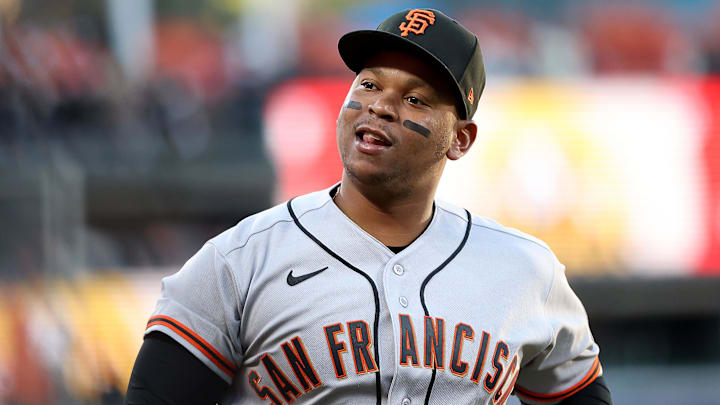
San Francisco Giants: 1B/DH Rafael Devers
It’s taken a group effort for San Francisco to rank dead last in the league in runs scored amid a start in which the warning signs showed up early. Of all the quiet bats, Devers ranks as the biggest surprise given his track record. From 2021 to ‘25, Devers ranked eighth in home runs, eighth in RBIs and fourth in doubles. Through his first 17 games, the 29-year-old has just three extra-base hits and a career-worst 28.6% strikeout rate. Devers similarly got off to a slow start last year (he was hitting .194 with just two homers in his first 27 games) before rediscovering his stride and turning in another strong year. For the Giants to revive their season, he’ll need to do the same.
Chicago Cubs: CF Pete Crow-Armstrong
Fresh off signing a nine-figure contract extension, Crow-Armstrong remains one of the game’s best defenders. But his offense has regressed in a big way, with his contact issues preventing him from tapping into his ability to do real damage. Crow-Armstrong’s 49.3% chase rate is the third-highest among 186 qualified hitters, which has led to an uptick in strikeouts and weak contact. The tools are all still there, but until he can develop a more consistent approach, expect continued high variance as far as his offensive output is concerned.
Cincinnati Reds: 1B Sal Stewart
A first-round pick in 2022 who raked at every stop in the minors, Stewart impressed enough in his 18-game debut last season to earn a starting spot on Opening Day this year. While most expected him to be a productive major league hitter, even his most ardent believers couldn’t have anticipated a start quite this hot. With a two-homer game on Wednesday against the Giants, Stewart now has seven long balls on the year with a .323/.434/.726 slash line, with as many walks as strikeouts (13). With polish beyond his years, the 22-year-old looks like the next budding star.

Milwaukee Brewers: 1B Jake Bauers and C/1B Gary Sánchez
A bit of a cheat here in picking two Brewers, but when Bauers and Sánchez combine to give Milwaukee the lead in home runs by first basemen (10), you have to take notice. The Brewers have a way of manufacturing production out of unlikely places, and did so just last year at first base with Andrew Vaughn. With Vaughn on the injured list, Bauers and Sánchez have stepped up, and while it would be a surprise if either held down the starting job long-term, it’s an outcome that’s well within the realm of possibility given Milwaukee’s track record.
Pittsburgh Pirates: 2B Brandon Lowe
The Pirates had high hopes when they traded for Lowe in the offseason, and the two-time All-Star has delivered on those and then some. Lowe ranks fourth among qualified hitters in isolated power (.383) with seven homers in his first 16 games. He’s done so while running career bests in walk rate (15.3%) and strikeout rate (20.8%). It’s a combination that portends a career year—perfect timing for a player who will be a free agent at season’s end.
St. Louis Cardinals: RF Jordan Walker
Walker has always flashed potential, and after two years spent wandering the baseball wilderness (he put up a 69 OPS+ across 162 games from 2024–25), he seems to be putting it all together. The 23-year-old is laying off pitches outside the strike zone at an above-average clip and keeping the ball off the ground to maximize his power. The results have been a league-leading eight homers and a Statcast profile that screams for a breakout season. It’s taken a while, but Walker evolving into a fearsome middle-of-the-order bat is just what this Cardinals rebuild needs.
Atlanta Braves: SS Mauricio Dubón
The Braves traded for the veteran Dubón about a month before they signed Ha-Seong Kim to a $20 million contract, and two months before it was reported that Kim would miss a big chunk of the season with a hand injury. That thrust Dubón, who owned a career 85 OPS+, into a starting role, and his hot start has helped propel Atlanta to become the highest-scoring offense in the league. Through 18 games, Dubón has hit .333/.371/.555, playing his typical strong defense with a career-best .278 expected batting average that suggests his production is not simply a mirage.
Miami Marlins: C Liam Hicks
Agustín Ramírez was the buzzy Marlins catcher coming into the season, but Hicks has been the breakout star so far. A Rule 5 selection a year ago, Hicks held his own as a rookie, with a .247/.346/.346 line in 390 plate appearances. But he’s upped his game in 2026, making phenomenal swing decisions to fuel the league’s lowest swinging strike rate (1.9%). Though he’s not a standout when it comes to bat speed, his barrel control allows him to hammer line drives to his pull side, giving him a .322 expected batting average. With an 8.1% strikeout rate that stands as the fourth-lowest in baseball, Hicks has a high offensive floor and seems poised to blossom into a full-blown breakout star.

New York Mets: SS Francisco Lindor
There is blame aplenty in Queens, and perhaps Lindor’s slow start shouldn’t be that surprising given his hamate injury during spring training. But the star shortstop has started every game this season, managing just one homer with a .194/.301/.306 slash line. Lindor is just one of several regulars who has yet to tap into his power, as the Mets rank dead last as a team in ISO (.112). There’s not much in the underlying numbers to suggest that Lindor’s slow start is anything more than just that. But the longer it takes for New York’s lineup to wake up, the more ramped up the pressure will get for a team that entered 2026 with high expectations.
Philadelphia Phillies: SP Jesús Luzardo
When Philadelphia let Ranger Suárez walk in free agency and signed Luzardo to a $135 million contract extension, it was a clear show of faith for a talented pitcher who thrived in his first season with the Phillies. Four starts into 2026, though, and things have not gone according to plan for the lefthander, who got roughed up for nine runs (eight earned) in Wednesday’s 11–2 loss to the Cubs, raising his season ERA to 7.94. Luzardo has a stellar 25.5 K-BB% on the season, and hasn’t had any abnormal home run issues. His issues seem flukish, as evidenced by his .417 BABIP and 2.82 expected ERA. While bad luck seems to be the most likely culprit, the Phillies surely hope Luzardo’s luck turns quickly, as the team currently has the second-worst run differential (minus-25) in the NL.
Washington Nationals: SS CJ Abrams
This might seem like an odd choice given Abrams’s undeniable talent and already impressive career résumé. But the 25-year-old hasn’t quite put everything together for a full season yet (despite his All-Star nod in 2024), with a career 101 OPS+ coming into this year. Through the first three weeks of the season, Abrams looks like a budding superstar, batting .367/.458/.717 with six homers and four stolen bases. His walk rate is up to 9.7% while his strikeout rate is down to 13.8%, both career bests. With a .432 xwOBA that ranks as the ninth-best in the league, few are swinging it as well as the young shortstop. It took some time, but Abrams is looking like he’s finally developing into the franchise cornerstone that the Nationals have hoped he’d become.
More MLB from Sports Illustrated
 Add us as a preferred source on Google
Nick Selbe is a programming editor at Sports Illustrated who frequently writes about baseball. Before joining SI in March 2020 as a Breaking and Trending News writer, he worked for the Orange County Register, MLB Advanced Media, Graphiq and Bleacher Report. Selbe received a bachelor’s in communication from the University of Southern California.
Follow NickSelbe