%20%20--%3E%0A%3Csvg%20version%3D%221.1%22%20id%3D%22Layer_1%22%20xmlns%3D%22http%3A%2F%2Fwww.w3.org%2F2000%2Fsvg%22%20xmlns%3Axlink%3D%22http%3A%2F%2Fwww.w3.org%2F1999%2Fxlink%22%20x%3D%220px%22%20y%3D%220px%22%0A%09%20width%3D%2239px%22%20height%3D%2240px%22%20viewBox%3D%220%200%2039%2040%22%20enable-background%3D%22new%200%200%2039%2040%22%20xml%3Aspace%3D%22preserve%22%3E%0A%3Cpath%20fill%3D%22%23FFFFFF%22%20d%3D%22M38.5%2C7H28.2v26h10.3V7z%22%2F%3E%0A%3Cpath%20fill-rule%3D%22evenodd%22%20clip-rule%3D%22evenodd%22%20fill%3D%22%23FFFFFF%22%20d%3D%22M26.1%2C25.5c0%2C5.8-4.1%2C7.5-12.9%2C7.5C3.9%2C33%2C0%2C31.2%2C0%2C25.2v-1.1h11.6%0A%09v2.4c0%2C0.7%2C0.1%2C1.4%2C1.2%2C1.4c1%2C0%2C1.2-0.4%2C1.2-1.3v-0.9c0-1.6-0.9-1.6-3.5-2.2C2.2%2C21.7%2C0%2C19.7%2C0%2C15.3v-0.9C0%2C9.3%2C5.5%2C7%2C12.9%2C7%0A%09c10.2%2C0%2C12.8%2C2.6%2C12.8%2C7.4v1.8h-11v-2.9c0-0.6-0.4-1.1-1.2-1.1c-0.6%2C0-1.2%2C0.4-1.2%2C1.1v0.9c0%2C1.5%2C0.9%2C2%2C3.3%2C2.5%0A%09c8%2C1.6%2C10.5%2C3.3%2C10.5%2C7.5V25.5z%22%2F%3E%0A%3C%2Fsvg%3E%0A)
The Five Best (and Worst) Starts for MLB Players on New Teams
In this story:
The common refrain among baseball fans at this point in the year, regardless of how their favorite team is performing, is simple: “It’s early.” And yet, here we are still in April, with managerial openings at two of baseball’s highest-profile jobs. Whether positive or negative, these games all still count the same on the final ledger.
Looking across the league, scores of big-name players changed uniforms this offseason. And while some have quickly made themselves feel right at home in their new cities, others are still trying to get acquainted with their surroundings.
Yes, it’s still early, but not too early for a check in on the best (and worst) starts to the season for familiar faces in new places.
All stats are updated entering Wednesday’s games.
Best Debuts
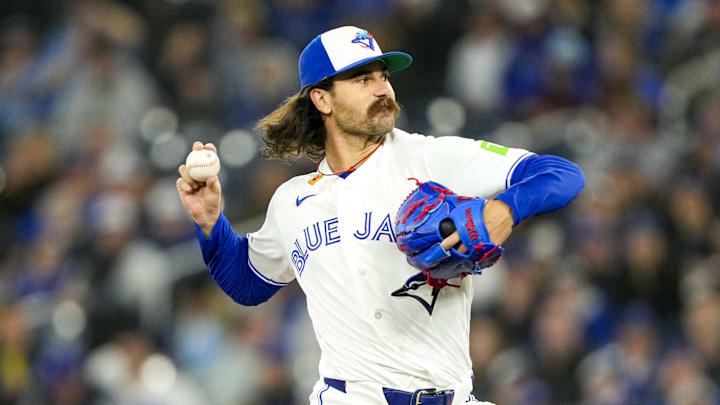
Dylan Cease, SP, Toronto Blue Jays
Fresh off signing the richest contract in Blue Jays history, Cease has looked electric through his first six starts in Toronto. His strikeout rate (35.5%) ranks second only to Milwaukee’s Jacob Misiorowski, and he’s given up two runs or fewer in five of his six outings so far. Pitch efficiency remains an issue for the 30-year-old, though—his walk rate is up to 12.3%, his highest since 2020, and he has only completed six innings once to date. To ascend to true ace status, he’ll need to avoid free passes and pitch deeper into games. If he does that, Cease will be in the conversation as one of the league’s best pitchers.
Munetaka Murakami, 1B, Chicago White Sox

Murakami’s status as a menacing power hitter was forged through his years of dominating Japan’s NPB prior to his arrival stateside. Concerns about his ability to make consistent contact led to him settling for a two-year, $34 million deal with the White Sox, and through his first month in Chicago, that’s looking like quite a bargain.
Entering play Wednesday, Murakami is tied with Aaron Judge for the league lead in home runs (12). Yes, he’s striking out plenty (his 34.4% K-rate is the eighth-highest among qualified hitters). But he’s actually shown a good awareness of the strike zone, with a chase rate (22.2%) that ranks in the 85th percentile among all hitters. And when he does make contact, it is loud, with an average exit velocity of 95 mph and a 21.9% barrel rate. Pitchers will surely make an adjustment to how they approach facing Murakami, but if there were any doubts about the 26-year-old’s ability to be an impact hitter in MLB, those questions have been answered with authority.
Luis Arraez, 2B, San Francisco Giants
Arrae had to wait a while before signing a one-year, $12 million deal with San Francisco in his first foray into free agency despite a résumé that includes three batting titles and a career .317 average. His lack of power and obvious defensive home depleted his market, though, and the Giants seem to be the beneficiaries.
Arraez chose San Francisco in part to get a shot at playing second base everyday, and the early returns have been positive. Statcast grades him as being six Outs Above Average, second-best among all second basemen behind only the Cubs’ Nico Hoerner. And he’s maintained his contact-centric production at the dish, batting .315/.345/.380 through 28 games. If Arraez can keep up his defensive gains, he should be able to cash in during his next go-around on the open market.
Taylor Ward, LF, Baltimore Orioles
Ward has settled in nicely atop the Orioles’ lineup after an offseason trade sent him to Baltimore following eight seasons with the Angels. While his power hasn’t shown up the same way it did during his final year in Anaheim (in which he hit a career-high 36 home runs), he ranks fifth among all hitters with a .426 on-base percentage. Ward’s 152 wRC+ would easily be the best mark of his career. Most of Baltimore’s big bats have gotten off to slow starts (more on that in a moment), but if Ward’s able to keep up his form, he’ll likely be on base waiting for them to heat up.
Willson Contreras, 1B, Boston Red Sox
It’s been a dismal season for the Red Sox that looks unlikely to get any better. But little of that blame should fall on the shoulders of Contreras, who’s one of the few hitters that puts fear into the minds of opposing pitchers. While Boston ranks dead last in the American League in isolated power (.120), Contreras is the only player on the roster with an ISO over .200 (the league average is .150). He’s batting .252/.371/.456 on the season, leading Boston in home runs (six), runs (15) and RBIs (19). While this feels like rock bottom for a once marquee organization, it would be even lower if not for Contreras.
Worst Debuts
Pete Alonso, 1B, Baltimore Orioles

Baltimore currently ranks 15th in runs per game, an improvement from last year’s disappointment but still well below where the team hoped to be after signing Alonso to a five-year, $155 million contract this offseason. Alonso has played in every game so far but has yet to get going, batting .198 with just four home runs.
Nine-figure contracts for power-hitting corner infielders that run through their mid-30s have a long track record of aging poorly, but the Orioles likely didn’t anticipate Alonso getting off to a slow start right out of the gate. He’s still making hard contact, but his groundball rate is a career-high 46.8%, and his pull rate is a career-low 34.2%. His bat speed is down a tick (73.9 mph compared to 75.3 in 2025), but it still ranks in the 74th percentile among all hitters. If Alonso can make enough of an adjustment to catch the ball out in front of the plate more and tap into his pull power, the extra-base hits should start coming in bunches.
Bo Bichette, 3B, New York Mets
Bichette is one of several slumping Mets hitters that have contributed to an offense that ranks 29th in runs scored, last in on-base percentage (.289) and last in wRC+ (80). He has managed a .237/.276/.331 slash line, nearly identical to what he put up in his injury-marred 2024 campaign.
There’s nothing to suggest Bichette isn’t healthy, and for New York to turn around its current tailspin, he’ll need to get back to his old form quickly. This is a player who posted a .298/.339/.476 slash line and 125 wRC+ from 2021 to ‘23, averaging over 662 plate appearances per season. That type of production is paramount for a Mets lineup that will be without Francisco Lindor for the foreseeable future. Bichette’s .288 expected batting average and a .286 BABIP that’s 50 points lower than his career average suggest that some positive regression is in store. For the Mets’ sake, it’d better get here fast.
Tatsuya Imai, SP, Houston Astros
Imai’s time adjusting to life in the majors has gotten off to a rocky start, so much so that it might impact the Astros’ reputation back in Japan. The 27-year-old is currently on the injured list with arm fatigue after allowing seven runs on 11 walks over his first three games. In Japan, Imai was a workhorse, posting a 2.14 ERA over 337 innings from 2024 to ‘25, which earned him a three-year, $54 million contract this winter.
As the Astros deal with numerous other injuries to their pitching staff, Imai’s return to the mound (and, of course, improved play) is vital to the team rebounding from its slow start to get back in the playoff race. Houston ranks dead last in the league with a 5.96 ERA, offering no support for the American League’s highest-scoring offense. Imai’s first month in the major leagues hasn’t gone according to plan. He and his new team will have little time for a gradual adjustment period if they are to save their 2026 season.
Marcus Semien, 2B, New York Mets

Count Semien as another Mets hitter scuffling to begin the year. The veteran second baseman saw his offensive decline begin last season, when he posted the lowest wRC+ (89) since his rookie campaign. That downturn has continued to start 2026: through 114 plate appearances, Semien has just one homer and six extra-base hits for a meager .214/.274/.291 slash line.
Semien has seen his whiff rate against fastballs creep up each of the last three years, a concerning sign for a player in his age-35 season. The early numbers on his defensive value have started to slip, too, adding more evidence that he’s in the middle of an irreversible decline. It’s a troubling profile for a player who still has three years and $75 million left on his contract.
Devin Williams, RP, New York Mets
Completing our trifecta of underachieving Mets is Williams, a two-time All-Star closer who’s fallen off his perch and is still searching for a pathway back to the top. A relief pitcher’s body of work is simply a collection of small sample sizes, and there’s an undeniable feeling that judging a player based on eight innings of work on the season is a bit silly. That said, the results have been calamitous: Williams has given up eight runs over his last five appearances (three innings), with four walks and one home run allowed. Despite a mixed bag of a season with the Yankees last year, Williams still got a three-year, $51 million deal from the Mets this winter.
The biggest concern for the 31-year-old is that his once mythical “Airbender” changeup has lost its magic. He’s lost nearly five inches of induced vertical break on the pitch, and while it still generates whiffs, it’s getting hammered when hitters make contact with it: opposing batters have posted a .409 average against the changeup so far this season. Without his ace in the hole, Williams is nowhere near as effective. Until he regains his feel for the pitch that helped make him a star, the Mets are in store for a lot of uneasy ninth innings.
More MLB from Sports Illustrated
 Add us as a preferred source on Google
Nick Selbe is a programming editor at Sports Illustrated who frequently writes about baseball. Before joining SI in March 2020 as a Breaking and Trending News writer, he worked for the Orange County Register, MLB Advanced Media, Graphiq and Bleacher Report. Selbe received a bachelor’s in communication from the University of Southern California.
Follow NickSelbe