
Cal Raleigh Is Taking the Fall for a Mariners Front Office Out of Answers
In this story:
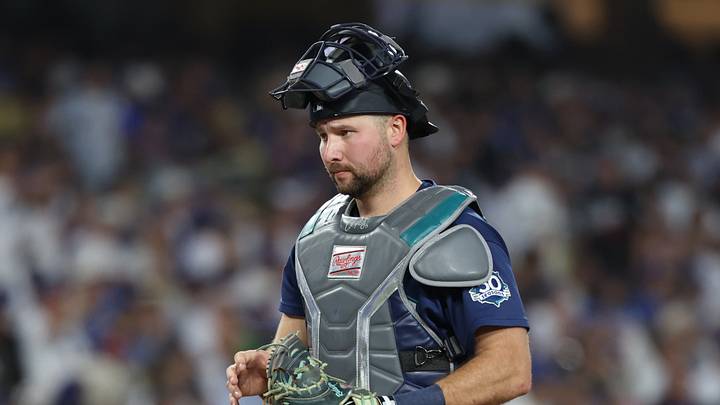
Cal Raleigh chose to step forward and do exactly what we expect a leader to do when their team is completely falling apart. He took the heat and called his own performance “awful.” He demanded more from himself before asking anything of his teammates. That deserves respect. At the same time, he went a little too far.
He defended manager Dan Wilson, president of baseball operations Jerry Dipoto and general manager Justin Hollander. He declared that Seattle’s decision-makers weren’t responsible for this mess because the players are the ones on the field.
“It’s not their fault. It’s our fault,” Raleigh said, according to Ryan Divish of The Seattle Times.
Hey man. That’s totally fair. It’s admirable loyalty, and even somewhat true. It’s also equal parts nonsense.
The players deserve plenty of blame. They take the at-bats, throw the pitches and make the plays. Raleigh went 0-for-4 with two strikeouts in the M’s latest loss. He has struggled to rediscover his offensive identity this season. The rest of the lineup also looks overwhelmed, impatient and completely disconnected. Nobody is asking Raleigh to pretend otherwise.
But responsibility doesn’t disappear once we glance above the clubhouse. The Mariners’ front office selected these players. Wilson and his staff prepare them, deploy them and establish the standard. When an entire roster looks lost and offensively helpless, that cannot be dismissed as 26 separate cases of underperformance. It's an organizational failure.
Cal Raleigh Can’t Own the Mariners’ Broken Offense
The most revealing numbers in Divish’s piece weren’t solely attached to Raleigh’s personal stat line. Seattle is 48-29 when it hits at least one home run and 8-34 when it doesn’t.
Eight wins in 42 homerless games isn’t a balanced offense going through a rough stretch. It’s a lineup with a single point of failure. If the Mariners don’t clear the fence, they can’t find their way out of the building.
Raleigh understands the problem. He talked about using the entire field, accepting singles and resisting the temptation to turn every swing into a home-run cut. He identified the predictable result of Seattle’s current approach: hitters get caught between pitches, miss hittable fastballs and chase breaking balls when they’re behind. It’s a sharp assessment. But it raises another obvious concern.
Why is Raleigh the one explaining how the Mariners need to reinvent their offensive identity in August?
No way this team just accidentally stumbled into being dependent on home runs. Dipoto and Hollander put this roster together. The organization developed or acquired these hitters. The coaching staff helped shape the approach that now appears so easy for the opposition to exploit.
Raleigh can tweak his plate approach and try to shoot a single through the opposite side. None of that changes the broader reality that Seattle built an offense with almost no margin for error when there’s a power outage.
Jerry Dipoto and Dan Wilson Shouldn't Get a Free Pass
Raleigh is right about one thing. Wilson cannot grab a bat and deliver the hit that his lineup keeps failing to produce. But that doesn’t mean the manager is powerless.
Wilson and company are the guys penciling in the lineup. He helps set expectations. He oversees preparation and decides how long struggling players remain in prominent roles. If the Mariners lack energy, urgency and attention to detail, as Raleigh himself suggested, then the manager belongs in that conversation.
And guess who else? Dipoto. Front-office accountability doesn’t require us to blame Dipoto for every slump. It requires us to recognize the obvious connection between roster construction and roster performance. If a team keeps losing in the same familiar way, the architect doesn’t get to stand across the street and critique the plumbing.
It’s dangerous to have this kind of public confession. Seattle’s most respected player just gave everyone above the field a ready-made defense. A captain who takes responsibility and says it’s his fault…how convenient.
Bryan Woo offered the clearest description of Raleigh’s burden. He said his former roommate sometimes needs to be reminded that he doesn’t have to carry the entire ship himself.
Yet that is exactly what Raleigh did in this situation. He is attempting to fix his swing, guide the pitching staff, revive the clubhouse, supply the urgency, represent the players and protect the people running the organization. How much weight is too much?
Raleigh should be accountable for his performance and his leadership. He should not have to answer for the entire franchise.
His willingness to stand in front of the collapse confirms everything we already knew about his leadership. It’s admirable, and every team should want a guy like him. But it also creates cover for people who should be standing beside him and accepting their share of the responsibility. If they leave Raleigh out there alone, their silence will say more about Mariners leadership than anything he said.
 Add us as a preferred source on Google
Tremayne Person is the Publisher for Mariners On SI and the Site Expert at Friars on Base, with additional bylines across FanSided’s MLB division. He founded the Keep It Electric podcast in 2023 and covers baseball with a blend of analysis, context, and a little well-timed side-eye just to keep things honest. Tremayne grew up a Mariners fan in Richmond, Va., and that passion ultimately led him to move to Seattle to cover the team closely and become a regular at home games. Through his writing, he connects with fans who want a deeper, more personal understanding of the game. When he’s not at T-Mobile Park, he’s with his dog, gaming, or finding the next storyline worth digging into.
Follow TremaynePerson