
Ranking the Mariners’ biggest offseason needs
In this story:
The Seattle Mariners finished 76-86 because they spent too much of the season asking a flawed roster to become something it wasn’t. The lineup would eventually heat up and the defense would settle down. While they were waiting for that, they figured the starting rotation would bail them out.
They could certainly count on enough players rebounding at the same time to keep the season afloat. None of it happened consistently enough.
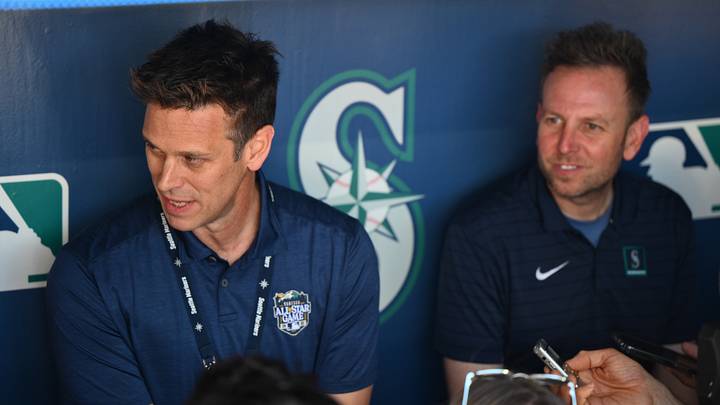
Now Jerry Dipoto and the Mariners have an offseason that demands more than rearranging the same pieces and selling optimism. We’ll set aside their most obvious need — a new manager — and focus on the roster.
1. Fix the Mariners’ MLB-worst defense
This is the obvious place to begin, though it may not be the most attractive on the board. But Seattle’s defense was more destructive in 2026 than it was disappointing.
The Mariners finished last in the majors with -53 Outs Above Average and -52 Fielding Run Value. Those numbers describe a team that routinely made life harder on its pitchers and turned manageable moments into complete messes.
We can debate individual defensive metrics, but the eye test was all many needed to spot the problems. The team lacked range, reliable positioning and even the athleticism that erases mistakes instead of multiplying them.
They’re going to need to decide where exactly Colt Emerson fits into their long-term infield and build around that answer. They also need clearly defined defensive homes for the rest of their young players. Moving people around sounds flexible until nobody becomes good anywhere.
At least one external addition should be an everyday two-way player, a legitimate major-league bat who can also improve the run prevention. Seattle also needs a bench player whose glove has actual value. “Versatile” cannot remain shorthand for someone who owns several gloves but fields poorly with all of them.
Fixing the defense would help every pitcher on the staff without requiring a mechanical adjustment or a new pitch. That makes it Seattle’s clearest path to immediate improvement.
2. Add Multiple Proven Hitters to the Mariners’ Lineup
There will be plenty of talk about internal rebounds. Cal Raleigh, Julio Rodríguez and Josh Naylor can all be better. Those are reasonable expectations, but they aren’t offseason acquisitions.
Seattle hit .233 (29th in the majors) with a .693 OPS in 2026. That’s nowhere near enough production for a franchise that wants to call itself a contender. The Mariners cannot return with essentially the same lineup and hope better health, better luck and a few strong months from young players will close the gap.
They will need to acquire outside offense at multiple positions. Three upgrades may sound aggressive, but 76 wins should make aggression easier to justify.
One addition needs to be an established impact hitter who changes how opposing pitchers navigate the lineup. The other moves can be more targeted. They can find a guy with solid contact, on-base ability, platoon balance, but Seattle needs adults in the room.
Some could argue the Mariners already have the latter with Brendan Donovan. But there’s no guarantee that after only playing 39 games this season that he’ll have a full season of health in 2027. Having a single point of failure is exactly what got the Mariners into this mess in the first place.
Another missing piece is accountability. These weren’t anonymous reserves who happened to struggle; they were specific veteran bets that repeatedly left Seattle without a workable Plan B.
3. Replace Failed Veteran Bets With Reliable Roster Depth
At times in 2025, Seattle’s bench featured the likes of Donovan Solano, Rowdy Tellez and even Leody Taveras. Each move had an explanation. Solano brought a history of hitting left-handed pitching. Tellez offered cheap power. Taveras had speed, center-field experience and former top-prospect shine. The results were so far from interesting.
Solano finished with a .639 OPS and only three home runs in 69 games. Tellez hit 11 homers, but his .249 on-base percentage made him a one-dimensional bat whose power couldn’t support the rest of the profile. Taveras batted .174 with a .470 OPS before his experiment ended after 28 games.
Then came Rob Refsnyder in 2026. In a familiar tune, the Mariners signed him for his history against left-handed pitching, giving the roster a specialized right-handed bat it badly needed. Instead, knee problems and miserable production turned him into another unusable answer. Refsnyder finished at .140/.211/.254 with a .465 OPS.
Taylor Ward belonged in a different category because he was acquired at the deadline to strengthen the everyday lineup, not merely occupy the bench. That made his collapse even more damaging. Ward hit .125 without a home run in 32 games for Seattle.
One failed veteran is baseball. Five of them (at the least) across two seasons is a roster-building problem. Seattle keeps targeting narrow skills, a platoon history, a power tool, defensive versatility, a past season that still looks attractive on a player page and acting as though those pieces automatically form a functional bench. They don’t, so what makes them believe the next cheap option will? Once the preferred trait disappears, the Mariners are left with a player who cannot contribute enough anywhere else. That has to change if they want to be taken seriously.
Seattle needs reserves with broader floors. Every bench addition isn’t going to be a hidden gem. Sometimes the job is simply to find competent major-league players who remain useful when the original plan changes. The Mariners have collected plenty of names over the years. This winter, they need actual alternatives.
4. Rebuild the Bullpen Behind Seattle’s Rotation
Pitching enters the offseason fourth on this list because the rotation still carries more believable talent than the rest of the roster. But the second half still damaged the staff’s aura. Seattle’s rotation was among baseball’s worst units by adjusted ERA and FIP during August, and the club’s long-standing formula — pitch well, catch the ball and scrape together enough runs — collapsed when all three pieces failed at once.
The Mariners need more than one trustworthy bullpen arm. They need firmer middle-relief depth and honest evaluations of every starter. Still, pitching should be reinforced rather than treated as the offseason’s main reconstruction project. The larger failure was building a roster that demanded near-perfection from its arms while supplying poor defense and too little offense.
 Add us as a preferred source on Google
Tremayne Person is the Publisher for Mariners On SI and the Site Expert at Friars on Base, with additional bylines across FanSided’s MLB division. He founded the Keep It Electric podcast in 2023 and covers baseball with a blend of analysis, context, and a little well-timed side-eye just to keep things honest. Tremayne grew up a Mariners fan in Richmond, Va., and that passion ultimately led him to move to Seattle to cover the team closely and become a regular at home games. Through his writing, he connects with fans who want a deeper, more personal understanding of the game. When he’s not at T-Mobile Park, he’s with his dog, gaming, or finding the next storyline worth digging into.
Follow TremaynePerson