%20%20--%3E%0A%3Csvg%20version%3D%221.1%22%20id%3D%22Layer_1%22%20xmlns%3D%22http%3A%2F%2Fwww.w3.org%2F2000%2Fsvg%22%20xmlns%3Axlink%3D%22http%3A%2F%2Fwww.w3.org%2F1999%2Fxlink%22%20x%3D%220px%22%20y%3D%220px%22%0A%09%20width%3D%2239px%22%20height%3D%2240px%22%20viewBox%3D%220%200%2039%2040%22%20enable-background%3D%22new%200%200%2039%2040%22%20xml%3Aspace%3D%22preserve%22%3E%0A%3Cpath%20fill%3D%22%23FFFFFF%22%20d%3D%22M38.5%2C7H28.2v26h10.3V7z%22%2F%3E%0A%3Cpath%20fill-rule%3D%22evenodd%22%20clip-rule%3D%22evenodd%22%20fill%3D%22%23FFFFFF%22%20d%3D%22M26.1%2C25.5c0%2C5.8-4.1%2C7.5-12.9%2C7.5C3.9%2C33%2C0%2C31.2%2C0%2C25.2v-1.1h11.6%0A%09v2.4c0%2C0.7%2C0.1%2C1.4%2C1.2%2C1.4c1%2C0%2C1.2-0.4%2C1.2-1.3v-0.9c0-1.6-0.9-1.6-3.5-2.2C2.2%2C21.7%2C0%2C19.7%2C0%2C15.3v-0.9C0%2C9.3%2C5.5%2C7%2C12.9%2C7%0A%09c10.2%2C0%2C12.8%2C2.6%2C12.8%2C7.4v1.8h-11v-2.9c0-0.6-0.4-1.1-1.2-1.1c-0.6%2C0-1.2%2C0.4-1.2%2C1.1v0.9c0%2C1.5%2C0.9%2C2%2C3.3%2C2.5%0A%09c8%2C1.6%2C10.5%2C3.3%2C10.5%2C7.5V25.5z%22%2F%3E%0A%3C%2Fsvg%3E%0A)
There Are Plenty of Mets to Blame, Few Obvious Solutions Amid Losing Streak
In this story:
NEW YORK — Juan Soto ran the bases on Tuesday afternoon, which was encouraging, both because the Mets need him back and because I was starting to worry they had forgotten where home plate was.
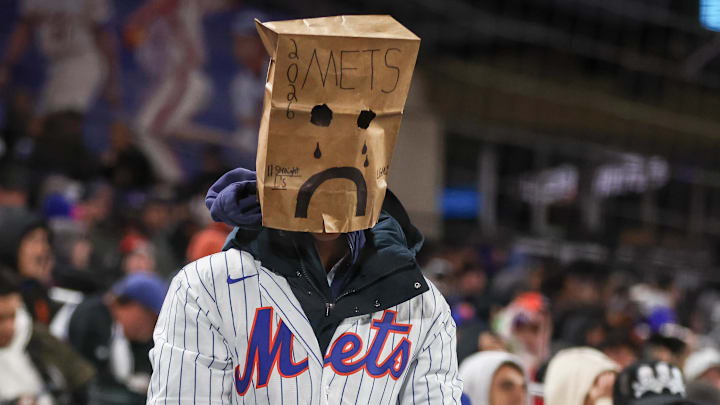
In fairness, it wasn’t just the offense this time. When you’ve lost 12 straight games, there’s enough blame to go around.
On Tuesday, closer Devin Williams faced five batters, recorded no outs and allowed two runs to seal a 5–3 defeat to the Twins. It was the second time in as many games that he helped turn a lead into a loss. Nolan McLean carried a perfect game into the sixth inning but was undone by a two-run home run and, later, a terrible throw by Luis Robert Jr. And outside of the three-run third inning, capped by Francisco Lindor’s home run, the Mets’ hitters managed two singles and two walks.
The team has now been outscored 67–22 during this stretch, its longest losing streak since 2002. No team has ever lost this many consecutive games and made the playoffs.
Eleven losses after Mayor Zohran Mamdani hugged Mr. Met (the New York Post is workshopping the term “Curse of the Mambino”), the players looked like they would rather be with his predecessor, Eric Adams, in Albania.
“It sucks,” said manager Carlos Mendoza.

Fans burned sage outside Citi Field on Tuesday afternoon. The SNY broadcast booth set up horseshoes and candles. Meanwhile, the only thing the players could do was try harder. And indeed, it looked like Port St. Lucie out there three hours before game time, with two separate infield drills and an outfield session running simultaneously. They took batting practice and insisted that they were just one good game away from turning things around.
“The guys are grinding,” said McLean. “Nobody wants it more than us. It’s tough that we’re putting in all this work and competing like crazy and we aren’t getting the results we want. Hopefully if we continue to do the right things and pitch well and throw strikes, the law of averages will take over.”
The Mets shouldn’t be this bad
The worst part is that this is a good team! Before the season began, FanGraphs projected them for 90 wins and a 79.5% chance to make the playoffs. (Less than a month later, those numbers are 82 and 38.2%.) Here at Sports Illustrated, we predicted they’d win 91 games and the NL East. The lineup boasts 16 All-Star selections. Kodai Senga and David Peterson have pitched poorly—poorly enough that Peterson is being demoted to the bullpen—but Freddy Peralta was an All-Star last year, Clay Holmes successfully made the transition from reliever to starter and McLean has been a revelation. There is no obvious reason they should be playing this badly.
Unfortunately, that means there is no obvious fix, either. The 2025 Mets staged a slow-motion collapse over the last two months of the season, and president of baseball operations David Stearns decided he had seen enough.
“As we got into the offseason and we reflected on our ’25 season, we made the determination we had to do better,’’ Stearns said this winter after cutting ties with the four longest-tenured Mets. “We were not gonna run back the same group.”
For the most part, Stearns correctly diagnosed—and jettisoned—the problems with the roster. Pete Alonso has an OPS of .642 for the Orioles. Jeff McNeil’s for the A’s is .702. Even Edwin Díaz, whom the Mets probably should have retained, is scheduled for surgery on Wednesday to remove loose bodies in his elbow and is not expected to pitch for the Dodgers again until at least the All-Star break. (Brandon Nimmo, on the other hand, has a .908 OPS for the Rangers, but Stearns was right that New York needed to improve defensively.)
The question is whether Stearns has identified the solutions. The Díaz-less bullpen entered Tuesday with a 6.05 ERA, third worst in baseball. But the larger problem remains the offense: Forty-nine players have an average bat speed below 70 mph; three are new Mets Jorge Polanco (69.5 mph), Bo Bichette (69.3 mph) and Marcus Semien (67.8 mph).
The team has a .288 on-base percentage, worst in the sport, and a .336 slugging percentage, second worst in the sport. They are 26th in ground-ball rate. They have scored the fewest runs. There are reasons for hope, primarily that Soto is expected to return Wednesday from his right calf strain. Still, he is but one man, and Mendoza cautioned against assigning too much responsibility to him.
"It definitely helps, but we cannot put all the pressure on one player,” Mendoza said. “Yes, his presence in the lineup, nobody’s going to deny that. But putting all the pressure on ‘Oh, we’re going to have Juan Soto; all of a sudden you start winning’—that’s not fair for him either. You just have to trust each other. You just have to stay together.”
They have to believe in themselves. A few more of these performances, and they might be the only ones who do.
More MLB from Sports Illustrated
 Add us as a preferred source on Google
Stephanie Apstein was a senior writer covering baseball and Olympic sports for Sports Illustrated, where she started as an intern in 2011 and has since covered a dozen World Series and three Olympics. She has twice won top honors from the Associated Press Sports Editors, and her work has been included in the Best American Sports Writing book series. She graduated from Trinity College with a bachelor’s in French and Italian, and has a master’s in journalism from Columbia University.
Follow stephapstein