%20%20--%3E%0A%3Csvg%20version%3D%221.1%22%20id%3D%22Layer_1%22%20xmlns%3D%22http%3A%2F%2Fwww.w3.org%2F2000%2Fsvg%22%20xmlns%3Axlink%3D%22http%3A%2F%2Fwww.w3.org%2F1999%2Fxlink%22%20x%3D%220px%22%20y%3D%220px%22%0A%09%20width%3D%2239px%22%20height%3D%2240px%22%20viewBox%3D%220%200%2039%2040%22%20enable-background%3D%22new%200%200%2039%2040%22%20xml%3Aspace%3D%22preserve%22%3E%0A%3Cpath%20fill%3D%22%23FFFFFF%22%20d%3D%22M38.5%2C7H28.2v26h10.3V7z%22%2F%3E%0A%3Cpath%20fill-rule%3D%22evenodd%22%20clip-rule%3D%22evenodd%22%20fill%3D%22%23FFFFFF%22%20d%3D%22M26.1%2C25.5c0%2C5.8-4.1%2C7.5-12.9%2C7.5C3.9%2C33%2C0%2C31.2%2C0%2C25.2v-1.1h11.6%0A%09v2.4c0%2C0.7%2C0.1%2C1.4%2C1.2%2C1.4c1%2C0%2C1.2-0.4%2C1.2-1.3v-0.9c0-1.6-0.9-1.6-3.5-2.2C2.2%2C21.7%2C0%2C19.7%2C0%2C15.3v-0.9C0%2C9.3%2C5.5%2C7%2C12.9%2C7%0A%09c10.2%2C0%2C12.8%2C2.6%2C12.8%2C7.4v1.8h-11v-2.9c0-0.6-0.4-1.1-1.2-1.1c-0.6%2C0-1.2%2C0.4-1.2%2C1.1v0.9c0%2C1.5%2C0.9%2C2%2C3.3%2C2.5%0A%09c8%2C1.6%2C10.5%2C3.3%2C10.5%2C7.5V25.5z%22%2F%3E%0A%3C%2Fsvg%3E%0A)
MLB Power Rankings: Areas of Improvement for Each Team
In this story:
April is in the rearview mirror, which means we have more than a month’s worth of data to evaluate the 2026 season. There’s an old baseball adage that although you can’t win a division in April, you can lose it. Well, several expected contenders seem determined to test that truism.
Even the best teams in the big leagues so far have seen at least one weakness emerge that could cost them down the line, if it isn’t already. The theme of this edition of power rankings, which we last published two weeks ago, is to highlight that potential Achilles heel for each club.
1. Atlanta Braves (Last edition: 2)
Weakness: Left field
The owners of MLB’s best record, joint-best run differential and highest-scoring offense have few glaring holes as long as the likes of Blake Elder, Martin Perez and rookie JR Ritchie keep their ERAs under 3.00 (perhaps a tough ask considering their underlying metrics). Left field has often been an uninspiring place in the lineup for Atlanta in recent years, and 2026 is no different in that regard with Mike Yastrzemski and Eli White combining for a 76 wRC+, 25th in MLB.
2. Los Angeles Dodgers (Last: 1)
Weakness: Back-end of the rotation
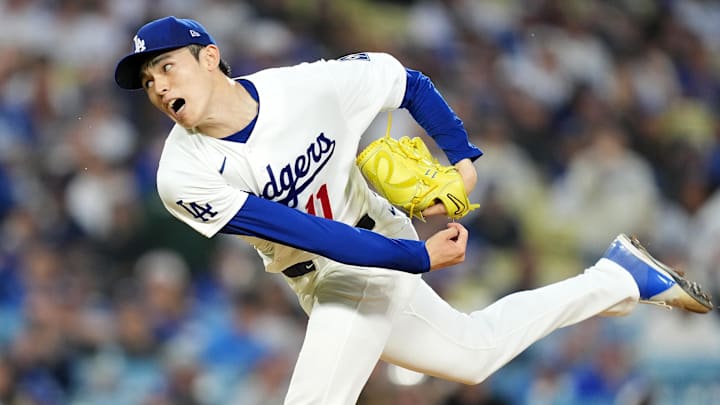
From top to bottom, the Dodgers are as sound as any team in baseball when they’re healthy, but they have enough guys out where the back of the six-man rotation isn’t doing so hot right now—specifically Emmet Sheehan and (especially) Roki Sasaki. Sasaki’s 6.35 ERA is actually a bit kind to him, as he’s allowing nearly two baserunners per inning thanks to an alarming lack of command. Blake Snell’s return from the injured list could cure this ailment in short order, at which point it’ll make sense for Sasaki to return to the bullpen.
3. New York Yankees (Last: 5)
Weakness: Third base
The Yankees have allowed the fewest runs and scored the second-most in the American League, but they could enter this year’s trade season with the same need for a better third baseman. Last year’s deadline acquisition, Ryan McMahon, ranks 28th out of 33 third basemen with a 52 wRC+ and is batting .167 with just two extra-base hits in 82 plate appearances. Right-handed platoon partner Amed Rosario is off to a hot start at the plate but is a defensive liability at the hot corner.
4. San Diego Padres (Last: 3)
Weakness: Production from stars
Remarkably, the Padres have one of the best records in baseball, while Fernando Tatis Jr., Manny Machado, Jackson Merrill and Jake Cronenworth have scuffled out of the gate. Tatis has yet to hit a home run despite having the second-best hard-hit rate (64.7%) in baseball. Merrill currently has a .600 OPS, while Cronenworth has been virtually unplayable (.478 OPS). Machado has shown signs of waking up over the past week. A lineup running this cold is either a major red flag or a powder keg. The team’s record suggests the latter—for now.
5. Chicago Cubs (Last: 10)
Weakness: Starting pitching
Chicago’s banged-up pitching staff has mostly held its own and done enough to support an offense that’s been among the league’s best to this point. But the foundation looks a bit creaky, especially in the rotation. Matthew Boyd is back from the injured list but owns a 7.00 ERA in four starts, Jameson Taillon has allowed nine home runs in six outings, and the duo of Javier Assad and Colin Rea look like no more than occasional fill-ins. Edward Cabrera and Shota Imanaga have pitched well, but the former is currently running a career-low strikeout rate (20.1%) and the latter has had a tendency to fade in the second half. If Chicago is to be a legitimate contender, adding another impact starter might be high on the to-do list come the trade deadline.
6. Cincinnati Reds (Last: 17)
Weakness: Ke’Bryan Hayes’s hitting
Hayes is among the game’s best defenders, but that’s not enough to justify playing time for a .130/.193/.208 slash line. That translates to a 6 wRC+, by far the lowest for any hitter with at least 80 plate appearances. Something closer to Hayes’s career 82 wRC+ mark would be enough to keep him in the lineup, and if you squint hard enough, there are reasons to think he’ll get there. His expected wOBA (.321) and expected batting average (.245) are right in line with the league averages, and he’s actually lowered his strikeout rate to a career-best 13.3%. Positive regression is sure to come, as there’s really not much lower to go here.

7. Milwaukee Brewers (Last: 6)
Weakness: Left side of the infield
The Brewers shipped off Caleb Durbin and the rest of their third base depth chart in the offseason trade that brought in Kyle Harrison, David Hamilton and Shane Drohan. Harrison looks like a breakout candidate and the best player involved in the deal, but the loss of Durbin’s production from 2025 has added to a huge gap on the left side of Milwaukee’s infield.
Luis Rengifo, David Hamilton and Joey Ortiz have combined to hit .208 with 10 extra-base hits and no home runs in 262 plate appearances on the season so far. Ortiz, who’s made 20 starts at shortstop and is the best defender of the bunch, has not had an extra-base hit all year. Hamilton has excellent speed and Rengifo has been productive as an everyday player before, so there’s reason to hope for improved results to come. The Milwaukee offense has survived without them, and would look even better if that group is able to pick up the pace.
8. Tampa Bay Rays (Last: 14)
Weakness: Bullpen
The Rays own the AL’s second-best record and have once again exceeded preseason expectations so far, but their bullpen has a worrying propensity for letting their opponents back in games. Seven different relievers have performed below replacement level, the worst of all being Team USA’s Griffin Jax, who has a 6.35 ERA with eight walks and three homers allowed in 11 ⅓ innings. The Taj Bradley trade is not working out for Tampa Bay.
9. Pittsburgh Pirates (Last: 4)
Weakness: Bubba Chandler’s command
A five-game losing streak that included a four-game home sweep at the hands of the Cardinals has thrown some cold water on Pittsburgh’s fast start. While the blame certainly falls on more than one player, it’s Chandler’s erratic command that steals the focus here, as it once again mucked up what could have been an effective outing on Tuesday. Chandler retired six of the first seven batters he faced with four strikeouts, then unraveled, walking three batters the next two innings before giving up a double and a two-run homer in the fifth. He’s issued multiple free passes in five of his six starts on the year, and his 15.4% walk rate is the fifth-highest among pitchers with at least 20 innings. Chandler, a former four-star quarterback prospect in high school who was committed to be a two-sport athlete at Clemson before getting drafted, is too good an athlete to struggle this much in finding the strike zone. He has the stuff to be an ace, and if he can harness his control better, he’ll make an already tantalizing Pirates rotation that much more powerful.
10. Detroit Tigers (Last: 7)
Weakness: Team defense
The Tigers are the lone team in the wide-open AL Central with a positive run differential, and given that none of the five squads currently has a winning record, this race could come down to the smaller details. If that’s the case, Detroit will need to shore up its defense. The Tigers currently rank last in Statcast’s Outs Above Average (-15), last in FanGraphs’ defensive WAR (-16.0) and 23rd in Defensive Runs Saved (four). With a rotation that features groundball specialist Framber Valdez and is now down Casey Mize, the team’s fielding aptitude figures to be tested quite a bit.
11. Texas Rangers (Last: 9)
Weakness: Slugging
The Rangers are positioned to compete, thanks to a high-upside rotation and enough quality hitters to carry them, but that hasn’t happened so far. Texas is 27th in runs scored (120) this season. The Rangers rank 24th in slugging (.376) and only have 29 home runs as a team. Josh Jung (.545) has carried a lot of weight, but Wyatt Langford (.363) and Evan Carter (.333) have been disappointments. With a rotation this good, leaving runs on the board is how you miss the playoffs.
12. Seattle Mariners (Last: 8)
Weakness: Whiff rate
The Mariners keep tumbling down the rankings, and it’s all because of an offense whose stars have gone missing. Cal Raleigh, Julio Rodriguez and Josh Naylor have all struggled in April, and the reason is simple: they aren’t making enough contact. Raleigh’s 41 strikeouts put him in the top five of the AL. As a team, the Mariners are fifth (288) in Ks, and their whiff rate of 28.0 is third-worst in baseball. Their contact rate on pitches in the zone is second-worst (80.0). When the Mariners swing at pitches, they’re simply not hitting them enough. That’s not a recipe for contention.
13. St. Louis Cardinals (Last: 25)
Weakness: Starting pitching
The Cardinals quickly flipped the switch to sweep the Pirates, fresh off losing five straight games, a run in large part fueled by effective starting pitching. But while the four St. Louis starters combined to allow just nine runs in 21 ⅔ innings (3.74 ERA), they did so by once again defying the principles of modern-day pitching.
St. Louis starters own the lowest strikeout rate (16.7%) in the league, and have also allowed the second-most home runs (26). The group doesn’t walk many batters, but that’s a dangerous tightrope to walk along regularly. This always looked to be a rebuilding year for the Cardinals, and it just might end up that way despite their current hot start. But if the team opts to make a run at a playoff spot, this group will have to get better—or get reinforcements from outside the current roster.
14. Cleveland Guardians (Last: 12)
Weakness: First base
Cleveland went into the season with Kyle Manzardo and Rhys Hoskins as their first base setup, and both have been disappointments so far. Hoskins signed on a minor-league deal, but Manzardo was expected to get the bulk of the playing time coming off his 27-homer season in 2025. Instead, the pair have combined for a .277 slugging percentage and -0.8 fWAR, both worst in the league.

15. Miami Marlins (Last: 22)
WeaknOutfield
The Marlins’ offense hasn’t been too bad so far, especially considering their usual standard. However, no matter who they’ve put in the outfield, from 2025 All-Star Kyle Stowers to top prospect Owen Caissie to veteran journeyman Austin Slater—who was released after just 12 games—they’ve scuffled at the plate. Miami’s outfielders collectively rank 29th with a 75 wRC+, ahead of only the Reds’.
16. Athletics (Last: 23)
Weakness: Starting pitching
The Athletics own first place in the AL West with a 17-14 record, but have a negative run differential, largely because of their starting pitching. The team’s starting rotation ranks 21st in ERA (4.42), and aside from Aaron Civale (3.23), not one has looked particularly good. Luis Severino has a 4.46 ERA, Jacob Lopez is at 5.84, and Jeffrey Springs is at 3.96, but has allowed 11 runs combined in his last two starts.
17. Toronto Blue Jays (Last: 18)
Weakness: Catcher
Alejandro Kirk’s thumb injury has left Toronto in bad shape behind the plate. Typical backup Tyler Heineman is off to an ice-cold start, with zero extra-base hits in 50 plate appearances, giving him a measly 9 wRC+ that ranks 41st out of 42 catchers. Brandon Valenzuela, a 25-year-old switch hitter who was the Blue Jays’ No. 24 prospect entering this year, isn’t doing a whole lot better (.189/.231/.351) in his first taste of major league action. Kirk can’t get back soon enough.
18. Arizona Diamondbacks (Last: 19)
Weakness: Back of the rotation
Zac Gallen and Eduardo Rodriguez have been solid at the top of the rotation, but the rest of Arizona’s starting pitchers have been brutal. The team’s starting rotation ranks 27th in ERA (5.13) and WHIP (1.50). Ryne Nelson has a 7.71 ERA and a -1.1 WAR, and Merrill Kelly has a 9.20 ERA and a 2.25 WHIP. Mike Soroka (4.70) and Brandon Pfaadt (5.67) have been nearly as bad. It has been a brutal year on the mound in Arizona.
19. Baltimore Orioles (Last: 16)
Weakness: Corner infield
At one corner of the infield stands a veteran slugger who was paid $155 million to mash. At the other stands a former top prospect whose sheen is wearing off in his age-24 season. First baseman Pete Alonso (6' 3", 245 lbs.) and third baseman Coby Mayo (6' 5", 225 lbs.) both cast intimidating presences at the plate, but neither is hitting above league-average. The Orioles certainly need Alonso to do so if they’re going to make the playoffs, while Mayo is in danger of losing his spot to Blaze Alexander and/or Weston Wilson.
20. Kansas City Royals (Last: 21)
Weakness: Bullpen
The injury to Carlos Estévez has left the back end of Kansas City’s bullpen in disarray. Lucas Erceg has gotten the bulk of the save opportunities, but he’s walked as many batters as he’s struck out this season (10). As a team, the Royals are 28th in bullpen ERA (5.33) and 27th in walk rate (13.5%)
21. Minnesota Twins (Last: 13)
Weakness: Making contact
As a group, the Twins don’t make terrible swing decisions—the difference between their in-zone swing rate and chase rate is 38.5%, sixth-best in the league. Despite this, the team doesn’t make a whole lot of contact. Minnesota ranks 26th in strikeout rate (26.7%), 26th in swinging strike rate (13.5%) and 28th in zone contact rate (81.9%). For a team that’s below average in isolated power (.146), you’d like to see their hitters get a bit more out of what little contact they’re making.
22. Colorado Rockies (Last: 28)
Weakness: Ezequiel Tovar’s bat
The Rockies have been a surprise this season, as they’re playing much better baseball than expected. Their 14-18 record is genuinely shocking, while their pitching staff has done an excellent job of limiting damage, even at home. The team’s biggest weakness may actually be the bat of a guy expected to be a foundational piece. Ezequiel Tovar is slashing an anemic .202/248/.298 with a 32 wRC+ and has produced -0.5 fWAR. He’s been an absolute disaster at the plate. If he can even get to league average, Colorado could continue to surprise.

23. Washington Nationals (Last: 27)
Weakness: Pitching staff
This shouldn’t come as a surprise to anyone who glanced at the Nationals roster before Opening Day. Their rotation is made up of veteran castoffs and post-hype prospects, while the bullpen is populated by a bunch of relative unknowns. The Nats’ 5.14 ERA is the worst in the NL, and in just 28 ⅔ innings, starter Zack Littell has given up 13 home runs, the most ever allowed by a pitcher through the end of April. It’s a shame, too, as the offense has scored more runs than any team except the Braves.
24. Boston Red Sox (Last: 20)
Weakness: Left side of the field
Shortstop Trevor Story, third baseman Caleb Durbin and left fielder Jarren Duran have all struggled mightily to open 2026, combining for four home runs in 350 plate appearances with none batting above the Mendoza line. They’ve dragged Boston’s offense down to an 83 wRC+, the worst in the AL and only better than the Mets. Manager Alex Cora paid the price for the Red Sox’ struggles, but nothing will change until this trio collectively figures it out at the plate.
25. Chicago White Sox (Last: 30)
Weakness: Outfield
As a group, Chicago’s outfielders rank 28th in the league in fWAR (-0.3), with the fifth-lowest slugging percentage (.341). None of the team's three most often-used outfielders—Andrew Benintendi, Luisangel Acuña and Tristan Peters—has been close to league average offensively. The trio has combined for five extra-base hits, and while Benintendi has four of them, he’s also been one of the game’s worst defenders over the last four years.
26. Los Angeles Angels (Last: 24)
Weakness: Bullpen
The Angels have been awful at the back end of games. If not for the Astros, they’d have the worst bullpen ERA in the game at 5.66. As a team, they’ve blown nine saves, converting four of 13 chances. Jordan Romano is sporting an impressively bad 10.13 ERA in 11 appearances, while Drew Pomeranz (9.26) hasn’t been much better. Even Jose Soriano’s brilliance can’t save this group.
27. Houston Astros (Last: 26)
Weakness: Pitching staff. All of it.
The Astros currently have the worst ERA in baseball by a full run. Houston’s team mark is 6.08, while the Nationals are second-worst at 5.08. With Hunter Brown, Tatusya Imai, Cristian Javier and Josh Hader out, things look dire. Mike Burrows and Lance McCullers Jr. both have ERAs over 6.00. The team’s bullpen ERA is an MLB-worst 6.63 as well. Houston has opened the season 12-20 despite having one of MLB’s best offenses. Things have to turn around on the mound.
28. Philadelphia Phillies (Last: 11)
Weakness: Rotation behind Cristopher Sanchez, Zack Wheeler
This placement may seem a bit harsh—Philadelphia actually swept a series against the team at the bottom of these rankings after firing Rob Thomson—but the Phillies own baseball’s worst run differential for many reasons, with their once mighty rotation being the most concerning one. Their 5.52 starters ERA is the worst in the NL and better than only the Astros (it’s been a long time since the 2022 World Series). Taijuan Walker already got the boot, but Jesus Luzardo, Aaron Nola and Andrew Painter all have ERAs above 5.00. At least Zack Wheeler looked good last Saturday in his first appearance since August.
29. New York Mets (Last: 15)
Weakness: The entire lineup aside from Juan Soto
The Mets rank dead last with a 80 wRC+, meaning they’re 20 percent worse than the average offense. Their top eight hitters in plate appearances have all batted below league-average, as newcomers Bo Bichette and Marcus Semien have been the most troublesome offenders with identical wRC+ marks of 69. Soto has been his typical awesome self when healthy, but he’s in dire need of more lineup support—an embarrassing issue for a franchise with MLB’s second-highest payroll.
30. San Francisco Giants (Last: 29)
Weakness: Middle of the order bats
One month into the season, the Giants sport MLB’s worst offense. They have scored 101 runs, while hitting an MLB-low 19 home runs. The team added Rafael Devers and Willy Adames over the last 18 months to add power to the lineup, and the two have combined to produce five home runs and 16 RBIs through one month. Devers has a .530 OPS, a 52 wRC+ and -0.8 fWAR, while Adames is sporting .601 OPS, a 69 wRC+ and -0.3 fWAR. The engines that should be driving the team’s offense are stalled.
More MLB from Sports Illustrated
 Add us as a preferred source on Google
Ryan Phillips is a senior writer on the Breaking and Trending News team at Sports Illustrated. He has worked in digital media since 2009, spending eight years at The Big Lead before joining SI in 2024. Phillips also co-hosts The Assembly Call Podcast about Indiana Hoosiers basketball and previously worked at Bleacher Report. He is a proud San Diego native and a graduate of Indiana University’s journalism program.
Follow rumorsandrants
Nick Selbe is a programming editor at Sports Illustrated who frequently writes about baseball. Before joining SI in March 2020 as a Breaking and Trending News writer, he worked for the Orange County Register, MLB Advanced Media, Graphiq and Bleacher Report. Selbe received a bachelor’s in communication from the University of Southern California.
Follow NickSelbe
Will Laws has been leading Sports Illustrated’s baseball coverage since 2024 and has covered MLB since 2014. Prior to joining the SI staff in February 2020, he previously worked for Yahoo, Graphiq, MLB.com and the Raleigh News & Observer. His work also has appeared on Yahoo Sports, NBA.com and AOL. Laws has a bachelor’s in print and digital journalism with a minor in sports media studies from the University of Southern California.
Follow willlaws