%20%20--%3E%0A%3Csvg%20version%3D%221.1%22%20id%3D%22Layer_1%22%20xmlns%3D%22http%3A%2F%2Fwww.w3.org%2F2000%2Fsvg%22%20xmlns%3Axlink%3D%22http%3A%2F%2Fwww.w3.org%2F1999%2Fxlink%22%20x%3D%220px%22%20y%3D%220px%22%0A%09%20width%3D%2239px%22%20height%3D%2240px%22%20viewBox%3D%220%200%2039%2040%22%20enable-background%3D%22new%200%200%2039%2040%22%20xml%3Aspace%3D%22preserve%22%3E%0A%3Cpath%20fill%3D%22%23FFFFFF%22%20d%3D%22M38.5%2C7H28.2v26h10.3V7z%22%2F%3E%0A%3Cpath%20fill-rule%3D%22evenodd%22%20clip-rule%3D%22evenodd%22%20fill%3D%22%23FFFFFF%22%20d%3D%22M26.1%2C25.5c0%2C5.8-4.1%2C7.5-12.9%2C7.5C3.9%2C33%2C0%2C31.2%2C0%2C25.2v-1.1h11.6%0A%09v2.4c0%2C0.7%2C0.1%2C1.4%2C1.2%2C1.4c1%2C0%2C1.2-0.4%2C1.2-1.3v-0.9c0-1.6-0.9-1.6-3.5-2.2C2.2%2C21.7%2C0%2C19.7%2C0%2C15.3v-0.9C0%2C9.3%2C5.5%2C7%2C12.9%2C7%0A%09c10.2%2C0%2C12.8%2C2.6%2C12.8%2C7.4v1.8h-11v-2.9c0-0.6-0.4-1.1-1.2-1.1c-0.6%2C0-1.2%2C0.4-1.2%2C1.1v0.9c0%2C1.5%2C0.9%2C2%2C3.3%2C2.5%0A%09c8%2C1.6%2C10.5%2C3.3%2C10.5%2C7.5V25.5z%22%2F%3E%0A%3C%2Fsvg%3E%0A)
MLB Opening Day Power Rankings: Every Team’s Sneaky X-Factor
In this story:
Baseball is the ultimate team sport. Unless you’re that one guy for the Dodgers, one player can’t do everything. It takes the full roster (and then some) to cover all the games, innings and at-bats that accrue over the six long months of a season. When the dust settles, the best teams are usually the deepest teams—and the power ranking portion of this article will reflect that as we embark on a new season.
Still, in every clubhouse, there’s one guy who’s more indispensable to his team than most. In a vacuum, the most important player on a team is also the best player, but that’s not what we’re here to focus on. Rather, we’re highlighting the unsung hero types whose particular skill sets are paramount to their teams having success or failure in 2026.
Call them x-factors, glue guys or spark plugs, whichever phrase you prefer—these are the underrated make-or-break players for every team.
1. Los Angeles Dodgers: SP Emmet Sheehan
With a team this star-studded, it’s hard to find an under-the-radar player whose production is paramount to the Dodgers’ success. But how Sheehan follows up his stellar 2025 campaign will go a long way toward easing the burden that is Dave Roberts’s annual high-wire act of pitching staff management.
Sheehan returned from Tommy John surgery and was dominant, posting a 2.82 ERA with a 30.6% strikeout rate across 73 ⅓ innings. With Blake Snell beginning the season on the injured list, Sheehan is set to break camp with a spot in the starting rotation. If he comes anywhere close to replicating last year’s success, he’ll hold onto it no matter how healthy the rest of the team’s pitchers are.
2. Seattle Mariners: SP George Kirby
As Seattle’s vaunted core of starting pitchers—Kirby, Bryan Woo, Logan Gilbert and Bryce Miller—collectively enters their late 20s, bumps and bruises are starting to take their toll. Last season, Gilbert missed time with forearm tightness, Miller battled elbow issues and even Kirby fought through shoulder problems. Woo made it through unscathed, though he’s spent numerous stints on the injured list throughout his career.
For these reasons, Kirby is the pick. Prior to 2025, he was the most reliable of the bunch: from his big-league debut on May 8, 2022, to the beginning of last season, he never missed a start, posting a 3.43 ERA in the process. He missed nearly the first two months of the ’25 campaign, looking a little rusty once he returned but overall still turning in a productive season. For the Mariners to get over the hump this year, they’ll likely need Kirby to return to his metronome-like consistency.
3. Toronto Blue Jays: RP Jeff Hoffman

It’s easy to forget now, but Hoffman was putting together a rock-solid postseason run before disaster struck at the worst possible time in Game 7. There’s no way to sugarcoat what a gut punch of a moment that was for the player and franchise, but after signing him to a three-year, $33 million deal last offseason, Toronto has little recourse but to support Hoffman and trust him to protect ninth inning leads again. The 33-year-old still has lights-out closer stuff, and if he can overcome the painful memory of how last October ended, he’ll be a key contributor to the Blue Jays making another Fall Classic run.
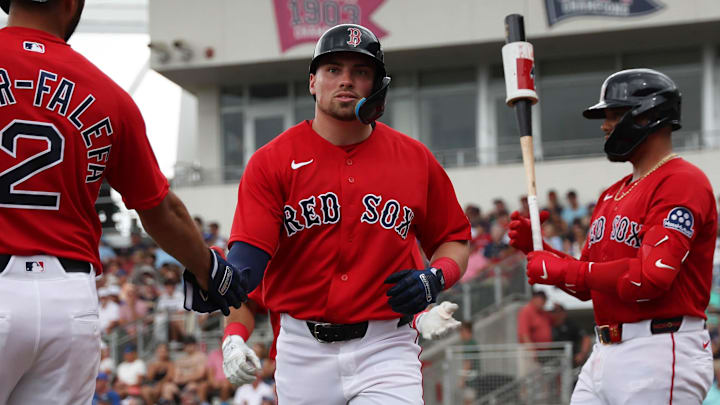
4. Boston Red Sox: 3B Caleb Durbin
Red Sox fans were reeling when Alex Bregman opted to sign with the Cubs in free agency, leaving Boston after just one productive (though injury-shortened) season. In steps Durbin after a trade from Milwaukee to take his place. The contact-heavy, defense-first 26-year-old had a strong rookie season with the Brewers, and should be an excellent fit in Boston. Durbin had the fifth-lowest strikeout rate (9.9%) among qualified hitters and was tied for eighth among third basemen in defensive runs saved. While not the household name that Bregman is, Durbin seems capable of replicating the former’s on-field production at a far more affordable price.
5. New York Yankees: IF José Caballero
With Anthony Volpe starting the year on the injured list (and coming off of a disappointing 2025 season), Caballero is the Yanks’ Opening Day starting shortstop. The speedy 29-year-old has quietly been a productive player for the past three years while bouncing around three different organizations, posting 5.9 fWAR on the strengths of his glove and base running despite only once topping 400 plate appearances in a season.
Now, he’ll get a fairly long runway to make the job his own. But even if Volpe returns to the starting lineup when healthy, Caballero’s versatility—he saw time at six different positions last season—combined with a slew of older, injury-prone veterans on the Yankees roster makes him a prime candidate to fill in all over the diamond when needed.
6. New York Mets: CF Luis Robert Jr.
Robert doesn’t need to recapture his All-Star form of three years ago to make a big impact on the Mets—he just needs to stay in the lineup. He’s logged more than 450 plate appearances in a season just once (2023), and while his production has waned in the past couple of years, his skills have not, as he has maintained his speed and defensive presence. Behind Robert, the Mets are thin on viable center field options, so even if his bat does not return to his peak production, having a Gold Glove caliber player patrolling the outfield will provide a huge boost for New York. And if Robert can pair that with his 30-homer potential? Then this will be one of the best moves in recent Mets history.
7. Baltimore Orioles: SP Kyle Bradish
There are a lot of options to choose from an Orioles roster oozing with as much talent as it has question marks. But for an organization that’s long struggled to develop starting pitching, Bradish is the choice, as he has the biggest upside of an intriguing group. The righthander owns a career 3.47 ERA in 67 starts, though Tommy John surgery limited him to just 14 appearances over the last two seasons. Bradish is healthy now after posting a ridiculous 37.3% strikeout rate in his limited six-start return last year. If he can replicate anything close to that level of dominance over a full season, Baltimore has a full-blown ace on its hands.
8. Philadelphia Phillies: 2B Bryson Stott
On a Phillies team with an older, veteran core, Stott provides some key traits: speed, defense and a high floor for offensive production. Though names like Bryce Harper, Trea Turner and Kyle Schwarber draw most of the headlines, Stott has quietly been among the most consistent regulars in the league. He ranks sixth among second basemen in fWAR (9.0) over the past three seasons, averaging 13 homers and 29 stolen bases per year during that stretch. As Turner enters his mid-30s and assumes more injury risk, Stott’s ability to cover both middle infield spots becomes more valuable.
9. Chicago Cubs: SP Edward Cabrera
The Cubs invested a lot to acquire Edwards in a trade from the Marlins, and it’s easy to see why. The 27-year-old had long flashed talent in Miami, but it wasn’t until 2025 that he cracked 100 big-league innings. He logged 137 ⅔ frames last year, with a 25.8% strikeout rate and career-best 8.3% walk rate. Health is a big question mark for the hard-throwing righthander, but if he can stay on the mound enough, Chicago has a pitcher with ace-worthy stuff, which is not a label that applies to many other options in the Cubs’ rotation.
10. Detroit Tigers: OF Parker Meadows

One of the strengths of A.J. Hinch’s club is the ability to slot versatile players in a variety of roles. Zach McKinstry, Javier Báez, Colt Keith and Matt Vierling have bounced all around the diamond over the past couple of years, and the Tigers have found ways to make it work. But the best version of this team, it seems, involves Meadows being productive with everyday playing time in center. The 26-year-old is a speed demon with an impact glove, but he’s never managed to crack 300 plate appearances in a season. Meadows has struggled this spring, but at least he’s healthy. If he stays that way, Detroit should have a two-way difference-maker patrolling the outfield.
11. Atlanta Braves: SP Grant Holmes
Holmes was effective in transitioning from a swing role to a full-time starter for Atlanta last year, making 21 starts with a 3.99 ERA and 25% strikeout rate over 115 innings. For a Braves rotation that’s already down Spencer Schwellenbach and Spencer Strider, Holmes’s availability will be crucial to cover innings. The righthander leans on his devastating slider, which generated a 42.8% whiff rate last season, to lead his arsenal, and he racked up plenty of strikeouts in spring training. With a rotation spot secured entering 2026, he’ll need to keep producing to help Atlanta return to the playoffs.
12. San Diego Padres: C Freddy Fermin
Padres catchers ranked 28th in fWAR last season, posting a cumulative .214/.265/.335 slash line. That black hole of production was why A.J. Preller traded for Fermin at the deadline, and though the 30-year-old didn’t light the world on fire in his first couple months in San Diego, he’ll be counted on to handle the starting catcher duties in 2026.
Fermin draws high marks for his defensive skills behind the dish, and his career 90 wRC+, while not exactly stellar, represents a big upgrade from what Martín Maldonado put up last season. If Fermin is ready for a bigger role, he’ll provide steady production to what was a glaring weakness a season ago.
13. Milwaukee Brewers: SS Joey Ortiz
It’s tempting to pick a pitcher here after Milwaukee shipped Freddy Peralta to the Mets, but I have enough faith in the Brewers’ pitching development and high volume of viable options that they will figure out creative solutions to be effective there. Ortiz gets the nod because of his potential to be an effective table setter on offense. Already an elite defender, he regressed at the plate last year, posting a 67 wRC+ and lacking feel for the zone. He made a lot of contact, but most of it was weak, likely the result of chasing pitches outside the strike zone far too often. If Ortiz can produce something closer to league average hitting, that, combined with his immense defensive value, will make him a 3-WAR player again.
14. Houston Astros: OF Cam Smith
The headlining names on Houston’s roster—Yordan Alvarez, Jose Altuve, Hunter Brown—will be the primary deciders of the team’s success in 2026. But for the Astros to return to the postseason, they’ll need a new generation of players to step up, as well as solid production from a group of relatively unproven outfielders. And out of that bunch, Smith is the one who looks to have the best shot at making an outsized impact.
The centerpiece of the Kyle Tucker trade, Smith was the Cubs’ first-round pick in 2024, and after logging just 32 minor league games with Chicago, he made Houston’s Opening Day roster last year. His rookie campaign didn’t exactly make headlines, but for a player this young and with this little pro experience, he acquitted himself well, posting a .236/.312/.358 slash line while learning a new position (right field). An impressive athlete with top-end bat speed, Smith looks to have more in the tank than the nine home runs he hit last year. If he can ascend to another level, the Astros will have themselves a franchise centerpiece.
15. Texas Rangers: UT Josh Smith
Smith is, almost by definition, the clear choice here. Sharing an infield with oft-injured teammates Corey Seager, Josh Jung and Jake Burger, Smith has spent the past two years being Texas’s walking Band-Aid, spending time at seven different positions while posting a combined 107 wRC+ over 293 games. He’s logged the most plate appearances (1,155) for the Rangers over the past two seasons of anybody still on the team despite never having a set position.
Smith’s versatility and above-average offensive prowess makes him the kind of player every team would love to have. While he seems set to open the season as the Rangers’ everyday second baseman, expect him to keep moving around the diamond whenever Texas needs him to.
16. Kansas City Royals: 1B/OF Jac Caglianone

By virtue of moving the outfield walls in, the Royals are going to hit more home runs in 2026 than the AL-worst 159 they mustered last season. But to pass that dubious mark in a meaningful way, they’ll need Caglinanone to quickly develop into the heart-of-the-order bat that his 6'4", 250-pound frame suggests he can be.
The No. 6 pick in the 2024 draft, Caglianone hit .337 with 20 homers in just 66 minor league games before getting called up last season, only to face-plant in his first crack against big-league pitchers. He’s looked much better this spring, both with the Royals and with Italy in the World Baseball Classic, and seems like he’s ready to take a big step forward. If he does, he’ll unlock Kansas City’s lineup in a big way.
17. Pittsburgh Pirates: 1B/OF Ryan O’Hearn
There are a number of hitters you could pick here, but we’ll go with the player who just signed the largest free-agent contract for a hitter in franchise history. O’Hearn has posted a wRC+ of 118 or better in three straight seasons, a benchmark that only Spencer Horwitz (119) cleared for Pittsburgh last year. If O’Hearn can sustain his improvements against lefties this year—he was actually better against lefthanders (135 wRC+) than righties (125) in 2025—then he’ll be more than just a strong side platoon hitter and instead an everyday fixture in the middle of the Pirates’ batting order.
18. Tampa Bay Rays: CF Cedric Mullins
Mullins’s 2025 production cratered after a deadline deal shipped him to the Mets, and he had to settle for a one-year contract in Tampa Bay this winter. Returning to form would be huge for a Rays side that could use even league-average offensive production from a competent center fielder. If Mullins could replicate the 103 wRC+ he posted from ‘22 to ‘24 rather than the .216/.299/.391 slash line he put up last season, Tampa Bay’s lineup puzzle would look a lot easier to solve.
19. Cleveland Guardians: OF Chase DeLauter
Is it a bit unfair to give this distinction to a player who technically hasn’t even debuted yet? Maybe. DeLauter, the oft-injured, ever-tantalizing 2022 first-round pick, had never played in a major league game before Cleveland gave him the start in Game 2 of last year’s wild-card series against the Tigers. He’s hit at every stop along the minors but has never played more than 57 games in a season as a pro. DeLauter has raked this spring, and the scoring-starved Guardians have no reason to not give him a shot at playing everyday. If he can just stay on the field most of the time, Cleveland will have an impact bat it so desperately needs.
20. Cincinnati Reds: 2B Matt McLain
McLain looked like a future star when he hit 16 homers with 14 stolen bases in his 89-game rookie season in 2023. But a shoulder injury cost him all of ’24, and despite playing 147 games last year, he didn’t seem like his best self, batting .220/.300/.343 for a meager 77 wRC+.
Given what he showed three years ago, the ceiling is clearly much higher for the 2021 first-round pick. McLain has raked this spring, and even though he spent most of last season looking lost offensively, he still managed 15 home runs and 18 stolen bases. Better results at the plate could unlock real 30–30 potential and give Cincinnati another up-the-middle star alongside shortstop Elly De La Cruz.
21. San Francisco Giants: RP Ryan Walker
Walker shared closing duties with Camilo Doval last year, and enters 2026 as the Giants’ ninth-inning man. After posting a 31% strikeout rate in his first two seasons, that number fell to 22.6% in ’25, a far less closer-worthy mark. As a result, his ERA ballooned from 1.91 in ’24 to 4.11 last year. To recapture his effectiveness, he’ll need to improve his slider, which suffered a 10-point drop in whiff rate (38% to 28%) year over year. If Walker can start missing bats like he used to, then the Giants will have a reliable closer.
22. Arizona Diamondbacks: SP Brandon Pfaadt
Pfaadt followed up a strong 2023 postseason with a solid ’24 campaign, and looked poised to be an impact arm at the top of Arizona’s rotation last year. That didn’t happen, as the righthander posted a 5.25 ERA with one of the lowest strikeout rates (19.2%) among qualified starters.
Pfaadt’s problem last season was that his fastballs—a four-seamer and a sinker—both got hammered, and yet he threw them more than any other pitch type. He’s tinkered with more cutters this spring, and the early results look promising. Pfaadt has made 65 starts over the past two seasons, so his durability is a huge asset. If a reworked pitch mix can unlock his stuff, he could take a big step forward in 2026. His production would be huge for a rotation headlined by aging veterans Merrill Kelly and Zac Gallen.
23. Miami Marlins: SP Max Meyer

Sandy Alcantara and Eury Pérez are the two anchors for Miami’s rotation. But Meyer, who’s entering what feels like a make-or-break age-27 season, is not far behind in terms of importance to the Marlins’ 2026 success. The No. 3 pick in the ‘20 draft has battled numerous injuries throughout his young career but has flashed high upside, with a five-pitch arsenal that helped him average more than a strikeout per inning last season. If Meyer can stay upright, he’ll help form an impressive young rotation that can help power a return to the postseason for Miami.
24. Athletics: SP Jeffrey Springs
It’s not quite Coors Field, but outside of Denver, no ballpark inflated run scoring last year as much as Sacramento’s Sutter Health Park. A’s pitchers gave up a .455 SLG at home in 2025, compared to a .407 mark on the road, representing the biggest home-road split of any team.
While a breakout from any pitcher would be the A’s saving grace, Springs gets the nod here after he made it through a healthy and relatively productive 2025 campaign in which he posted a respectable 4.11 ERA and set career highs in starts (30) and innings pitched (171). A bounce-back year from rotation mate Luis Severino would go a long way too, of course, but in Springs, the A’s have a pitcher whose performance was more reliable a year ago. They’ll need him to replicate that to give what should be a high-scoring offense enough support.
25. St. Louis Cardinals: OF Jordan Walker
The Cardinals are in full-blown rebuild mode, so a successful season means identifying and developing young talent to be a part of the organization’s next contending team. A lot of players fit into that category, but Walker is the choice here because of how lost he’s looked offensively ever since his standout rookie season in 2023.
A first-round pick in 2020 and former top prospect, Walker hit 16 homers with a 116 wRC+ as a rookie, but has managed a dreadful 66 wRC+ with a 30.7% strikeout rate the past two seasons. Still just 23, few players run as fast, throw as hard and have as much bat speed as Walker does, so St. Louis would be wise to pencil him in the lineup every day and see if he’s able to put everything together.
26. Minnesota Twins: SS Brooks Lee
The Twins could really use a developmental win after a brutal offseason, and Lee breaking out would be a big one. The No. 8 pick in the 2022 draft got his first extended look at the big leagues last season, and it was mostly a struggle. He posted an 81 wRC+ in 139 games, though he did hit 16 homers and managed a respectable 17.5% strikeout rate. For an organization that’s just months removed from a trade deadline firesale and seen considerable turmoil within the front office, developing a homegrown everyday player would represent a much-needed sign of progress.
27. Chicago White Sox: 3B Miguel Vargas
For the rebuilding South Siders, there’s a lot that needs to go right for 2026 to be a successful season. Vargas is high up on that list. The 26-year-old had some prospect pedigree with the Dodgers but was unable to carve out a role for himself before he was shipped to Chicago. His first full season with the White Sox started slowly, but he hit .267/.354/.436 after the All-Star break, and enters this year as the team’s everyday third baseman. On a team full of inexperienced hitters, Vargas’s patient approach is particularly valuable, and he should be a key fixture in the middle of Will Venable’s lineup.
28. Los Angeles Angels: SP Reid Detmers
What “make” looks like for an Angels team that’s posted 10 straight losing seasons is difficult to define, but relative to recent performances, the bar is low. To clear it, Los Angeles will need competent pitching a year after ranking last in the American League in strikeout rate (20.5%), walk rate (9.9%), home run rate (1.4 HR/9) and ERA (4.89).
While it will take more than one Halos arm to step up and deliver marked improvement from last season, Detmers is the pick both from a practical and philosophical standpoint. The team’s first-round pick in 2020, Detmers has long flashed talent but has rarely shown consistency. After a rough ’24 season in which he was demoted, he flourished in a relief role last season and now looks poised to return to the rotation. Detmers finally putting things together would be a foundational breakthrough the organization has sorely missed for most of the past decade.
29. Washington Nationals: SP Cade Cavalli

The Nationals are in the early stages of a full-on rebuild, so any young player who’s a potential building block or valuable trade chip could go here. After the team traded MacKenzie Gore to Texas, Cavalli steps in as the team’s de facto ace. A first-round pick in 2020, Cavalli fully returned from Tommy John surgery last season, logging a 4.25 ERA in 48 ⅔ big-league innings. A hard thrower who generates a lot of whiffs but not a lot of strikeouts, Cavalli developing into something close to a top-of-the-rotation arm would be a huge win for Washington’s new regime. Perhaps some more polish can get him there.
30. Colorado Rockies: SP Chase Dollander
New president of baseball operations Paul DePodesta has made no secret about his front office trying any new strategy to solve the riddle of piecing together a viable pitching staff. While targeting free agents who are game for the challenge of pitching at Coors Field is a good start, developing a homegrown impact arm would be an organizational triumph. Dollander, the No. 9 pick in the 2023 draft, has talent, but certainly didn’t solve the Coors Field enigma last season, as he posted a 3.46 ERA on the road but a ghastly 9.98 ERA at home. For a rebuilding organization, seeing Dollander take a step forward in 2026 would represent a meaningful proof of concept for the new regime.
More MLB from Sports Illustrated
 Add us as a preferred source on Google
Nick Selbe is a programming editor at Sports Illustrated who frequently writes about baseball. Before joining SI in March 2020 as a Breaking and Trending News writer, he worked for the Orange County Register, MLB Advanced Media, Graphiq and Bleacher Report. Selbe received a bachelor’s in communication from the University of Southern California.
Follow NickSelbe