
Pirates' Paul Skenes Readies For Tense Labor Battle
In this story:
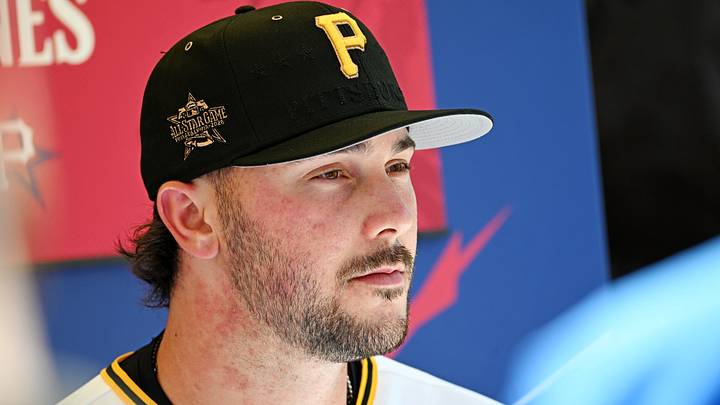
PITTSBURGH — Pittsburgh Pirates starting pitcher Paul Skenes is done with his 2026 season, but he has a massive offseason ahead of him off the mound.
Skenes is on the eight-player executive subcommittee for the MLBPA, the players' union, and plays an important role in the upcoming negotiations with the owners over the next collective bargaining agreement.
The current CBA expires on Dec. 1, and the owners will lock out the players, which could result in lost games in 2027 or even a lost season if both sides don't come to a new agreement.
It's a tough offseason for everyone, but particularly Skenes, whose leadership could play a big role in fighting for his fellow players and what they win in the next CBA.
Skenes Looking to Avoid Lockout
The looming threat of a lockout is ever-present over baseball, especially with the end of the regular season this weekend and the current CBA expiring in two months.
Skenes is also very aware of what the lockout represents: lost games, lost revenue and lost momentum in a time when baseball is on the rise with ratings, ticket sales and interest from the public.

It's not easy work for Skenes, who pointed to several issues they're discussing, with a potential salary cap being the biggest one.
The owners are pushing for a salary cap in this CBA, while the players' union, which has historically been against it, will fight back.
Skenes said the CBA is 400 pages long, so there are many things they haven't fully discussed yet, which also compounds the salary cap debate.
The MLBPA went on strike in August 1994 over the salary cap, among many issues, and the season was soon canceled. The 1995 season was also shortened to 144 games, resulting in continued distrust between the players and owners, as well as disinterest from the fans.
Skenes doesn't want that to happen and hopes that discussions with his fellow players and the owners will lead to a resolution and a way back to playing games on time.
"Yeah, that would be a worst-case scenario," Skenes said. "I've read the books, and obviously I wasn't alive for the strike in '94, but you don't want that to happen. I'm excited for the opportunity to be in the room. We've had Zooms - I mean, in-person meetings but I've been on 95% of them over Zoom throughout the season.
"I'm excited to be in the room and see it, and I think that's probably a product of me being in my first one. I talked to some other guys, and they're not quite as excited. We have an opportunity.
"We're stewards of the game. This is our game. This is as players it's also the owners' game. And we are all stewards of the game, and we have to protect it, so whatever that looks like is what it looks like. We have a lot of momentum. It would not be good to kill that."
Skenes' Role on the Subcomittee and Union Voting
The eight-player executive subcommittee each has a vote on whether they ratify the next CBA or not, but they aren't the only players who vote.
Each MLB team has an individual player representative, adding an extra 30 votes, with Pirates catcher Henry Davis filling that role.

It was a big deal in the last CBA negotiations, with the eight-player executive subcommittee voting against it, but 26 of the team representatives voted for it, and it passed 26-12.
Skenes notes the difference between what he and Davis do, as he looks out for the welfare of all players, while Davis is focused on what the Pirates players need, which he sees as important also.
"Yeah, obviously I wasn't in that one. I've heard about it," Skenes said. "I mean, it's been interesting to hear about. I mean, you can't tell everybody, 'Hey, I'm on the subcommittee, and you have to vote with me. That's not how it works.
"The clubhouses need to vote on behalf of their clubhouses; the subcommittee needs to vote on behalf of the subcommittee. That's the beauty of it; everybody has a vote. And I think as long as all the players are educated, which they are, the communication has been great and the engagement has been great and we're going to end up with the right deal for us."
Skenes View on Small Markets Ahead of CBA Negotiations
The biggest reason fans want a salary cap is so they can have more competitive balance between the large and small markets.
Small markets like the Cleveland Guardians, Milwaukee Brewers and the Tampa Bay Rays have had success, but the last small market team to win a World Series was the Kansas City Royals in 2015.
The Pirates are a small-market team, with just five non-losing seasons in the past 34 years, and fans don't expect Skenes to stay long-term.

A salary cap, for small-market fans and owners, would give them a chance to keep their star players, instead of letting them sign with large-market teams, which can afford their salary demands.
Skenes will enter his first of three seasons of arbitration in 2027 with the Pirates and then likely sign with another team at the end of the decade, or the Pirates will trade him prior.
Spending is a factor, Skenes acknowledged, but he also said that he's confident in the Pirates and that the conversation around the salary cap is more complicated than people make it out to be.
"I disagree," Skenes said. "I'm in the clubhouse. You can't be in the clubhouse of a small-market team feeling like you're helpless. I don't feel like that. I don't think us not making the playoffs has nothing to do with -- it probably has a little bit to do with -- spending, but we have a really good team.
"It comes down to a few pitches here and there where we're in one game, not lose one game, you add those up over the course of a season, and it's probably a little bit different picture.
"I think it's super nuanced, and there's a lot of detail that a lot of people, including some people in the game, probably don't fully understand. That's ok. Yeah."
 Add us as a preferred source on Google
Dominic writes for Pittsburgh Pirates On SI, Pittsburgh Panthers Pn SI and also, Pittsburgh Steelers On SI. A Pittsburgh native, Dominic grew up watching Pittsburgh Sports and wrote for The Pitt News as an undergraduate at the University of Pittsburgh, covering Pitt Athletics. He would write for Pittsburgh Sports Now after college and has years of experience covering sports across Pittsburgh.