
Why Rangers May Not Be Able to Shed All of Corey Seager’s Contract in Trade
In this story:
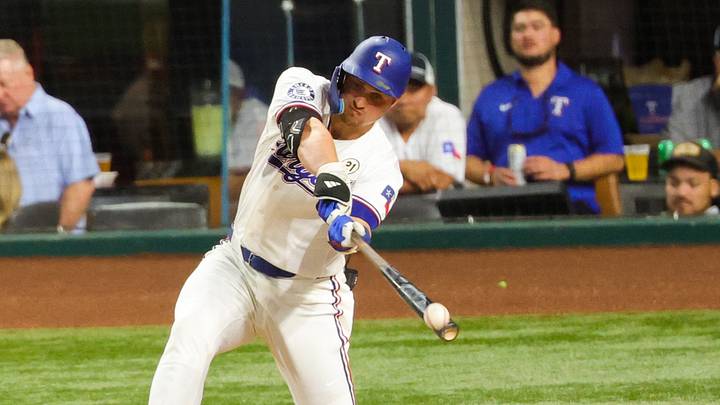
The conversations around the Texas Rangers attempting to trade shortstop Corey Seager are starting to reach a critical mass.
President of baseball operations Chris Young returned home from the general managers meetings in Las Vegas this weekend and multiple reports have him exploring the trade market for his All-Star shortstop. There are plenty of complications in moving Seager.
He has five years left on his $325 million contract and any team that trades for him will have to take on the remaining $155 million. Seeger has no trade rights, thanks to playing 10 years in the Majors and five years with the Rangers. He must approve any deal. Plus, it's not a target-rich environment with a potential work stoppage looming in the next three weeks. Finally, there are only a handful of teams that can take on his contract and even they’re not freely spending money this offseason — at least not yet.
The deck feels stacked against the Rangers. But with a static payroll for 2027 and four high-priced veterans, Young must move one. Seager is the most attractive option. It provides financial relief and should bring solid players in return. Texas would love to get out from under the entire contract.
For all those reasons, Young and the Rangers might have to eat some Seager’s contract to make this work.
Rangers Should Eat Part of Corey Seager’s Contract

It's not unheard of for a team to eat part of a player’s contract as part of facilitating a trade. Young was on the other side of this equation in 2023 when the New York Mets were desperate to part with right-handed pitcher Max Scherzer.
The Mets were going nowhere and Scherzer as playing on a two-year, $86.67 million deal. Ownership wanted to get out from under the deal. But the Rangers didn’t want to take on the whole deal.
Young worked a deal in which he sent top prospect Luisangel Acuna to the Mets for Scherzer. As part of the deal, the Mets paid down more than $35 million of Scherzer’s remaining contract while the Rangers took on the remaining $22.5 million. Plus, Texas got Scherzer for 2024.
Do the math. Of the remaining $57.5 million, the Mets took on 61% of the deal just to get out from under it. Young won’t do that. That would require eating more than half of Seager’s deal. That’s not the payroll relief he’s looking for, especially since he would probably have to pay that down over five years.
But what about 30%? That would be $46.5 million of Seager’s remaining contract. Divided over five years that would be $9.3 million. That’s $21.7 million in relief each year, based on Seager’s $31 million per year. That’s $21.7 million back in 2027, along with the $64 million the Rangers will get back when Jacob deGrom’s and Nathan Eovaldi’s deals expire after the 2027 season.
That's the sort of flexibility that Young could do something with in free agency. It's not a perfect scenario. But it's good enough, especially if the return on Seager is three players, with at least one Major League-ready player. To get the financial flexibility he needs, Young may have to bite the bullet and do something a little more creative.
 Add us as a preferred source on Google

Matthew Postins is an award-winning sports journalist who covers Major League Baseball for OnSI. He also covers the Big 12 Conference for Heartland College Sports.
Follow postinspostcard