
How Tigers May Navigate Salary Arbitration with 11 Eligible Players
In this story:
The Detroit Tigers shed potential payroll at the trade deadline by dealing both Tarik Skubal and Casey Mize.
Both would have cost plenty in free agency and even though there are rumors that Skubal might be interested in returning as a free agent to the Motor City, it’s going to cost the Tigers.
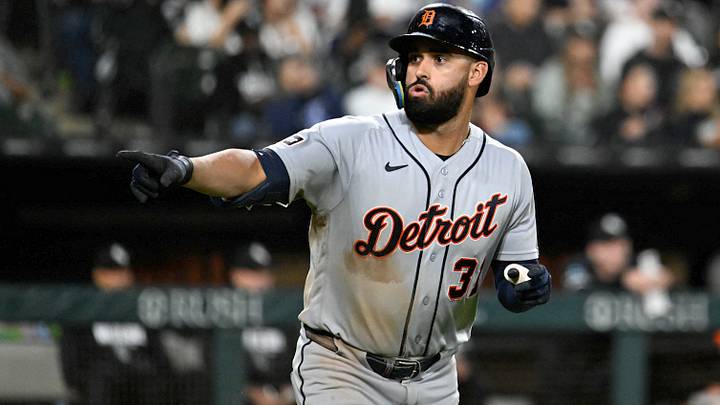
Detroit’s leadership, led by president of baseball operations Scott Harris, will have to use salary arbitration as an input to the Tigers’ overall payroll. Eleven players are set to make significant money through the process.
How Tigers Could Navigate Salary Arbitration

Recently, MLB Trade Rumors posted its annual salary arbitration projections. These projections are put together by Matt Swartz and posted to the site. While they’re not official, Swartz tends to be on the mark — or close to it — with his projections.
According to his data, the Tigers could be on the hook for $42 million in arbitration money this offseason, depending upon how the collective bargaining agreement shakes out. If there is no new CBA by Dec. 1 the players are likely to be locked out by the owners.
Harris and his team will have to calibrate with the rest of the payroll. Per Spotrac, the Tigers have a total current payroll allocation of $168 million. But that only includes players under contract, including pitcher Framber Valdez. Include the arbitration eligible players and the pre-arb players and the Tigers’ potential payroll for 2027 goes up to $218 million.
For an organization that tends not to spend big that often, those are narrow margins. What can the Tigers do about it?
The player with the highest projected cost is outfielder Riley Greene, who is projected to make $9.3 million. With two more years of team control and three All-Star Game nods, the Tigers are unlikely to make a move with him. They’ll pay that figure.
The next names could be decision points. The include first baseman Spencer Torkelson ($7.7 million), infielder Zach McKinstry ($5 million), outfielder Kerry Carpenter ($4.1 million), outfielder Matt Vierling ($3.7 million) and relief pitcher Will Vest ($4.4 million). All have one or two years of team control. Normally, Detroit would keep players like this. But, with a farm system now ready to burst with young talent, some of these players could be traded.
The most likely candidates are the position players. Torkelson has been up-and-down offensively, Carpenter has been oft-injured, while Vierling and McKinstry would give a new team versatility. Vest, who missed part of last season with an injury, has value as a reliever and the Tigers may need someone with closer experience.
The rest include Tyler Holton ($2.4 million), Beau Brieske ($1.5 million), Reese Olson ($1.5 million), Wenceel Perez ($1.4 million) and Parker Meadows ($1 million). Those would be easy signings for Detroit and won’t appreciably impact the Tigers’ bottom line.
There’s a good chance that not all these 11 players will be with the Tigers next season. The question is which ones stay and which ones go?
 Add us as a preferred source on Google
Matthew Postins is an award-winning sports journalist who covers Major League Baseball for OnSI. He also covers the Big 12 Conference for Heartland College Sports.
Follow postinspostcard