
Austin Martin’s Biggest Asset Could Be Undermining His Value to Twins
In this story:
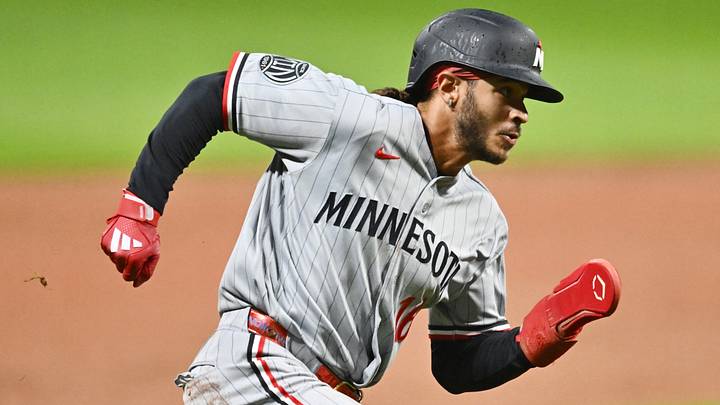
The Minnesota Twins should give Austin Martin a more selective running plan in 2027. His ability to reach base can help a crowded lineup, but his stolen-base decisions need to preserve more of those opportunities.
Martin stole 12 bases in 2026 and was caught eight times. That translates to a 60% success rate, a figure that deserves attention when Minnesota evaluates what he can provide from the bench.
The Twins’ crowded outfield picture makes that evaluation important. A reserve needs to contribute in limited opportunities. Better choices on the bases could help Martin do that without changing his swing or requiring another acquisition.
Martin’s On-Base Skill Gives the Twins Something to Protect

Martin finished with a .228/.341/.315 slash line and 45 walks in 358 plate appearances. His batting average and three home runs made his offensive limitations easy to identify.
His patience remained useful. He chased only 18% of pitches outside the strike zone, according to Statcast, giving him a way to contribute when hits were scarce.
That skill was especially valuable against left-handed pitchers. Martin drew 28 walks in 177 plate appearances against them and produced a .379 on-base percentage. His batting average was almost identical against right-handers, but his on-base percentage fell to .304.
Previous coverage examined Martin’s contribution against lefties. The next step should be ensuring Minnesota gets more benefit after he reaches.
A walk puts another runner in the inning and gives the next hitter an opportunity. A stolen base can improve that opportunity, but a caught stealing takes an out and a runner away.
A Clearer Running Plan Would Make His Reserve Role More Useful

The Twins should review Martin’s attempts by pitcher delivery, catcher throwing, count, and game situation. Those details can help identify when his speed offers a real advantage and when staying put gives the lineup a better chance.
The game state should matter as well. With two outs and a dangerous hitter at the plate, the cost of ending the inning needs to be part of the decision.
They should also separate the decision to use him as a pinch runner from the decision to send him. Replacing a slower runner can help on a single, a double or a ball in the gap without requiring a steal attempt.
The strongest argument for continued freedom is that 20 attempts represent a small sample. A few different outcomes would change his percentage considerably. Minnesota should account for that uncertainty before deciding how much to restrict him.
That still leaves room for a more disciplined plan. Martin should earn aggressive opportunities through favorable matchups and reliable reads, with success and outs tracked alongside total steals.
If he wins a bench spot, his plate discipline, matchup value and ability to cover outfield innings can support a useful assignment. Improving his running decisions would help those contributions last longer once he gets on base.
 Add us as a preferred source on Google

Alvin Garcia is a Puerto Rico-born sportswriter and U.S. Army veteran. He has covered Major League Baseball since 2022, producing breaking news, game coverage, analysis, roster stories and player features for national and team-focused publications. His previous work has appeared at Heavy, The Sporting News, Athlon Sports, Yardbarker, and FanSided. Garcia brings a data-informed, fan-focused approach to his coverage.