%20%20--%3E%0A%3Csvg%20version%3D%221.1%22%20id%3D%22Layer_1%22%20xmlns%3D%22http%3A%2F%2Fwww.w3.org%2F2000%2Fsvg%22%20xmlns%3Axlink%3D%22http%3A%2F%2Fwww.w3.org%2F1999%2Fxlink%22%20x%3D%220px%22%20y%3D%220px%22%0A%09%20width%3D%2239px%22%20height%3D%2240px%22%20viewBox%3D%220%200%2039%2040%22%20enable-background%3D%22new%200%200%2039%2040%22%20xml%3Aspace%3D%22preserve%22%3E%0A%3Cpath%20fill%3D%22%23FFFFFF%22%20d%3D%22M38.5%2C7H28.2v26h10.3V7z%22%2F%3E%0A%3Cpath%20fill-rule%3D%22evenodd%22%20clip-rule%3D%22evenodd%22%20fill%3D%22%23FFFFFF%22%20d%3D%22M26.1%2C25.5c0%2C5.8-4.1%2C7.5-12.9%2C7.5C3.9%2C33%2C0%2C31.2%2C0%2C25.2v-1.1h11.6%0A%09v2.4c0%2C0.7%2C0.1%2C1.4%2C1.2%2C1.4c1%2C0%2C1.2-0.4%2C1.2-1.3v-0.9c0-1.6-0.9-1.6-3.5-2.2C2.2%2C21.7%2C0%2C19.7%2C0%2C15.3v-0.9C0%2C9.3%2C5.5%2C7%2C12.9%2C7%0A%09c10.2%2C0%2C12.8%2C2.6%2C12.8%2C7.4v1.8h-11v-2.9c0-0.6-0.4-1.1-1.2-1.1c-0.6%2C0-1.2%2C0.4-1.2%2C1.1v0.9c0%2C1.5%2C0.9%2C2%2C3.3%2C2.5%0A%09c8%2C1.6%2C10.5%2C3.3%2C10.5%2C7.5V25.5z%22%2F%3E%0A%3C%2Fsvg%3E%0A)
MLB Extension Candidates Are Shifting Toward Where Baseball Is Headed
In this story:
This article is a part of Verducci’s View, a weekly baseball newsletter from Sports Illustrated senior writer Tom Verducci. Every Monday, Tom empties out his notebook over email and covers MLB’s hottest topics, provides in-depth analysis through both text and video breakdowns, looks forward to what’s worth watching during the week and more.
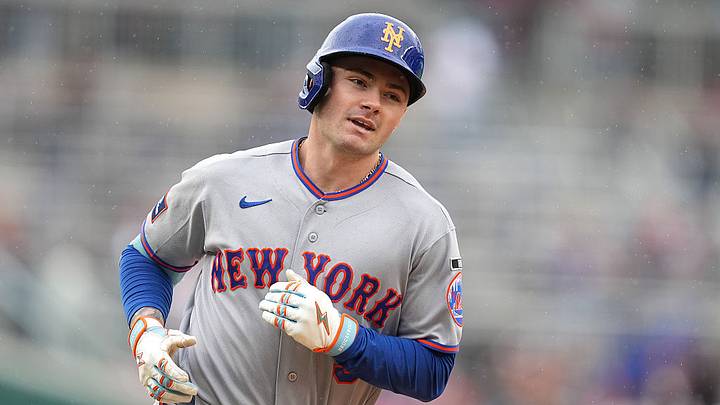
The Mets locked up a below average hitter for eight years and $95 million on Saturday after seeing him play five months in the big leagues. What at first glance might seem a rash move—what’s the rush?—is a smart move that says a lot about center fielder A.J. Ewing and where baseball is headed. It’s a smart move because:
- The Mets get what every club craves: fixed costs. They bought out all of Ewing’s arbitration years and two years of free agency.
- Ewing’s age. Ewing debuted at 21 with 11 home runs and 25 stolen bases. Producing at a young age is a good barometer of future success. Only four other first-year players in baseball history hit those thresholds at such a young age: Barry Bonds, Rocco Baldelli, Elly De La Cruz and Julio Rodriguez.
- Ewing is an up-the-middle player with elite baserunning and defensive value.
The last point is the most important when it comes to the direction of the game. I’ve been pointing out that baseball has become a younger man’s game in great part because of rules changes and increased velocity. Teams increasingly are trusting young players to step into full-time roles and locking them up to extensions. Almost a month into free agency, only one position player has signed (Jake Bauers). It is not a good time to be a 30-something corner player.
As one manager told me this season, “In two or three years every team is going to have three center fielders playing in the outfield and rangy athletes with speed in the infield.”
Ewing is the sixth player this year to sign an early extension. The most common denominator is that all of them have plus speed and/or play in the middle of the diamond:
Player | Years | Amount | Sprint Speed Percentile |
|---|---|---|---|
Kevin McGonigle | 9 | $150M | 72 |
Konnor Griffin | 9 | $140M | 98 |
A.J. Ewing | 8 | $95M | 94 |
Colt Emerson | 8 | $95M | 39 |
Cooper Pratt | 8 | $50.75M | 88 |
Luis Lara | 7 | $31M | 79 |
Baseball is becoming a faster game. Since such tracking began in 2015, the median MLB sprint speed and the number of teams with elite speed have been rising steadily. More teams in 2026 had an average elite sprint speed of 27.8 feet per second or faster than in the first seven years of tracking combined!
MLB Team Sprint Speed
Year | Median ft/sec. | Teams with 27.8+ ft/sec. |
|---|---|---|
2015 | 26.9 | 0 |
2016 | 27.0 | 0 |
2017 | 27.1 | 1 |
2018 | 27.1 | 1 |
2019 | 27.1 | 0 |
2020 | 27.0 | 0 |
2021 | 27.2 | 1 |
2022 | 27.2 | 4 |
2023 | 27.3 | 7 |
2024 | 27.4 | 4 |
2025 | 27.3 | 4 |
2026 | 27.4 | 6 |
Who was the fastest team in baseball in 2026? The best team in baseball: the Milwaukee Brewers.
Early extensions are not guarantees of success. But some of the extensions that have not worked out involved corner players or those without elite speed, such as Evan White, Eloy Jimenez, Jon Singleton and Kristian Campbell. The Orioles are hoping Samuel Basallo (eight years, $67 million) is an outlier. Basallo is one of the five slowest players in baseball (min. 100 competitive runs).
Critics can note that Ewing posted a 97 OPS+ last season, struck out at an above average rate (25.4%), hit .220 with runners in scoring position, has almost no opposite field power (no home runs, two hard-hit extra-base hits) and has below-average bat speed. But him not being a middle-of-the-order impact hitter is no reason to go year-by-year with Ewing.
His value is that he is a strong complementary player with a high floor. A player who reaches the big leagues this young who can run, defend in the middle of the field and hold his own at-bat—especially with good plate discipline, an important predictor—is a good bet to be a regular contributor on a winning team. Ewing may not be a superstar, but he is the kind of athletic, complementary player teams increasingly are looking for and locking up as the game gets younger and faster.
Other young, athletic players who fit the mold of high-floor, low-risk extension candidates include Chandler Simpson of the Rays, Henry Bolte of the Athletics, Sam Antonacci of the White Sox, Luke Keaschall of the Twins and Travis Bazzana of the Guardians.
 Add us as a preferred source on Google

Tom Verducci is a senior writer for Sports Illustrated who has covered Major League Baseball since 1981. He also serves as an analyst for FOX Sports and the MLB Network; is a New York Times best-selling author; and cohosts The Book of Joe podcast with Joe Maddon. A five-time Emmy Award winner across three categories (studio analyst, reporter, short form writing) and nominated in a fourth (game analyst), he is a three-time National Sportswriter of the Year winner, two-time National Magazine Award finalist, and a Penn State Distinguished Alumnus Award recipient. Verducci is a member of the National Sports Media Hall of Fame, Baseball Writers Association of America (including past New York chapter chairman) and a Baseball Hall of Fame voter since 1993. He also is the only writer to be a game analyst for World Series telecasts. He lives in New Jersey with his wife, with whom he has two children.