
Kody Clemens vs. Chase Meidroth: Who Should Win AL Silver Slugger at Second Base?
In this story:
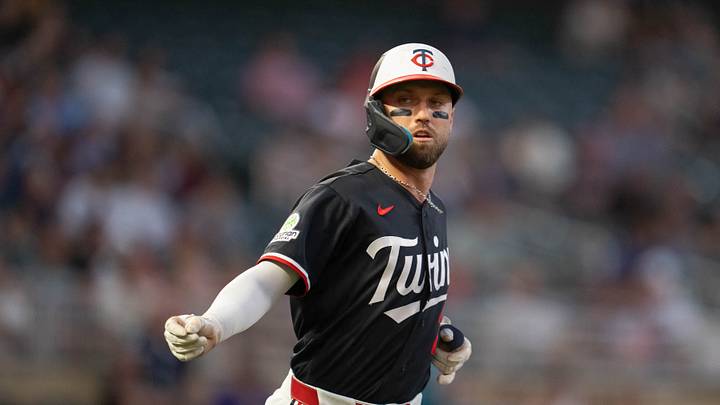
This is a more interesting comparison than it might seem if we start by taking a look at the percentiles of Kody Clemens of the Minnesota Twins vs. Chase Meidroth of the Chicago White Sox, the finalists for the American League Silver Slugger this season.
What could happen? Expected statistics would quickly make us lean toward Clemens in this challenge, as he did much better in the batting percentiles (79 vs. 65), xwOBA (73 vs. 15), xSLG (83 vs. 9), Barrel% (78 vs. 16), average exit velocity (92 vs. 20), Hard-Hit% (83 vs. 22), and Batting Run Value (76 vs. 49).
That was great, and in this debate it carries considerable weight up to a certain point, but it is unavoidable to also give weight to actual productivity, where this comparison can take an interesting turn.
Why Should Meidroth Win?

To begin with, Meidroth led all second basemen in fWAR with 4.5, leaving Clemens behind—including the full offensive and defensive value—and finished producing the best season in offensive productivity, with 13.2 Off, the FanGraphs metric that estimates the runs contributed by a hitter above the league average, while Clemens finished with just 7.9. This could be a great argument here, but it should not yet completely define the conversation.
Meidroth also had better results in the metrics that evaluate offensive production in relation to the league average, as he recorded 118 wRC+ compared to Clemens’ 108, and likewise slightly surpassed him in OPS+ (115 vs. 108) and wOBA (.339 vs. .327). That said, let’s analyze another interesting point here, since there are two different scenarios when it comes to comparison.
A) The overall impact of each hitter, where we already saw that Meidroth leads all second basemen in fWAR.
B) What we have not seen internally: the impact of both only when they played as second basemen.
On this last point, Meidroth does not change much, as he played 149 of his 154 games at second base, which makes him a legitimate player.
On the other hand, we know that Clemens was used at several positions, especially at first and second base by the Minnesota Twins in 2026. He played 71 of his 145 games as a second baseman, around 50% of his games, and his performance was much better than his overall balance, accumulating 1.3 fWAR out of his total 2.5 fWAR, with 111 wRC+, much better than the previous comparison point in which Clemens had 108 wRC+. In other words, basically, and this is a point in his favor, his best moments with the bat came when he played second base. Even so, Meidroth’s total productivity was favored by his fWAR, although in the predictive metrics it did not carry the same weight.
Why Should Clemens Win?

As we saw before, Clemens was far superior in the quality of his contact, surpassing Meidroth in important metrics such as xwOBA (.334 vs. .301) and xSLG (.456 vs. .348), and he also ranked in the 73rd percentile in xwOBA, while Meidroth finished in the 15th. In xSLG, he reached the 83rd percentile and Meidroth was at the 9th, and in Barrel%, the difference was also wide, with percentiles of 78 and 16, respectively. Clemens finished with a Batting Run Value of +12 runs, compared to Meidroth’s +7, which reflects a greater offensive contribution in terms of accumulated value during the season, and he was also a better baserunner, surpassing Meidroth with +2 vs. +0 in Baserunning.
Additionally, Clemens had a key role in the Twins’ lineup, producing 136 wRC+ in High Leverage situations, with a .333/.378/.452 offensive line in 47 plate appearances, production that also surpassed Meidroth, who accumulated just 70 wRC+ in the 58 plate appearances he had.
Verdict
Both had two different roles on their respective teams, but I would lean a little more toward Clemens, who was slightly more complete in impacting the game with the expansion of his power by hitting 27 home runs, being a more consistent hitter in high-pressure situations, better positioned in the league percentiles, and a better baserunner.
 Add us as a preferred source on Google

Yirsandy is a baseball writer specializing in MLB coverage with experience across multiple teams and storylines. He currently writes for Diamond Centric, where he covers the New York Mets, San Diego Padres, Chicago Cubs, Milwaukee Brewers, and Kansas City Royals. My work focuses on game coverage, player analysis, and storytelling that connects performance with context. My Substack has also been an important part of my writing development, where I’ve built much of my baseball coverage and storytelling voice over time. I’m passionate about combining reporting, research, and thoughtful analysis to produce engaging baseball content for readers.