%20%20--%3E%0A%3Csvg%20version%3D%221.1%22%20id%3D%22Layer_1%22%20xmlns%3D%22http%3A%2F%2Fwww.w3.org%2F2000%2Fsvg%22%20xmlns%3Axlink%3D%22http%3A%2F%2Fwww.w3.org%2F1999%2Fxlink%22%20x%3D%220px%22%20y%3D%220px%22%0A%09%20width%3D%2239px%22%20height%3D%2240px%22%20viewBox%3D%220%200%2039%2040%22%20enable-background%3D%22new%200%200%2039%2040%22%20xml%3Aspace%3D%22preserve%22%3E%0A%3Cpath%20fill%3D%22%23FFFFFF%22%20d%3D%22M38.5%2C7H28.2v26h10.3V7z%22%2F%3E%0A%3Cpath%20fill-rule%3D%22evenodd%22%20clip-rule%3D%22evenodd%22%20fill%3D%22%23FFFFFF%22%20d%3D%22M26.1%2C25.5c0%2C5.8-4.1%2C7.5-12.9%2C7.5C3.9%2C33%2C0%2C31.2%2C0%2C25.2v-1.1h11.6%0A%09v2.4c0%2C0.7%2C0.1%2C1.4%2C1.2%2C1.4c1%2C0%2C1.2-0.4%2C1.2-1.3v-0.9c0-1.6-0.9-1.6-3.5-2.2C2.2%2C21.7%2C0%2C19.7%2C0%2C15.3v-0.9C0%2C9.3%2C5.5%2C7%2C12.9%2C7%0A%09c10.2%2C0%2C12.8%2C2.6%2C12.8%2C7.4v1.8h-11v-2.9c0-0.6-0.4-1.1-1.2-1.1c-0.6%2C0-1.2%2C0.4-1.2%2C1.1v0.9c0%2C1.5%2C0.9%2C2%2C3.3%2C2.5%0A%09c8%2C1.6%2C10.5%2C3.3%2C10.5%2C7.5V25.5z%22%2F%3E%0A%3C%2Fsvg%3E%0A)
Twins’ Reunion With Sonny Gray Is a Low-Risk Coup With Plenty of Upside
In this story:
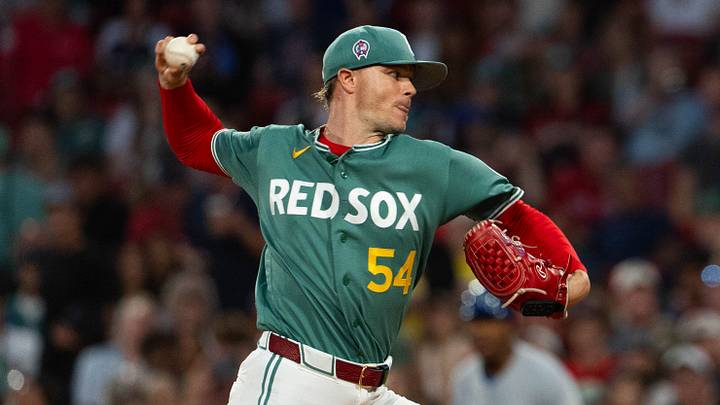
Sonny Gray is returning to Minnesota three years after he last played in the Twin Cities.
Gray, 37, agreed to a two-year, $55 million deal with the Twins, according to a Wednesday report from ESPN’s Jeff Passan. The contract includes an opt-out after the first season, per Passan, so Gray could potentially re-enter free agency at the age of 38. He’ll earn an average annual value of $27.5 million across the duration of the deal, a slight bump in salary from his last contract, a three-year, $75 million deal he signed with the Cardinals.
The veteran righthander also pocketed a $10 million buyout on his previous deal when the Red Sox declined to pay him $30 million for 2027, so he stands to make $140 million over a five-year period. Good money if you can get it.
Gray is coming off an excellent season with the Red Sox in which he recorded 4.3 bWAR, won an MLB-best 18 games and logged a 2.72 ERA with 149 strikeouts and 46 walks in 169 innings to finish fifth in AL Cy Young voting. It was his best season since his final year in Minnesota in 2023, when he was the Cy Young runner-up, generated 5.6 bWAR and made his third and most recent All-Star team.
It’s been a busy and successful couple of days for the franchise. The Twins retained star catcher Ryan Jeffers via the $23.15 million qualifying offer and are now reuniting with Gray after his successful two-year stint with the franchise in 2023–24.
Why this deal makes sense
This is a surprising but excellent signing for the Twins, who bring back a veteran pitcher in Gray who experienced plenty of success during his previous stint in Minnesota. Across his two years with the Twins, Gray made 56 starts and pitched to a 2.90 ERA (3.05 FIP) while striking out 300 batters in 303 2/3 innings. He surrendered just 19 home runs across his two-year stay with the franchise and recorded a total of 8.0 bWAR. Gray was the runner-up for the American League Cy Young award in 2023.
Gray becomes a centerpiece of the Twins’ rotation, where he’ll join Pablo Lopez, Taj Bradley and Joe Ryan. Also competing for a spot in the rotation will be Zebby Matthews, Bailey Ober, Dean Kremer, Mick Abel and Connor Prielipp. That’s an elite rotation, and they’ll have the comfort of some strong depth pieces that can step in if any of their starters sustain an injury.
The short-term nature of the deal is also significant for the Twins. Gray is 37, so it’s reasonable to think his production might drop off before long. A two-year deal will let Minnesota acquire an ace-caliber pitcher without having to pay him beyond his age-38 season. And a $27.5 million AAV is a very reasonable deal for a pitcher at this stage of his career, especially one who proved last season that he can still produce at a high level.
Sonny Gray, Filthy 3 Pitch K.
— Rob Friedman (@PitchingNinja) September 6, 2026
All Curveballs. 🔨 pic.twitter.com/NxMUHOlFBt
Biggest risk factors
The biggest risk for the Twins as it relates to the acquisition of Gray is the potential for his production on the mound to decline. Gray has pitched no fewer than 166 innings in each of the last four seasons but has lost a tick of velocity on his fastball and sinker over the past few years, with his 92 mph fastball ranking in the 13th percentile league-wide. His strikeout and whiff rates have also shrank, with his cutter especially losing effectiveness in that regard (30.8% whiff rate in ’24, 14.7% in ’26).
Year | Overall K% | Overall Whiff% | FB Velocity |
|---|---|---|---|
2024 | 30.3% | 29.8% | 92.5 |
2025 | 26.7% | 27.5% | 92.0 |
2026 | 21.8% | 23.1% | 91.8 |
He’s still been effective despite those trends by keeping hitters off-balance with a six-pitch mix. Last season, he was in the 73rd percentile for groundball rate (46.4%) and only surrendered 16 home runs. He surrendered 19 total home runs in his two seasons in Minnesota, 10 of which came during his starts at Target Field, so he’s clearly comfortable and confident pitching at the franchise’s home stadium. But there will be significant pressure on the Twins’ defense, which ranked 26th in fielding run value and 20th in outs above average last season.
Roster implications for the Twins
The Twins bolstered their starting rotation with the addition of Gray, which leaves one less rotation spot for players currently on the roster to compete for. As a result, the Twins may look to trade one of their starters to address other areas.
One player that stands out among the rest as a possible trade candidate is Bailey Ober. The towering 6'9" righthander is entering his final year of arbitration before reaching free agency, and he’s expected to receive a deal worth north of $6.5 million. For a pitcher that could be on the outside of the rotation looking in, that’s a steep price to pay. If they can’t find a trade partner, they may even non-tender Ober before Friday’s deadline.
The addition of Gray could also prevent arms such as David Festa, Matthews and Kendry Rojas from making the Opening Day roster, and force them to start the season in Triple A, where they’d likely remain until a rotation spot opens up. Those players could also become trade candidates as a result of the Gray acquisition.

Market impacts
SI’s Will Laws and Nick Selbe predicted in their free agency preview that Gray would land a two-year deal worth $50 to $56 million. He ended up landing in their range after agreeing to a two-year, $55 million pact. At age 37, it was unlikely Gray was going to receive a deal longer than two years, and he’s now established the market for accomplished veteran starters by securing an AAV of $27.5 million.
After Dustin May signed a larger than expected three-year, $52.5 million contract with the White Sox, free agent starting pitchers will feel confident in getting the deals they desire. There are a handful of experienced starters in this year’s free agent class, and the early deals that have come to fruition bode well for the remaining arms.
Winners and losers of this deal
The winners of the Gray deal include the remaining free agent starting pitchers who have yet to sign with teams, and of course, the Twins. In particular, older pitchers like Kevin Gausman will certainly be referring to Gray’s contract in Minnesota when negotiating with teams.
When at full strength, Gray improves Minnesota’s rotation to be one of MLB’s best from top to bottom, and in a lackluster American League, positions the club to make a strong push for the postseason.
As for losers of the deal, contending teams that were hoping to lure Gray to their organization have missed out on one of the top free agent pitchers. In particular, teams like the Braves, Mets, Cubs and Astros that could have benefited from a experienced pitcher on a short-term deal will be disappointed. Gray was one of the most experienced arms on the market, and many of the other top arms, particularly those younger than Gray, will be seeking longer contracts.
 Add us as a preferred source on Google

Karl Rasmussen is a staff writer for Sports Illustrated. A University of Oregon alum who joined SI in February 2023, his work has appeared on 12up and ClutchPoints. Rasmussen is a loyal Tottenham, Jets, Yankees and Ducks fan.
Follow Karlras920