
3 Things We Learned About the Timberwolves in Nets Blowout
In this story:
The Minnesota Timberwolves have never had an eight-game homestand before. In previous years, this would probably be written in more of a negative tone.
Previously hovering around a .600 win percentage as the home team over the last two seasons, it was an open secret that complacency could easily set in in previous years. The rhythm of playing at home outside of Target Center is far less regimented than it is on the road, which could show up as an issue with a younger, less hungry during the regular season Timberwolves team. This year, it seems to be a bit different with a 6-2 stretch in Minneapolis, ending with a blowout of the reeling Brooklyn Nets.
With a fierce closeout of a never-before-seen volume of home games in franchise history, the Timberwolves are officially rolling. But what did it teach us about a team we're continually learning about?
1. A smooth transition
Heading into Monday night, the Wolves were eighth in the league in turnover frequency in transition.
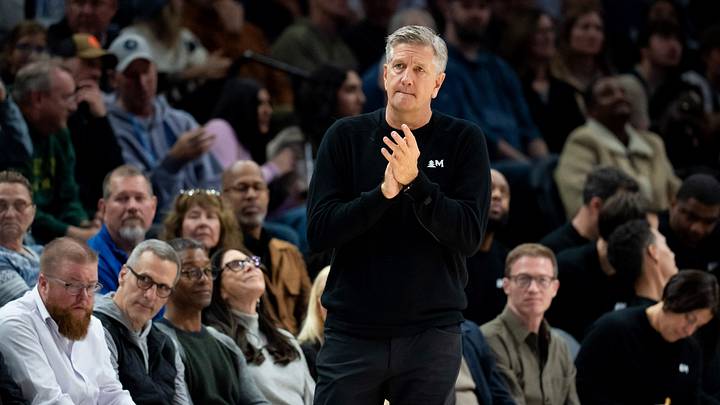
While in recent history they have played fast, it hasn't always been congruent with playing efficiently. Previously, head coach Chris Finch would sometimes say they would play fast just to play fast. On Monday, they continued to show that this team can do both.
The Wolves forced 21 turnovers, had 31 points off of turnovers, and scored 27 points on the fastbreak. Most importantly, it was a low-turnover-frequency game in transition.
DEFENSE ➡️ OFFENSE pic.twitter.com/uZxQL1OTi9
— Minnesota Timberwolves (@Timberwolves) November 24, 2026
"Simple plays, better spacing," Finch said after the game. "We calmed down just a little bit, we've had bad spacing in transition...running on top of each other over the last couple games."
Not only was it the equalizer in the Wolves being able to carve out a substantial lead, but also being able to hold it for the entire game—another previous trend that seems to be on the out.
2. A lead? For the entire game?
When the Timberwolves took the lead at 1-0 on a Jonathan Kuminga made free throw, they never gave it up. Not once.
It can be hard throughout the course of a full NBA game against the best players in the world to do it. Just ask many of the players in the same locker room. Jaden McDaniels, who had a regular-season career-high 34 points on 12-16 shooting, has been around for plenty of blown leads against less-than-stellar opponents.
"Us being discplined...knowing that teams can come back down 20 in a matter of minutes," he said in the locker room after. "We wanted to put the game away, and see our young guys get into the game too."

The Wolves' struggles against teams under .500 and teams well below their caliber are well documented. But to win as thoroughly as they did on Monday night after eight games of being at home, on a less regimented schedule, speaks volumes about the level this team is currently operating at. What brings it home further is who they were able to do it against.
3. A homecoming spoiled
Julius Randle had two good years in Minnesota. Were they great? In stretches, yes. He was the definitive second-best, and sometimes best player on a team that beat the Los Angeles Lakers in five games and went to a Western Conference Finals. He carried the Wolves through stretches without Anthony Edwards when they needed him, and pulled in gravity on offense.
But the ever-ringing line from Chris Finch in the Wolves trading "moodiness for giddiness" rang between all walls possible of the Target Center on Monday night. Randle turned the ball over five times and fell back into a scene Wolves fans had seen plenty of times by walking back defensively, a half-raised white flag that would, at times, suck the energy out of a team that seemed to be fueled by its vibes.
"He meant a lot to us," McDaniels said after the game, reflecting on the two years together in which they shared the floor for heavy minutes. "When we didn't have Ant, he was our leader and the head of the snake...and that's who he looked up to—he was kind of a vet to us as well."
He didn't have a bad night by any stretch of the imagination: 29 points, 68% shooting, nothing to scoff at by any stretch. But in many of the darkest hours for the Wolves during his tenure in Minnesota, that would seem to be the case.
In an instant, he could go from being the most important player on the roster to one that felt like they needed to get rid of at so many different moments.
Now, Randle has moved on. The Wolves have, too. So far? It seems that it's worked out for both parties.
Get Timberwolves On SI straight to your inbox: sign up for our free newsletter here.
 Add us as a preferred source on Google

Andrew Carlson has covered the Minnesota Timberwolves since the 2021-2022 season; ironically, the franchise's first playoff appearance in four years. Following the rise of the Wolves and Anthony Edwards, Andrew has covered and been credentialed for multiple postseasons and Western Conference Finals runs up close to the team, while marrying both opinionated and technical content around the game. Andrew attended and graduated from the University of Missouri where he got his degree in journalism, and covered SEC football and basketball for multiple news outlets.
Follow andrew_carlson2