%20%20--%3E%0A%3Csvg%20version%3D%221.1%22%20id%3D%22Layer_1%22%20xmlns%3D%22http%3A%2F%2Fwww.w3.org%2F2000%2Fsvg%22%20xmlns%3Axlink%3D%22http%3A%2F%2Fwww.w3.org%2F1999%2Fxlink%22%20x%3D%220px%22%20y%3D%220px%22%0A%09%20width%3D%2239px%22%20height%3D%2240px%22%20viewBox%3D%220%200%2039%2040%22%20enable-background%3D%22new%200%200%2039%2040%22%20xml%3Aspace%3D%22preserve%22%3E%0A%3Cpath%20fill%3D%22%23FFFFFF%22%20d%3D%22M38.5%2C7H28.2v26h10.3V7z%22%2F%3E%0A%3Cpath%20fill-rule%3D%22evenodd%22%20clip-rule%3D%22evenodd%22%20fill%3D%22%23FFFFFF%22%20d%3D%22M26.1%2C25.5c0%2C5.8-4.1%2C7.5-12.9%2C7.5C3.9%2C33%2C0%2C31.2%2C0%2C25.2v-1.1h11.6%0A%09v2.4c0%2C0.7%2C0.1%2C1.4%2C1.2%2C1.4c1%2C0%2C1.2-0.4%2C1.2-1.3v-0.9c0-1.6-0.9-1.6-3.5-2.2C2.2%2C21.7%2C0%2C19.7%2C0%2C15.3v-0.9C0%2C9.3%2C5.5%2C7%2C12.9%2C7%0A%09c10.2%2C0%2C12.8%2C2.6%2C12.8%2C7.4v1.8h-11v-2.9c0-0.6-0.4-1.1-1.2-1.1c-0.6%2C0-1.2%2C0.4-1.2%2C1.1v0.9c0%2C1.5%2C0.9%2C2%2C3.3%2C2.5%0A%09c8%2C1.6%2C10.5%2C3.3%2C10.5%2C7.5V25.5z%22%2F%3E%0A%3C%2Fsvg%3E%0A)
Why the Bears’ Trade for Jeffery Simmons Already Makes Them the Deadline’s Biggest Winner
In this story:
2026 NFL trade deadline tracker: The biggest trades leading up to Nov. 10
Because these things tend to happen on Thursday mornings in between status update meetings with human resources about fridge cleaning policy, you’re not hearing the sound of a freshly baked deep dish pizza smashing through the window of a neighborhood bar in Chicago, nor the flapping of human clothing as a person leaps off the DuSable Bridge into the river. You won’t hear a brilliantly tortured chef storming out of his fraught but incredibly tasteful Michelin star restaurant to pump his fist in the air (I know very little about Chicago outside of that season and a half of The Bear I’m sorry). You have to imagine it’s in the cards, though, because the Bears believe they are going to the Super Bowl and would not have made the precedent-altering maneuver to trade for Jeffrey Simmons if that wasn’t true. We have reached a point in our own personal hyperbole journey where the phrase “Going All In” has lost much of its meaning. But when a sports franchise sacrifices a lot of draft capital for one player at the back end of his career, the Bears are as close to all in as we’ve seen from a football team in the past five years.
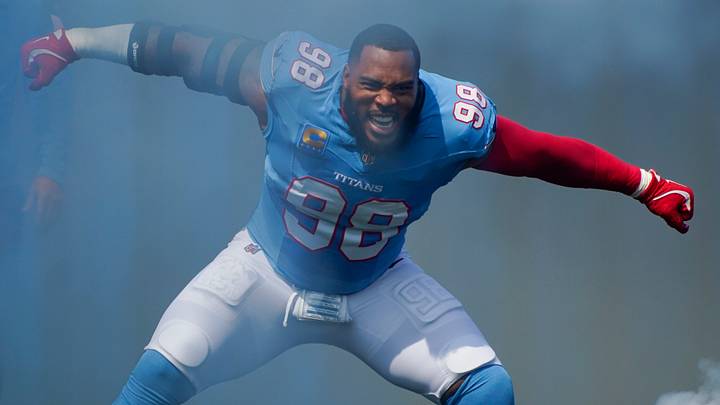
The Bears are sending two first-round picks and a fourth-round pick to the Titans for Simmons, a 29-year-old defensive tackle who will turn 30 just before next year’s training camp. Simmons signed a three-year contract extension in the offseason worth an average of $35.2 million per season and has only been leapfrogged by Jalen Carter’s massive deal which was completed later on in the 2026 offseason.
This deal is so unprecedented that we should break it down into multiple parts. I’m here to tell you why the Bears have to be considered the major victors of the trade deadline (regardless of what happens next) and why we should get romantic about this kind of deal. This is not a time to guard your heart. Let me tell you why:
- What it means to be an ALL-IN team
The fate of the ALL-IN team at the trade deadline is not as dubious as you might think, especially when you filter out some of the moves that were not technically “ALL IN” transactions. For example, last year’s Sauce Gardner trade was an ALL-IN move and turned out to be one of the great failures in recent history. The Bears trading for Montez Sweat in 2023 reflected Chicago's cap space at the time and the need to spend its next two first-round picks on other premium positions (quarterback and wide receiver). The 49ers traded for Chase Young the season the team made the Super Bowl. The Rams traded for Von Miller and won the Super Bowl, though both trades cost far less in terms of raw capital than the Simmons trade. In 2019, the Giants traded for Leonard Williams, but the team was already going nowhere. This was an effort to skip the line in free agency and get a trial run for Williams before signing him to a long-term extension.
When good teams make targeted moves, especially to bolster the pass rush and the defensive line as a whole, it’s normally a good investment. We’ll get into more of that in just a second. First, here’s a look at those deadline deals:
2025 Deadline:
- Quinnen Williams to the Cowboys (Cowboys finish 7-9-1)
- Sauce Gardner to the Colts (Colts finish 8–9)
2024 deadline:
- Davante Adams to the Jets (Jets finish 5–12)
- Za’Darius Smith to the Lions (Lions finish 15–2, stunned by the Commanders in the first round of the playoffs)
2023 deadline:
- Montez Sweat to the Bears (Bears finish 7–10)
- Chase Young to the 49ers (49ers finish 12–5, lose to the Chiefs in the Super Bowl)
2022 deadline:
- Calvin Ridley to the Jaguars (Jacksonville finished 9–8)
- Chase Claypool to the Bears (Bears finish 3–14)
2021 deadline:
- Von Miller to the Rams (Rams beat the Bengals in the Super Bowl)
2019 deadline:
- Leonard Williams to the Giants (Giants finish 4–12)
2. The defensive tackle position is more important than ever
We outlined this during the Jalen Carter extension and the brief period in which it looked like Vita Vea could get traded. Here’s the TL;DR: Offensive line injury rates are sky high, which is why coordinators like Minnesota’s Brian Flores blitz so much. It can also accentuate defensive line mismatches more than ever. This is especially true for Simmons, who is the No. 1 defensive tackle in the NFL in pass rush win rate. He has a violence and quickness to his game unlike almost any interior rusher in the NFL right now. Take whatever designer analytics you like, and there’s evidence that Simmons is playing his best football: He’s tied for the lead in sacks among defensive tackles at four (again, on a Titans team that has led for a total of 49 minutes this year as opposed to 266 trailing), he leads PFN’s total DT Impact rankings and leads all defensive tackles in what PFN terms "disruption EPA.” If you want to take my word for it instead, he’s whipping up on offensive lines across the NFL. If you’re Bears coach Ben Johnson, you’re thinking about the division-rival Packers, who were on a third-string center a week ago against the Lions, for example. In that scenario, Simmons would render the Packers useless as a running team and generate pressure on nearly every snap—or accumulate so many ancillary blockers that someone else could (more on that in a second).
Another reason the Bears wanted to do this: Interior penetrators are a nightmare for outside zone specific teams. And while some of the Kyle Shanahan offenses have been baked into other schemes and mutated, the reality of the current NFL is this: Outside zone running plays still make up almost 30% of all running plays in the NFL. The Bears have about a 58% success rate against outside zone runs this year and have been defending them reasonably well. Over the past four weeks, the Bears have cracked the top 10 in EPA vs. the run and rushing success rate, but that won't be sustainable if they rely on a heavy workload for Grady Jarrett, James Lynch, Kentavius Street, and Neville Gallimore.
Lastly, credit where credit is due: Dennis Allen has been on fire of late. His game plan against the Falcons tortured Michael Penix, resulting in five sacks and six quarterback hits. The return of Kyler Gordon has yielded a 31% pressure rate by blitzing from the nickel position in only two weeks, resulting in four sacks and three quarterback hits. Simmons, who, according to ESPN analytics, generates a double team on 88% of his pass-rushing opportunities so far this season (and still has the best pass rush win rate in the NFL, creating nearly 30 pressures in 2026 so far after double teams), is going to create more lanes for players like Gordon to wreak havoc.
Just as Brian Flores reached for a potential game-wrecker at defensive tackle by selecting Caleb Banks out of Florida, which, over the long term will enhance the efficacy of his blitz packages, Allen now has a chess piece with Queen–like maneuverability to clear out the rest of the board.
3. What it means for Tennessee
I think this trade raises fair questions about the Titans’ long- and short-term plans. This is different from the Jets trading Gardner, who showed moments of sharp decline after his rookie-of-the-year season and less of a willingness to stick his nose into the fray during lost seasons. Simmons was exceptional even when his team was not. Period. The Titans are, in theory, very interested in getting good quickly. The team is opening a new stadium a year from now. A pair of late first-round picks over the next two years isn’t the kind of advertisement that leads to an immediate PSL purchase or a savvy marketing campaign (spend $20,000 and get a front-row seat to the evolution of our…off ball linebackers). The Gardner trade was a deal the Jets had to accept. The Simmons trade is one the Titans are choosing to accept because the team is struggling mightily from a talent perspective, and any action is better than standing still.
It also creates fair questions about Saleh amid all of the uncertainty. While I think he was the right hire as the team attempted to recapture some of the personality it had lost from the Mike Vrabel firing, I find it difficult to imagine that a coach who makes his living off violent pass rushes, and had his best season ever with a combination of DeForrest Buckner, Arik Armstead and Nick Bosa, would voluntarily agree to ship Simmons for raffle tickets.
Maybe windows are getting smashed with pizza boxes in Nashville, too (gross pizza, I’m sure), but for very different reasons than Chicago.
 Add us as a preferred source on Google

Conor Orr is a Senior Writer for Sports Illustrated with more than 15 years of experience covering the NFL. His work has been cited in Best American Sportswriting and has won a PFWAA award. Prior to Sports Illustrated, he covered both the Giants and Jets for The Star-Ledger. Conor lives in New Jersey with his amazing wife and three children.
Follow author