
Broncos Fire Back at Chargers' Accusations Over Failed Daiyan Henley Trade
In this story:
The Daiyan Henley trade is off.
Late Wednesday night, the Denver Broncos made the announcement, shocking fans and media alike. The Los Angeles Chargers posted a welcome-back meme for Henley around the same time, confirming there was no trade.
We learned on Thursday that it was officially due to a failed physical. Adam Schefter reported that the Broncos had concerns about Henley's knee after his physical, but they still wanted him — just not at the price of the previously agreed-upon 2027 fourth-round pick and 2028 fifth-round pick, given what they discovered during the physical.
Pro Football Talk's Mike Florio reported that Henley's physical in Denver revealed some arthritis in one knee. That didn't match up with the picture of health that L.A. reportedly presented of Henley to the Broncos.
But Denver was still interested in keeping Henley. According to 9NEWS' Mike Klis, the Broncos went back to the Chargers to negotiate a different price. L.A. didn't budge, so the trade was canceled.
Chargers Claim Transparency, Hint at Bad Faith on Denver's Part

Chargers GM Joe Hortiz claims that he was transparent about Henley's health status and that the Broncos were aware of the veteran linebacker's situation before agreeing to terms on the trade. Every team evaluates injuries differently, which is why these transactions come with the caveat of "pending a physical."
According to ESPN's Lindsey Thiry, Hortiz wouldn't confirm Schefter's report that it was Henley's knee that failed to pass Denver's physical, let alone Florio's report of finding arthritis, but the Chargers GM claims he shared any health concerns with the Broncos before they agreed to the trade.
"We came to terms on it, made the agreement, they called us up and were asking us to amend the trade based on the physical," Hortiz told Thiry. "And in our minds, the physical's a binary thing. It's pass or fail. And they wanted the player still. They wanted to change the terms. They used it, and we weren't going to do it."
Henley has dealt with a knee and shoulder injury this season, though he's played through both. Hortiz was adamant that the Broncos were aware of Henley's health status.
"Yep, absolutely," Hortiz told Thiry when asked whether he was transparent with Denver about Henley's health. "'Hey, he's dealing with this, but he's expected to practice and play for us this week.' And I think that was their plan. They certainly wanted him still."
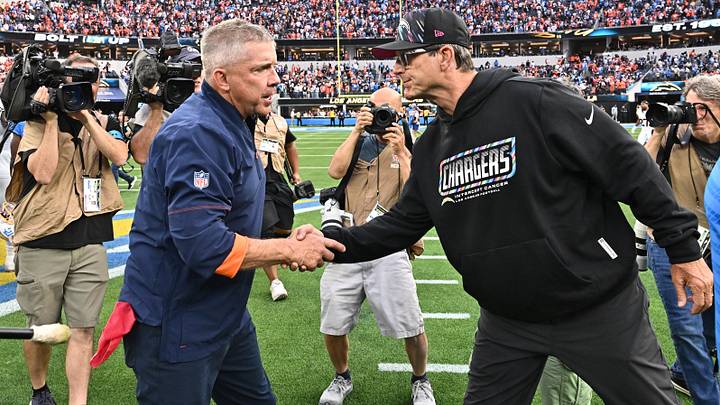
As for Chargers head coach Jim Harbaugh, he expressed his frustration with how the botched trade unraveled and why he believes the NFL should close the "loophole" that allows a buying team the prerogative to ask for different compensation after the deadline passes.
"The Broncos based a pass-fail on a medical grade on whether we would take less compensation, and we wouldn't, and we didn't," Harbaugh said. "In my opinion, it's one of those loopholes the league should really look into because it sets a bad precedent, [and it] continues to set a bad precedent."
Denver's Side of the Story

According to Klis, when Henley's knee turned out to be a bit more concerning than the Broncos had been led to believe, the Chargers "brushed off concerns." The Broncos reached out to the NFL, and the league confirmed that, given the failed physical, Denver could approach the Chargers about changing the compensation if they still wanted Henley.
"Per league source, it was only after Henley flunked his physical — in which several medical opinions were sought — [the] Broncos got [the] NFL involved and received confirmation it was OK to revisit the compensation, as there is precedent for these situations," Klis reported on X.
Harbaugh and the Chargers are trying to present this as Denver basing the pass-fail of Henley's physical on whether L.A. would renegotiate the compensation, but the Broncos are pushing back on that through Klis, even going so far as to reveal that they reached out to the NFL about it, after the linebacker's physical produced results that didn't match what they'd been told when they agreed to send a fourth- and fifth-round pick for him.
The Broncos claim they had a "long-term view of the player," per Klis, which is why they were still willing to make a trade with the Chargers even after Henley failed the physical. The Chargers wouldn't accept any new terms, so that was that.
"Regardless of compensation, it was well within Broncos rights to simply flunk him on physical and move on. Instead GM George Paton tried to find a solution for a difficult situation. Again, within the Broncos rights and the NFL aware every step," Klis reported on X.
The Loophole
Now, some people around the NFL are using the botched Henley trade as a referendum on the "loophole" within league rules that allows for teams to change the terms of a deal, pending the physical, even after the trade deadline has passed. For the seller, the argument is that it puts them at a disadvantage because, with the deadline passed, it's not like they can go back to other interested suitors.
For the buyer, as the Broncos were in this scenario, the loophole offers protections and flexibility in the event that a physical uncovers conditions that may not have been disclosed when the trade was agreed upon in principle. That allows the buyer to seek value commensurate with what their physical evaluation found, in the event that it doesn't line up with how the seller presented the player's bill of health.
Some people believe that the rules should be based 100% on the physical: if the player passes, the trade goes through at the agreed-upon price. Period. End of story. If the player fails his physical, then the buyer has only one recourse: cancel the trade.
The Takeaway
There are two sides to every story. We've reported both sides, leaving it up to you to decide what really happend.
Did the Chargers try to pull a fast one on the Broncos and sneak an injury past a division rival? Or did the Broncos try to leverage a failed physical in bad faith to strong-arm a better deal for Henley after the deadline had passed?
A third possibility is that the Chargers were transparent with the state of Henley's health, but that the Broncos' medical standards were different, or they could have even discovered more in the physical than the Chargers were aware of.
Teams can view the severity of a player's injury differently. That's why some teams will spend money on a given player in free agency who may have a checkered injury jacket while other teams won't even consider signing them.
Add into the botched Henley trade the rariety of it being between two division rivals, and perhaps we shouldn't be all that surprised that it fell through in spectacular fashion, with both sides pointing the finger.
 Add us as a preferred source on Google

Chad Jensen is the Publisher of Denver Broncos On SI, the Founder of Mile High Huddle, and creator of the popular Mile High Huddle Podcast. Chad has been on the Denver Broncos beat since 2012 and is a member of the Pro Football Writers of America.
Follow ChadNJensen