
What the Jets' Inactive Trade Deadline Says About Their Plans for 2027
In this story:
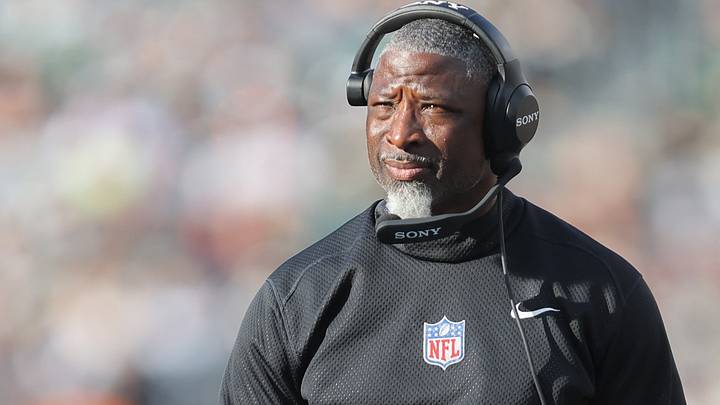
The Jets stood pat during the trade deadline on Tuesday. It shouldn't come as a surprise, considering head coach Aaron Glenn announced as much following their loss to the Chiefs.
Aaron Glenn on tomorrow's trade deadline: "Never say never, but right now I know we're going to stand pat. Listen, we're in the business of keeping good players. That's how I see it...But you never know what's going to happen." #Jets
— Rich Cimini (@RichCimini) November 9, 2026
But as countless trades poured in over the wire, New York's inactivity, particularly pertaining to several players on expiring deals, left some confused. They didn't trade edge rusher Will McDonald despite a reported trade request; they didn't move Nahshon Wright or Jarvis Brownlee, and watched as other struggling teams moved off key players.
Gang Green's actions were clear. They wanted to keep as much of the talent on the roster to give Glenn the best chance to keep his job.
But is it really that simple? Does failing to trade McDonald actually hurt the Jets' chances beyond 2026?
How Jets' present situation impacted their trade deadline plans
Many Jets fans were frustrated with the team's lack of moves on Tuesday. But their frustration ignores the reality that the team had been living with over the last several months. Owner Woody Johnson wants Glenn to succeed. Because of that, he wants to give him as much talent as possible.
That means keeping players who are helpful role pieces or borderline starters.
Despite a 2-7 start, the Jets are more comfortable keeping their already heavy treasure trove of draft picks—including three first-rounders in the 2027 draft. In their eyes, Glenn still has eight games remaining to show he's capable of being kept on for a third year.
But the record and on field problems tell a different story.
Few coaches in NFL history have had as bad a start to their careers as Glenn has with New York. He's 5-21 in his first 26 games, has yet to win a division contest, and has few answers for how to fix the problems New York has. Before he was first hired, Glenn was known as someone who could build a great staff full of competent coaches around him, but after dismantling his first failed staff, his second has shown little improvement. If the team continues to lose this season, there can be no argument that Glenn has failed to earn a third season with the team.
The caveat here is that while the Jets are trying to win with Glenn, their inability to do so has shown it doesn't matter how much talent they have. But their push also means a few more things we'll get to.
The Darren Mougey factor
Many Jets fans have drawn their ire not just at Glenn but also at general manager Darren Mougey for the team's lack of a sell-off as the Colts and Eagles have previously done.
In their minds, Mougey not making a deal is a sign that he and Glenn are a package deal. If Glenn ends up being fired, Mougey's mistakes shouldn't absolve him either.
But that couldn't be further from the truth.

There are several reasons the Jets failed to make any trades at the deadline. Ownership could have voiced their opinions to push one final time behind Glenn, and players may have requested that they still try to openly compete. A general manager has to weigh all of that together when making decisions.
In the case of Will McDonald, for example, New York Post's Brian Costello reported that the Jets had offers for as high as a second-round pick. McDonald has a trade request out and played under 50% of the snaps last week in Kansas City. So why didn't Mougey make a move?
What if he did and the Jets' front office opted not to move him? What if Mougey believes in McDonald's abilities as a pass rusher and is willing to keep him on the roster for the team's next head coach? If McDonald is a scheme liability under Glenn, could the Jets hire a coordinator with a 4-3 background who incorporates the wide-nine approach? All of a sudden, McDonald could be seen as an important piece again.
The idea that Mougey failed at the deadline is a farce. New York is set up for success now just as much as they were last week. Trades for later picks would have done nothing to change that.
If anything, the lack of moves shows the Jets still value Glenn's input on the roster, and it is as much a 50-50 split with Mougey as once originally thought. Should the team continue to bottom out, Mougey will have plenty more to point to as a way to show he should be given more responsibility over the roster and the head coach.
Setting the stage for 2027
Here's what many people forget:
The Jets are a bad football team. They will remain a bad football team even after the trade deadline. While it would've been nice to ship off players on expiring deals, the team still has plenty of cap space and three first-round picks—more than enough ammo to entice a strong coach and come away with impact players to alter the team's fortune.
New York's desired defense of Glenn should also matter little to the fanbase at this point. The coach has proven himself incapable of putting a team in a position to win football games; the best way forward for the team to actually lose for the remainder of the season is to keep everything the way it is, however harsh or realistic that may be.
By the end of the year, it's expected that the Jets will move on from Glenn and his coaching staff. Mougey will have an opportunity to bring in a coach who fits his vision for the roster. The trade deadline will mean very little when it comes to these outcomes.
Especially with the Colts (the team the Jets own the first-round pick of) already selling off key starters across both sides of the ball.
Get Jets On SI straight to your inbox: sign up for our free newsletter here.
 Add us as a preferred source on Google

Nick covers the NFL for Sports Illustrated/FN. He was previously on the New York Jets' beat for AM New York with prior experience reporting on the New York Islanders and the Philadelphia Eagles. The New York City resident is also an Adjunct Professor at LIU Brooklyn.
Follow nick_faria1720