%20%20--%3E%0A%3Csvg%20version%3D%221.1%22%20id%3D%22Layer_1%22%20xmlns%3D%22http%3A%2F%2Fwww.w3.org%2F2000%2Fsvg%22%20xmlns%3Axlink%3D%22http%3A%2F%2Fwww.w3.org%2F1999%2Fxlink%22%20x%3D%220px%22%20y%3D%220px%22%0A%09%20width%3D%2239px%22%20height%3D%2240px%22%20viewBox%3D%220%200%2039%2040%22%20enable-background%3D%22new%200%200%2039%2040%22%20xml%3Aspace%3D%22preserve%22%3E%0A%3Cpath%20fill%3D%22%23FFFFFF%22%20d%3D%22M38.5%2C7H28.2v26h10.3V7z%22%2F%3E%0A%3Cpath%20fill-rule%3D%22evenodd%22%20clip-rule%3D%22evenodd%22%20fill%3D%22%23FFFFFF%22%20d%3D%22M26.1%2C25.5c0%2C5.8-4.1%2C7.5-12.9%2C7.5C3.9%2C33%2C0%2C31.2%2C0%2C25.2v-1.1h11.6%0A%09v2.4c0%2C0.7%2C0.1%2C1.4%2C1.2%2C1.4c1%2C0%2C1.2-0.4%2C1.2-1.3v-0.9c0-1.6-0.9-1.6-3.5-2.2C2.2%2C21.7%2C0%2C19.7%2C0%2C15.3v-0.9C0%2C9.3%2C5.5%2C7%2C12.9%2C7%0A%09c10.2%2C0%2C12.8%2C2.6%2C12.8%2C7.4v1.8h-11v-2.9c0-0.6-0.4-1.1-1.2-1.1c-0.6%2C0-1.2%2C0.4-1.2%2C1.1v0.9c0%2C1.5%2C0.9%2C2%2C3.3%2C2.5%0A%09c8%2C1.6%2C10.5%2C3.3%2C10.5%2C7.5V25.5z%22%2F%3E%0A%3C%2Fsvg%3E%0A)
NFL Free Agency 2026: How AFC Teams Stack Up by Salary Cap Space
In this story:
Projected Contracts, Landing Spots for the NFL’s 50 Best Free Agents in 2026 | When Does 2026 NFL Free Agency Start? | NFL Free Agency Guide for All 32 Teams
Hopefully, the Seahawks enjoyed their post-game Super Bowl celebration and the parade.
Now, we’re onto 2026.
While Seattle has the claim of reigning champ, the rest of the league is chasing the Seahawks to win a Lombardi Trophy. To that end, the next season begins with free agency’s legal tampering period on Monday and Tuesday, when teams are allowed to negotiate with outside free agents. At 4 p.m. ET on Wednesday, the new league year begins when organizations can officially sign those players.
So, let’s take a look at where all 16 AFC teams stand in terms of cap space and potential needs.
All cap numbers are from Overthecap.com, but these numbers change periodically.
Baltimore Ravens
Cap space: $18.5 million
Cap implications: The big question is whether the Ravens will get a long-term deal done with soon-to-be free agent Tyler Linderbaum. Baltimore could lose the three-time Pro Bowler after declining his fifth-year option and then not tagging him, all while offering him a market-setting contract. If Linderbaum walks, general manager Eric DeCosta needs to find a suitable replacement while also upgrading the edge rush, among other areas.

Buffalo Bills
Cap space: -$31.8 million
Cap implications: The Bills are fast at work before free agency, adding receiver DJ Moore in a trade from the Bears that will become official when the new league year begins at 4 p.m. ET on March 11. However, the Bills are potentially losing some free agents: center Connor McGovern, guard David Edwards, and edge rushers A.J. Epenesa and Joey Bosa. As for other additions, Buffalo needs help in the pass-rushing department, all while the defense transitions from a 4-3 to a 3-4 scheme. The Bills are always a contender with Josh Allen, but they’ll need to be creative in the coming months.
Cincinnati Bengals
Cap space: $47.2 million
Cap implications: If Cincinnati wants to spend some money in free agency, it has the cap space to do so. The question is whether the Bengals will do so, something they have rarely done on outside talent, since free agency came into the NFL in 1993. Owner Mike Brown loathes large, guaranteed contracts, but if Cincinnati is going to fix its 31st-ranked defense from a season ago, it needs to spend significant capital at all three levels of the unit.
Cleveland Browns
Cap space: -$17.2 million
Cap implications: The Browns need to look to the future once again. With Deshaun Watson eating up $80.7 million of cap space, Cleveland is working from an impossible spot. It’s likely to be a season of seeing what quarterback Shedeur Sanders can do, albeit with an uncertain offensive line. With two first-round picks and minimal cap space, the Browns will likely continue to build through the draft, something they did well in 2025.
Denver Broncos
Cap space: $25.2 million
Cap implications: With Bo Nix still on his rookie contract, the Broncos have some flexibility in how they can approach this offseason. Denver still needs more skill-position talent on offense, both in receivers to work alongside Courtland Sutton, a true starter at tight end and a complement to running back RJ Harvey in the backfield. After falling one game short of the Super Bowl last season, Denver could be thinking that a few moves will make the difference.
Houston Texans
Cap space: -$7.9 million
Cap implications: The Texans have already been busy this offseason, trading right tackle Tytus Howard to the Browns before acquiring running back David Montgomery for fourth- and seventh-round picks along with guard Juice Scruggs. Still, Houston has to continue upgrading the offensive line while bringing in another proven playmaker to pair with star receiver Nico Collins and a pair of young wideouts in Jayden Higgins and Jaylin Noel.

Indianapolis Colts
Cap space: -$4.7 million
Cap implications: After using the transition tag on quarterback Daniel Jones, the next big decision for general manager Chris Ballard is whether to release receiver Michael Pittman Jr. to allow for the signing of wideout Alec Pierce. Once that’s decided, the Colts are still facing the potential loss of right tackle Braden Smith while also likely wanting to upgrade the front seven, including edge rusher.
Jacksonville Jaguars
Cap space: -$16.9 million
Cap implications: While the Jaguars would love to keep their momentum going from a great 2025, it’ll be a bit tough to spend in free agency. Jacksonville has some in-house talent to extend, including Parker Washington, Travon Walker and others. It’s likely the Jaguars will allow running back Travis Etienne Jr. and linebacker Devin Lloyd to leave in the coming weeks, needing to be replaced in the draft through smart-value signings.
Kansas City Chiefs
Cap space: $24.9 million
Cap implications: The Chiefs have restructured Patrick Mahomes and traded cornerback Trent McDuffie to the Rams for four draft picks. It’s also been reported that they intend to release right tackle Jawaan Taylor, saving $20 million in cap space. They could also release linebacker Drue Tranquill and tight end Noah Gray, which would net another $10 million. Restructures of defensive end George Karlaftis and center Creed Humphrey are also possibilities. If GM Brett Veach wants to be aggressive and go after an upgrade at running back and edge, he will be able to do so.
Las Vegas Raiders
Cap space: $88.1 million
Cap implications: With their fourth coach in four seasons, the Raiders are once again trying to jumpstart their program. The good news? They have the third-most cap space in football and very few in-house options to worry about retaining. If the front office wants to, it can spend with a notion of quickly upgrading the roster in multiple areas while also landing Indiana quarterback Fernando Mendoza with the No. 1 pick.
Los Angeles Chargers
Cap space: $99 million
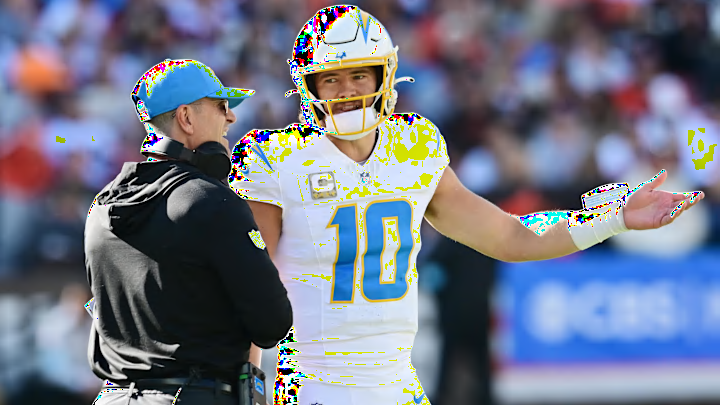
Cap implications: It’s time for the Chargers to make a push. After flaming out in the wild-card round each of the past two seasons, Los Angeles has a talented roster, a top-10 quarterback and oodles of cap space.
Miami Dolphins
Cap space: -$1.6 million
Cap implications: This is a reset year for the Dolphins. After releasing myriad veterans, including receiver Tyreek Hill and edge rusher Bradley Chubb, it’s clear that first-year GM Jon-Eric Sullivan is clearing the metaphorical decks. Sullivan’s next big decision is whether to bring in another quarterback to compete with or overtake Tua Tagovailoa in 2026, or let Tagovailoa play out the season before moving on after the season ends.
New England Patriots
Cap space: $39.3 million
Cap implications: With Drake Maye on a rookie deal, the Patriots are in a prime position to add aggressively. New England still needs to upgrade its offensive line after Maye was the fourth-most-sacked quarterback in 2025. It also has needs along the defensive line and in finding another target for Maye.

New York Jets
Cap space: $74.3 million
Cap implications: Even after placing the franchise tag on running back Breece Hall, GM Darren Mougey has plenty of money to make moves. New York needs a receiver to pair with Garrett Wilson, edge rushers and corners after the respective trades of Jermaine Johnson III and Sauce Gardner, and a quarterback. Perhaps this is the landing spot for Kyler Murray once he’s released by the Cardinals?
Pittsburgh Steelers
Cap space: $40.1 million
Cap implications: Pittsburgh has one of the older cores in the league, with stars in their 30s, including Cam Heyward, Aaron Rodgers (barring retirement), T.J. Watt and Jalen Ramsey. Pittsburgh should be aggressive trying to win now under new coach Mike McCarthy, even if the smart move would have been rebuilding years ago. The front office should target offensive weapons and help in the back seven.
Tennessee Titans
Cap space: $93.8 million
Cap implications: GM Mike Borgonzi and the Titans have the most cap space of any team in football. Tennessee also might have more needs than any other roster, with holes in almost every position group. Borgonzi could aggressively target help at receiver, running back, tight end and the back seven of the defense, among others, areas that will undoubtedly be pursued in both free agency and the draft.
More NFL on Sports Illustrated
 Add us as a preferred source on Google
Matt Verderame is a national NFL staff writer for Sports Illustrated, writing features, columns and more. Before joining Sports Illustrated in March 2023, Verderame wrote for FanSided and SB Nation. He’s a proud husband to Stephanie and father of two girls, Maisy and Genevieve. In his spare time, Verderame is an avid collector of vintage baseball cards.
Follow MattVerderame