%20%20--%3E%0A%3Csvg%20version%3D%221.1%22%20id%3D%22Layer_1%22%20xmlns%3D%22http%3A%2F%2Fwww.w3.org%2F2000%2Fsvg%22%20xmlns%3Axlink%3D%22http%3A%2F%2Fwww.w3.org%2F1999%2Fxlink%22%20x%3D%220px%22%20y%3D%220px%22%0A%09%20width%3D%2239px%22%20height%3D%2240px%22%20viewBox%3D%220%200%2039%2040%22%20enable-background%3D%22new%200%200%2039%2040%22%20xml%3Aspace%3D%22preserve%22%3E%0A%3Cpath%20fill%3D%22%23FFFFFF%22%20d%3D%22M38.5%2C7H28.2v26h10.3V7z%22%2F%3E%0A%3Cpath%20fill-rule%3D%22evenodd%22%20clip-rule%3D%22evenodd%22%20fill%3D%22%23FFFFFF%22%20d%3D%22M26.1%2C25.5c0%2C5.8-4.1%2C7.5-12.9%2C7.5C3.9%2C33%2C0%2C31.2%2C0%2C25.2v-1.1h11.6%0A%09v2.4c0%2C0.7%2C0.1%2C1.4%2C1.2%2C1.4c1%2C0%2C1.2-0.4%2C1.2-1.3v-0.9c0-1.6-0.9-1.6-3.5-2.2C2.2%2C21.7%2C0%2C19.7%2C0%2C15.3v-0.9C0%2C9.3%2C5.5%2C7%2C12.9%2C7%0A%09c10.2%2C0%2C12.8%2C2.6%2C12.8%2C7.4v1.8h-11v-2.9c0-0.6-0.4-1.1-1.2-1.1c-0.6%2C0-1.2%2C0.4-1.2%2C1.1v0.9c0%2C1.5%2C0.9%2C2%2C3.3%2C2.5%0A%09c8%2C1.6%2C10.5%2C3.3%2C10.5%2C7.5V25.5z%22%2F%3E%0A%3C%2Fsvg%3E%0A)
Andres Cantor, John Strong Share Insights, Excitement Ahead of Calling 2026 World Cup
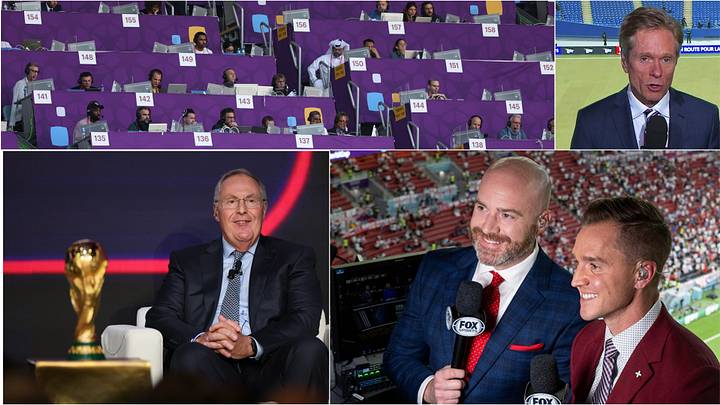
The last time Andrés Cantor called a World Cup match, he went viral. As Gonzalo Montiel scored the winning penalty against France to secure the Argentina’s first World Cup title at Qatar 2022, his outpouring of emotion at the microphone was heard around the world.
“Argentina campeon!” the Argentinian commentator exclaimed, barely holding back the tears. “Argentina campeon de mundo.” Now, four years later, he’s back—this time in North America and with an opportunity to call a home World Cup for the second time, living in Miami even as his heart lies with La Albiceleste.
“In 1994, I was waiting for the World Cup to happen in our country because I knew it was a pivotal moment for soccer in America, and it turned out to be for the good,” he tells Sports Illustrated of the campaign over 30 years ago, now preparing to offer Spanish commentary on Telemundo and Futbol de Primera radio this summer.
“I am hoping this summer that the casual soccer fan that doesn’t follow soccer on a weekly basis, will fall in love a little bit more... and for those who peripherally know that there’s something happening this summer, to enjoy it, whether they understand or not.”
Best known for his Spanish commentary, he is one of thousands of commentators who add their soundtrack to the most formative moments in soccer. For FOX Sports, Telemundo, TSN and other broadcasters, the 104-game assignment is a behemoth—yet, it’s an opportunity to tell more stories than ever before.
Así narró @andrescantorgol en las pantallas de Telemundo el gol de la victoria de la #Albiceleste.
— José Rivera Adrovet (@jadrovet) December 18, 2022
🇦🇷 Cantor, nacido en Buenos Aires y quien llegó a #EEUU cuando era un adolescente, no pudo contener la emoción y rompió en llanto. pic.twitter.com/O3v56uOw18
On FOX Sports, the English-language broadcasts in the U.S. will be greeted by the familiar tones of John Strong, who has called the World Cup since the 2018 tournament in Russia, which was when North America was selected to host the 2026 edition. He found out that the North American bid had been successful when his plane, without WiFi at the 2018 World Cup, landed in Sochi, and the alerts started flooding in.
“It’s surreal,” says Strong, who will be the lead voice for all of the U.S. men’s national team games, as well as the tournament’s headlining moments, capped by the July 19 final in East Rutherford, N.J.
“Now that it's here, the biggest thing you just hope is that the players, as individuals, and that the teams are able to take advantage of the opportunity and be able to do something special that is truly memorable.”
The last time the U.S. hosted the World Cup, it ended in a round of 16 loss to Brazil, while Mexico’s best-ever result was a quarterfinal finish at its home tournament of 1986, which marked Canada’s first-ever men’s World Cup experience and one of only two.
This time, there’s potential for all three co-hosts to make a deep run, with true world stars dotting across even the lesser traditional powers of the two northernmost hosts, allowing hardcore and casual fans alike to dream of lengthy summers into July.
Emotions on Home Soil

For those tuning in from TV sets, bars and fan zones, the emotions will be clear. They will be sentiments shared by those in the broadcast booth, who transform them into passionate calls that fuel historic moments, as so many iconic broadcasters have done in the past.
It isn’t lost on either Cantor or Strong how significant it will be to add their soundtrack in such a pivotal moment for the sport in the U.S. Strong says there’s likely “no way” for him not to be a little choked up before broadcasting the USMNT’s World Cup opener against Paraguay from Los Angeles on June 12.
Cantor, meanwhile, is embracing his 11th World Cup experience, set to call the first game at SoFi Stadium from near his old home in Los Angeles, where he lived during the 1994 tournament.
“To walk into this tournament and call the USMNT games in one of the most incredible stadiums in the world, their home opener against one of our Latin American participants, and with all the noise and everything that is going on in soccer in America, is I wouldn’t say full circle, because I’m not closing the circle, but it’s still an emotional moment,” Cantor says.
A Long Time Coming for Canada

When it comes to the first-time co-host nation, the story couldn’t be more different. There are still record numbers expected to tune into Canada’s games, and hopes of a dream quarterfinal run, led by world-class talent, are just as prominent.
But it’s a long time coming for a nation that, in 2014, ranked 122nd in the world. At that point, Gerry Dobson voiced the Canadian men’s national team and Premier League matches on the weekend, as Rogers Sportsnet became the first channel to broadcast live EPL games in the country.
He retired in 2016, two years before North America won the 2026 World Cup bid and just before things began to look up, with the emergence of Alphonso Davies, Jonathan David, Tajon Buchanan and other key stars. He did, however, call the team's lone trophy win at the 2000 Gold Cup.
“I have no regrets about the career that I had in the time that I had covering the sport over the years,” Dobson says. “I do wish that things had been better when I was doing it, because it is so much fun watching this current generation of players doing what they're doing, making the country proud.
“It would have been nice to have some of that, that glory, I suppose, because they were very lean years when I was covering the game. Canada never qualified, and never even came came close.”
While he will watch the games from his home in Ottawa, now in his mid-70s, it isn’t lost on him just how far the Canadian program has come, with support largely expected to be home-leaning.
That’s a far cry from 25 years ago, when, in a World Cup qualifying match in Edmonton, he recalled the organizers bringing Trinidadian musicians to welcome the opponents, or when crowds in Toronto jeered when Canada touched the ball, often in lopsided losses to small Caribbean nations.
“Those are the kinds of things that would happen that would stack the odds against Canada...
When our guys would go down there, they’d treat us like dirt, but when they come up here, we treat them, we welcome them in, and we just made it so difficult on ourselves for no reason,” he adds. “It’s totally different now.”
Preparations and Expectations Hit Fever Pitch

Even as technology has changed sports in almost every way, nearly every broadcaster still has their printouts and scribbles in front of them. Some use tiny fonts on sticky notes, others big fonts on movable pieces. To call any sporting event is a puzzle, but for a 48-team World Cup, it’s as if it’s a massive Rubik’s Cube—after all, there are 1,248 players in the largest World Cup of all time.
Yet, the approach has to be different. For many U.S. viewers, it will be a rare opportunity to watch soccer, and the explanations have to appeal to both hardcore fans and fans who may not have watched in the past four years, if not longer. Compared to many other nations, it’s a uniquely American challenge.
“It’s a different audience than [those] watching MLS on a weekend,” says Strong. “We have to be careful not to be patronizing and obnoxious to those who know the game, but we know the vast majority of the audience are more casual fans... and that’s no different from the Super Bowl or the World Series, where the numbers show that they’re every sport has this avid core and a much larger, more casual following that shows up for the big moments.”
“Many more people will be sort of soccer curious, as it were, and I love being the person that can be their first point of contact,” he adds. “If all they’re doing is tuning into the games, we can’t wait to say, ‘Welcome to the party,’ and welcome them to the show, have fun together. That’s what I love most about the job, and that's the thing that's so special to me about this World Cup.”
READ THE LATEST WORLD CUP NEWS, ANALYSIS AND INSIGHT FROM SI FC
 Add us as a preferred source on Google
Ben Steiner is an American-Canadian journalist who brings in-depth experience, having covered the North American national teams, MLS, CPL, NWSL, NSL and Liga MX for prominent outlets, including MLSsoccer.com, CBC Sports, and OneSoccer.
Follow BenSteiner00