%20%20--%3E%0A%3Csvg%20version%3D%221.1%22%20id%3D%22Layer_1%22%20xmlns%3D%22http%3A%2F%2Fwww.w3.org%2F2000%2Fsvg%22%20xmlns%3Axlink%3D%22http%3A%2F%2Fwww.w3.org%2F1999%2Fxlink%22%20x%3D%220px%22%20y%3D%220px%22%0A%09%20width%3D%2239px%22%20height%3D%2240px%22%20viewBox%3D%220%200%2039%2040%22%20enable-background%3D%22new%200%200%2039%2040%22%20xml%3Aspace%3D%22preserve%22%3E%0A%3Cpath%20fill%3D%22%23FFFFFF%22%20d%3D%22M38.5%2C7H28.2v26h10.3V7z%22%2F%3E%0A%3Cpath%20fill-rule%3D%22evenodd%22%20clip-rule%3D%22evenodd%22%20fill%3D%22%23FFFFFF%22%20d%3D%22M26.1%2C25.5c0%2C5.8-4.1%2C7.5-12.9%2C7.5C3.9%2C33%2C0%2C31.2%2C0%2C25.2v-1.1h11.6%0A%09v2.4c0%2C0.7%2C0.1%2C1.4%2C1.2%2C1.4c1%2C0%2C1.2-0.4%2C1.2-1.3v-0.9c0-1.6-0.9-1.6-3.5-2.2C2.2%2C21.7%2C0%2C19.7%2C0%2C15.3v-0.9C0%2C9.3%2C5.5%2C7%2C12.9%2C7%0A%09c10.2%2C0%2C12.8%2C2.6%2C12.8%2C7.4v1.8h-11v-2.9c0-0.6-0.4-1.1-1.2-1.1c-0.6%2C0-1.2%2C0.4-1.2%2C1.1v0.9c0%2C1.5%2C0.9%2C2%2C3.3%2C2.5%0A%09c8%2C1.6%2C10.5%2C3.3%2C10.5%2C7.5V25.5z%22%2F%3E%0A%3C%2Fsvg%3E%0A)
Carlos Babela Given Man Utd Number With Serious Meaning
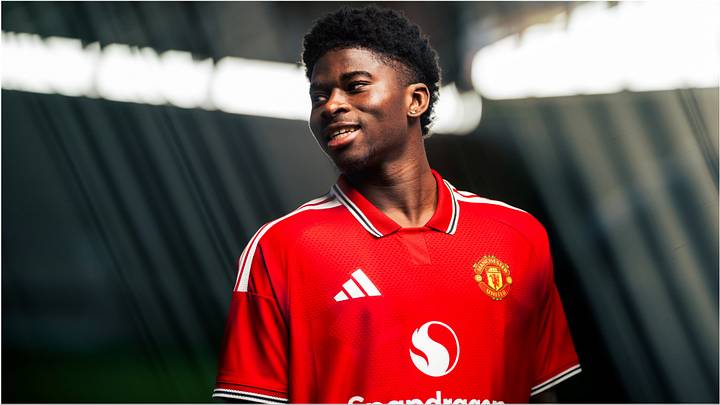
Whenever a player signs for a new club, one of the first questions that’s asked—aside from the stock how they will fit in, what role will they play—is what jersey (shirt, depending on where you’re reading this) number are they taking.
It’s almost as important as the actual signing itself, such is the significance of some numbers in a club’s history. At Manchester United, there’s even more scrutiny over what digits a player is wearing on their back.
Carlos Baleba already has the weight of expectation on his young shoulders. His arrival at Old Trafford is viewed as the completing of a midfield jigsaw puzzle that has also seen Youri Tielemans and Andrey Santos slotted into place this summer, and as he’s carrying a $95.5 million (£70 million) price tag, Baleba’s expected to get up to speed quickly.
If that pressure wasn’t enough for Baleba, who comes across as very calm and mature for a 22-year-old, he’s taking on the No. 20 jersey at Manchester United—one that you wouldn’t automatically assume has huge significance, but actually does after you do a bit of digging.
The History of Baleba’s New Number
Diogo Dalot is the most recent occupier of the No. 20, but the Portuguese has completed the exact same number switch that Gary Neville completed way back in 1996, when he’d established himself as Sir Alex Ferguson’s first choice right back and became No. 2.
Dalot is perhaps not as secure in his role, but wearing that number does suggest that Michael Carrick will favor him over Noussair Mazraoui when both are fully fit.
The No. 20 became significant when Neville vacated it, as it was taken by a young Norwegian striker who would quickly be dubbed ‘the baby faced assassin.’ That player? A certain Ole Gunnar Solskjær.

What he went on to achieve at United is well documented, but in case it’s slipped past your radar, the No. 20 is what Solskjær had strapped to his back when he helped turn the 1999 Champions League final against Bayern Munich completely on its head with a stoppage-time winner.
It’s a number Solskjær would carry throughout his United career, which yielded 12 major trophies including six Premire League titles. If Baleba gets anywhere near that, he’ll have done rather well for himself.
Robin van Persie also wore the No. 20 en route to winning the Premier League title and Golden Boot in 2012–13. The Dutchman scored 30 goals in his debut season—he’d opted to leave current Premier League champions Arsenal in search of silverware—and quickly established himself as the superstar of Ferguson’s final season team.
Van Persie’s time at United was actually shortlived, as age and injuries began to catch up with him, and there’s not been another player of Baleba’s profile to wear it since.
• The Winners and Losers From Carlos Baleba’s Man Utd Transfer
How Important Will Baleba Be?

Baleba’s not going to have the goalscoring impact of a Solskjær or a Van Persie, that’s simply not his job. But what he will do is bring tremendous athleticism to United’s midfield, a dynamism and energy that has been lacking for a number of years and should translate into a better overall press, and turn over possession before driving forward to transition into attack.
It’s hoped Baleba’s skillset will complement the recently acquired Tielemans, allowing the Belgian playmaker to thread passes between the lines and dictate the tempo of matches. That in turn could allow Bruno Fernandes to be even more influential than he was during 2025–26, though whether the recent PFA Player of the Year winner can replicate his incredible assist output remains to be seen.
At the very least, United’s opening day defeat to Hull City highlighted that Tielemans and Santos don’t have the mobility or intensity to combat teams who are physical and play direct—that’s something Baleba is expected to cope with a lot better.
 Add us as a preferred source on Google
Toby Cudworth is Lead Editor for SI FC. A Premier League, EFL and UEFA accredited journalist, Cudworth is a graduate of the University of Gloucestershire, where he studied Broadcast Journalism. He previously worked for 90min as a writer, academy manager, editor and eventually content lead, before joining Sports Illustrated in May 2025. A lifelong supporter of West Ham United, he still can’t quite believe they won a European trophy and feels nature is healing now that results have slipped back into the yo-yo patterns of the last 30 years.
Follow Toby_Cudworth