%20%20--%3E%0A%3Csvg%20version%3D%221.1%22%20id%3D%22Layer_1%22%20xmlns%3D%22http%3A%2F%2Fwww.w3.org%2F2000%2Fsvg%22%20xmlns%3Axlink%3D%22http%3A%2F%2Fwww.w3.org%2F1999%2Fxlink%22%20x%3D%220px%22%20y%3D%220px%22%0A%09%20width%3D%2239px%22%20height%3D%2240px%22%20viewBox%3D%220%200%2039%2040%22%20enable-background%3D%22new%200%200%2039%2040%22%20xml%3Aspace%3D%22preserve%22%3E%0A%3Cpath%20fill%3D%22%23FFFFFF%22%20d%3D%22M38.5%2C7H28.2v26h10.3V7z%22%2F%3E%0A%3Cpath%20fill-rule%3D%22evenodd%22%20clip-rule%3D%22evenodd%22%20fill%3D%22%23FFFFFF%22%20d%3D%22M26.1%2C25.5c0%2C5.8-4.1%2C7.5-12.9%2C7.5C3.9%2C33%2C0%2C31.2%2C0%2C25.2v-1.1h11.6%0A%09v2.4c0%2C0.7%2C0.1%2C1.4%2C1.2%2C1.4c1%2C0%2C1.2-0.4%2C1.2-1.3v-0.9c0-1.6-0.9-1.6-3.5-2.2C2.2%2C21.7%2C0%2C19.7%2C0%2C15.3v-0.9C0%2C9.3%2C5.5%2C7%2C12.9%2C7%0A%09c10.2%2C0%2C12.8%2C2.6%2C12.8%2C7.4v1.8h-11v-2.9c0-0.6-0.4-1.1-1.2-1.1c-0.6%2C0-1.2%2C0.4-1.2%2C1.1v0.9c0%2C1.5%2C0.9%2C2%2C3.3%2C2.5%0A%09c8%2C1.6%2C10.5%2C3.3%2C10.5%2C7.5V25.5z%22%2F%3E%0A%3C%2Fsvg%3E%0A)
Elite Managers Take Center Stage at the World Cup—and Maybe the Next One Too
After most of England’s players had made their way down the tunnel following a cathartic 4-2 victory over Croatia in their World Cup opener, Three Lions manager Thomas Tuchel was making his way down the string of pitchside media spots when he spotted a familiar face and an even more familiar grin.
It was Jürgen Klopp, the former Liverpool manager who immediately pulled away from his duties as a commentator for Germany broadcaster Magenta TV to give Tuchel a warm embrace and share a brief moment of praise for what he had just seen on the pitch.
The interaction between countrymen served as a neat reminder that this year’s World Cup is about far more than just compelling games during the opening phases of the group stage, it’s a tournament where powerhouses like England are allowing truly elite managers to take center stage more than ever.
And based on early returns, the national federations who decided to open up the checkbooks for a top-tier touchline resume are certainly looking well positioned to make potentially deep runs at a World Cup that is shaping up to be vastly different from previous editions in more ways than one.

Tuchel is a notable example of this trend in 2026 but far from alone in bringing the right mix of tactical nous to the requisite man-management that comes from being a part of some of the biggest clubs in the world.
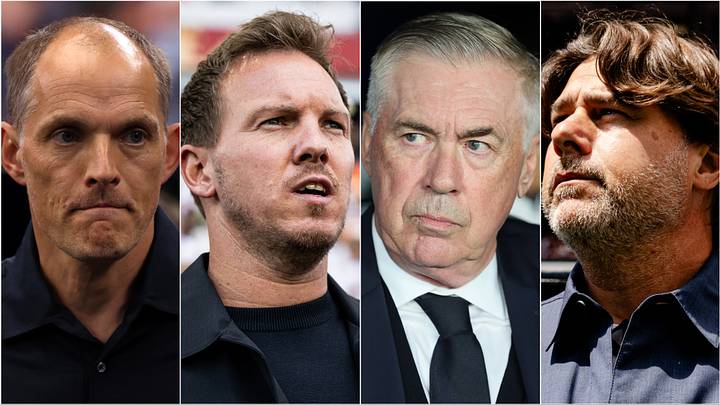
Serial champions league winner Carlo Ancelotti does not look like he is breaking a sweat while navigating the complexities of the Brazil job and Mauricio Pochettino has already guided the co-hosting United States to a first place finish in a World Cup group stage for just the third time ever. Ex-Bayern Munich coach Julian Nagelsmann, at all of 38 years old, has ripped off 11 consecutive wins with Germany and restored quite a bit of luster to one of the regular European contenders in the process.
Argentina’s Lionel Scaloni and France’s Didier Deschamps can rightfully be lumped into the same category despite their lack of recent history in club football, since it is hard to deny their place alongside the other names given they’re both going for a second World Cup trophy in charge of their respective national teams.
Such a collective group are not just imposing figures who have been able to provide a rousing pre-game speech in the dressing room before matches either.
Not Afraid to Make the Tough, High-Pressure Decisions

Tuchel’s squad selections were widely questioned when he initially made them but much of the British media–and indeed public at large–have come quickly around after seeing them in action against Croatia last week. Jude Bellingham lived up to his big-game billing and played in a number of positions beyond his typical No. 10 to combine beautifully with striker Harry Kane. Elliot Anderson proved to be a natural partner for Declan Rice elsewhere in the midfield and the pace provided by the likes of Noni Madueke and Marcus Rashford on the wing made the decision to leave out the likes of Cole Palmer and Phil Foden a distant memory.
Ancelotti, too, can be credited for staying relaxed after Brazil’s initial draw against Morocco left many Seleção supporters fretting. Inserting Matheus Cunha into the starting lineup wound up producing a brace by the Manchester United forward and Vinicíus Júnior dropping deeper than he did in the group stage opener allowed him to capture yet another Man of the Match award to go with a second goal in as many games. Plus, Ancelotti has navigated tricky off-field storylines involving Neymar’s availability and the minutes of young star Endrick at the same time.
Though it hasn’t always been smooth sailing since he first took over the U.S. national team, it’s also hard to argue with the results Pochettino has produced. His lineup produced one of the best ever American performances in the World Cup during the victory over Paraguay and he deftly allowed injured star Christian Pulisic to sit out a win over Australia with spot-on tactics against a feisty Socceroos side. For a group whose supporters constantly shout that they believe that they will win, there’s some real conviction that actually is the case now thanks to the Argentine in charge.
The presence of such elite managerial names is not a regular occurrence at the World Cup historically given the typical career disconnect between coaching a national team and running the show at places like Real Madrid, Chelsea, Paris Saint-Germain or Bayern Munich.
The lack of training time with the former, combined with the greater salaries and prestige that come from the latter, so often pushed most accomplished coaches into the punditry box during the summer tournaments on the football calendar while they navigated the transfer market ahead of the coming season. Now, that tide might be turning even with the presence of so many regular veterans to this level like Hervé Renard (recently picked up by Tunisia), Carlos Queiroz (Ghana), Javier Aguirre (Mexico), Roberto Martínez (Portugal) and others still making up the vast majority of managerial choices across the 48-strong lineup this year.
International Management Heading in a Different Direction

A more interesting question is if finding accomplished and respected names to run the show is just a blip in 2026 or will become more of a trend moving forward at future World Cups. Those nations with the prestige and resources will not be lacking for available options if so.
One can start with Klopp, who is the nebulous Head of Global Soccer for Red Bull when not gallivanting across America for German television. He’s been whispered as a potential choice for the football association (DFB) to take over the national team for nearly a decade and might delight at the prospect of taking over for Nagelsmann—who is signed until after the European Championships in 2028—given the country’s attacking talent, like Jamal Musiala and Florian Wirtz, are just coming into their prime.
If Klopp doesn’t want to wait, there’s always the possibility of simply staying on this side of the pond and taking over for Pochettino after his contract runs out this summer.
There’s also the matter of Klopp’s old Premier League foil being available too with Pep Guardiola having previously expressed a strong desire to one day coach a national team in the World Cup and his successful tenure at Manchester City finally coming to a close in May.
He’s quite fond of America from spending quite a bit of time in the country over the years and could also be in play if the English Football Association or Tuchel part ways before the upcoming Euros as well. Brazil, should Ancelotti not continue through the 2030 World Cup, beckons as an option and the thought of restoring glory to an Italian side which has been absent from the quadrennial competition since 2014 might be tempting down the road someday—if its able to get its house in order. As a Catalonian, it is a little difficult to see Guardiola taking charge of Spain, but hosting a World Cup on home soil means you can’t entirely rule it out either.

Another big name, Zinedine Zidane, figures to be making his way into the spotlight either way. Though he has been out of management since leaving Real Madrid in 2021, he is viewed by most inside and outside of France as the natural successor for Les Bleus once Deschamps steps away this year and may delight at the prospect of leading the team he once captained to a final—which is rumored to be held at the Bernabéu in four years time.
Plus, any number of others with similar CV’s could suddenly find themselves considering the virtues of national team management right alongside. After all, this isn’t exactly the next job either Tuchel or Nagelsmann envisioned after getting sacked, but do find themselves thriving in all the same.
Whether the presence of such managerial heavyweights is simply a circumstantial blimp of a World Cup in North America or a lasting trend past this year’s edition won’t be known for a while. Until then, it’s getting hard to deny the success on the pitch—and the hugs that tend to follow off it—that a select few elite managers are experiencing before we’ve even hit the knockout phase of the grandest tournament in sports.
READ THE LATEST WORLD CUP NEWS, ANALYSIS AND INSIGHT FROM SI FC
 Add us as a preferred source on Google
Bryan Fischer is a staff writer at Sports Illustrated covering college sports. He joined the SI staff in October 2024 after spending nearly two decades at outlets such as FOX Sports, NBC Sports and CBS Sports. A member of the Football Writers Association of America’s All-America Selection Committee and a Heisman Trophy voter, Fischer has received awards for investigative journalism from the Associated Press Sports Editors and FWAA. He has a bachelor’s in communication from USC.
Follow bryandfischer