%20%20--%3E%0A%3Csvg%20version%3D%221.1%22%20id%3D%22Layer_1%22%20xmlns%3D%22http%3A%2F%2Fwww.w3.org%2F2000%2Fsvg%22%20xmlns%3Axlink%3D%22http%3A%2F%2Fwww.w3.org%2F1999%2Fxlink%22%20x%3D%220px%22%20y%3D%220px%22%0A%09%20width%3D%2239px%22%20height%3D%2240px%22%20viewBox%3D%220%200%2039%2040%22%20enable-background%3D%22new%200%200%2039%2040%22%20xml%3Aspace%3D%22preserve%22%3E%0A%3Cpath%20fill%3D%22%23FFFFFF%22%20d%3D%22M38.5%2C7H28.2v26h10.3V7z%22%2F%3E%0A%3Cpath%20fill-rule%3D%22evenodd%22%20clip-rule%3D%22evenodd%22%20fill%3D%22%23FFFFFF%22%20d%3D%22M26.1%2C25.5c0%2C5.8-4.1%2C7.5-12.9%2C7.5C3.9%2C33%2C0%2C31.2%2C0%2C25.2v-1.1h11.6%0A%09v2.4c0%2C0.7%2C0.1%2C1.4%2C1.2%2C1.4c1%2C0%2C1.2-0.4%2C1.2-1.3v-0.9c0-1.6-0.9-1.6-3.5-2.2C2.2%2C21.7%2C0%2C19.7%2C0%2C15.3v-0.9C0%2C9.3%2C5.5%2C7%2C12.9%2C7%0A%09c10.2%2C0%2C12.8%2C2.6%2C12.8%2C7.4v1.8h-11v-2.9c0-0.6-0.4-1.1-1.2-1.1c-0.6%2C0-1.2%2C0.4-1.2%2C1.1v0.9c0%2C1.5%2C0.9%2C2%2C3.3%2C2.5%0A%09c8%2C1.6%2C10.5%2C3.3%2C10.5%2C7.5V25.5z%22%2F%3E%0A%3C%2Fsvg%3E%0A)
Why Lionel Messi, Inter Miami’s Title Defense Fell Apart and What Must Change in 2027
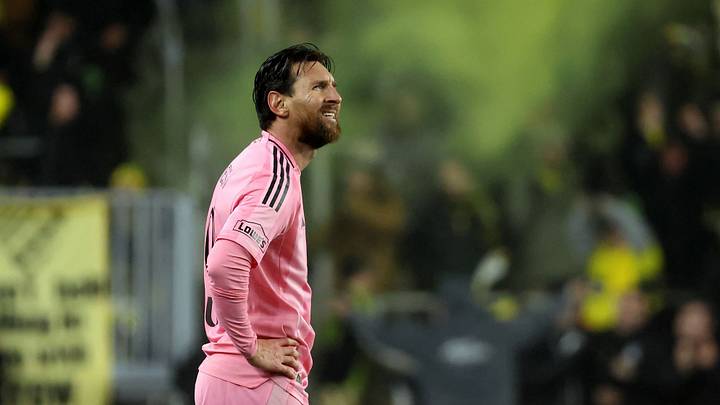
Ever since Lionel Messi touched down in South Florida, the Herons have been drinking from a seemingly inexhaustible stream of success. But perhaps it has finally run dry.
Messi wasted little time transforming Inter Miami from MLS cellar dwellers into trophy contenders, guiding them to their maiden piece of silverware in the 2023 Leagues Cup before helping them reach the U.S. Open Cup final.
The 2024 season would see them claim the Supporters’ Shield with the highest points tally in MLS regular season history (74), only to lose in three games to Atlanta United in the opening round of the playoffs. Miami climbed the mountaintop the following year, securing their first-ever MLS playoff series victory en route to defeating Vancouver Whitecaps in the MLS Cup.
This season, however, their title defense came to a premature end. The Herons were swept by Columbus Crew in Round One of playoffs, a consequence of inconsistencies all year long—not just on the field but also on the touchline.
A Season to Forget for Miami
SANTIAGO RODRIGUEZ WINS IT IN THE 92ND MINUTE! 🚨@ColumbusCrew upsets the defending champs Inter Miami and advances in the Audi MLS Cup Playoffs! pic.twitter.com/eh7dXZv8o7
— Major League Soccer (@MLS) November 28, 2026
A tepid start saw them crash out of the Concacaf Champions Cup in the round of 16. Javier Mascherano then resigned on April 14, setting the stage for a tumultuous campaign. His successor, Guillermo Hoyos, initially impressed with eight wins from 10 before losing momentum in August and falling to Monterrey and León in the Leagues Cup group stage.
Miami subsequently took four points from six matches, prompting them to appoint Kily González, who delivered the Campeones Cup with a victory against Cruz Azul; however, González never quite convinced at the helm, with Miami winning one of their final four regular season matches. The Herons nevertheless finished second in the East (third overall), setting up a showdown with the most in-form team in MLS: seventh seed Columbus Crew.
In their first playoff match at Nu Stadium, they were thoroughly outplayed, falling behind to an early penalty, going down to 10 men shortly afterward and shipping two second-half goals in a 3–0 defeat. Miami then traded the balmy Florida heat for the frigid Ohio rain, carving out several promising opportunities but lacking the cutting edge to capitalize on them.
The visitors had a goal disallowed for offside before Germán Berterame headed Telasco Segovia’s inviting cross over the bar. These missed opportunities would come back to haunt them: two months after conceding a last-gasp winner in Columbus, Miami suffered the same fate in a 1–0 defeat.
Miami will not join D.C. United (1996–97), Houston Dynamo (2006–07) and LA Galaxy (2011–12) in the exclusive club of back-to-back MLS Cup winners. For a team boasting the league’s most expensive roster and the presumptive three-time MLS MVP, another first round exit represents a monumental missed opportunity.
A Revolving Door at the Dugout
Messi and Kily González embrace after winning a trophy in his first game as @InterMiamiCF coach. 🤗 pic.twitter.com/ek9wUBEdUW
— Major League Soccer (@MLS) September 17, 2026
Inter Miami have gone through six different managers since the start of 2023, five of them Argentine. They selected Tata Martino to jumpstart the Messi era, having previously managed him at Barcelona and Argentina, before appointing his former teammate Mascherano.
Next came Hoyos, who coached Messi at La Masia and fast-tracked him through the youth ranks, and González, who consoled a teenage Messi in the dressing room after he was sent off on his international debut.
The common denominator in these hires has been their preexisting relationship with Messi rather than an extensive track record of managerial success. While Mascherano succeeded in striking the right tactical balance, neither of his successors managed to do so.
In contrast to the championship-winning side of 2025, which possessed a clearly identifiable structure designed to maximize Messi’s brilliance, the 2026 iteration resembled a collection of moving parts without rhyme or reason.
As their opponents came to realize, the formula was simple: stop Messi, and you stop Miami. Messi registered 26 goals and 17 assists in 2026, directly contributing to more than half of Miami’s 80 goals. When Columbus succeeded in neutralizing him in the playoffs, the league’s most prolific attack went 180 minutes without finding the back of the net.
Failing to Fill the Spanish Void
What a pass from Sergio Busquets to Jordi Alba 😮💨
— Major League Soccer (@MLS) August 17, 2025
Alba opens the scoring for @InterMiamiCF. pic.twitter.com/yZe6IpzOCK
Sergio Busquets’s retirement deprived Miami of a midfield metronome capable of dictating possession, shielding the backline and unlocking opposition defenses. While they sought to fill the void by acquiring David Ayala from Portland and entrusting Yannick Bright with greater responsibility, neither came close to replicating the Spaniard’s influence in possession.
Without a reliable conduit between defense and attack, and with summer signing Casemiro playing out of position, Miami became increasingly reliant on Rodrigo De Paul to progress the ball and Messi to conjure something out of nothing.
There was always going to be a drop-off at left back following Jordi Alba’s retirement, given the telepathic understanding he had developed with Messi over the previous decade. Miami sought to replace Alba with another Spanish international in Sergio Reguilón, but his persistent fitness problems saw him miss nearly half the regular season and their entire postseason.
Having sanctioned Noah Allen’s loan to Chicago Fire in September, Miami were repeatedly forced to shoehorn the likes of Gonzalo Luján, Facundo Mura and Fricio Caicedo into the position. What had once been one of Miami's greatest sources of attacking inspiration had become one of their most glaring weaknesses.
Defensive Frailties Prove Costly

Despite winning every major trophy available to them in North America bar the Concacaf Champions Cup and U.S. Open Cup, there’s an argument to be made that Miami have actually underachieved in the Messi era.
Messi has been a notch above every other player in MLS since arriving in 2023, winning consecutive MVP awards and Golden Boots. Across Messi’s three full seasons, Miami have scored 79, 81 and 80 regular-season goals, tallies surpassed only by the 1998 LA Galaxy and 2019 LAFC (both 85) in MLS history.
As long as Messi remains fit, Miami are guaranteed a steady supply of goals and a playoff spot. Yet despite their formidable attacking output, they have suffered two first round exits in three playoff campaigns. Their progress has been continually hampered by a porous defense, with no team among the top 13 sides in the Supporters’ Shield standings conceding more goals (59).
Having pried MLS Goalkeeper of the Year Dayne St. Clair away from Minnesota United, Miami would have expected a considerable upgrade between the sticks. Instead, the Canadian kept just four clean sheets in 28 league appearances, posted the third-lowest save percentage among the league’s 30 regular goalkeepers (60.8%) and temporarily surrendered his starting position to Rocco Ríos Novo.
In fairness to St. Clair, he received little protection from the likes of Micael and Maximiliano Falcón, whose shortcomings forced Miami to repurpose Casemiro as a center back. In doing so, they deprived themselves of the experienced midfield anchor they had been crying out for since Busquets’s retirement without actually improving their defensive situation.
For all the money invested in defense, Miami conceded more than twice as many goals as Nashville and managed just two clean sheets from the start of August onward. Their inability to see out matches was a recurring Achilles heel, with 16 of their 59 regular season goals conceded coming in the final 15 minutes, making it fitting that Santiago Rodríguez’s 92nd-minute strike delivered the final blow to their title defense.
An Expensive but Imbalanced Attack

While their defensive frailties handicapped their progress, Miami’s attack was not without shortcomings.
Season-ending injuries to Mateo Silvetti and Tadeo Allende deprived them of much-needed verticality and dynamism on the flanks, with their absences proving particularly debilitating given the limited mobility of Messi and Luis Suárez.
Meanwhile, $15 million signing Berterame offered little to compensate for the loss of either winger, struggling to justify both his hefty transfer fee and his $3.82 million annual compensation. Often deployed away from his natural center forward position to accommodate Suárez, the Mexican international managed just 10 MLS goals.
At 28, Berterame is already in the prime of his career, and Miami cannot afford to wait indefinitely for their investment to bear fruit. Given the chasm between their attacking firepower and defensive frailty, the Herons would be wise to entertain offers for Berterame and use the vacated Designated Player slot to acquire a defensive cornerstone.
What Needs to Change in 2027?

Miami have less than three months to prepare for the MLS sprint season, and several difficult decisions await them. Should they persevere with González? Should they exercise their purchase options on Micael and Matías Galarza? Is St. Clair, who ranks among the highest-paid goalkeepers in MLS, worth retaining?
They will likely seek a team-friendly renewal with Suárez, who outscored Berterame by seven league goals despite earning a fraction of his salary. However, the Uruguayan should transition into a rotational role rather than remain an automatic starter.
Should Miami manage to cash in on Berterame, they could deploy Messi as a false nine, flank him with Allende and Silvetti and retain Suárez as an experienced alternative off the bench. This would afford them greater financial and roster flexibility to reinforce central defense and left back, while enabling Casemiro to return to his natural midfield anchor position alongside Segovia and De Paul.
Above all, Miami need to prioritize tactical compatibility over individual pedigree, recruiting defenders with recovery pace and assembling a team capable of compensating for Messi’s limited defensive output without sacrificing its attacking potency.
Having already retired from international duty with Argentina and hinting at hanging up his boots altogether following the death of his father, Messi turns 40 next June. Miami cannot afford to squander another year of his brilliance.
Miami have spent the past three and a half years building a team around the greatest player of all time. Now, they must build a team worthy of him before the curtain comes down on his illustrious career.
 Add us as a preferred source on Google

Zach Lowy is a journalist, writer and interviewer whose work explores the stories, personalities and defining moments shaping the global game. Zach has covered European and North America soccer in-depth, and was on the ground for the 2025 Club World Cup and 2026 World Cup.
Follow ZachLowy