%20%20--%3E%0A%3Csvg%20version%3D%221.1%22%20id%3D%22Layer_1%22%20xmlns%3D%22http%3A%2F%2Fwww.w3.org%2F2000%2Fsvg%22%20xmlns%3Axlink%3D%22http%3A%2F%2Fwww.w3.org%2F1999%2Fxlink%22%20x%3D%220px%22%20y%3D%220px%22%0A%09%20width%3D%2239px%22%20height%3D%2240px%22%20viewBox%3D%220%200%2039%2040%22%20enable-background%3D%22new%200%200%2039%2040%22%20xml%3Aspace%3D%22preserve%22%3E%0A%3Cpath%20fill%3D%22%23FFFFFF%22%20d%3D%22M38.5%2C7H28.2v26h10.3V7z%22%2F%3E%0A%3Cpath%20fill-rule%3D%22evenodd%22%20clip-rule%3D%22evenodd%22%20fill%3D%22%23FFFFFF%22%20d%3D%22M26.1%2C25.5c0%2C5.8-4.1%2C7.5-12.9%2C7.5C3.9%2C33%2C0%2C31.2%2C0%2C25.2v-1.1h11.6%0A%09v2.4c0%2C0.7%2C0.1%2C1.4%2C1.2%2C1.4c1%2C0%2C1.2-0.4%2C1.2-1.3v-0.9c0-1.6-0.9-1.6-3.5-2.2C2.2%2C21.7%2C0%2C19.7%2C0%2C15.3v-0.9C0%2C9.3%2C5.5%2C7%2C12.9%2C7%0A%09c10.2%2C0%2C12.8%2C2.6%2C12.8%2C7.4v1.8h-11v-2.9c0-0.6-0.4-1.1-1.2-1.1c-0.6%2C0-1.2%2C0.4-1.2%2C1.1v0.9c0%2C1.5%2C0.9%2C2%2C3.3%2C2.5%0A%09c8%2C1.6%2C10.5%2C3.3%2C10.5%2C7.5V25.5z%22%2F%3E%0A%3C%2Fsvg%3E%0A)
The Six Issues That Cost Liam Rosenior His Job As Chelsea Manager
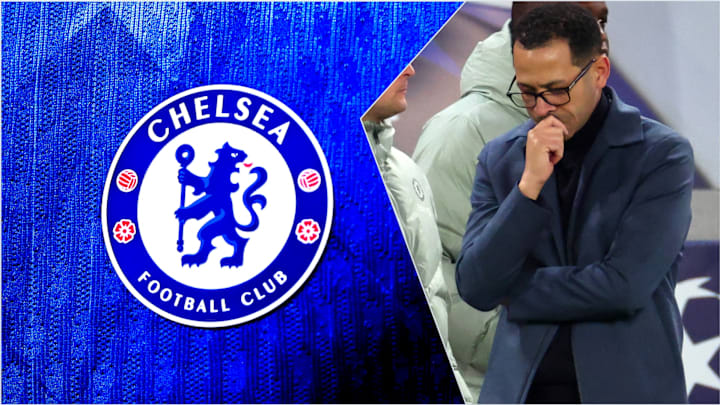
Liam Rosenior signed a six-and-a-half-year contract when he took over as Chelsea manager in January. Just 106 days later, he was given his marching orders.
Chelsea have spent 2026 in a spiral. Rosenior was tasked with stabilizing things but oversaw the club’s poorest run of domestic results since 1912 and, with hopes of European qualification fading away, was sent packing on Wednesday to become Chelsea’s shortest-tenured permanent manager of the Premier League era.
Here’s how it all went wrong for Rosenior.
Wrong Place, Wrong Time

While misery at Chelsea reached a new low during Rosenior’s tenure, that descent actually began before he arrived.
Fans had been growing increasingly tired of the ownership group’s refusal to deviate from a model that had yielded nothing but expensive drama, and the departure of former boss Enzo Maresca was the final straw.
While it must be noted that the fanbase was divided on Maresca during his tenure, most supporters sympathized with the Italian as a butting of heads with those above him left him feeling direspected and unable to continue his tenure. The general sentiment among fans was that the decision-makers in BlueCo—co-owner Behdad Eghbali, co-sporting directors Paul Winstanley and Laurence Stewart and recruitment chiefs Joe Shields and Sam Jewell—had done nowhere near enough to justify their desire to interfere with day-to-day coaching.
That produced a wave of support for Maresca which, inevitably, meant whoever replaced him was always going to suffer. The only way to appease fans would have been by upgrading to an undisputed superstar of the managerial world, but BlueCo did not offer that and instead took the easy route of hiring Rosenior from sister-side Strasbourg.
From the moment he arrived at Stamford Bridge, Rosenior faced an uphill battle to prove himself. The pressure was already unsustainable before he had uttered his first words after signing. Only a miracle would have helped him.
Spokesperson for the Machine

The influx of BlueCo-linked staff behind the scenes has also unsettled Chelsea fans, who have seen the backroom staff from senior level down to the academy torn apart to make space for people with personal connections to those calling the shots.
Rosenior, known to sporting director Winstanley from their shared time at Brighton & Hove Albion, was seen by many as just another example of those upstairs hiring their friends, while he was painted as a “BlueCo guy” because of his tenure at Strasbourg.
Simply put, Chelsea fans do not want more “BlueCo guys.” The explicit chants directed against the ownership and the formal protests in the streets have made it clear most do not want anyone associated with BlueCo involved in any capacity. With Rosenior, they were asked to accept another face of the project.
None of this is Rosenior’s fault, of course. He forged professional relationships early in his career and did an impressive job in charge of Strasbourg, but doing so attached him to a wildly unpopular project for which he became the headline act. Again, only unprecedented success would have been enough to overturn that sentiment.
Too Many Buzzwords

There were questions about Rosenior’s pedigree and suitability for such a big job. Chelsea fans are used to seeing the world’s biggest managers in the dugout but were now being asked to accept a boss whose experience had come in the English second tier and the upper-mid table of Ligue 1 in France.
That is not an impossible battle to overcome—Mikel Arteta had never even had a manager job when he joined Arsenal—but Rosenior’s approach to proving himself rubbed many the wrong way as he tried to make his mind stand out from the rest.
The nickname of ‘LinkedIn Liam’ was quickly handed out as Rosenior’s overly professional media appearances revolved around soundbites and buzzwords that became the target of taunts on social media. He parroted the idea of “respecting the ball” as the players began performing pre-game huddles, although it must be said that the widely ridiculed idea was not actually his to begin with.
Rosenior argued the future “does not exist until you get there”, insisted he would not “limit limitless” and split the word “manage” in two to define management as helping men age. Predictably, social media went wild—the boss insisted he did not see the taunts as he is too old for such platforms.
When you go against the status quo like that, you have to back it up with performances and results. Rosenior’s Chelsea offered neither and fans quickly decided they were not going to accept it.
More Fall Out to Rosenior’s Dramatic Firing
Undermined by Key Stars

Not all of Rosenior’s issues came from the stands, however.
Around Chelsea’s Champions League quarterfinal against Paris Saint-Germain, both legs were plagued by team leaks on social media before the match. Rosenior insisted the mole in the dressing room had been addressed soon after.
Fast-forward to Rosenior’s final game in charge and the barber of left back Marc Cucurella was the one to reveal that both João Pedro and Cole Palmer would miss the 3–0 defeat to Brighton. Not only was that another leak, but the revelation of something as significant as Palmer’s absence proved nothing inside the dressing room was sacred.
Cucurella proved to be a particular thorn in Rosenior’s side. During the last international break, the left back spoke openly about his disappointment towards Maresca’s departure, criticizing the club for making the mid-season decision. The comments were against the club in general, rather than Rosenior specifically, but his status was clearly undermined in the process as one of the most senior figures in the team openly pined for days gone by.
Those sentiments were soon followed by a wave of public appearances from Enzo Fernández, the vice-captain of the squad. He echoed Cucurella’s disappointment towards Maresca’s exit and forced Rosenior into a difficult position with his public flirting with Real Madrid. An internal two-game suspension gave Rosenior a thoroughly unnecessary headache.
As was the case with supporters, even the Chelsea players appeared to have had enough of BlueCo’s methods. Rosenior simply found himself caught in the crossfire.
Dressing Room Divide

Reports in the aftermath of Rosenior’s departure have highlighted the fact he clearly had not endeared himself to the players.
The trend of Rosenior’s tenure saw Chelsea become worse on the pitch with each passing day, with the Blues’ early success coming as Rosenior was forced to work with the scraps of the Maresca era until he had enough time to bring in his own methods.
His approach to coaching, by all accounts, did not impress many in the dressing room, who were left perplexed by his ideas and constant determination to change things. BBC Sport note Rosenior was nicknamed “the substitute teacher” by one player, but many struggled to show respect to their new manager as his methods grew increasingly complex.
Publicly, Rosenior repeatedly defended his players publicly but footage of the group failing to acknowledge his backroom staff as they left the pitch became common, and the mood turned after the Brighton game when Rosenior took aim at what he felt was an “unacceptable” lack of effort and determination.
Center back Trevoh Chalobah came out to defend the dressing room, biting back at Rosenior by insisting the players were exhausted after giving their all. Those claims were not backed up by the fact Chelsea have been outrun by their opponents in each of their 34 Premier League games this season.
No Answers for Bad Results

At the end of the day, this is a results business, as Rosenior acknowledged. If you don’t win games, you don’t last long—a sentiment with which Chelsea fans are incredibly familiar.
March’s 5–2 defeat to PSG, which brought the widely panned decision to rotate goalkeepers, produced significant doubts about Rosenior’s tactical knowledge, and the run of seven defeats from eight games that followed hardly helped.
Aside from the 7–0 win over minnows Port Vale in the FA Cup, Rosenior’s Chelsea failed to score in his final six games in charge. Performances fell off a cliff and the Blues did not look like rediscovering their best, regardless of how many notes Rosenior passed to his players during games.
What began as a bid to consolidate a spot in the Champions League next season soon descended into a scramble to seal any form of European action. By failing to offer any signs of stopping the rot, Rosenior left the owners with an easy decision to make.
READ THE LATEST CHELSEA NEWS, ANALYSIS AND INSIGHT FROM SI FC
 Add us as a preferred source on Google
Tom Gott is an associate editor for SI FC, having entered the world of soccer media in early 2018 following his graduation from Newcastle University. He specialises in all things Premier League, with a particular passion for academy soccer, and can usually be found rebuilding your favorite team on Football Manager.
Follow tomgott2