%20%20--%3E%0A%3Csvg%20version%3D%221.1%22%20id%3D%22Layer_1%22%20xmlns%3D%22http%3A%2F%2Fwww.w3.org%2F2000%2Fsvg%22%20xmlns%3Axlink%3D%22http%3A%2F%2Fwww.w3.org%2F1999%2Fxlink%22%20x%3D%220px%22%20y%3D%220px%22%0A%09%20width%3D%2239px%22%20height%3D%2240px%22%20viewBox%3D%220%200%2039%2040%22%20enable-background%3D%22new%200%200%2039%2040%22%20xml%3Aspace%3D%22preserve%22%3E%0A%3Cpath%20fill%3D%22%23FFFFFF%22%20d%3D%22M38.5%2C7H28.2v26h10.3V7z%22%2F%3E%0A%3Cpath%20fill-rule%3D%22evenodd%22%20clip-rule%3D%22evenodd%22%20fill%3D%22%23FFFFFF%22%20d%3D%22M26.1%2C25.5c0%2C5.8-4.1%2C7.5-12.9%2C7.5C3.9%2C33%2C0%2C31.2%2C0%2C25.2v-1.1h11.6%0A%09v2.4c0%2C0.7%2C0.1%2C1.4%2C1.2%2C1.4c1%2C0%2C1.2-0.4%2C1.2-1.3v-0.9c0-1.6-0.9-1.6-3.5-2.2C2.2%2C21.7%2C0%2C19.7%2C0%2C15.3v-0.9C0%2C9.3%2C5.5%2C7%2C12.9%2C7%0A%09c10.2%2C0%2C12.8%2C2.6%2C12.8%2C7.4v1.8h-11v-2.9c0-0.6-0.4-1.1-1.2-1.1c-0.6%2C0-1.2%2C0.4-1.2%2C1.1v0.9c0%2C1.5%2C0.9%2C2%2C3.3%2C2.5%0A%09c8%2C1.6%2C10.5%2C3.3%2C10.5%2C7.5V25.5z%22%2F%3E%0A%3C%2Fsvg%3E%0A)
Three Key Takeaways From the USMNT’s Heated Clash With Germany
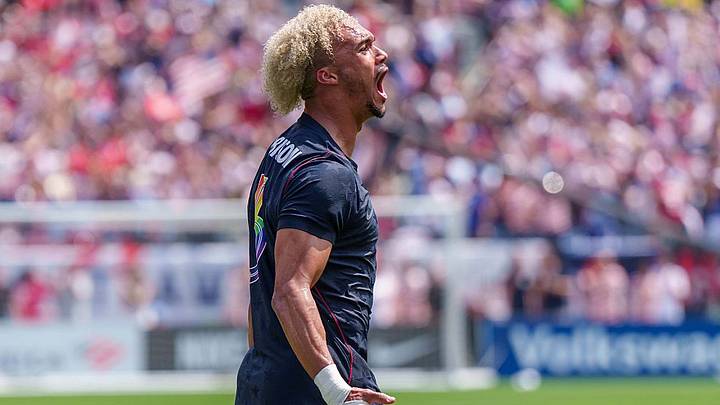
The U.S. men’s national team is red hot and ready for the 2026 World Cup.
The co-host played a final pre-tournament friendly against European powerhouses and serious title-contenders Germany on Saturday in Chicago, Ill., resulting in a 2–1 loss. Nevertheless, the USMNT showed glimpses of brilliance and the ability to hang with a team much more surgical on the ball—the only two ingredients a nation needs, in addition to a small pinch of luck, to achieve global glory.
The sold-out crowd of over 63,000 at Soldier Field could tell how antsy the USMNT are to get the summer’s tournament rolling, even breaking out into a spat with German players at the end of the game, which resulted in a few heated exchanges and shoves.
In addition to the pre-World Cup jitters, the Stars and Stripes will certainly feel confident heading into the spotlight of soccer’s grandest stage in less than a week, following Saturday’s outing and last week’s victory over No. 14 ranked Senegal.
Here are Sports Illustrated’s three key takeaways from the match against Germany.
A Slow Start for the USMNT

It was a tale of two quarters in the first half of the international friendly. At the opening whistle, the USMNT was stunned by Germany’s pace on the ball and explosiveness off of it, reaching second to every ball and forced on its back heels while the European heavyweights continually charged towards the box. It took just three minutes for German star forward Kai Havertz to break through, scoring a header off of a free kick, the Arsenal superstar simply outgunning the likes of U.S. center back Miles Robinson.
Havertz nearly added another one just three minutes later, slipping the ball past goalkeeper Matt Freese from close range, before the ball was ruled out of bounds and the goal was revoked. With 70% of possession and a third legitimate chance on goal for Germany within the first 10 minutes, it appeared just the beginning of a long, grueling afternoon for U.S. fans.
The U.S. rose to the occasion, though, presenting itself as a completely different team after the 15-minute mark. The squad adjusted to the pace the Germans were playing at and quickly grew accustomed to the lack of time it had on the ball before German pressure arrived. The Stars and Stripes began taking it to the German outfit in an effort that culminated in Antonee “Jedi” Robinson’s highlight reel-worthy strike in the 37th minute, perhaps using “the force” to the launch the ball off his first touch past goalkeeper Oliver Baumann from the top of the box. Robinson celebrated the equalizer with a back handspring into a back flip to send the red, white and blue crowd into a frenzy.

The U.S. ended the half with equivalent possession and five total shots to the German’s four.
U.S. soccer poster player Christian Pulisic was critically important for the squad’s resurgence, as Saturday’s affair compounded his personal resurgence that he began against Senegal. Throughout the first 20 minutes of the opening half, Pulisic was rendered useless on the left flank, all windows to him completely shuttered. The left winger soon adjusted his positioning, shifting substantially more central to combine with the midfielders and even Sergiño Dest over on the opposite flank. It was Pulisic’s combination with Dest in particular that yielded the corner kick that Robinson scored off of. In the final three minutes of the half, Pulisic had three shot attempts that led to three corner kicks, giving the U.S. momentum heading into the break.
Although the U.S. quickly regrouped to better handle the savvy Germans, the Americans need to anticipate that level of pace and clinical technical ability from the outset, especially this summer on soccer’s most competitive stage against the world’s best players. The recognition and adjustment cannot happen only after goals have already been scored. By then, it is often too late to catch up. If the USMNT anticipate a deep run on home soil this summer, then the team will most certainly face powerhouses that match—or exceed—the Germans’ speed of play.
Need to Improve Aerial Threat

The USMNT need to be better in the air. The most obvious example of the team’s shortcoming—no pun intended—was the blazing header goal Havertz scored in the opening minutes, the 6'4" striker beating out the 6'2" Miles Robinson.
Nevertheless, the USMNT was beaten in the air all game long, a key plane of the field the team will need to dominate this summer should they expect any success on the World Cup stage. The first half hour saw the U.S. beaten time and time again aerially, with the Germans winning seven aerial duels to just one for the U.S. By half time, it was Germany’s eight to the USMNT’s four, and by the end of the match, it was 12 to six.
A key factor to the host’s struggles in the air was the absence of center back Chris Richards. The 26-year-old defensive stalwart is one of the Stars and Stripes’ biggest aerial threats, both on set pieces and in the general run of play. He has been sidelined with an ankle injury since mid-May, though, but is expected to be ready to play by the World Cup opener against Paraguay on June 12.
Insight Into Pochettino’s Formation, Key Starters

Manager Mauricio Pochettino has been hugely experimental with the USMNT since taking over the team back in 2024, all with an eye towards this summer’s tournament. The Argentine boss was similarly experimental on Saturday, giving 21 players minutes on the pitch.
Nevertheless, some of his thought processes became clearer, especially regarding his formational preference and who he sees as belonging in the starting lineup.
Pochettino employed a 3-4-2-1 formation for much of Saturday’s match, to follow up the similar 3-4-3 lineup he employed last Sunday against Senegal. It is evident that he finds the U.S. to be at its highest level with three defenders in the back, a style that also yielded the squad success last fall, as it went undefeated through the October and November international windows with three wins and one draw.
The manager had briefly experimented with a four-back formation during the March international window, but thrashings by both Belgium and Portugal seemed to convince him to return to the three-back, a set-up he is likely to employ this summer, given the tournament kicks off in less than a week and he is out of opportunities for more harmless experimentation.
It also became clear that Pochettino was leaning towards a three-back set up when he announced his official 26-man roster on May 26, naming a whopping five centers to the final list. In a three-back formation, all three defenders can be center backs, thus requiring the need for a greater number of them on the roster.
Saturday’s clash also indicated that Matt Freese will be the starting goalkeeper at the World Cup, clocking 90 minutes between the sticks against Germany, the more challenging of the week’s two friendlies. Matt Turner and Chris Brady split time in the net against Senegal. Folarin Balogun and Ricardo Pepi will likely be Pochettino’s go-to strikers this summer, as third striker option Haji Wright do not clock minutes in either of the two friendlies, despite being healthy.
Pochettino also appears still confident in captain Tim Ream in the starting center back role after a shaky performance from the 38-year-old last week. Ream did more to earn that confidence against Germany, sitting lower as opposed to trying to engage the attack, which is not his strong suit.
READ THE LATEST USMNT NEWS, ANALYSIS AND INSIGHT FROM SI FC
 Add us as a preferred source on Google
Sophia Vesely is a writer, reporter and editor for SI FC, with an emphasis on North American coverage. Her experience comes from regional journalism as a former sports reporter for the Orlando Sentinel, Dallas Morning News and Seattle Times. Vesely graduated from Swarthmore College, where she played collegiate soccer as a wingback. She specializes in MLS, NWSL and NCAA soccer.