%20%20--%3E%0A%3Csvg%20version%3D%221.1%22%20id%3D%22Layer_1%22%20xmlns%3D%22http%3A%2F%2Fwww.w3.org%2F2000%2Fsvg%22%20xmlns%3Axlink%3D%22http%3A%2F%2Fwww.w3.org%2F1999%2Fxlink%22%20x%3D%220px%22%20y%3D%220px%22%0A%09%20width%3D%2239px%22%20height%3D%2240px%22%20viewBox%3D%220%200%2039%2040%22%20enable-background%3D%22new%200%200%2039%2040%22%20xml%3Aspace%3D%22preserve%22%3E%0A%3Cpath%20fill%3D%22%23FFFFFF%22%20d%3D%22M38.5%2C7H28.2v26h10.3V7z%22%2F%3E%0A%3Cpath%20fill-rule%3D%22evenodd%22%20clip-rule%3D%22evenodd%22%20fill%3D%22%23FFFFFF%22%20d%3D%22M26.1%2C25.5c0%2C5.8-4.1%2C7.5-12.9%2C7.5C3.9%2C33%2C0%2C31.2%2C0%2C25.2v-1.1h11.6%0A%09v2.4c0%2C0.7%2C0.1%2C1.4%2C1.2%2C1.4c1%2C0%2C1.2-0.4%2C1.2-1.3v-0.9c0-1.6-0.9-1.6-3.5-2.2C2.2%2C21.7%2C0%2C19.7%2C0%2C15.3v-0.9C0%2C9.3%2C5.5%2C7%2C12.9%2C7%0A%09c10.2%2C0%2C12.8%2C2.6%2C12.8%2C7.4v1.8h-11v-2.9c0-0.6-0.4-1.1-1.2-1.1c-0.6%2C0-1.2%2C0.4-1.2%2C1.1v0.9c0%2C1.5%2C0.9%2C2%2C3.3%2C2.5%0A%09c8%2C1.6%2C10.5%2C3.3%2C10.5%2C7.5V25.5z%22%2F%3E%0A%3C%2Fsvg%3E%0A)
Three Key Takeaways From the USMNT’s Gritty World Cup Win Over Australia
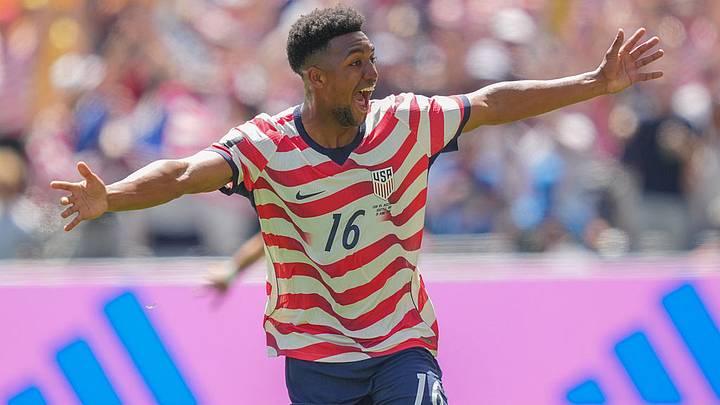
It wasn’t pretty. At times, it was actually quite ugly, like when 6'6" Australian center back Harry Souttar wrapped his arms—each the length of a goal post—practically twice around Folarin Balogun, appearing twice the size of the U.S.’s 5'10" star striker, resulting in a small scuffle and yellow cards all around.
Nevertheless, the USMNT achieved what it set out to do, toppling the sneakily-talented team from Down Under 2–0 on Friday under the Seattle sun. The 2026 World Cup co-host maintains its place atop the Group D standings, with winning out now an incredibly real possibility.
Before turning attentions to the last foe still standing, Türkiye, which the U.S. faces on Thursday, here are three key takeaways from the critical win over Australia.
New Stars Emerge

The USMNT may have been missing its main star on the pitch, Christian Pulisic, but others have quickly emerged. The 11th-minute finish that gave the USMNT its early lead, although technically an own goal, was conjured by the pure brilliance of Balogun.
The 24-year-old striker darted down the left flank, cutting towards the goal line and muscling the behemoths on Australia’s backline. Using the outside of his right foot, he flicked the ball across the box to the incoming Ricardo Pepi. A 6'4" Cameron Burgess, frantically trying to recover, got to the ball first, yet instead of clearing it over the crossbar, he gifted it perfectly to the back of the net.
Although the stats sheet won’t give Balogun his due credit for that monumental opener, there are certainly more moments of brilliance on the horizon for the young forward. He scored a brace in his World Cup debut last week, notching half of the U.S.’s goals for a dominant 4–1 victory over Paraguay at SoFi Stadium, becoming the first USMNT player to score more than one goal in a World Cup since the inaugural edition of the tournament in 1930 and putting himself firmly in the Golden Boot race.
Alex Freeman, the youngest player on the USMNT’s roster at just 21, was also a shining star on Friday. The right center back appeared rattled in the early minutes against Australia; however, he quickly adjusted to the visitor’s style, anticipating when the Aussies would try to catch him off guard with a fast break. Not only did Freeman come up big on the backline with five clearances and four tackles, but he also notched the U.S.’s second goal in the 43rd minute, a Super Man-like leaping header off of a rebound, for just his third international goal.
The 2026 World Cup—played across the U.S., Canada and Mexico—vows to the bolster the sport’s popularity across a continent still largely coming to understand and appreciate it. Yet perhaps just as significantly, this tournament is also proving to bolster the talents of the USMNT, a nation that has largely floundered at soccer’s showpiece event.
The Stars and Stripes are finally proving their worth on the global stage and their status as true tournament contenders. Even more so, they are proving the very real possibility of even greater success in the future, given the team is as much reliant on young emerging stars as the likes of established stars Pulisic and Weston McKennie.
Pochettino Proves His Worth

Australia provided the USMNT with a unique challenge. Not only did the Aussies allow the Americans to dominate possession and set the tempo of the game, they actually encouraged it, choosing to hunker down on defense with five defenders across the back and four in midfield. They kept the U.S. occupied in the center of the pitch, and it was precisely in the monotony of the U.S.’s lateral passes that Australia intended to strike. All the Socceroos waited for was a touch slightly too big, a run one step behind or one hair out of place.
It was the type of strategy that required Pochettino to really put his thinking cap on as manager, and he nailed it all around.
The former Tottenham Hotspur, Paris Saint-Germain and Chelsea boss switched the U.S.’s formation to a three-back before the game, trusting that his trio of center backs could cover for each other on any quick counterattacks, which still enabled Antonee Robinson and Sergiño Dest to push high up the pitch without worrying about needing to always be the first to recover in a counterattack situation.

It was unexpected—yet ingenious—for Pochettino to pair Balogun and Ricardo Pepi up top together, as the two strikers have only featured side-by-side twice before. Balogun is normally a lone soldier on the frontline and has proved successful in his solo missions.
Nevertheless, aided by Robinson and Dest as pseudo-wingers, the striker pair soon overwhelmed Australia’s hearty five-man backline and allowed the U.S. to do exactly what Türkiye couldn’t against Australia: capitalize on its infrequent chances. The Americans walked into halftime with two goals on just a 1.20 xG (expected goals) and nine total shots.
The striker pairing also allowed Balogun to push wider, an unexpected place for him on the pitch, but his speed proved even more lethal from the left flank, often outgunning the likes of Australia fullback Jacob Italiano, while Pepi held more centrally.
“He’s always given us different ideas to attack,” Balogun said about Pochettino after the game. “To play with Pepi today wasn’t a shock. It wasn’t a plan B because [Christian Pulisic] was out. It felt like another solution to win the game. Australia played with a back five, so two strikers occupying the center backs is also a good idea. That’s credit to the boss, and you can see today that it worked.”
USMNT Making History

The gritty win over Australia secured the first part of history that the USMNT seeks to rewrite this summer on home soil. It marked the first time since 1930 that the USMNT earned two wins in the group stage. In that inaugural, 13-team competition, the Americans won consecutive matches against Belgium and Paraguay to advance to the semifinals, where they were promptly thumped by Argentina 6–1.
The last time the U.S. won twice at the World Cup, across all stages, was back in 2002, upsetting Portugal 3–2 in the group stage opener before defeating Mexico 2–0 in the round of 16 to advance to the quarterfinals, the furthest stage the team has advanced to in the modern era of the tournament.
After dominating its first two matches in Group D, more history feels destined to be made.
READ THE LATEST WORLD CUP NEWS, ANALYSIS AND INSIGHT FROM SI FC
 Add us as a preferred source on Google
Sophia Vesely is a writer, reporter and editor for SI FC, with an emphasis on North American coverage. Her experience comes from regional journalism as a former sports reporter for the Orlando Sentinel, Dallas Morning News and Seattle Times. Vesely graduated from Swarthmore College, where she played collegiate soccer as a wingback. She specializes in MLS, NWSL and NCAA soccer.