%20%20--%3E%0A%3Csvg%20version%3D%221.1%22%20id%3D%22Layer_1%22%20xmlns%3D%22http%3A%2F%2Fwww.w3.org%2F2000%2Fsvg%22%20xmlns%3Axlink%3D%22http%3A%2F%2Fwww.w3.org%2F1999%2Fxlink%22%20x%3D%220px%22%20y%3D%220px%22%0A%09%20width%3D%2239px%22%20height%3D%2240px%22%20viewBox%3D%220%200%2039%2040%22%20enable-background%3D%22new%200%200%2039%2040%22%20xml%3Aspace%3D%22preserve%22%3E%0A%3Cpath%20fill%3D%22%23FFFFFF%22%20d%3D%22M38.5%2C7H28.2v26h10.3V7z%22%2F%3E%0A%3Cpath%20fill-rule%3D%22evenodd%22%20clip-rule%3D%22evenodd%22%20fill%3D%22%23FFFFFF%22%20d%3D%22M26.1%2C25.5c0%2C5.8-4.1%2C7.5-12.9%2C7.5C3.9%2C33%2C0%2C31.2%2C0%2C25.2v-1.1h11.6%0A%09v2.4c0%2C0.7%2C0.1%2C1.4%2C1.2%2C1.4c1%2C0%2C1.2-0.4%2C1.2-1.3v-0.9c0-1.6-0.9-1.6-3.5-2.2C2.2%2C21.7%2C0%2C19.7%2C0%2C15.3v-0.9C0%2C9.3%2C5.5%2C7%2C12.9%2C7%0A%09c10.2%2C0%2C12.8%2C2.6%2C12.8%2C7.4v1.8h-11v-2.9c0-0.6-0.4-1.1-1.2-1.1c-0.6%2C0-1.2%2C0.4-1.2%2C1.1v0.9c0%2C1.5%2C0.9%2C2%2C3.3%2C2.5%0A%09c8%2C1.6%2C10.5%2C3.3%2C10.5%2C7.5V25.5z%22%2F%3E%0A%3C%2Fsvg%3E%0A)
Don’t Be Fooled by Victories—The USMNT Still Has Several Questions Left to Answer
The U.S. men’s national team looks fantastic. This fact cannot be denied, and the team has four-straight wins to back it up.
Nonetheless, two things can be true. The USMNT can be categorically perfect post-2026 World Cup, yet still harbor several imperfections.
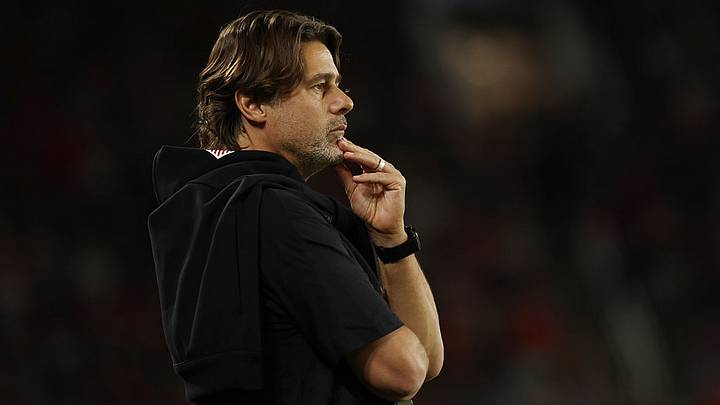
Manager Mauricio Pochettino is undoubtedly proud of the way the Stars and Stripes dominated in their first regrouping since the summer’s tournament; however, he is left with just as many questions as when the team was unexpectedly thrashed by Belgium in the round of 16.
There are several unknowns that relate to individual American players, such as the future status of once-leader Christian Pulisic or former stalwart Tim Weah. There are also several broader, team-centered and positional problems Pochettino must puzzle through.
Here are three big questions Pochettino still has left to answer. Thankfully, he has four years to do so.
Who Belongs Between the Posts?

Pochettino has dreams of turning the USMNT into one of the “most powerful” international teams in global soccer, one that can repeatedly contend for regional trophies and advance deep into World Cup competition.
That is a dream he will never achieve without an elite goalkeeper. Not only is a stellar shot-stopper the difference between beating good teams and great teams, it also sets the entire mood of a team’s play. Having unwavering confidence in one’s last line of defense enables a squad to be carefree enough to reach a flow state and take chances.
The Stars and Stripes have not had a world-class goalkeeper of longevity on their roster in nearly 10 years, back when Tim Howard retired in 2017. The Premier League star and two-time World Cup starter (2010, 2014) had 42 clean sheets in 121 total caps for the national team, amounting to nearly 35% of his appearances.
Meanwhile, the 2026 World Cup starting goalkeeper, Matt Freese, has five clean sheets in 19 total caps (26%), an underperformance compared to Howard’s statistics and a sincere lack of experience to be handed the keys to the net at soccer’s most prestigious affair. The reality that Freese was in over his head manifested most obviously in the round of 16 loss, when he whiffed a clearance to gift Belgium its third goal of the night, the nail in the coffin for a runaway victory.
Pochettino has had wavering faith in Freese, and even called him up for the fall. Freese played just 45 minutes against Peru, though, in a rather uneventful outing that saw him make a single save.
The rest of the goalkeeping ranks aren’t promising either. World Cup third-stringer Chris Brady and newcomers Brian Schwake and Diego Kochen all underwhelmed. To be fair, none of them were heavily tested. Nevertheless, there were not even glimpses of world-class play. At best, they were solid, but that’s not enough to turn Pochettino’s team into a global superpower.
Who Belongs on the Backline?

Thank goodness for Chris Richards.
The seasoned veteran has been a constant in the center of the backline since early 2025, impressing with his distribution skills of unfathomable accuracy, his aerial dominance, his one-on-one defending and, most importantly, his poise. He sets a tone of cool confidence across the entire defense that can then instigate dangerous attacking motions.
He can’t do it alone, though. With the recent international retirement of 39-year-old Tim Ream, the need for a suitable partner has never been clearer, yet no obvious contender has presented himself thus far.
There’s Mark McKenzie and Auston Trusty, both of whom are fringe players. Trusty did partner well with Richards when called upon this fall, though. There is also Miles Robinson; however, the more minutes he accrues on the international stage, the more he seems incorrect for the job.
Pochettino will certainly be holding out hope for Neil Pierre, who has held down the Philadelphia Union’s backline since their MLS resurgence this summer. Except the 6'7" teenager struggled in his debut camp this fall, proving he still has a lot of work to do before he can even begin to enter the starting lineup conversation. He made one start in the win against Chile and continuously gave the ball away, resulting in unnecessary counter attacks for the South Americans. Pochettino ultimately couldn’t trust him again, granting him zero minutes against Mexico and just 16 against Canada.
What Is the Team’s New Identity?

The gap between the USMNT’s most successful moments at the World Cup this summer and the catastrophe that ensued against Belgium can be chiefly attested to one factor: the team’s identity.
At its peak, the USMNT played with a rugged grit that manifested into a high-press, aggressive attacking strategy. From the opening whistle, the Americans jumped down their opponents’ throats and didn’t give them any other choice but sit back and be dictated by their rhythm of play. In all three group stage matches, they found the back of the net within the first 11 minutes.
That strong identity was a mix of quintessential American swagger and a uniquely South American sense of competitiveness, the latter of which the Argentinian Pochettino has been trying to instill ever since taking over the helm in 2024. It was cemented with a togetherness unlike one the team has felt in many years.

“The chemistry of the team, it’s like a family bond we have at the moment, and that’s really good to have,” USMNT and World Cup star winger Sergiño Dest told Sports Illustrated last month in an exclusive interview. “Even in club football, it’s difficult to have that chemistry that we have with the national team, so that’s really important.”
At its worst, the USMNT showed zero semblance on that spirited team identity. From the opening kickoff against Belgium, the players were a step behind. They appeared disengaged, a sense of haze floating over the team that has subsequently been attested to the intense scandal surrounding striker Folarin Balogun.
Nevertheless, the team was able to re-establish part of that team identity this fall, and it will be something Pochettino continues to hone and refine over the next four years.
“We played four games over two weeks and always with the same intensity, with the same commitment, with the same passion,” Pochettino said after the win against Canada. “That is a thing we need to keep. Of course, it is not easy, but that is why we need to give the credit to the players.”
 Add us as a preferred source on Google
Sophia Vesely is a writer, reporter and editor for SI FC, with an emphasis on North American coverage. Her experience comes from regional journalism as a former sports reporter for the Orlando Sentinel, Dallas Morning News and Seattle Times. Vesely graduated from Swarthmore College, where she played collegiate soccer as a wingback. She specializes in MLS, NWSL and NCAA soccer.