%20%20--%3E%0A%3Csvg%20version%3D%221.1%22%20id%3D%22Layer_1%22%20xmlns%3D%22http%3A%2F%2Fwww.w3.org%2F2000%2Fsvg%22%20xmlns%3Axlink%3D%22http%3A%2F%2Fwww.w3.org%2F1999%2Fxlink%22%20x%3D%220px%22%20y%3D%220px%22%0A%09%20width%3D%2239px%22%20height%3D%2240px%22%20viewBox%3D%220%200%2039%2040%22%20enable-background%3D%22new%200%200%2039%2040%22%20xml%3Aspace%3D%22preserve%22%3E%0A%3Cpath%20fill%3D%22%23FFFFFF%22%20d%3D%22M38.5%2C7H28.2v26h10.3V7z%22%2F%3E%0A%3Cpath%20fill-rule%3D%22evenodd%22%20clip-rule%3D%22evenodd%22%20fill%3D%22%23FFFFFF%22%20d%3D%22M26.1%2C25.5c0%2C5.8-4.1%2C7.5-12.9%2C7.5C3.9%2C33%2C0%2C31.2%2C0%2C25.2v-1.1h11.6%0A%09v2.4c0%2C0.7%2C0.1%2C1.4%2C1.2%2C1.4c1%2C0%2C1.2-0.4%2C1.2-1.3v-0.9c0-1.6-0.9-1.6-3.5-2.2C2.2%2C21.7%2C0%2C19.7%2C0%2C15.3v-0.9C0%2C9.3%2C5.5%2C7%2C12.9%2C7%0A%09c10.2%2C0%2C12.8%2C2.6%2C12.8%2C7.4v1.8h-11v-2.9c0-0.6-0.4-1.1-1.2-1.1c-0.6%2C0-1.2%2C0.4-1.2%2C1.1v0.9c0%2C1.5%2C0.9%2C2%2C3.3%2C2.5%0A%09c8%2C1.6%2C10.5%2C3.3%2C10.5%2C7.5V25.5z%22%2F%3E%0A%3C%2Fsvg%3E%0A)
‘We Are Not Politicians’—Mauricio Pochettino Fans Flames of 2026 World Cup Backlash
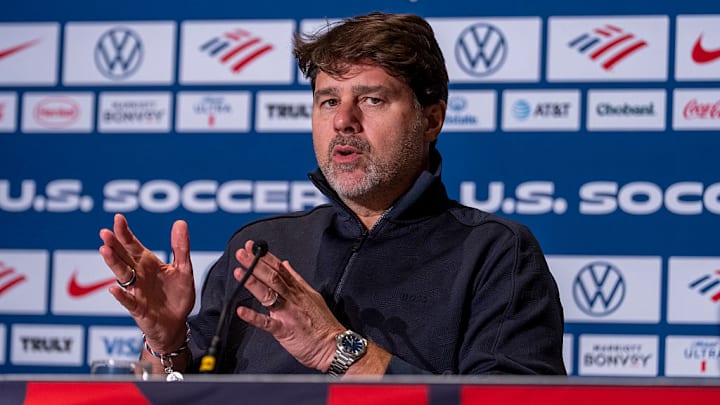
U.S. men’s national team boss Mauricio Pochettino did not share American winger Tim Weah’s recent critique of 2026 FIFA World Cup ticket prices, insisting it is not their “duty to evaluate the price of the ticket” but rather just to “perform on the pitch.”
Weah previously labeled prices for this summer’s tournament as “too expensive” and voiced his concerns about “real fans” missing out on attending the 2026 World Cup, unfolding across the United States, Canada and Mexico. Since the draw in December, ticket prices have soared into the thousands for a single game, with a Category 1 ticket for the World Cup final coming in at $8,680.
When asked about FIFA’s pricing and Weah’s comments, Pochettino drew a harsh line between what he believes his players should and should not be talking—or worrying—about ahead of the biggest competition of their lives. “First of all, I think players need to talk on the pitch, playing football, not outside of the (pitch).
“It is not [Weah’s] duty to evaluate the price of the ticket. And then also my duty is to prepare the team, the U.S. men’s national team, in the best way to perform. We are not politicians. We are sport people that only we can talk about our job.
“And I think if FIFA does something or takes some decision, they know why, and it is their responsibility to explain why. But it’s not up to us to provide our opinion,” Pochettino said.
Political Controversy Serves As 2026 World Cup Backdrop

Widespread backlash over expensive ticket prices is just one controversy looming over the 2026 World Cup. Many concerns and questions have been raised about hosting the tournament largely across the United States amid President Donald Trump’s immigration crackdown and desire to acquire Greenland, an autonomous territory of Denmark, as part of national security efforts.
President Trump even threatened to move games out of host cities he deemed “unsafe,” targeting predominately Democratic cities like Boston, Seattle and Los Angeles. The 79-year-old also warned of tariffs coming for any European nation against his Greenland plans, though he has since backed off those claims.
Calls for a boycott have sounded in several European countries, including France and Germany, as a result of the political unrest surging throughout the United States, where 78 of the competition’s 104 matches will unfold in the summer.
France sports minister Marina Ferrari quelled rising outrage, revealing there is “no desire” from the ministry for a boycott, but vice-president of the German soccer federation Oke Göttlich urged others to “have the [boycott] discussion” given the “potential threat.”
The rising tensions serve as the backdrop for the biggest tournament in the sport, a situation not at all unfamiliar to FIFA, who greenlit Qatar to host the 2022 World Cup.
Pochettino Risks Alienating His Team With Such Strong Comments

The political controversy surrounding the 2026 World Cup especially hits home for the USMNT, who are set to play their group stage matches in Los Angeles and Seattle. Yet Pochettino is steering clear of anything outside the realm of soccer.
“Our responsibility is to perform, play and perform on the pitch. And then the people that (are) in charge of the federation, maybe he can give his opinion, but I am the head coach of the federation. And I think we have the organization that is over us, that is FIFA, that is doing an amazing job around the world uniting people, because I think FIFA unites people,” Pochettino said.
“I think for sure the media need to ask directly to FIFA, and for sure you are going to receive a very good answer. But no, it is not up to us to judge this type of thing. We need to be focused on the sports side, and trust in the organization that is in charge of soccer or football around the world, that they are going to do the right things.”
Not only did Pochettino take aim at Weah, but he also potentially put his players in an awkward position, towing the line of censorship within his camp. As the World Cup edges closer and closer, players of the host nation will undoubtedly be asked to comment on more than just soccer, and then they could find themselves stuck between speaking out or adhering to their manager’s demands.
READ THE LATEST USMNT NEWS, REACTION AND ANALYSIS
 Add us as a preferred source on Google
Amanda Langell is a writer and editor for SI FC. Born and raised in New York City, her first loves were the Yankees, the Rangers and Broadway before Real Madrid took over her life. Had it not been for her brother’s obsession with Cristiano Ronaldo, she would have never lived through so many magical Champions League nights 3,600 miles away from the Bernabéu. When she’s not consumed by Spanish and European soccer, she’s traveling, reading or losing her voice at a concert.
Follow AmandaLangell